Reading a Fletcher driveway before you spend on it
Most of the pavement in Fletcher was laid on ground that used to be orchard or pasture. The town grew up along US-25 and the French Broad bottomland, and the housing stock runs from 1970s ranches off Howard Gap Road to newer subdivisions chipped into the ridges toward the Blue Ridge escarpment. That mix matters, because the failure pattern in a pavement tells you what a repair will actually cost — and in Fletcher, two driveways a mile apart can fail for completely different reasons.
Crack reading comes first. A single wandering crack with clean edges is a pavement crack, and a routed, filled repair is cheap. Stair-stepped cracks that connect into a web are alligator cracking, and that is a base failure, not a surface one — the soil underneath has moved or the drainage failed. If you can press a screwdriver handle into the surface beside a crack in July and it sinks, you have a soft spot, and any overlay poured over it will mirror that failure within a season.
Then look at the edges. Edge cracking on a mountain driveway usually means the asphalt is too thin at the lip, water is getting into the subgrade from the side, or the shoulder was never built. And potholes that keep coming back after every patch are the classic tell that someone has been topping a drainage problem with mix instead of fixing it.
Patch, overlay, or tear out: the honest decision tree
Repair makes sense when the damage is isolated — under roughly a quarter of the surface, no alligator pattern, and the base sounds solid when you walk it. An overlay makes sense when the pavement is weathered and raveling but structurally sound, and the surface is worth preserving. A tear-out makes sense when the failure is widespread or the base is gone.
| Scope | What it covers | Typical regional range |
|---|---|---|
| Crack routing and fill | Clean, fill, and seal isolated cracks | typically $300–$900 |
| Patch repair | Remove failed section, rebuild base, compact, patch | typically $600–$2,400 |
| Residential overlay (1.5–2 inch) | Clean, tack, level, and overlay sound pavement | typically $3,300–$8,900 |
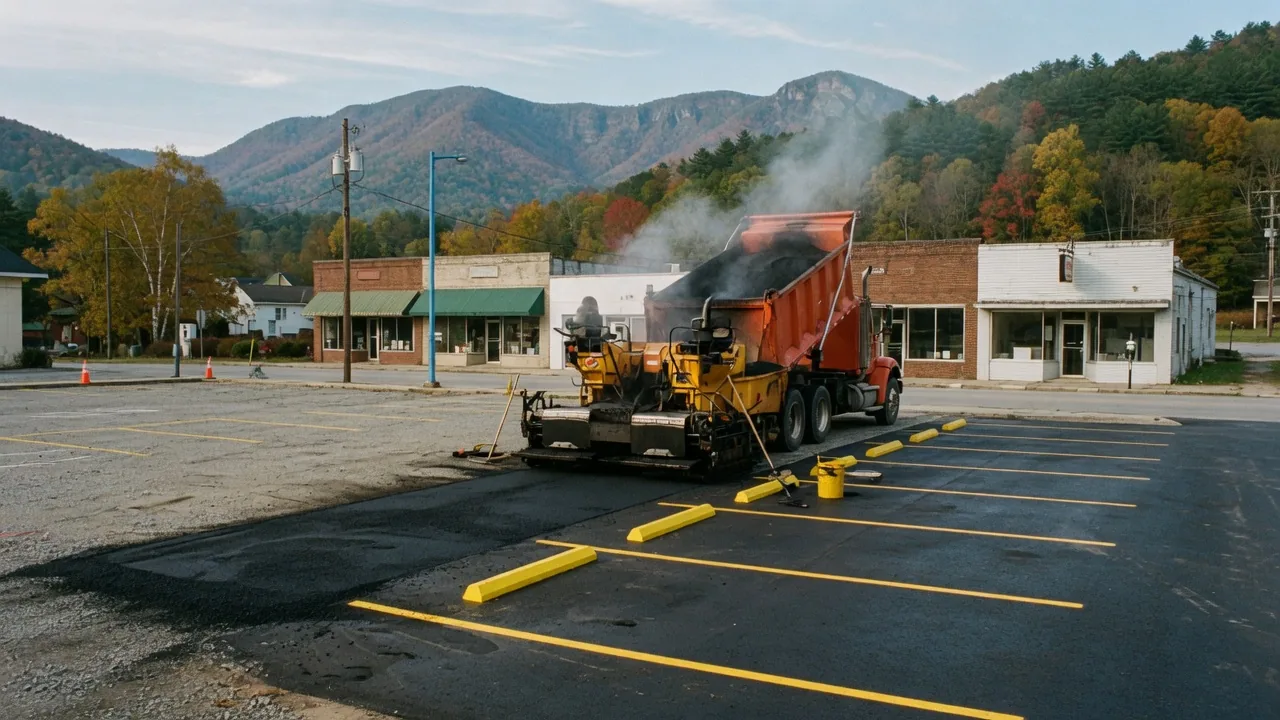
| Commercial lot overlay | Per square foot, larger area, thicker section | typically $2.50–$6.00/sq ft |
| Full tear-out and repave | Remove asphalt, rework base, new surface course | typically $7,000–$18,000+ |
An honest contractor will walk the pavement with you and tell you which line you're actually on. A bid that jumps straight to overlay without checking the base is a bid that hasn't looked at the problem yet. The full asphalt resurfacing guide walks the same decision tree with the terminology you'll hear on site.
What Henderson County pricing actually reflects
Fletcher sits in Henderson County, and driveways here price differently from the coast or the flat Piedmont. Slopes change how much asphalt and compaction the job takes, tree canopy changes how much organic debris and root movement you're fighting, and freeze-thaw swings in the mountains mean the thickness and the drainage detailing matter more than they would three hours east. The county cost page has the line-item table: Henderson County asphalt driveway cost breakdown.
Watch for add-ons that shouldn't be invisible. If a bid doesn't mention base repair, drainage, or edge work, that's not a cheaper job — that's a job with the expensive line items left off the page. The real number for a Fletcher driveway is usually the overlay price plus whatever the base needs, and the base is what the first contractor skipped.
Water and weather decide pavement life here
Henderson County sits in the wet, freeze-thaw belt of the Southern Appalachians, and the federal record shows why so many local driveways fail at the base rather than the surface: 16 declared events touch this county, spanning 1978-2026, across the storm and flood family. Every one of those events put water against pavements that were never graded to move it away. Before anyone sells you an overlay, ask where the water goes. The National Weather Service tracks the freeze-thaw cycles that open cracks each winter, and the same freeze-thaw cycle is what turns a hairline crack into an alligator patch in two seasons.
Grading, gutters, and shoulder rebuilding aren't glamorous line items, but they are the difference between a five-year driveway and a fifteen-year one. If the pitch of the driveway sends water back toward the garage, no surface treatment fixes that for long.
Permits, licensing, and hiring in Fletcher
Most residential resurfacing doesn't trigger a building permit, but any work that touches a driveway apron, a right-of-way, or a street connection is an NCDOT matter, and the driveway permit process runs through NCDOT Connect. If the job crosses into commercial paving or larger structural scope, general contractor licensing thresholds under the North Carolina Licensing Board for General Contractors apply. Stormwater and runoff can bring in NCDEQ rules on larger lots, particularly where pavement changes the drainage pattern to a neighbor or a stream.
Ask two questions of any crew bidding in Fletcher: how do they prep a base before an overlay, and who handles the permit if the apron or the right-of-way is involved. When you're ready to talk to a crew that works this ground regularly, the Fletcher paving contractors page is the right next step.