Where the money actually goes on a Buncombe driveway
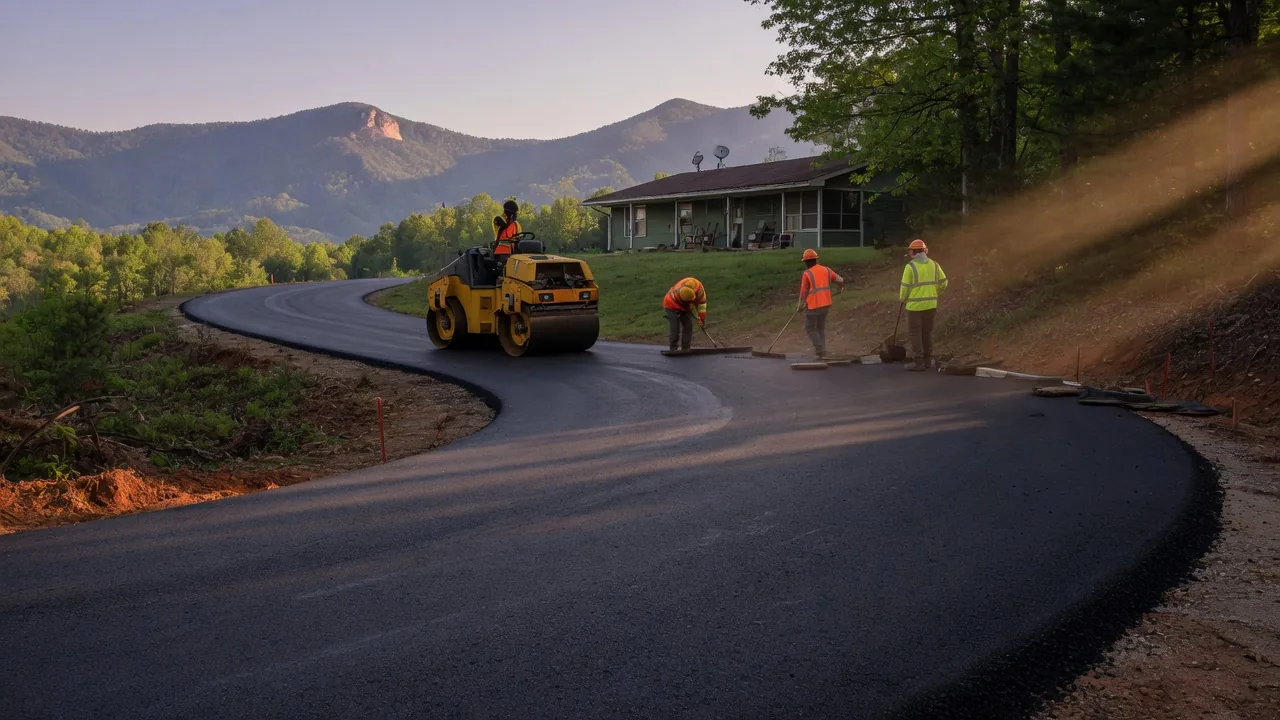
Watch a crew quote a driveway off a gravel switchback above the French Broad and you'll see the number change mid-sentence. The flat-lot formula breaks the moment the truck can't back to the top of the grade, and that happens constantly in this county. A quote around Asheville is never just sealcoat. It is a bundle, and on a mountain lot the bundle has four parts that do the real damage to the price: cleaning, crack and edge prep, product, and access. Flat-lot websites quote the first three and forget the fourth — which is why a Weaverville driveway on a 20 percent grade often costs more than a wider, flatter lot in Fletcher.
| Line item | Typical Buncombe range | What drives it |
|---|---|---|
| Cleaning and prep (blow, scrape, edge) | $0.08 – $0.18 / sq ft | moss, soil, leaf litter, previous failing coat |
| Crack fill (hot or cold pour) | $1.50 – $6 / linear ft | crack width, count, whether water has entered base |
| Sealcoat application (residential) | $0.12 – $0.28 / sq ft | number of coats, product type, penetration |
| Steep-drive access surcharge | 10% – 25% of labor | grade, turning room, truck placement |
| Full residential package | $150 – $550 (most jobs $250 – $400) | size, prep severity, crack volume |
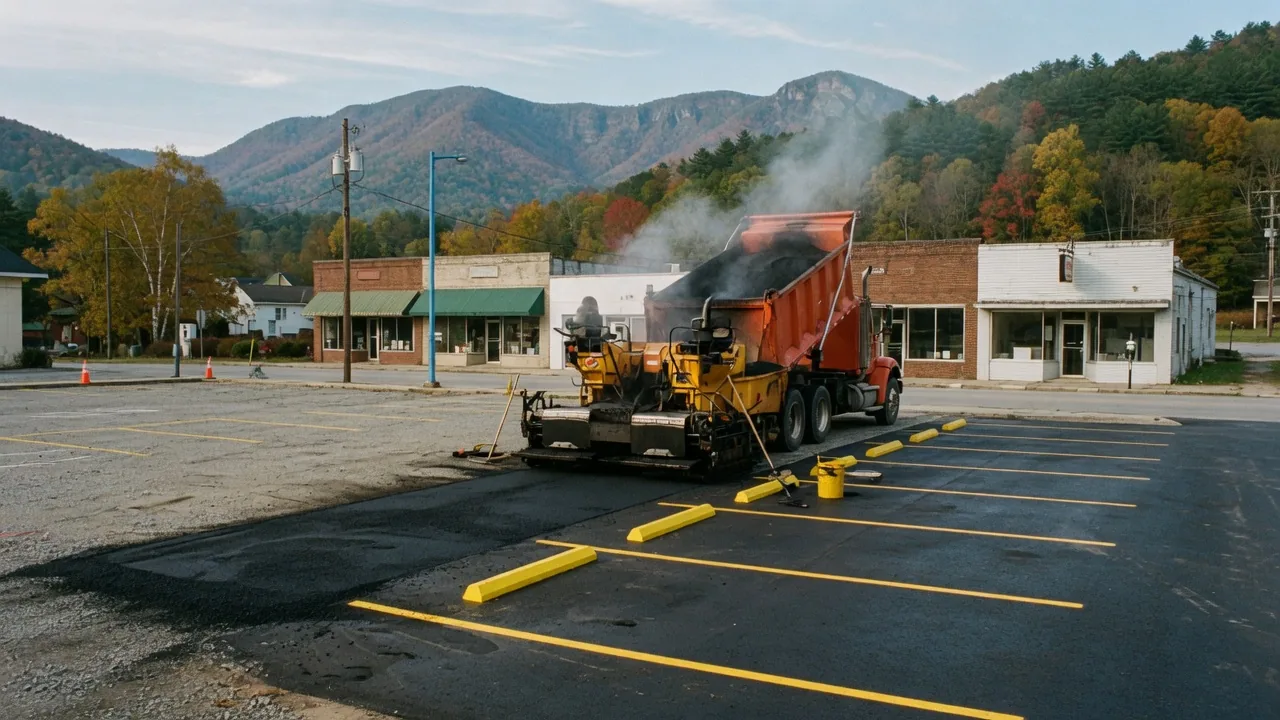
| Commercial / long-drive package | $700 – $2,000+ | square footage, traffic load, striping needs |
Those are honest working bands, not quotes. A driveway that looks small on a Buncombe plat map can still be a hundred linear feet of failing asphalt if it climbs the ridge behind the house. Prep time is what separates a $200 job from a $450 job here.
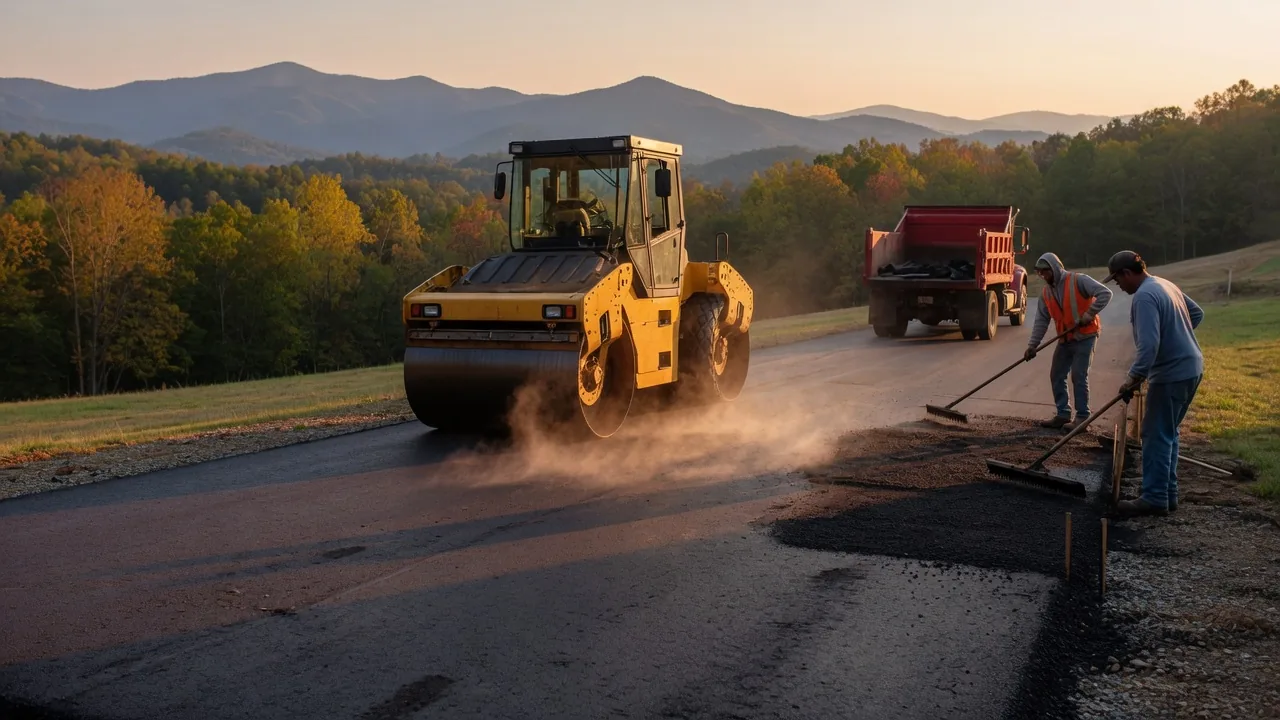
Terrain is the reason the spread is wide. In the valley floors around Fletcher, Arden, and parts of Swannanoa, drives are short, wide, and usually flat enough that a single truck can work the whole surface without repositioning. Climb into Weaverville, Fairview, Leicester, or the ridges off Town Mountain and the same square footage turns into a puzzle: less turning radius, more edge to hand-cut, and a base that's been quietly settling for years. On those lots the sealcoat itself might be a third of the invoice. The rest is labor spent getting the surface fit to seal.
Tree cover matters too. buncombe County sits under heavy hardwood canopy in a lot of residential pockets, and shade keeps pavement damp longer after rain. Damp asphalt holds moss and algae, and both have to come off before any sealer bonds. A shaded lot in Black Mountain can carry twice the prep burden of a sunny lot of identical size in Candler, and the quote should show it.
Why this county's weather tears asphalt up faster
Buncombe sits in a pattern that is hard on pavement: warm wet springs, humid summers with afternoon storms rolling off the Blue Ridge, and hard freeze-thaw cycles in January and February. Water gets into hairline cracks, freezes overnight, expands, and pushes the crack wider. Repeat that for a few winters and a driveway that needed a $200 seal coat now needs crack routing and base work first. The federal record reflects how often this county deals with storm and water events — 19 federally declared disasters touch Buncombe County across 1973-2026 — and that pattern is exactly what ages asphalt here.
The freeze-thaw piece is worth understanding because it's what separates mountain maintenance from flatland maintenance. On a flat lot in eastern North Carolina, water pools and eventually evaporates. On a graded drive in this county, water keeps moving — down the slope, along the edge, into every crack it can find, and then it sits in the low spot at the bottom of the run. When the overnight temperature drops below freezing and climbs back above it the next afternoon, that trapped water expands and contracts and works the crack open from the inside. One winter does a little. Three winters does a lot.
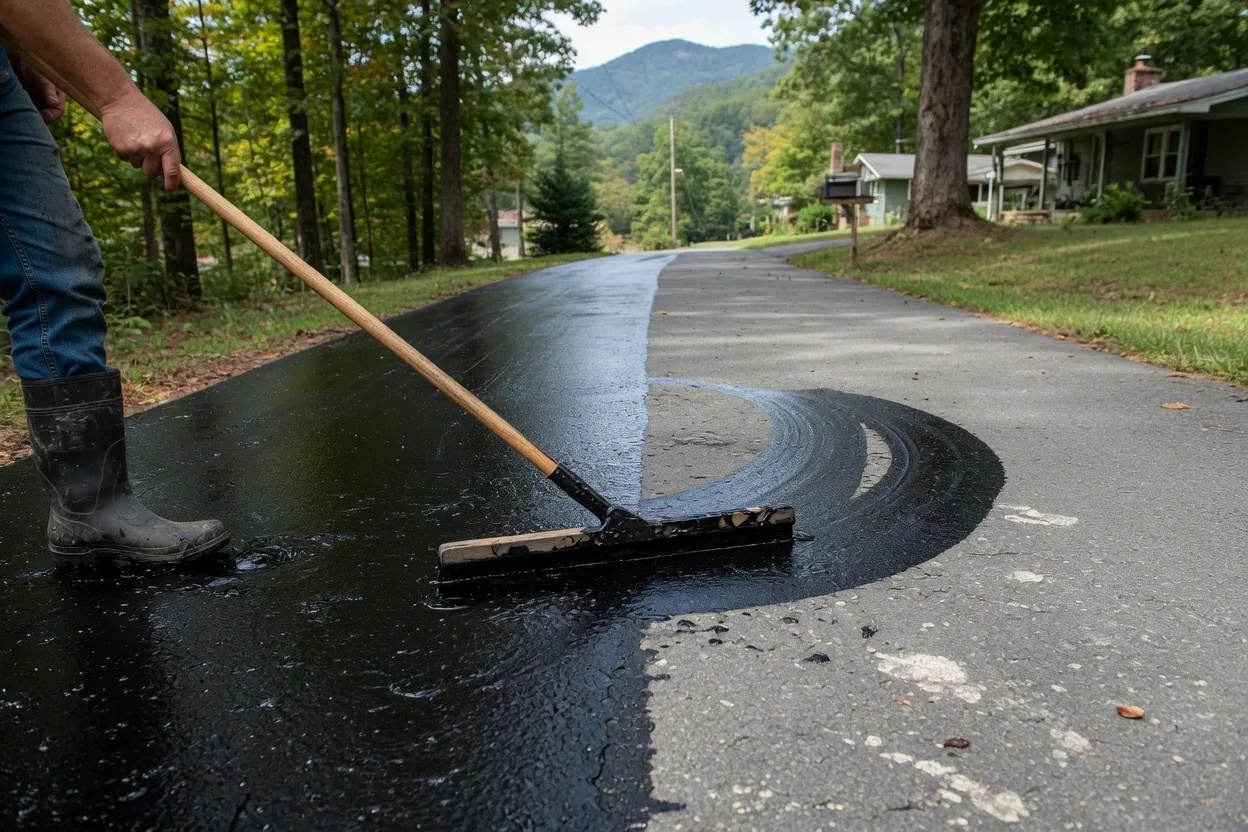
Add the summer pattern: Asheville is one of the wetter spots in the Southeast, and afternoon thunderstorms in July and August can drop serious rain in under an hour on a slope that was bone dry that morning. Fast runoff scours the edges of a drive and finds any weakness in the surface. Practical translation: in this county, sealcoating is less about cosmetics and more about shutting water out before another winter. Skipping it doesn't save money — it moves the money into a later repair. Our sealcoating service overview walks through what a proper coat does and doesn't fix.
What a fair quote should include
When you compare bids from three crews, make sure they are pricing the same job. A useful quote line-itemizes at least these:
- Square footage measured, not guessed. Long mountain drives are frequently underestimated by a hundred square feet or more.
- Crack prep listed separately. If crack fill is baked into a single per-square-foot number, you can't tell whether it's included or being skipped.
- Product type. Asphalt-emulsion-based sealers and coal-tar-based sealers behave differently on grade and in freeze-thaw; ask which and why.
- Number of coats. Two thin coats are normal; one heavy coat is a shortcut.
- Cure time statement. Asphalt needs to be fully cured, typically months after paving, before it should be sealed at all — sealing new asphalt too early traps solvents and softens the surface.
- Access assumptions. On a steep or narrow drive, ask explicitly whether the quoted price assumes the truck can reach every section, or whether part of the job is hand-applied.
A quote that ignores access on a Buncombe hillside is not a quote, it's an estimate waiting to grow. Better to hear the real number up front. If a contractor walks the drive, notes the grade, asks where the water goes when it rains, and then writes down what they found, you're dealing with someone who has priced this kind of lot before. If they pace it off, guess, and hand you a per-square-foot figure on the spot, the driveway will probably get sealed and you'll probably pay more than you were told.
Curious how a full repave compares to a coat? See asphalt paving services for what a new surface actually costs versus maintaining the one you have.
Licensing, codes, and driveway rules in Buncombe County
Sealcoating itself is generally not a licensed trade in North Carolina — it is a surface treatment, not a structural or mechanical trade. Where licensing does come in is when a job crosses into paving work or driveway construction, especially near a public right-of-way. The NC Licensing Board for General Contractors sets the threshold at which a project requires a licensed general contractor, and a driveway that ties into a state-maintained road may also need a driveway permit from NCDOT before any work in the right-of-way. If a driveway handles stormwater toward a creek or drainage easement, the NC Department of Environmental Quality rules on sediment and runoff can apply. None of that is sealcoating's concern directly, but a contractor who knows it exists is a contractor who has done more than one kind of job.
Stormwater is the sleeper issue on Buncombe lots. Many drives here are cut into a slope and end in a culvert, a swale, or a runout toward a creek. When that system is undersized or clogged, the water backs up and starts eating the asphalt from below, and no amount of sealer fixes a base that's being washed out. If a contractor mentions drainage during the estimate, take that seriously. It means they're looking at the cause, not just the surface.
One local reality worth flagging: on steep graded drives in Buncombe, sealer that runs during application is a real nuisance and a sign of the wrong mix. A crew that has worked hills knows to adjust consistency and direction of application. Ask them.
How to keep the price honest in this market
Three moves pay off:
- Get the prep story in writing. Ask every bidder what they will do about cracks and edges before sealing. If the answer is vague, the number is vague.
- Price by measured square footage. Request the measurement. On a sloped drive, ask whether prep hours are included or billed separately.
- Compare against the county band. If a bid lands far outside the ranges above, make them explain why. Sometimes there is a real reason (bad base, previous silicone crack filler that has to be cut out), and the explanation tells you whether they know what they are doing.
Timing is the other lever. In Buncombe, the practical sealcoating window runs late spring into early fall, when the surface is warm, dry, and staying that way long enough for the coat to cure. Schedule into that window and you avoid the premium that comes with squeezing work in at the edges of the season. Late fall jobs on cool shaded drives are riskier because the sealer may not set properly before the first hard freeze, and that failure is not covered by a warranty. If a contractor is pushing you toward a November slot on a ridge-top drive, ask why.
Wondering whether the whole driveway is worth resealing or replacing? The sealcoating cost guide lays out the national picture so you can see where Buncombe sits. Then call two local crews and compare on a level line-item sheet.