The paving calendar here is shorter than most homeowners expect
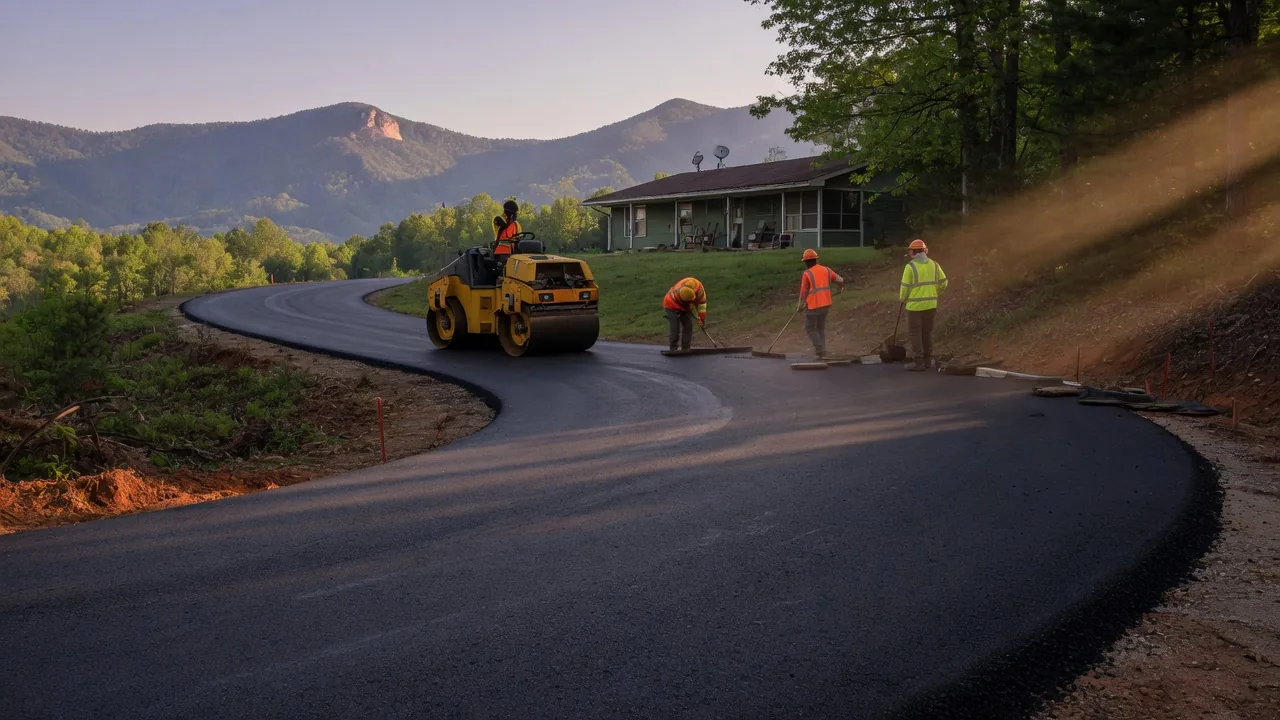
Weaverville sits in a bowl of the Reems Creek and Flat Creek valleys, and that geography controls driveway work more than anything on a price sheet. Hot-mix asphalt leaves the plant hot and has to be laid and rolled while it still is — the practical window in Buncombe County runs roughly April into November, and the plants themselves throttle or shut when overnight lows drop near freezing. On a shaded north-facing slope off Monticello Road or up a hollow toward Barnardsville, the surface can stay cool enough to resist proper compaction even in the shoulder months.
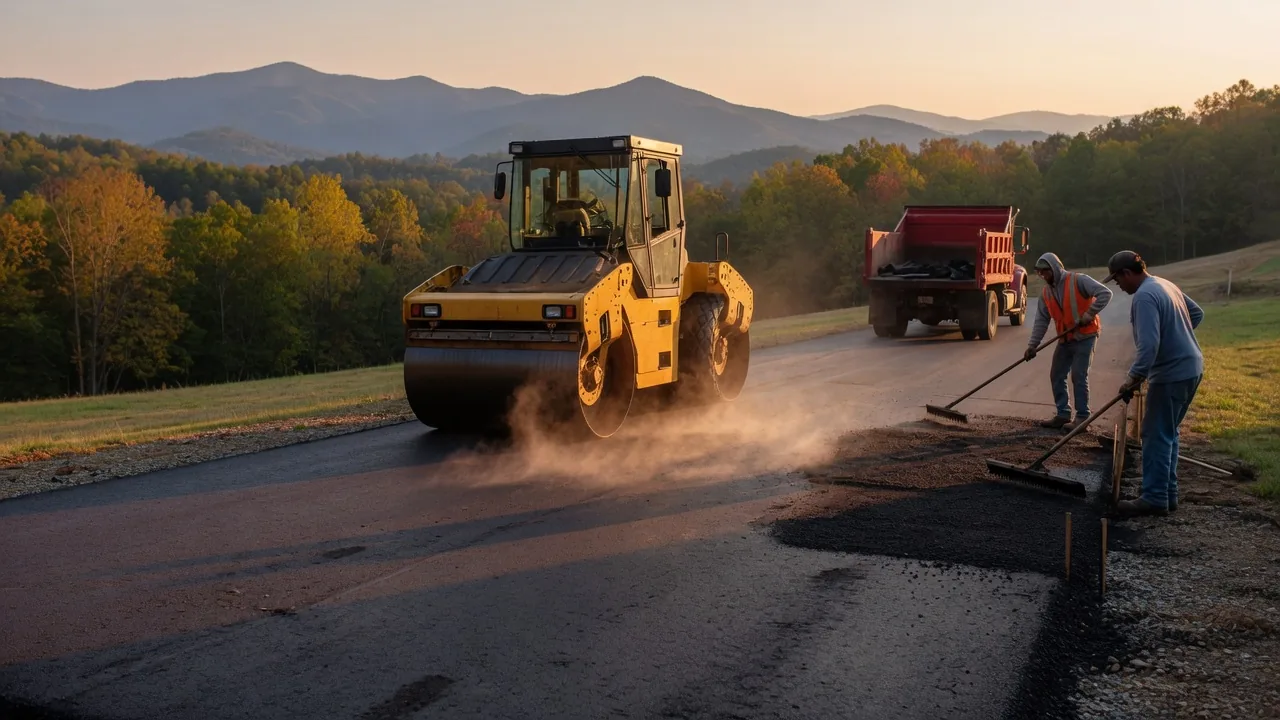
That matters because a driveway repair that goes down cold or gets rolled at the wrong temperature looks fine for one season and then ravels. The National Weather Service freeze and frost forecasts are the honest scheduling tool here, not a promise made in January. If a contractor offers to mill and overlay a shaded Weaverville driveway in the dead of February, ask what plant the mix is coming from and what the surface temperature will be when the roller goes over it.
There is a second layer to the calendar that catches people by surprise. Weaverville's town core and the roads climbing toward Weaverville Highway sit at different elevations and hold different heat overnight; a driveway at 2,100 feet in the valley may roll clean on a morning when a slope at 3,000 feet up a Flat Creek hollow is still frost-stiff. A crew that treats the whole town as one climate will schedule you wrong. The best practice is to walk the actual pavement, check the shade pattern through the day, and time the pour to a stretch where the surface hits temperature before noon and stays there through the roller pass.
What actually fails on Weaverville driveways
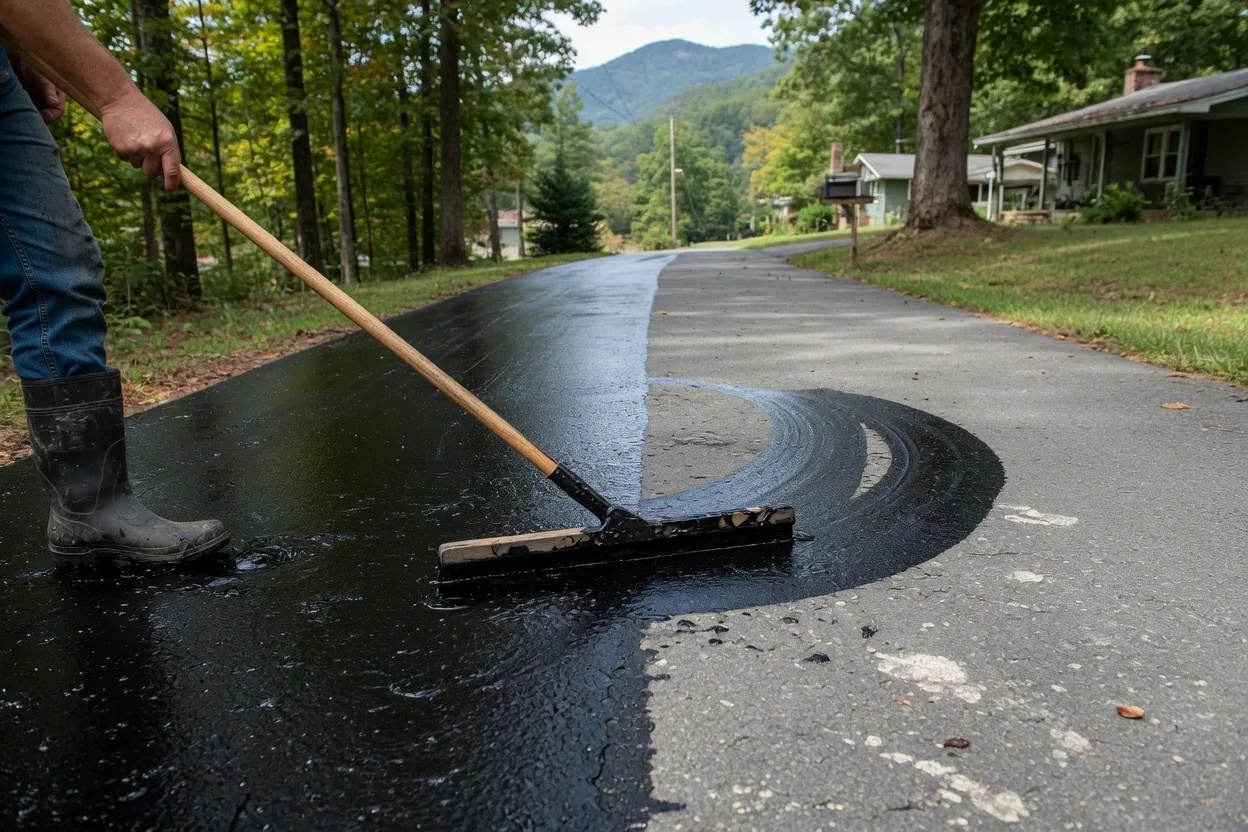
Three patterns show up over and over. First, edge cracking under the eaves of oak and poplar canopy — the tree roots hold moisture against the shoulder and the asphalt gives at the weak point. Second, alligator cracking in a wheel path, which almost always traces back to base failure, not a surface problem; patching over it buys a year. Third, a washboard or rutted apron where the driveway meets the county road, because that transition takes the drainage off the road above and the freeze-thaw cycle does the rest.
Weaverville's housing stock reinforces this. Older homes along Main Street and the neighborhoods off Reems Creek Road often have driveways poured decades ago with whatever base was on site; newer construction on the slopes toward Weaverville Highway was cut into fill that moves. Before anyone quotes a repair, the useful question is whether the crack is a surface issue or a base issue. The asphalt driveway repair guide walks through the difference, and it changes the number by thousands.
Scope and price ranges for this area
Every driveway is its own job, but the bands below reflect what Weaverville and the surrounding Buncombe County work realistically bills at. Confirm the line items against the Buncombe County asphalt cost breakdown before you compare bids.
| Scope of work | Typical price range |
|---|---|
| Crack filling (routed and sealed, per linear foot) | $2–$6 per ft |
| Pothole or small-area patching (under ~50 sq ft) | $450–$1,200 |
| Full-driveway sealcoat (standard 2-car width) | $700–$1,600 |
| Mill and overlay, residential driveway | $2,200–$4,200 |
| Base repair plus overlay (failed subgrade) | $4,000–$8,500+ |
| Full removal and repave | quoted by square foot after site review |
Two caveats specific to this terrain. Decking thickness, haul distance up a steep hollow, and drainage corrections at the apron all move the number and rarely appear on a phone quote. And anytime a driveway job touches the public road approach, a driveway permit from the NCDOT Connect system is typically required — that requirement is not optional and not the contractor's problem to skip.
Drainage and the wet-season pattern
Federal disaster history is a fair proxy for how much water Weaverville driveways have to survive: 19 declared events have touched this county across 1973-2026, most of them storm and flood family. Every one of those pushed water at driveways that were graded for a drier assumption. A driveway that puddles at the low corner in a normal rain will pond and then freeze in a cold snap, and freeze-thaw is what turns a hairline crack into an alligator patch.
So the repair order here is usually drainage first, asphalt second. Regrading a shoulder, adding a swale, or catching a gutter downspout before it dumps onto the apron often costs less than the overlay it prevents. If the driveway ties into a slope above the house, that water wants a path away from the pavement altogether. The federal storm record on the EPA stormwater side is worth a look if you are rethinking how runoff crosses the lot.
Hiring someone who works this county
North Carolina sets a threshold for when a paving project legally needs a licensed general contractor, and larger resurfacing and new-driveway jobs cross it — check the current limits at the NC Licensing Board for General Contractors. Below that threshold, licensing is not the filter; references and process are. Two questions cut through most of the noise: which local hot-mix plant do you buy from, and what surface temperature do you roll at? A crew that answers both without hesitating works here for real.
The Weaverville paving contractor guide covers what a legitimate first visit includes. Expect the bid to separate base repair from surface work, and expect a realistic calendar — a good Weaverville pavers crew will tell you the season they can actually do the job, not just the season you want it done.