Why thickness and lift count decide the price here
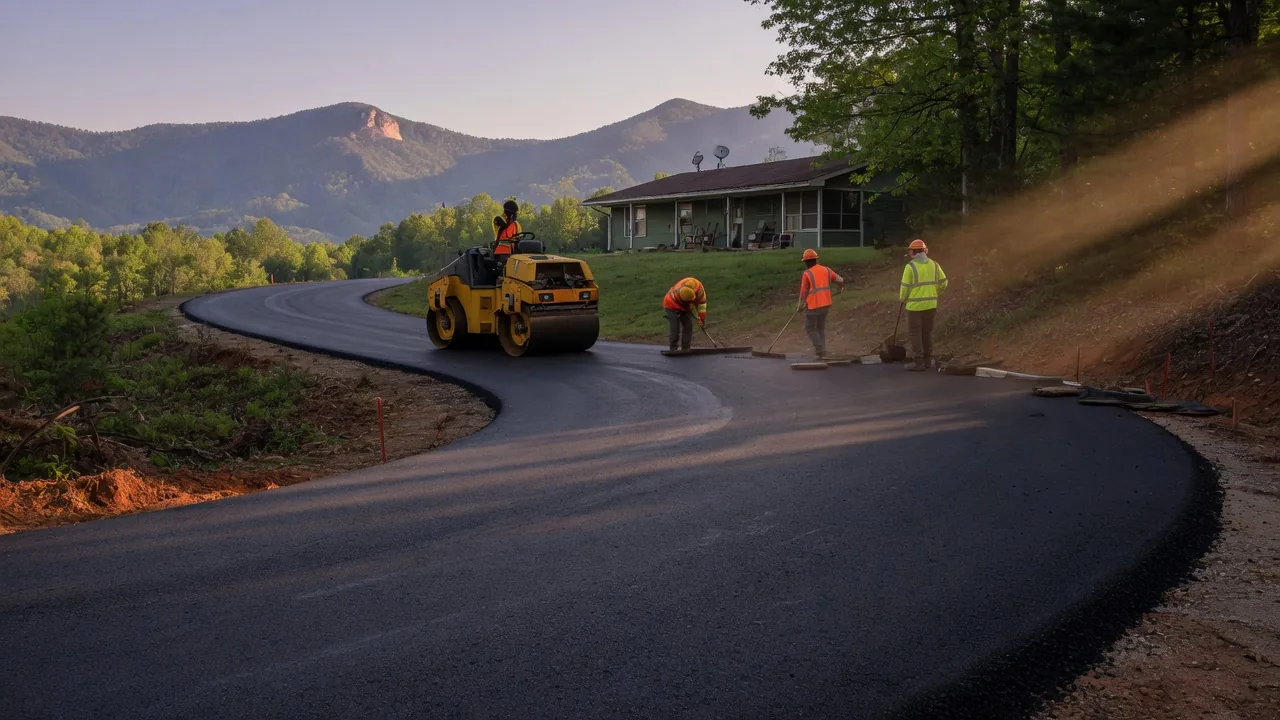
Biltmore Forest driveways rarely fail because the asphalt was the wrong color. They fail because a gravel lane was surfaced without fixing what gravel was hiding: a base that drains sideways, roots heaving the subgrade, and a turnaround where the same heavy vehicle pivots every day. The conversion question is never just "two inches or three?" It is two inches or three over what, placed in one lift or two, and whether the turnouts and aprons need more than the straight run.
As a working rule: a low-traffic straight driveway can take a 2-inch single lift over a properly compacted base. Anything with a tight turnaround, a slope steep enough to matter, regular delivery or contractor traffic, or a run long enough that trucks lean on one edge should be built as two lifts totaling 3 inches, because each lift compacts independently and the joint between them is what resists shear. That single decision is usually the largest line-item difference between two otherwise identical bids.
The Biltmore Forest situation: old lanes under old trees
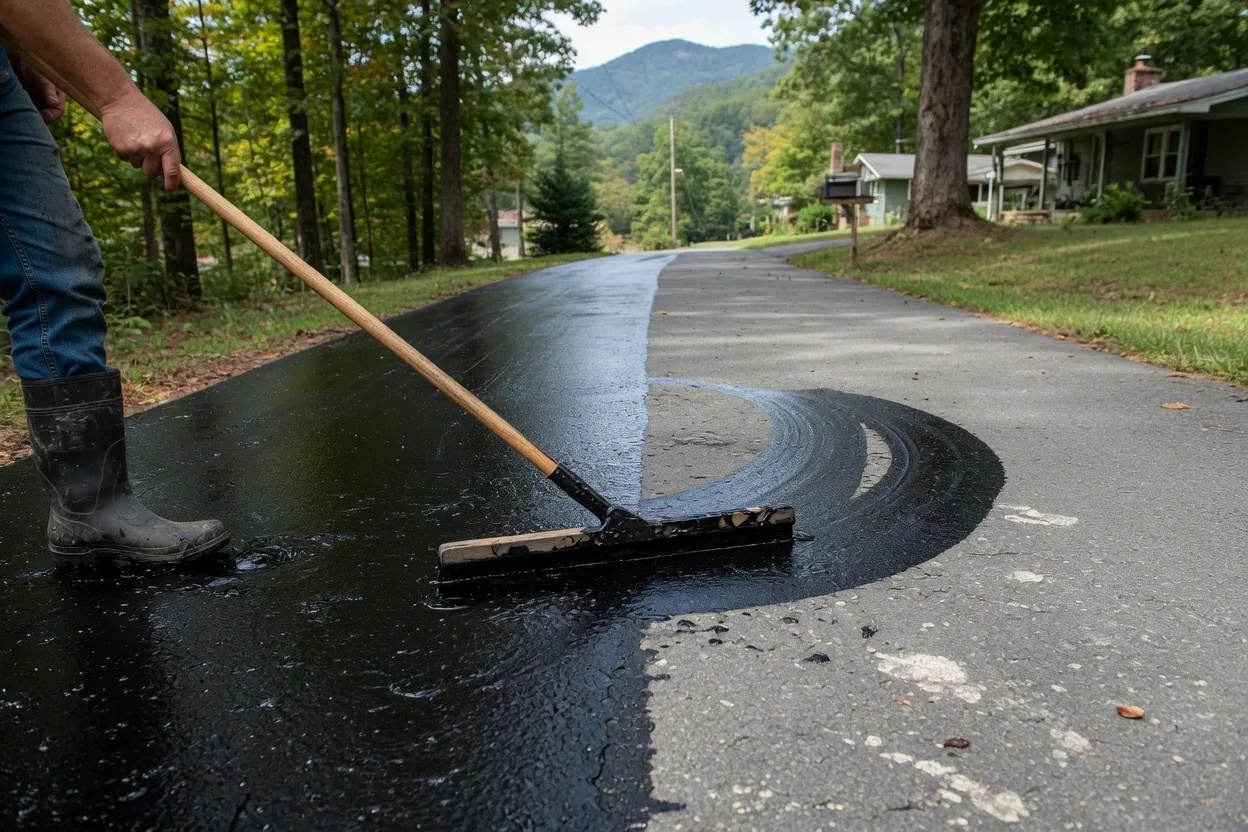
This is a wooded, low-density village inside Buncombe County with estate-era lots, mature canopy, and driveways that were cut long before anyone thought about load ratings. The character of the work follows: shade keeps pavement damp and slow to cure, root systems push from below, and the water that used to soak into a gravel surface has to go somewhere once you cap it. That last point is the one homeowners underestimate — gravel is a drainage surface, asphalt is a roof. Convert without addressing where the runoff goes and you have built a small dam across your own entrance.
In the mountains around Asheville, storm and flood history is the backdrop for every drainage conversation: 19 declared federal events touch this county across 1973-2026. That record is why a serious conversion scope includes grading and drainage line items before any asphalt number appears. The National Weather Service outlook for the southern Appalachians is a standing reminder that freeze-thaw cycles, not summer heat, are what chew up thin pavement here.
What a real conversion scope includes
A conversion is a base project with an asphalt finish, not the other way around. Expect the following, in this order: strip and evaluate the existing gravel, correct the grade and crown, address roots and any soft spots, place and compact new crushed stone to a settled depth, then pave. Skipping the evaluation step is how one-inch-thick pavement gets sold as three.
| Scope item | Typical range |
|---|---|
| Grading, crowning, and drainage correction | $900–$2,800 |
| New compacted stone base (4–6 in.) | $2.00–$4.25 per sq ft |
| 2-inch single-lift asphalt surface | $2.75–$4.50 per sq ft |
| 3-inch two-lift asphalt surface | $4.00–$6.25 per sq ft |
| Turnaround, apron, or culvert work | $600–$3,500 |
| Full driveway conversion, most homes | $4,700–$12,500 |
Those bands track the broader Buncombe County asphalt driveway cost picture, where slope, access, and tree cover move the number more than square footage does. The gravel-to-asphalt conversion guide walks through the sequencing in more detail if you want to compare scopes line by line.
What the town's traffic actually calls for
Biltmore Forest driveways carry a specific load profile: heavy SUVs and trucks on short runs, garbage and delivery vehicles backing and turning on pavement that was never engineered for point loads, and in many cases a second dwelling or outbuilding sharing the same entrance. Turning and braking forces concentrate at the apron and turnaround, which is precisely where thin single-lift pavement shears first. If your driveway has a tight Y-turn or a steep pull from the road, the honest answer is 3 inches in two lifts, even though a flatter lot two streets over could get away with 2.
Driveway work that connects to a public street also touches NCDOT's driveway and access permitting process, so confirm who owns the apron before anyone breaks ground; the application path runs through NCDOT Connect. And once a paving scope crosses the state's contracting threshold, the contractor's standing is a licensing question handled by the NC Licensing Board for General Contractors — worth a lookup before you sign anything.
Sequencing the job around mountain weather
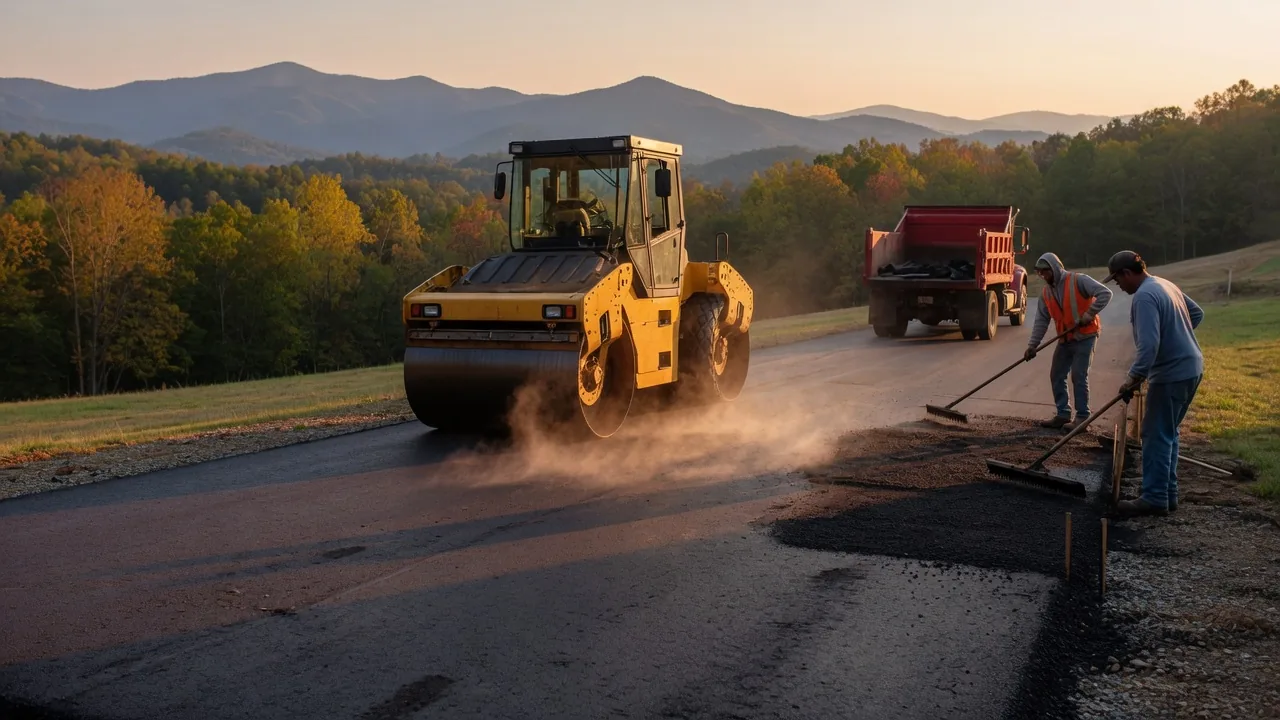
Hot-mix asphalt has a narrow working window: it needs to be placed and compacted while it is still hot, and it needs dry, above-freezing conditions underneath. In this part of Buncombe County that means late spring through early fall is the realistic paving season, and a base installed in wet fall ground is a base that will pump and fail next spring. Any crew that will lay asphalt over saturated gravel in a wet month is selling you a callback.
Get the base right in one season and the surface in the next if the schedule forces it — that is not a corner cut, it is good sequencing. When you are ready to compare bids from local crews, the paving contractors serving Biltmore Forest page is the place to start, and it is worth asking each bidder the same question: how many lifts, over what base depth, and where does the water go. The answers will separate the real scopes from the cheap ones.