Why haul distance sets the price in Fletcher
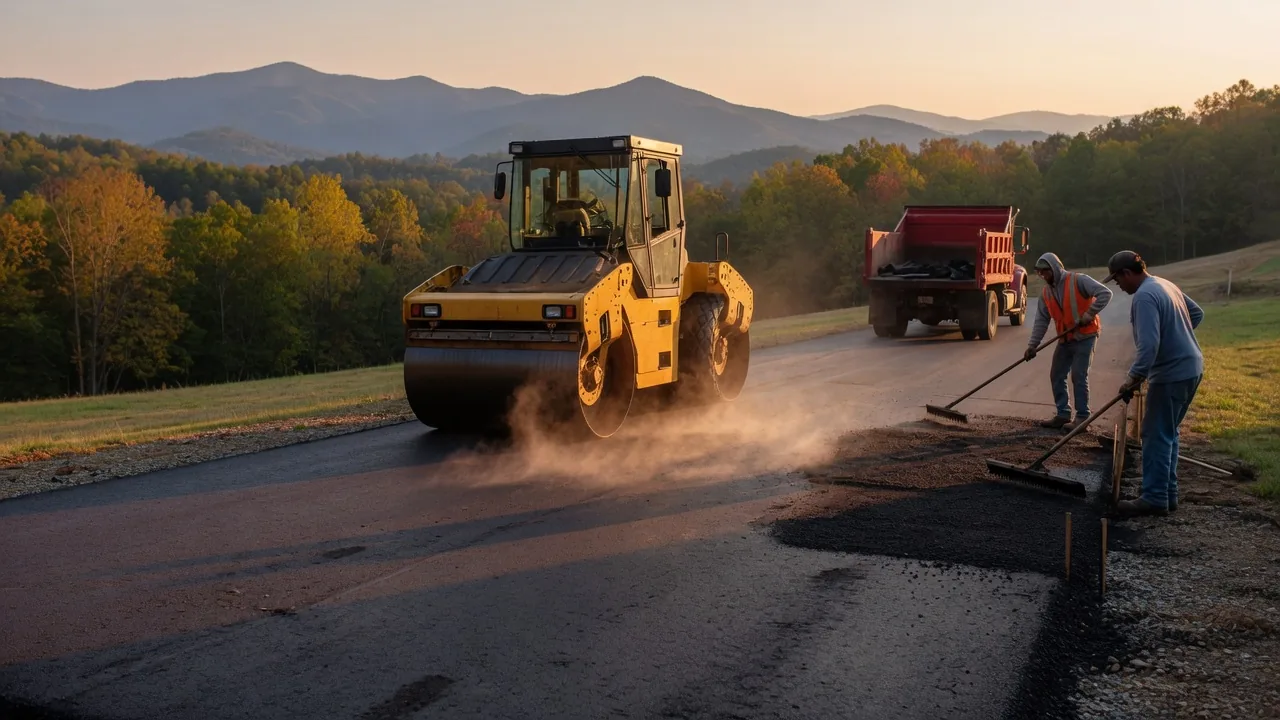
Hot mix asphalt is a perishable product. It leaves the plant at roughly 300 degrees, and it has to be placed and compacted before it drops below about 185 degrees — after that it sets up in the truck and becomes a load of expensive gravel. That ticking clock is why driveway paving is a logistics business before it is a construction business. Fletcher sits in the southern end of the Asheville basin, and the mix that lands on a Fletcher driveway is usually trucked down I-26 from plants in the Buncombe County corridor. Add a 25 to 40 minute haul, and the crew has a shrinking working window.
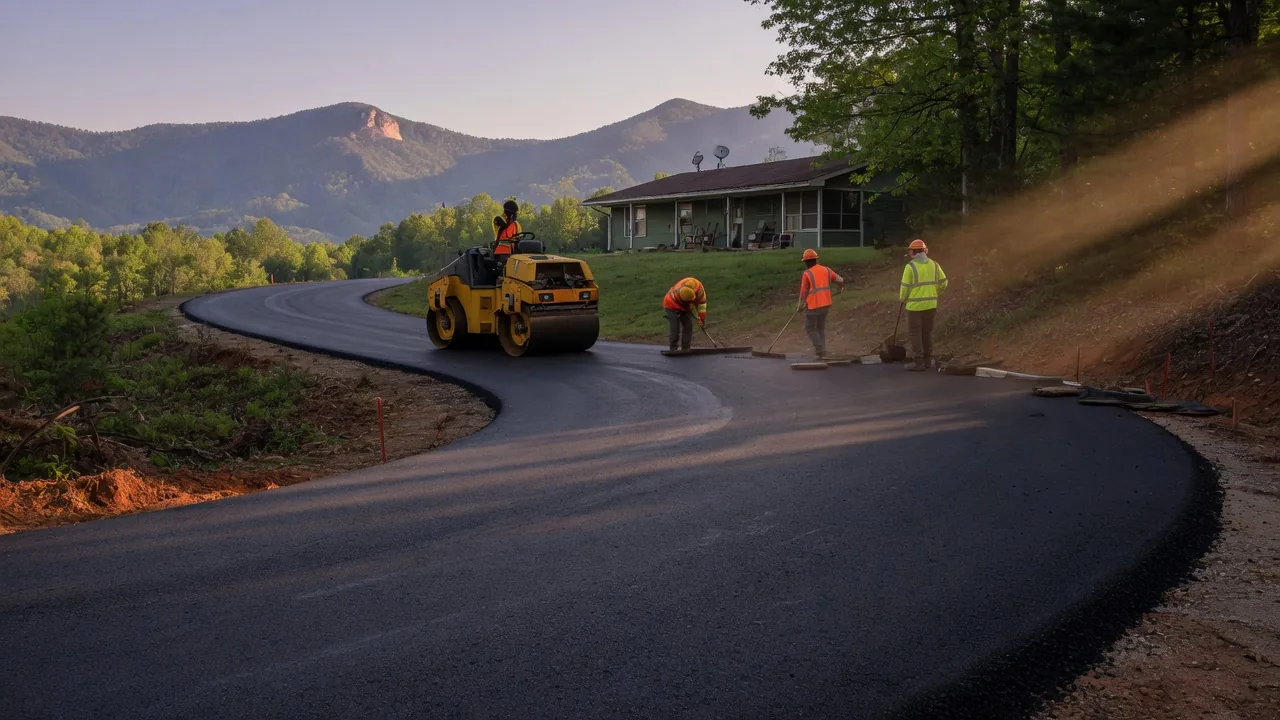
On a straight, wide, half-mile driveway off a flat county road, that window is generous — the paver can lay and roll behind the truck faster than it cools. On the tight switchbacks and steep cut-in drives common on the ridges off Howard Gap and the fancier lots near the Cane Creek bottoms, the same load hits the driveway already cooling, and the crew has to break it into smaller drops, spread by hand at the edges, and move slower. That is the single biggest reason two Fletcher neighbors with identical square footage can get quotes a few thousand dollars apart: same driveway size, completely different crew day.
What actually has to happen before one ton of asphalt goes down
The conversion is never "pave over the gravel." A gravel driveway that has been performing for years is a base — but rarely a base that passes. The real work is the prep, and prep is where the honest part of the estimate lives:
- Grading and shaping. The existing crown and slope either shed water or they don't. A crowned, well-drained base gets planed, re-crowned, and compacted; a dish-shaped one gets cut and re-built.
- Base repair. Soft spots are dug out and re-filled, because asphalt laid over a soft spot fails in the first freeze cycle.
- Adding base where the driveway is thin. Gravel driveways that have been topped with loose stone for years often have a sub-base that is an inch or two short of what a paved surface needs; borrow and crush is imported and compacted in lifts.
- Drainage on the uphill side. In this county that matters. Fletcher sits in a wet pocket of the mountains, and the federal disaster record shows 16 declared events touching the county across 1978-2026 — overwhelmingly storm and flood family. Any driveway conversion that ignores where the uphill water goes is a re-do waiting to happen. The NC Office of State Fire Marshal code officials' site is the state's resource for the residential code, which treats site drainage as a first-class requirement.
- Edging. Asphalt has no strength at a bare edge. New stone or concrete edging along both sides is what keeps the mat from crumbling outward.
The Fletcher price picture, by scope
Driveways are priced in square feet, but the conversion scope — not the area alone — sets the number. Here is a working, honest range for a residential driveway in this market. These are regional bands, not flat rates; any crew quoting a single number before seeing the base is guessing.
| Scope | Typical range | What drives it |
|---|---|---|
| Prep only: grade, re-crown, compact existing base | $1,200-$3,000 | Length, existing base thickness, soft spots |
| Base repair and added crush/base in lifts | $2,000-$6,500 | How much material the driveway is short, compaction |
| 1.5-inch asphalt binder course + 1.5-inch top course (typical new build) | $4.50-$8.00/sq ft | Access, haul distance, thickness spec |
| Full conversion, average Fletcher residential drive | $6,500-$16,000 | All of the above + edging and drainage |
| Long, steep, or tight-access conversion | $14,000-$28,000+ | Smaller loads, more handwork, slower crew day |
For the county-level line items and how they compare to neighboring markets, see the Henderson County asphalt driveway cost breakdown.
Access, timing, and the permits nobody thinks about
Two things tend to surprise Fletcher homeowners mid-project. First, timing: paving season in the mountains is a narrow window, and a hot-mix plant will not run for a driveway load if the schedule is already tight. If your conversion is happening in the shoulder months, book the crew and the plant together — a paving contractor who can't promise a plant slot is not a paving contractor you want on strike-off day.
Second, the county road. If your driveway meets a state-maintained road, the point where it ties in is regulated. NCDOT issues driveway and street access permits, and applications go through NCDOT Connect. This is not the same thing as a building permit, and it is easy to miss until the crew shows up and the widening or culvert pipe needs to be in before the apron can be paved. Any crew that has done conversions on county roads in Henderson County will know this and ask about it on the first visit.
On the contracting side, the state threshold matters. North Carolina's Licensing Board for General Contractors sets the dollar value at which a project requires a licensed general contractor; a single residential driveway conversion usually sits under it, but a long drive with significant grading, drainage, and retaining work can cross the line. Ask who holds the license on a job your size.
For people deciding between repaving and keeping the gravel
If the driveway is short, flat, and shaded, a fresh gravel top can be the right call — gravel is cheap, self-healing, and you can spread it yourself. Where the math flips to asphalt is when you are already paying for grading, base repair, and drainage every few years, and you want to stop. A converted driveway sheds water at the surface, doesn't rut, doesn't dust, and doesn't need a new load of crush every spring. For most Fletcher lots with any length or slope to them, the first conversion is the last time you think about the driveway for a decade. The broader trade-offs are covered on our gravel to asphalt conversion guide.
If you want a real number, the first visit has to look at your base, your water, and your access — not just a satellite measurement. That is also how you tell a serious crew apart from one that will quote you over the phone. Local crews serving this area are listed on our Fletcher paving contractors page.