Why the edge is the first thing to go on a mountain driveway
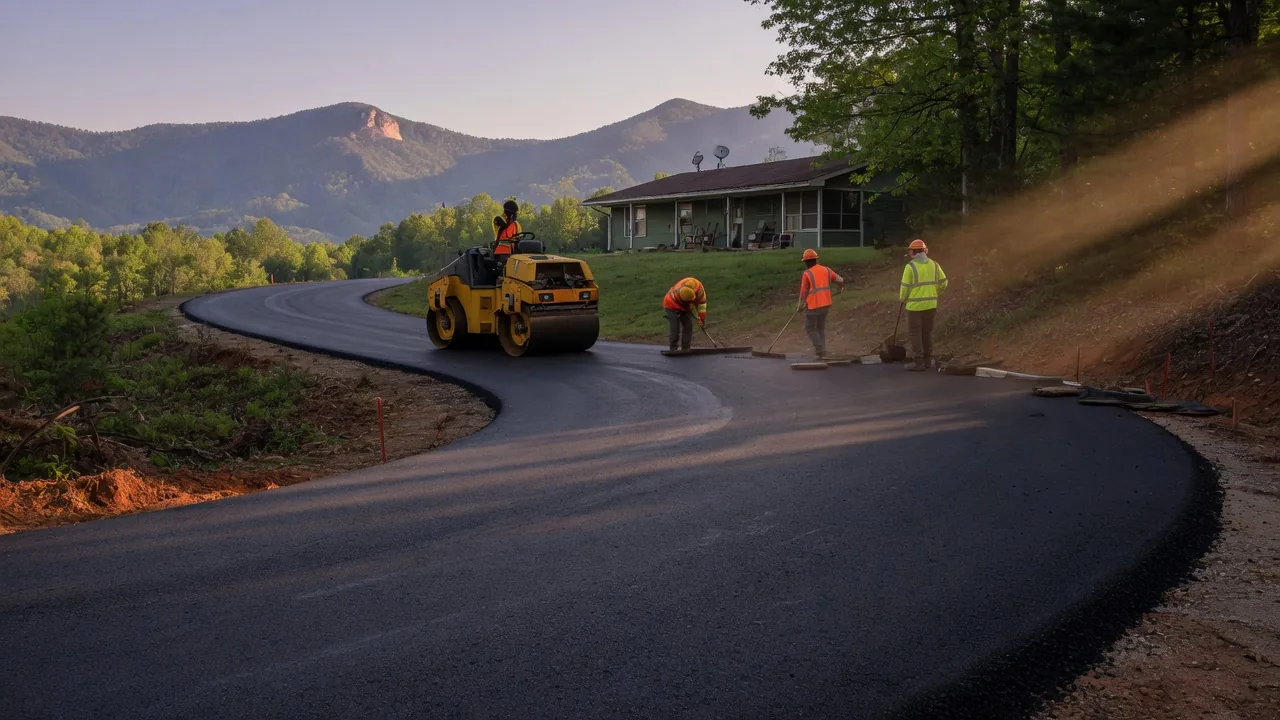
Drive an unlined driveway off a cut-and-fill road in Buncombe County and the pattern repeats: the middle of the asphalt is fine, and the outer six to eighteen inches have broken into chunks, slumped toward the ditch, or grown a fringe of weeds. The edge is the thinnest part of the asphalt section, it sits over the least-compacted soil, and it is the first place water arrives. On a slope lot the uphill edge gets runoff; on a roadside lot the road department's ditch sits below it and pulls the subgrade toward the low side over years of wet-dry cycling.
The practical question is not whether the edge is crumbling. It is whether the crumbling is cosmetic (surface asphalt raveling where it thinned past the aggregate base) or structural (the base and subgrade have lost bearing and the edge is falling away). The two cost vastly different amounts to fix, and the difference is usually visible in a ten-minute look at the shoulder, the ditch, and the nearest tree.
The line items that actually move the number
Asphalt driveway edge repair is priced like a small civil job, not like a paving job. Five line items drive the total:
1. Linear feet of edge. The single biggest multiplier. A forty-foot crushed edge on a culvert approach is a few hundred dollars. A two-hundred-foot failing edge on a long ridge driveway is a project.
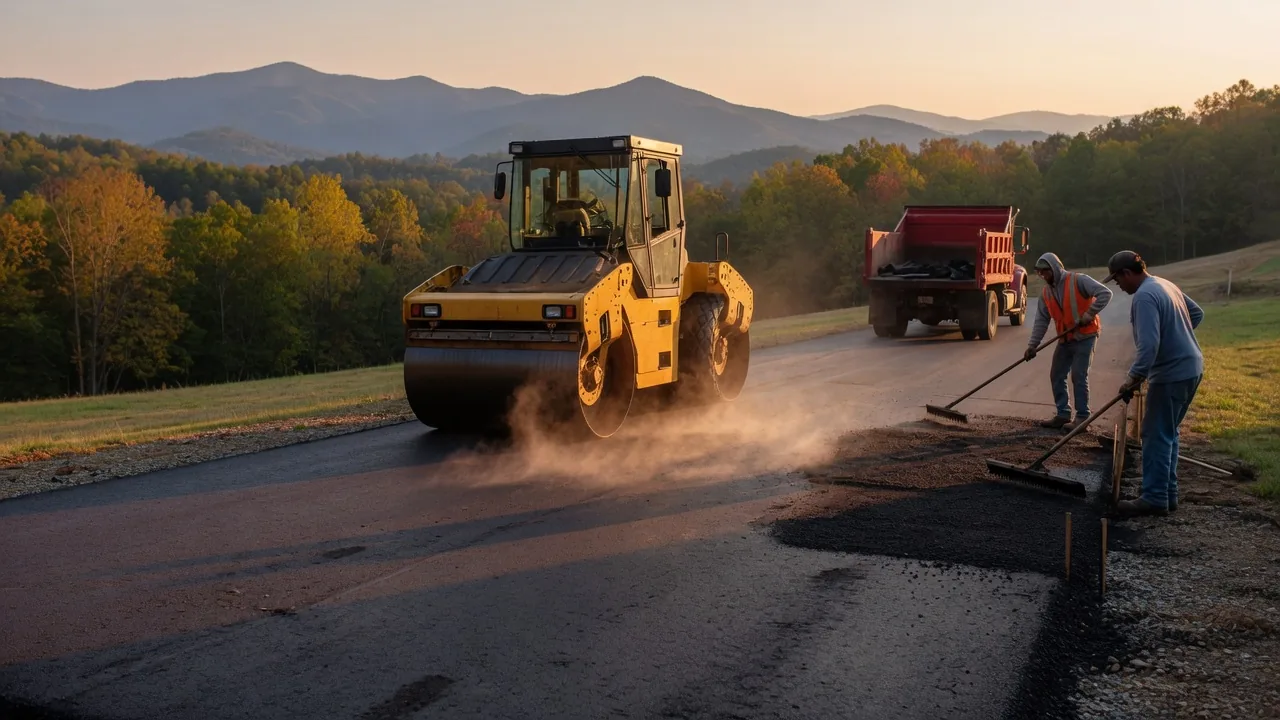
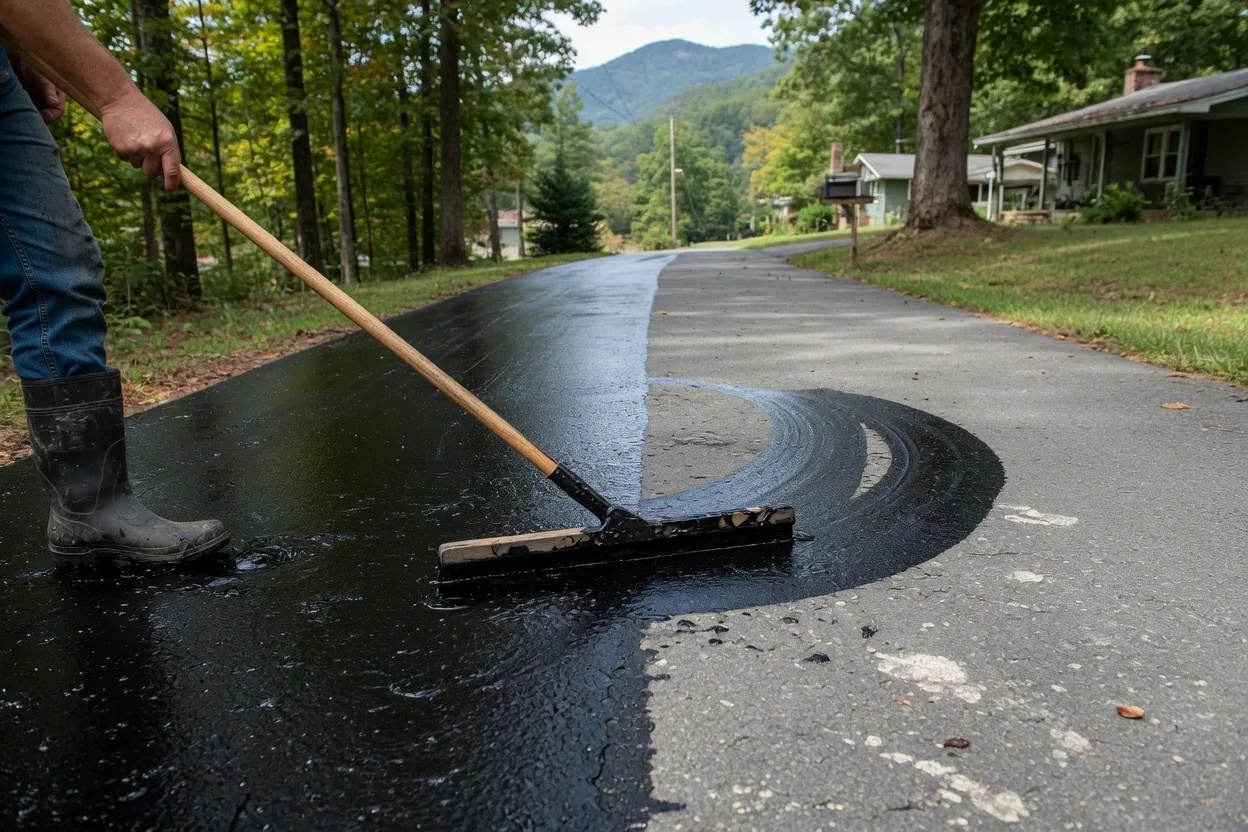
2. Depth of the failure — surface only, or base and subgrade. Surface repair is saw, clean, tack, and compact a new asphalt wedge. Subgrade repair adds excavation, haul-off of bad soil, and aggregate base imported and compacted in lifts per the NC Building Code Council's adopted residential provisions.
3. Drainage correction. If the cause is the ditch, the catch basin, or the missing shoulder, the edge repair alone is temporary. This is the most commonly skipped line item in cheap quotes.
4. Tree roots. Buncombe County's hardwoods lift edges on a schedule. Removal, root pruning, or a root barrier is a real cost, and it is not paving.
5. Access and haul. A steep driveway with no turnaround means small loads and a longer day. Steep-lot jobs above the parkway routinely carry this line item. Flatland quotes never show it.
If a bid has one number and no breakdown, treat it as an estimate of a different job. A proper scope separates the asphalt work from the dirt work, because the dirt work is the part that fails again if it is done badly.
What Buncombe County edge repair costs
These are working regional ranges for the county and the city of Asheville. They are bands, not quotes; the actual number depends on the linear feet and where the failure stops.
| Scope | Typical range | What is included |
|---|---|---|
| Edge-only surface repair (raveling, no slump) | $350-$900 | Saw cut, clean, tack, asphalt wedge, compact |
| Edge repair with shoulder rebuild | $900-$1,800 | Above plus aggregate shoulder and grading to drain |
| Base and subgrade repair at edge | $1,800-$4,200 | Excavation, base import, compacted lifts, then asphalt |
| Drainage correction (ditch, basin, or culvert) | $600-$3,500 | Regrade, riprap, pipe, or catch basin as needed |
| Full edge rebuild on long or steep driveway | $4,200-$9,000+ | Combined scope, access and haul priced in |
Two numbers to hold in your head. First, the repair cost is usually a fraction of the replacement cost — edge repair is worth doing before the failure walks inward. Second, the drainage line is the one that keeps the repair from being a subscription. See the asphalt repair cost breakdown for how these line items behave across repair types.
Storm water is the usual author of this damage
The federal disaster record for this county is overwhelmingly storm and flood family: 19 declared events across 1973-2026. Each one pushed water at driveways that were built for a drier assumption. Buncombe County's terrain concentrates that water — a road cut into a slope sends runoff to the downhill edge of every driveway it serves, and a driveway that was fine for a decade can start losing its edge in one wet season once the uphill grading changes.
The National Weather Service keeps the local precipitation record; the takeaway is that this is a wet county with steep ground, and an edge that cannot shed water will not hold. Before approving asphalt work, ask what happens to the water after the repair. If the answer is nothing, the repair is a patch.
Permits, licensing, and the driveway apron
If the crumbling edge is at the point where the driveway meets a public road, the work touches a NCDOT driveway permit condition. That is not a reason to avoid the repair; it is a reason to ask the contractor whether they have done apron work before and whether the repair will keep the apron draining to the ditch rather than onto the shoulder.
Hiring rules matter less than people think and more than people check. North Carolina's Licensing Board for General Contractors sets the threshold at which a project needs a licensed general contractor — paving and grading driveway work can fall under it depending on scope and value. Ask the question and get a real answer. If the job escalates from edge repair into a full replacement or a driveway extension, the licensing and permitting picture changes with it. And if the fix is really a repair rather than a rebuild, asphalt driveway repair is the correct scope to price.