The line items that actually move a Marshall driveway bill
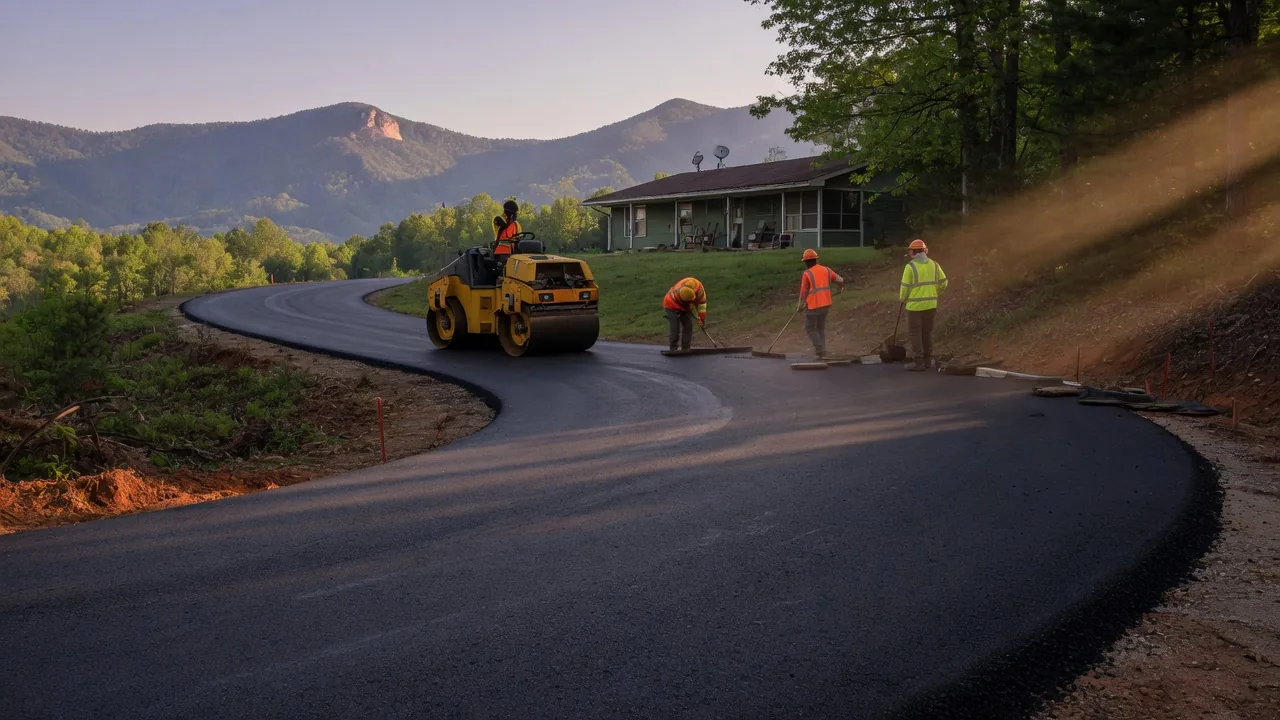
A quote for asphalt driveway repair in Marshall NC is rarely one number, and the number that surprises people is almost never the asphalt. It is the prep. On the valley floors along the French Broad and Walnut Creek, driveways sit on alluvial ground that stays soft well into spring; on the benches above, they sit on cut-and-fill pads where the outer edge of the drive is fill and the inner is original clay. Both fail at the edges first, and both require base correction before any new black goes down.
Here is how the line items stack up in this county. Treat these as working bands, not quotes — footage, access, and how far the truck has to back in change everything.
| Scope | Typical range | What drives it up |
|---|---|---|
| Crack filling (hot-pour or cold-pack) | $250–$600 | Total crack length, how deep they run, whether they're alligatoring |
| Patching / pothole repair | $600–$2,200 | Square footage, depth of failed base, machine vs. hand access |
| Edge rebuild + base correction | $900–$3,000 | Linear feet of failed edge, how much fill has to come out |
| Overlay (1.5–2 inch, fabric-reinforced) | $2,800–$7,500 | Square footage, fabric over cracks, tack coat, steep-grade paving |
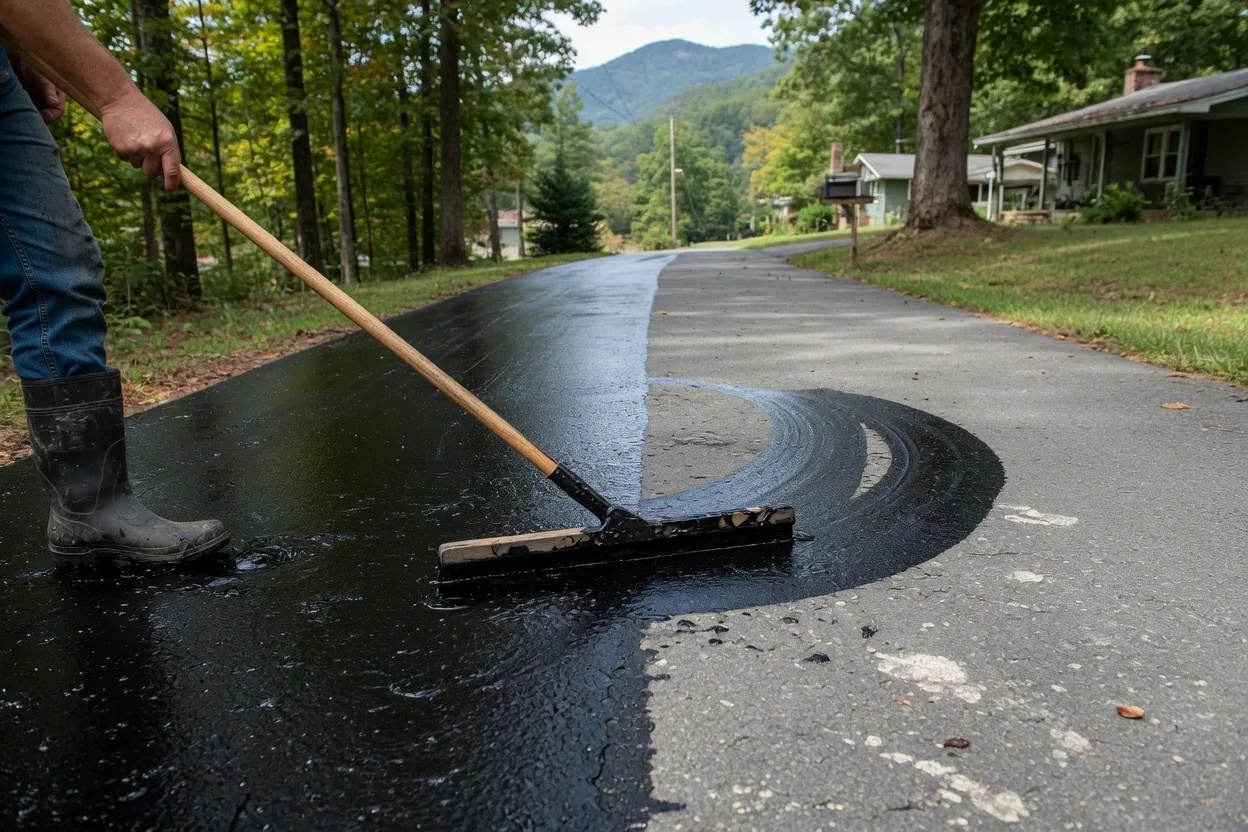
| Sealcoat (after repair, not instead of) | $0.20–$0.35/sq ft | Number of coats, oil spots that need primer, cure time before coating |
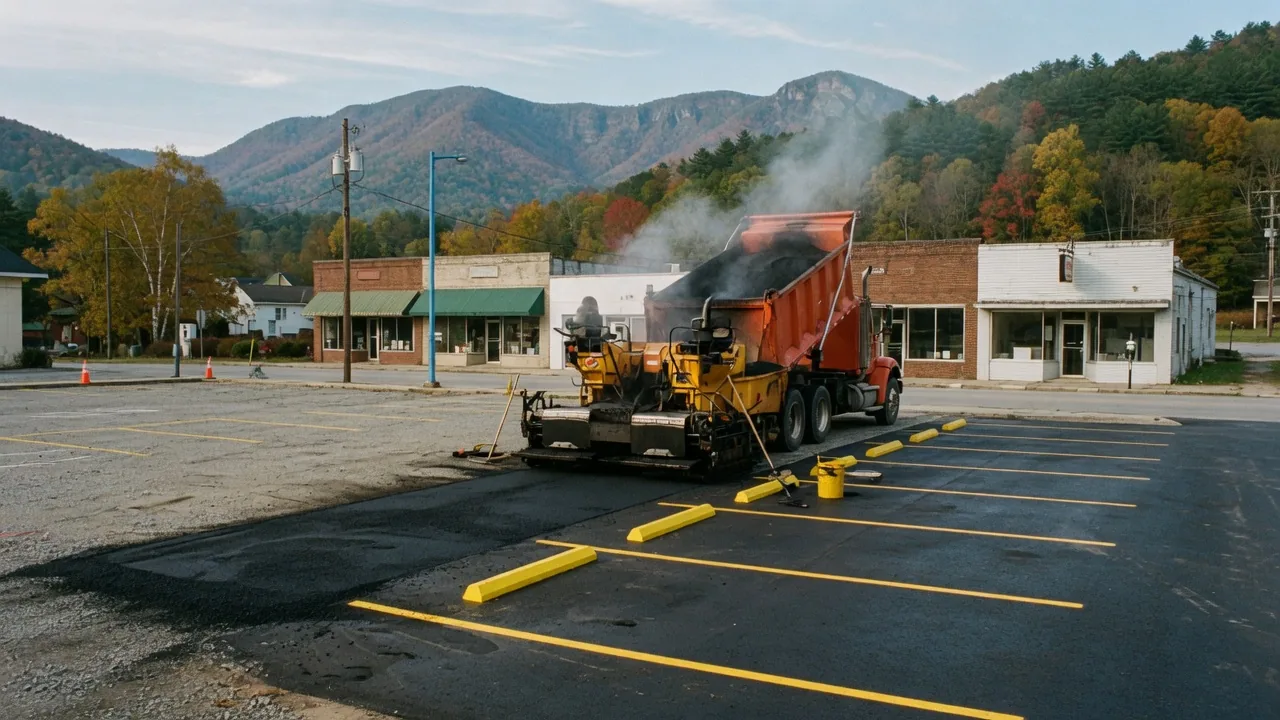
| Full removal and replacement | $4.50–$8.00/sq ft | Haul-off, stone base depth, culvert work at the road apron |
The Madison County cost breakdown expands these line items with the terrain notes that matter up here, and it is the page to read before you call anyone.
Why Madison County driveways fail from the bottom up
Most of the driveways in and around Marshall were cut into ground that does not drain like the flatland the paving manuals assume. Uphill runoff crosses the drive instead of running beside it. Downhill, the apron at the state road holds water against the asphalt because the culvert was sized for a smaller storm or has simply silted in. Once water sits at the edge, the base aggregate loses its interlock, and the asphalt above it cracks in a pattern that looks random but follows the soft spot.
The federal record backs this up: 21 declared events touch this county (1978-2026), and they are overwhelmingly storm and flood family. Every one of them pushed water at driveways built for a drier assumption. That is why any honest repair scope here starts with drainage — ditch, culvert, crowning, and where the uphill neighbor's water goes — before it talks about asphalt. The National Weather Service keeps the local precipitation record if you want to see how the patterns have shifted.
What the work itself looks like, step by step
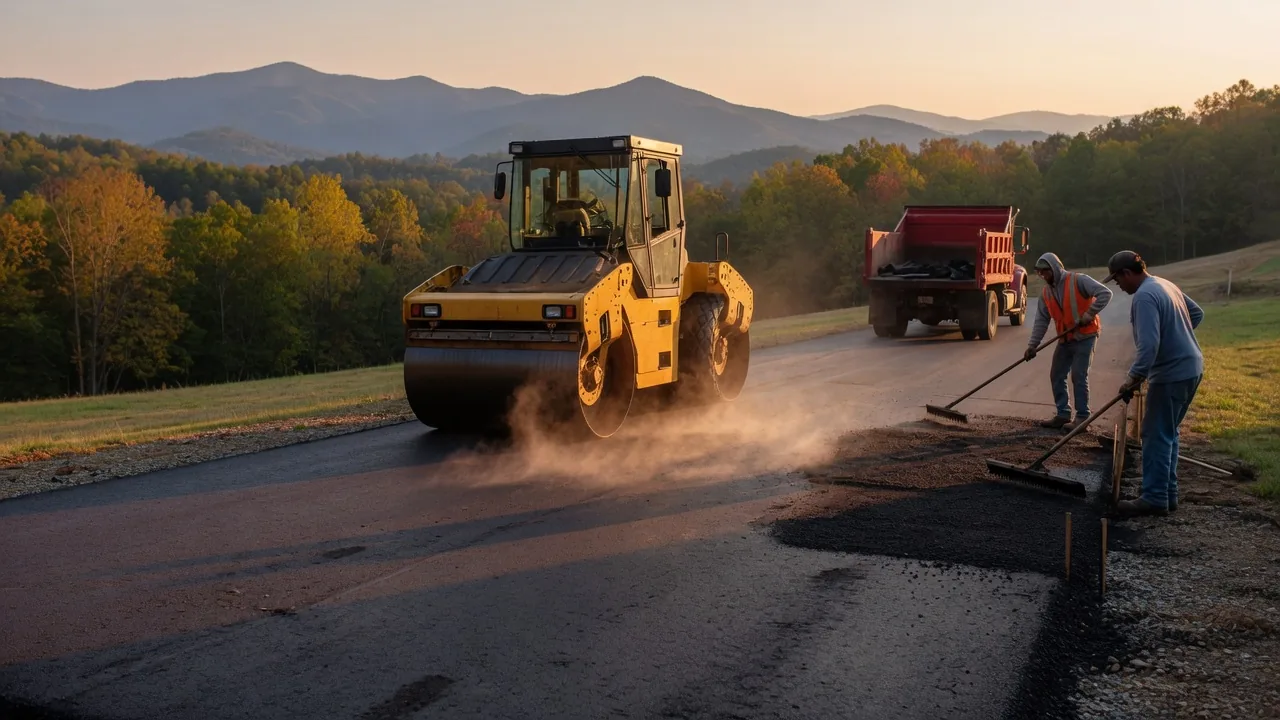
A proper repair visit is a sequence, not a product. First, the crew probes the failed areas to find how deep the soft ground goes — a patch over soft base is a patch that will be back next year. Second, they cut clean edges, because feathered asphalt fails. Third, they correct the base with compacted aggregate, then tack the existing surface so the new material actually bonds. Fourth, they place and compact the repair or overlay. Fifth, and most often skipped, they address the water that caused the failure in the first place.
For anything beyond a small patch, the state cares about how the drive meets the road. NCDOT controls driveway connections to state-maintained routes, and work that changes the apron or the culvert often needs a permit through NCDOT Connect before a crew breaks ground. Ask who pulls it. If the answer is vague, that is your answer.
Matching the fix to the failure (and the money)
Three failure patterns show up over and over here, and each has a different price shape.
Crack networks with good base underneath. The cheapest real fix: clean, fill, and seal. A few hundred dollars, done in an afternoon, buys several years if the water is managed.
Localized soft spots and potholes. These are patch or partial-depth repairs. Low thousands, and worth doing early because a pothole grows faster than a crack.
Widespread cracking and settled sections. This is overlay territory, or replacement if the base is gone. This is where the money goes, and this is where the drainage conversation stops being optional. The repair overview walks through which failure pattern maps to which scope.
One more thing specific to Marshall: grade. A lot of drives here climb at angles that make standard paving equipment work harder, slow the crew down, and occasionally require a smaller machine. Steep grade adds labor and sometimes equipment line items that a flat-lot quote would never show. A bid that ignores grade is a bid written for a different property.
Choosing a crew without getting sold a driveway you don't need
The single best filter here is whether the crew talks about water before they talk about asphalt. A crew that starts with drainage, base, and edges is diagnosing. A crew that starts with a price per square foot for a full replacement is selling. Both exist in this county.
For larger scopes, North Carolina sets a dollar threshold above which a project must be performed by a licensed general contractor — the NC Licensing Board for General Contractors publishes the current figure and the rules around it. Paving itself is a specialty trade, but the threshold matters on big removal-and-replace jobs that touch grading or drainage structures. When you're comparing bids, the contractor guide for Marshall covers the questions that separate a real scope from a sales pitch.