What Marshall driveways actually look like before asphalt goes down
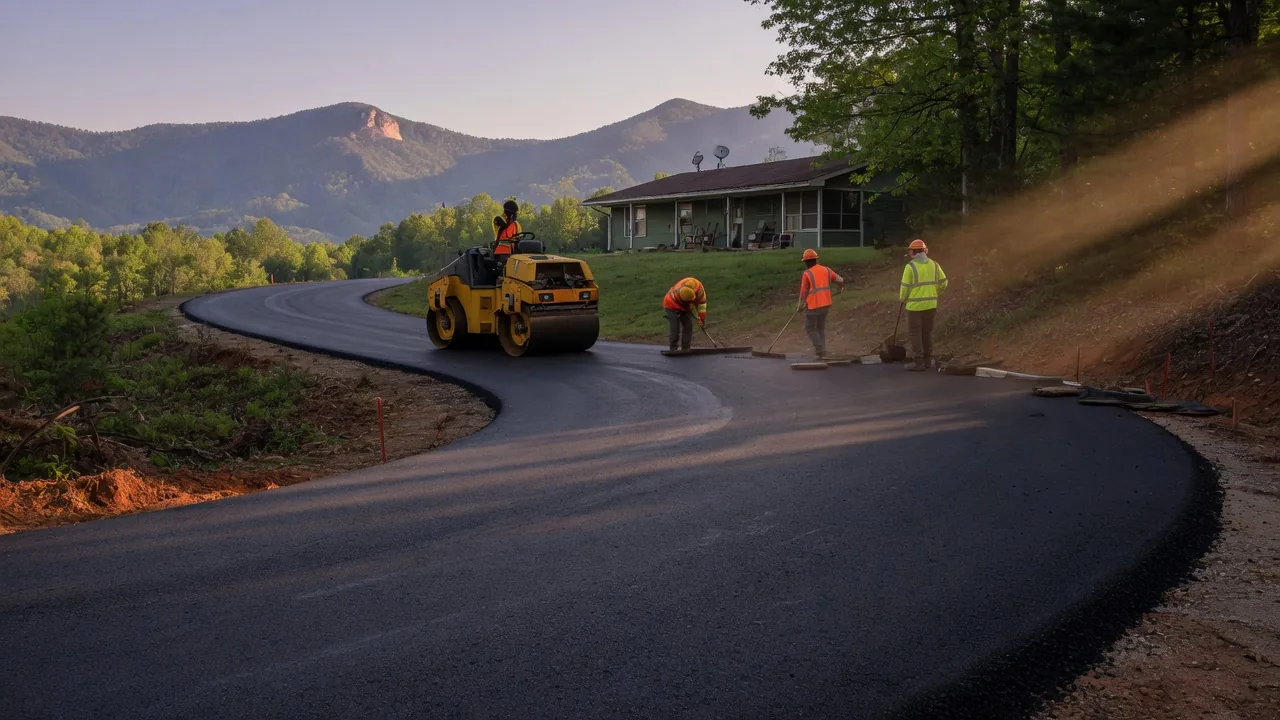
Marshall is a small town in Madison County, the county seat, and the driveways here reflect the terrain: long gravel runs off the French Broad valley, steep switchback approaches up the ridges, and a mix of older farm tracks and newer shared access roads serving a handful of homes. A typical Marshall gravel drive is not the short, straight apron you'd find on a city lot in Asheville. It is more likely 200 to 600 feet long, has at least one significant grade change, and has been re-graveled repeatedly instead of ever being properly crowned and drained. That pattern shows up on the wooded slopes above the river, off NC 25 and NC 70, and along the county roads that thread between them.
Because the terrain climbs away from the valley floor so quickly, driveway construction here shares more with mountain logging roads than with suburban pavement. Water moves fast on these grades, and a gravel drive that has never been shaped to shed it will show ruts, exposed rock, and washouts on the outside of every curve. Those conditions set the scope of a conversion before any asphalt is discussed.
That matters because the asphalt is the cheap part. Base correction on a rutted, cross-sloped mountain drive is where the money and the risk live, and it is the single biggest reason two neighbors on the same road can get quotes that differ by thousands of dollars. A stable, well-crowned gravel base that has been maintained can sometimes be overlaid after minimal prep. A drive that has been patched with loose gravel for a decade typically needs regrading, added crush stone, and new drainage before a single ton of asphalt is laid.
The housing character matters too. Much of Marshall is older housing stock and rural parcels rather than new subdivision builds, which means driveways here are often inherited from previous owners with no record of how the base was built. That uncertainty is normal on these jobs, and a crew that expects it will price the work more honestly than one that assumes a clean subgrade.
The honest cost picture for a Madison County conversion
The table below reflects typical regional bands for this scope. Treat them as ranges, not quotes. Every driveway gets measured, and on mountain grades the measurement is really about how much base correction and drainage work the slope demands.
| Scope | Typical price range |
|---|---|
| Base repair plus 1.5-inch asphalt overlay on existing stable base | $3,400-$5,800 |
| Full conversion: regrade, compacted crush base, 2-inch asphalt | $6,000-$9,500 |
| Long or steep drive (500 ft+) with cut, drainage, and turnouts | $9,500-$16,000+ |
| Added culvert, ditch, or drainage correction | $900-$3,200 |
A short, flat, well-drained gravel drive that ties into a paved road near town might land at the low end of the first row. A 600-foot ridge drive with a pair of switchbacks, an uphill ditch that dumps onto the surface, and no place for water to go at the bottom sits at the top of the third row, sometimes higher once a culvert is added.
The working numbers live on the Madison County cost breakdown, which spells out why slope and length move the price more than the mix design does. Slope is the multiplier here. A paved surface on a sustained grade has to resist both the weight of the vehicle and the shear of water running down it, and that pushes thickness, base depth, and compaction requirements up together.
Why grading and water decide the outcome more than the asphalt
Madison County storm history is the honest context here: 21 declared events touch this area over 1978-2026, and the pattern is heavy rain on steep ground. Water that sheets off a ridge and hits a gravel drive does one of two things on asphalt. It runs off cleanly if the crown and ditch are right, or it pools and undermines if they aren't. Uphill runoff is the number-one failure mode on converted mountain drives, and it is also the failure a homeowner often discovers only after the first big storm of the season.
Before any paving, the drainage question gets answered first: crown the surface, cut or clean the uphill ditch, and confirm where the water goes at the bottom. On Marshall grades the answer is usually a turnout to a vegetated slope, a culvert under the drive, or a lined ditch to a safe discharge point. Skip any of those and the asphalt acts like a roof, sending concentrated flow exactly where erosion is most likely.
The NC Office of State Fire Marshal code officials publish guidance on site drainage and access standards, and it is worth knowing that a driveway serving a residence is also the emergency access route. If a fire apparatus cannot make the grade and turn, the conversion is incomplete no matter how good the asphalt looks. On the narrow, winding drives that climb away from the river, turning radius and surface condition at the steepest pitch are the two things that decide whether emergency access actually works.
Asphalt mix and placement technique matter, of course. But in this terrain they are the last ten percent of the job. Get the grade and the water right and the pavement behaves; get them wrong and even premium mix fails within a few seasons.
Permits, licensing, and who should be doing this work
If your driveway meets a state-maintained road, and many Marshall drives tie into NC 25, NC 70, or NC 213, you need a driveway permit through NCDOT before altering the connection. The application process runs through NCDOT Connect, and touching the shoulder or sight distance without one is a real problem. Sight distance matters especially on the curves these highways take through the valley, where an entrance cut the wrong way can push a driveway apron into an area drivers cannot see.
General paving itself is not typically a licensed trade in North Carolina, but the NC Licensing Board for General Contractors sets the dollar threshold where larger site and grading packages require a licensed general contractor. If your quote includes significant excavation or structural retaining work, and many steep Marshall drives do, ask who holds the license and confirm it before signing. A conversion that becomes a small grading project stops being ordinary paving in the eyes of the state.
Other rules can apply depending on how close the work comes to a stream or the floodplain. The U.S. Environmental Protection Agency maintains resources on stormwater and erosion control that are a useful starting point if your drive crosses a drainage or runs along the river bottom. On these parcels, that's common, and a crew that works in the county regularly will already know to ask.
If you are still weighing whether the conversion makes sense at all, start with the gravel to asphalt overview for the tradeoffs, then talk to a crew.
Choosing the right crew on a mountain road
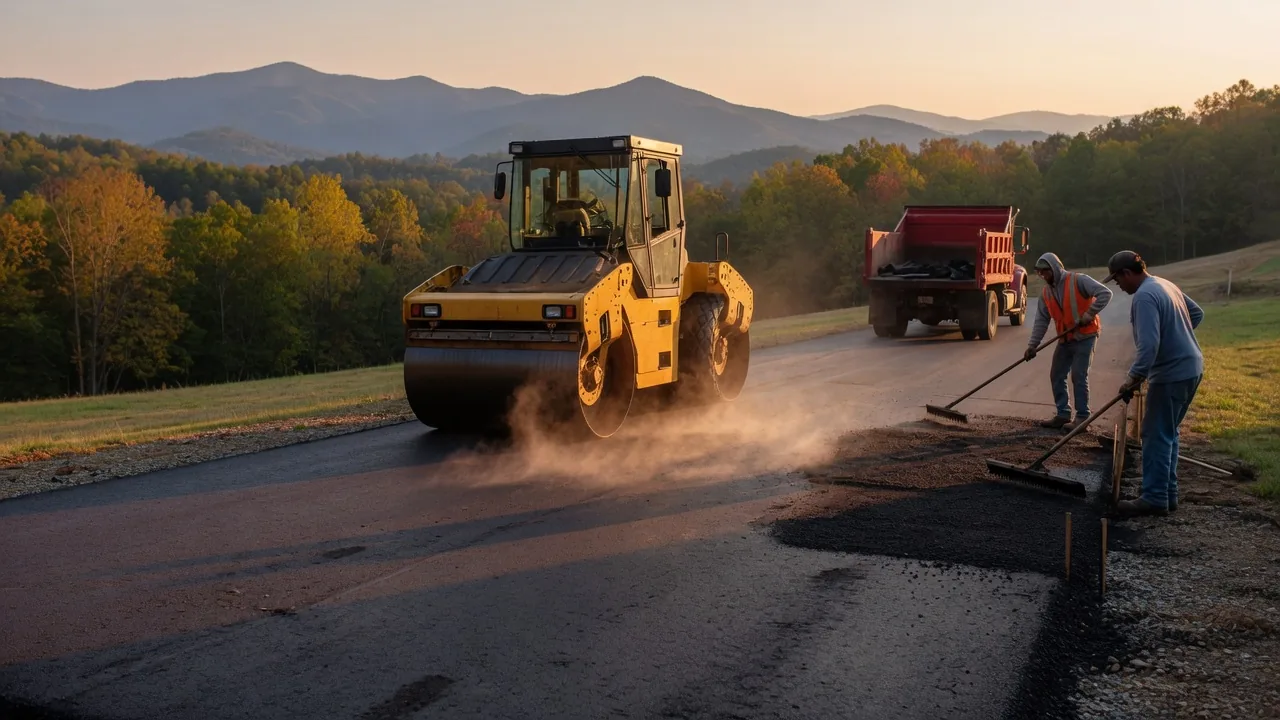
Three checks that actually matter in Marshall. First, ask whether they have run a roller on a sustained grade before. Compaction on a slope is a different skill than on a flat lot, and under-compacted base on a hill will rut within a season. Second, ask what they do when the subgrade turns out wet or soft, because on these drives it usually does, and how deep they go before paving is the tell. A crew that shrugs off the question is not one to hire. Third, ask for the drainage plan in writing, including where the uphill water goes and how the crown is shaped. The Marshall paving contractor list is the place to start, and any crew that skips the drainage conversation is skipping the part that fails first.
It also helps to walk the drive with the estimator and watch what they look at. A serious one reads the slope, finds the low spots, and traces the water. A crew that walks straight to the widest, flattest part of the drive and quotes from there is pricing the job they want, not the job you have. On a place like Marshall, where the terrain does most of the talking, that distinction is usually obvious within the first ten minutes.