The lanes that make Clyde its own paving market
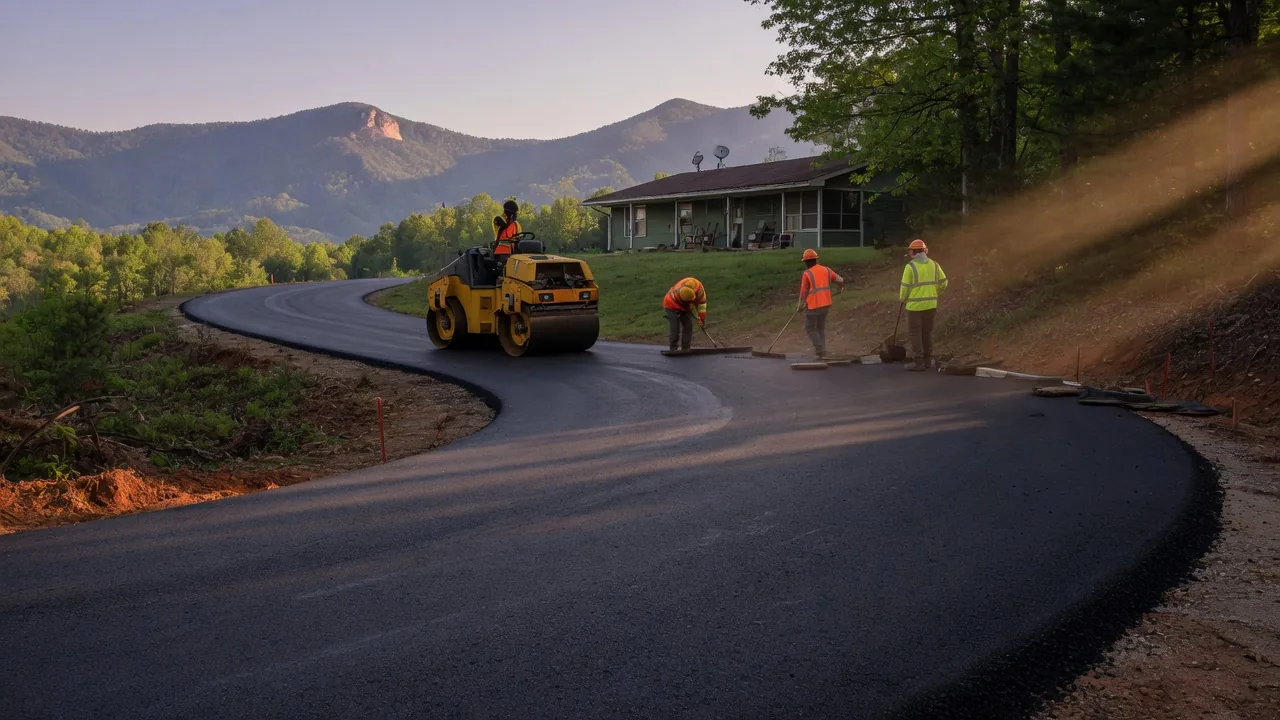
Clyde sits on the Haywood County valley floor where US 19 and the Pigeon River corridor meet, and the driveways here run long. Where a Waynesville lot near Main Street might give you 40 feet of asphalt, a Clyde property off a rural road often carries 150 to 400 feet of lane from the mailbox to the house, and a good share of those lanes climb. That length changes everything about a paving estimate: more tons of mix, more base stone, more edge, more equipment time, and trucking that has to reach a site the crew can't just back into from a curb.
The other Clyde pattern is age. A lot of these lanes started as gravel and got a chip-seal or thin hot-mix cap decades ago. What looks like a paved driveway from the road is often a failing surface over a base that was never built for asphalt in the first place. Any contractor who quotes that as a simple overlay without probing the base is quoting a job that will crack within a couple of winters.
Drive through the Crabtree and Hyatt Creek communities and you're looking at a different kind of paving than anything inside Asheville's city limits. Subdivisions here tend to be surveyed off larger parent tracts, so driveway easements run across old field edges, and the transition from the road apron to the lane is often shorter radius with a sharper grade change. That apron is where water gets in first. A Clyde lane that gets no attention there will show edge cracking a season or two before the mid-lane surface even shows wear. The other thing locals know is that these lanes share the calendar with hay season, brush clearing, and the wet stretches that run through the valley — the paving window is real, and a crew who knows the town schedules around it rather than fighting it.
What the work actually involves on a Clyde lane
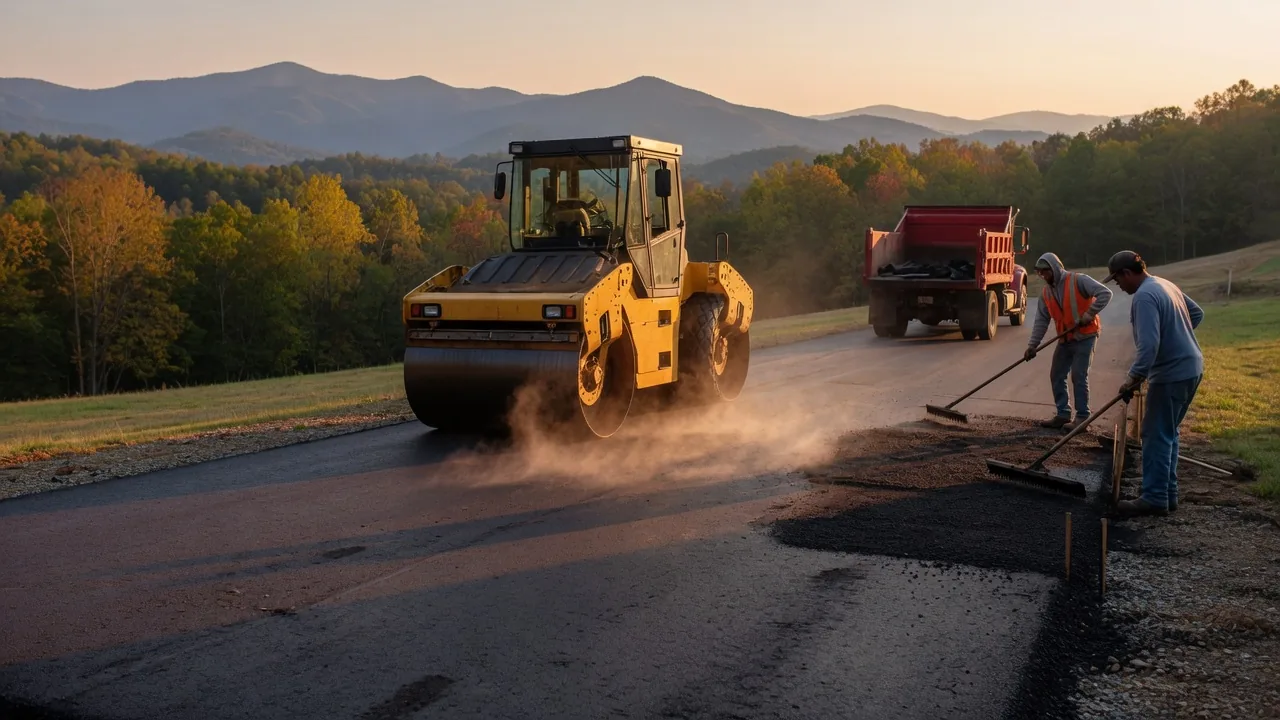
A real scope on a long sloped driveway has stages, and skipping one shows up later as a pothole or a washout. The typical sequence: probe the existing base, cut and remove failed sections, re-grade and compact, add and compact crushed stone where the base is thin, then lay hot-mix asphalt in one or two lifts depending on thickness, and finally compact the mat and dress the edges. On a slope, water management is part of paving — a crown, a proper cross-slope, and a drainage path that carries runoff off the lane instead of down the middle of it.
Thickness matters more than most homeowners realize. A car-only lane and a lane that sees a loaded pickup and a trailer are not the same asphalt spec, and the quote should say which one you're getting. If a contractor won't put thickness and base depth in writing, the price is a guess.
Probing the base is where the honest work gets separated from the fast quote. On Clyde lanes, the usual field test is a shovel-and-pry check at a few points along the run, looking for soft spots, buried organic matter, and how much stone sits under the old surface. Two hundred feet of lane can look identical from the wheel and divide cleanly into a third that's fine, a third that needs a patch, and a third that needs a rebuild down to mineral soil. The estimate should reflect that, not an average across the whole thing.
On a slope over about 8 percent, a paved lane no longer holds itself in place. Water has to be intercepted above the pavement, moved along the edge in a defined swale or shoulder ditch, and released below the drive without cutting a gully. Clyde properties off the ridge roads frequently need some version of that work, and it's cheaper to build it into the paving scope than to repair the erosion afterward.
Clyde and Haywood County paving cost table
These are working regional ranges for Haywood County, not a quote. Length, slope, base condition, and access are the price movers — expect a long Clyde lane to sit at the upper end of any band.
| Scope | Typical range | What drives it |
|---|---|---|
| Gravel driveway grading and re-stoning | $800–$3,000 | Length, culvert work, how far stone has to be trucked in |
| Asphalt overlay on sound base | $3,200–$6,500 | Square footage, thickness, edge prep |
| New asphalt over prepared base | $4,500–$9,800 | Base build-up, slope, drainage, lift count |
| Full tear-out and rebuild | $9,000–$20,000+ | Removal tonnage, base replacement, long runs |
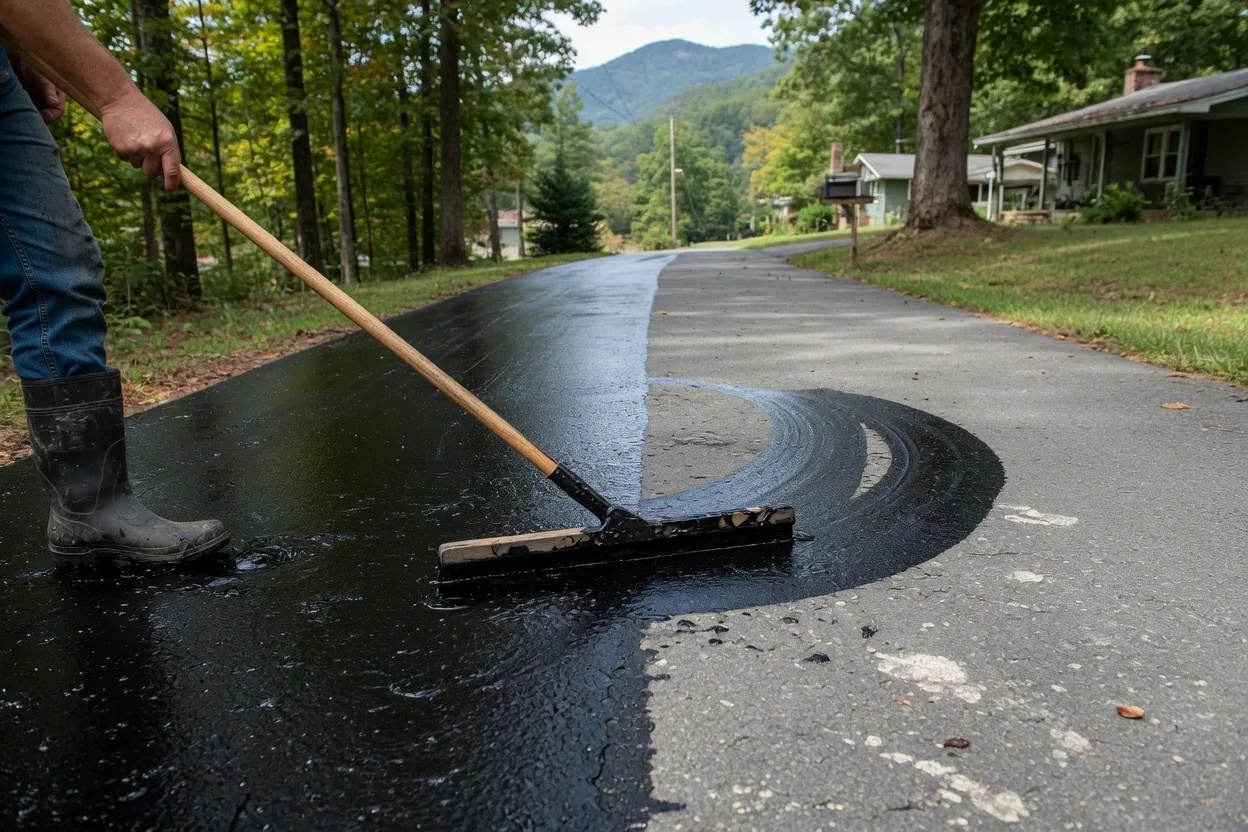
| Crack fill and sealcoat | $350–$1,500 | Linear feet, number of cracks, prep |
See the Haywood County asphalt driveway cost breakdown for how these bands get built up line by line. Farther up the ridges off the valley floor, where lanes cross drainage and need the most base correction, expect the upper half of the rebuild band rather than the midpoint. On the flatter agricultural parcels closer to town, where lanes were graded straight and stayed high, the lower end of the overlay or new-pave bands is realistic.
Permits, access, and where the rules bite
If your lane meets a state-maintained road, the driveway connection is an NCDOT matter, and the permit applies whether you're repaving or rebuilding the apron — see NCDOT Connect for driveway permit applications. Culverts under the driveway, which many Clyde lanes have, fall into the same access conversation. For the asphalt work itself, North Carolina's general contractor licensing rules kick in at project thresholds, so for a larger commercial or full-site paving job the NC Licensing Board for General Contractors is where you verify who you're hiring. Stormwater runoff that leaves your property and enters a stream or ditch is worth thinking through before you pave, since paved area sends water faster than gravel did.
Properties that touch the Pigeon River corridor or its feeder streams run into that runoff question directly, and the honest way to handle it is to design the water path before the asphalt goes down. On larger or more complicated sites, that means the same rulebook the EPA sets out for stormwater applies at the local level. For a driveway, the practical version is: know where the water went before, and make sure it has somewhere to go after.
One more local wrinkle: if the driveway crosses an easement shared with a neighbor, the paving scope and any culvert work have to respect it, and that conversation is best had before a crew mobilizes, not after the grade is cut.
Matching the crew to the driveway
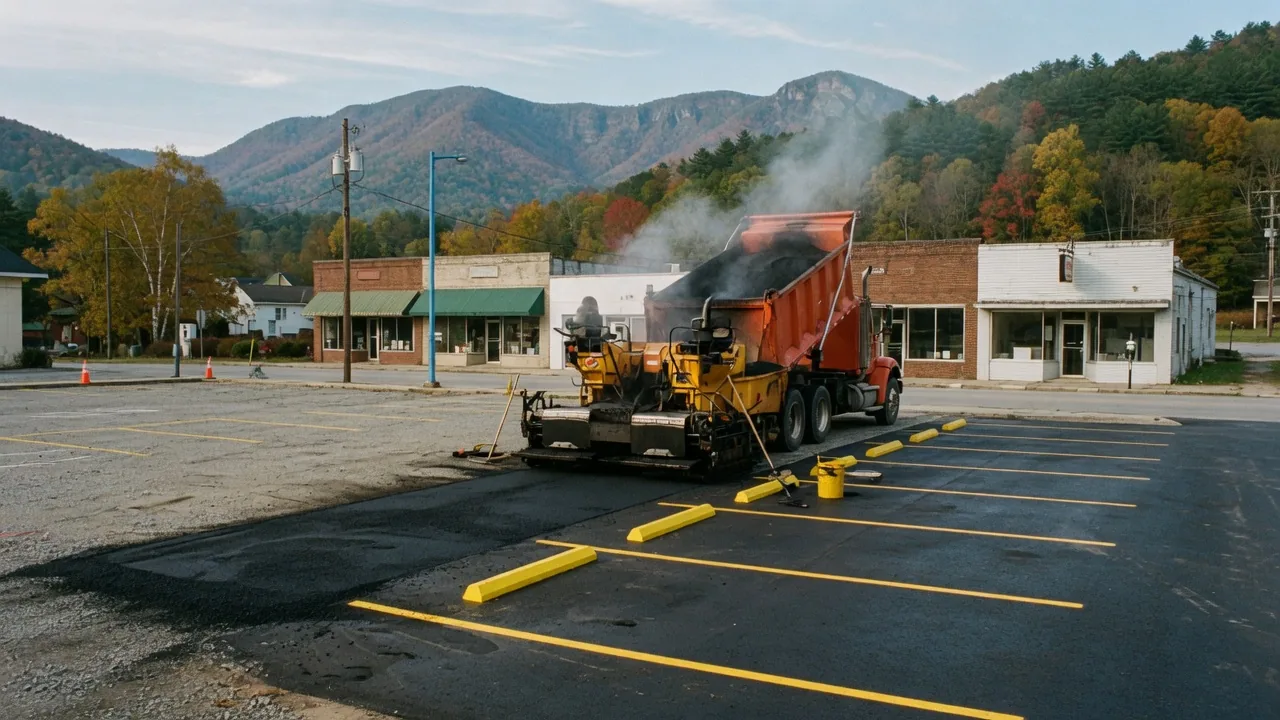
The questions that separate a Clyde-competent crew from a flat-lot crew: Have you paved long sloped lanes on this side of the county? What thickness and base depth are in my quote, in writing? How do you handle water on a grade? And do you have NCDOT access experience if my lane meets a state road? A contractor who can answer those without hesitating has done this work here. When you're comparing bids, start with the asphalt paving overview so you know what a complete scope includes, and see the Clyde driveway paving page for the local specifics on this town's lanes.
Timing matters too. Asphalt needs warm, dry conditions to lay and compact properly, and Haywood County's paving season runs roughly from spring into fall. A crew booking out weeks ahead in summer is normal, and a quote that promises next-week paving in the middle of a wet stretch should raise a question about whether the base will be dry enough to pave over.
Weather history is part of why Clyde lanes get paved the way they do. The county has seen 19 federal disaster declarations across a record span of 1973-2026, and the pattern that shows up in mountain water events is saturated ground and fast runoff. A driveway built without that in mind will find out in the next wet cycle. The locals who have rebuilt after those events tend to ask tougher questions the second time, and that's fair.
Ask a contractor what a proper departure looks like: a clean compacted edge, no standing water on the finished mat, thickness verified at a core or by tonnage math, and a walkthrough after the work cures. That list is short but it separates a lane you'll be patching in three years from one you won't touch for fifteen.