The line items that actually move a Mills River paving number
Two driveways on the same road in Mills River can price 40 percent apart, and it is almost never the asphalt itself. The number lives in four places: how much graded stone has to go down before anything black shows up, how far the trucks run from the Henderson County plants to your gate, what mix design the job demands, and how much of the old surface has to be milled out or torn to grade.
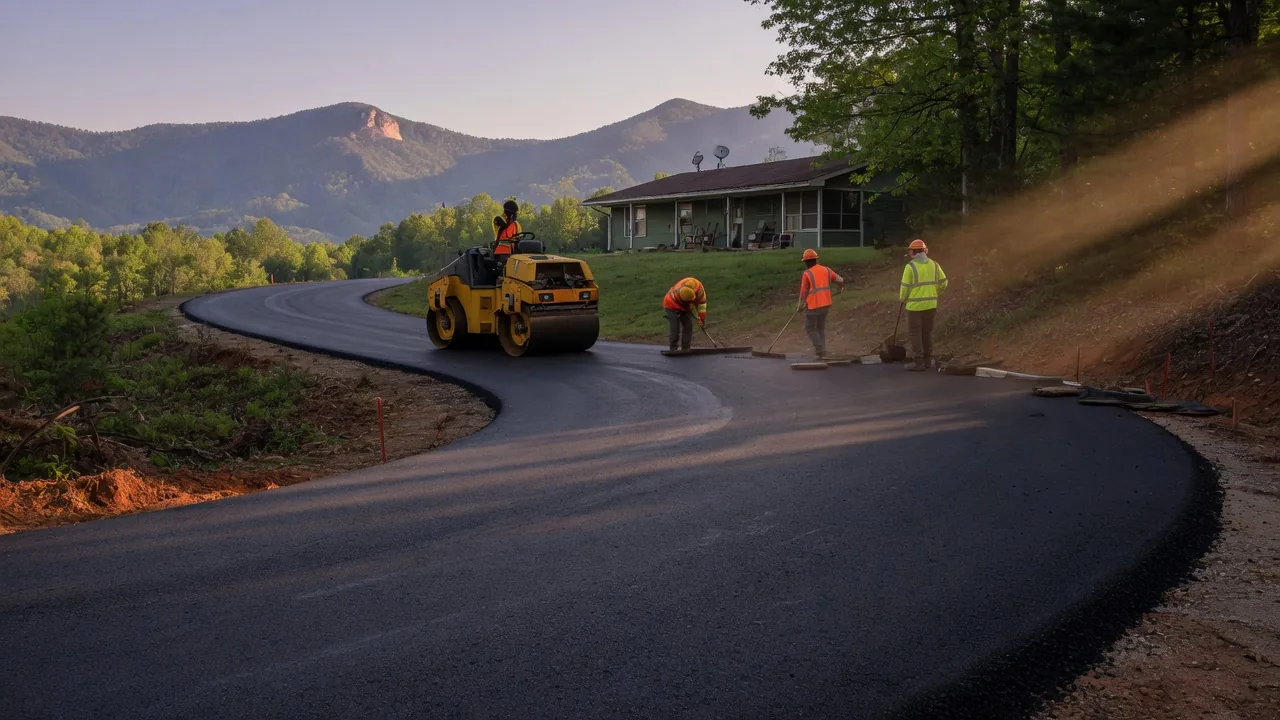
Mills River sits in a band of the county where real working ground — horse pasture, orchard rows, equipment yards — meets steep cut-in residential lots off the ridge roads. A short, flat, new-build drive off a paved subdivision street is the easy case. A quarter-mile farm lane that has to carry a loaded horse trailer or a hay truck is a different animal: thicker base, wider turn radii, and a drainage plan for the uphill side. That is where the money goes, and a bid that skips those items is not cheaper — it is incomplete.
Walk a handful of properties around the Hooper Lane and North Mills River Road areas and the pattern repeats. A modest ranch drive with a two-car apron prices close to what the square footage suggests. A knoll-top homesite with a serpentine approach prices well above it, because every curve and every degree of grade adds stone, adds compaction passes, and adds edge work that a straight run never needs. The asphalt tonnage is often the smallest variable in the two quotes.
Stone is the quiet budget line. A driveway that looks flat to the eye may still need a crowned grade, a swale along one side, or a culvert at the ditch line, and each of those moves cubic yards of borrow and crusher run before the first roller ever touches the job. On the sloped lots common toward the Pisgah ridgeline, that prep can represent half the quote. Homeowners who compare two bids that differ by thousands are usually comparing two different base specifications, not two prices for the same work.
What the scope-vs-price picture looks like in Henderson County
Use this as a working table, not a quote. Local conditions, access, and season move every row. The Henderson County cost breakdown carries the long version, and the asphalt paving overview covers method and materials.
| Scope | Typical Range | What drives it |
|---|---|---|
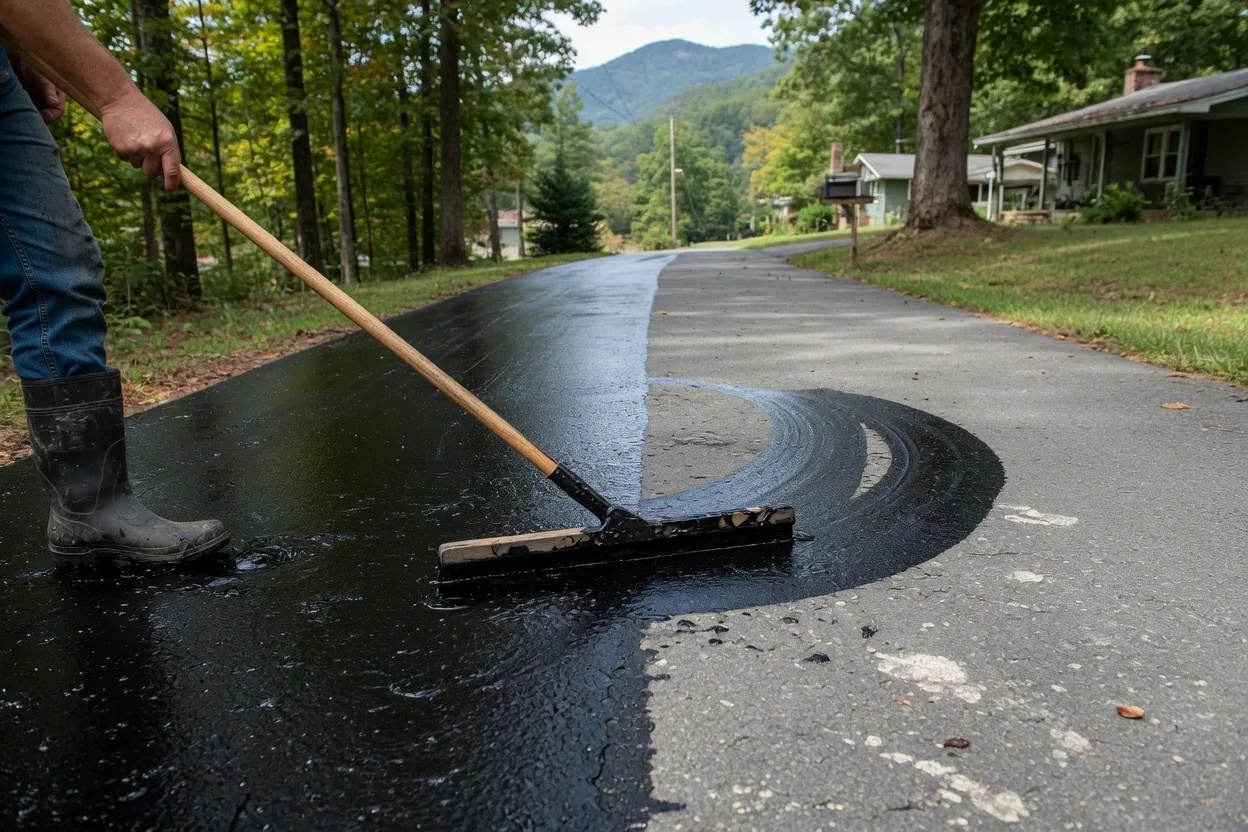
| Patch and seal, existing drive | $400–$1,800 | Crack length, alligator areas, prep |
| Overlay on sound base, short residential drive | $3,800–$7,500 | Tonnage, leveling course, apron ties |
| Full removal and replacement, residential | $7,500–$16,000 | Haul-off, new base depth, compaction |
| Farm lane or long private drive | $2.50–$4.50/sq ft | Base thickness, slope, drainage, width |
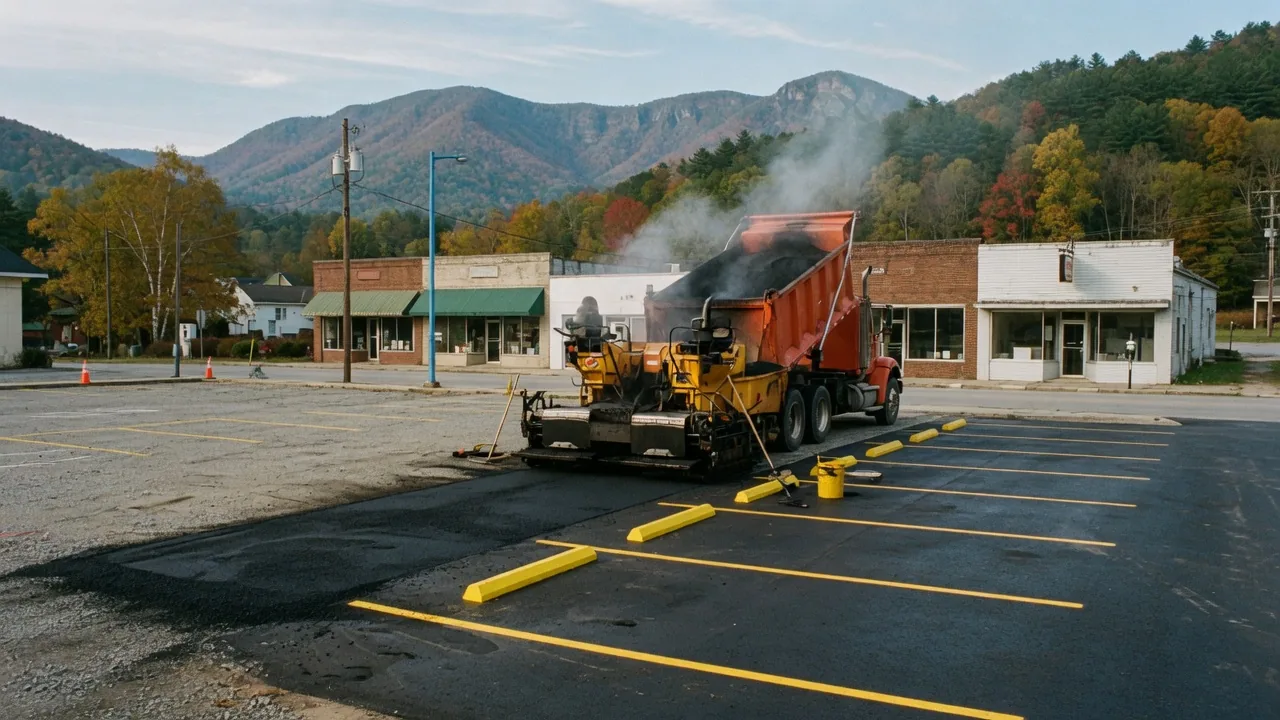
| Commercial lot or parking area | $3.00–$5.00/sq ft | Mix design, striping, curb, ADA limits |
Read the table by matching your job to a row, then adjusting for the variables in the right-hand column. A tack-and-overlay on a sound 1,000-square-foot drive is a straightforward number. The same square footage on a soft base with a failing apron is not, because the tear-out and the stone underneath are doing the pricing, not the surface area. Mills River jobs also carry a haul-off cost that flatland jobs often avoid: broken asphalt and excess spoil have to leave the site, and on a narrow ridge-road driveway that means smaller loads and more trips.
Season moves the table too. A scope bid in the cool, dry weeks works with predictable compaction. The same scope squeezed into a wet stretch means the crew waits on the base to dry, and schedule pressure can nudge the number. None of this is arbitrary; it is the honest arithmetic of a mountain-county paving season.
Why the mountain yard and the flatland yard are not the same job
Henderson County sits in a freeze-thaw band that punishes thin asphalt. Water gets into a marginal base, freezes, heaves, and the crack opens wider every spring. The federal disaster record backs the pattern: 16 declared events touch this county across 1978-2026, overwhelmingly storm and flood family. Every one of those events pushed water at driveways and access roads that were built for a drier assumption. The International Code Council standards treat subgrade drainage and compaction as first-class requirements for exactly this reason.
Practically, that means the base depth and the grading plan are not upsells. On a Mills River lane, water running off the pasture or the uphill neighbor has to be moved before it reaches the asphalt edge. Skip that and the paving budget turns into a repeat paving budget.
Temperature swing is the other mountain tax. A placement made in a warm afternoon can meet a cold overnight while the mat is still curing, and a mix that was designed for milder conditions can go brittle. That is why the specified mix design matters more here than it does a hundred miles east. A contractor who works these ridges regularly knows which mixes hold up through a Henderson County winter and which ones look fine until the first hard freeze. Ask the question directly and see whether the answer is specific.
Haul distance, plant mix, and why the schedule is tight
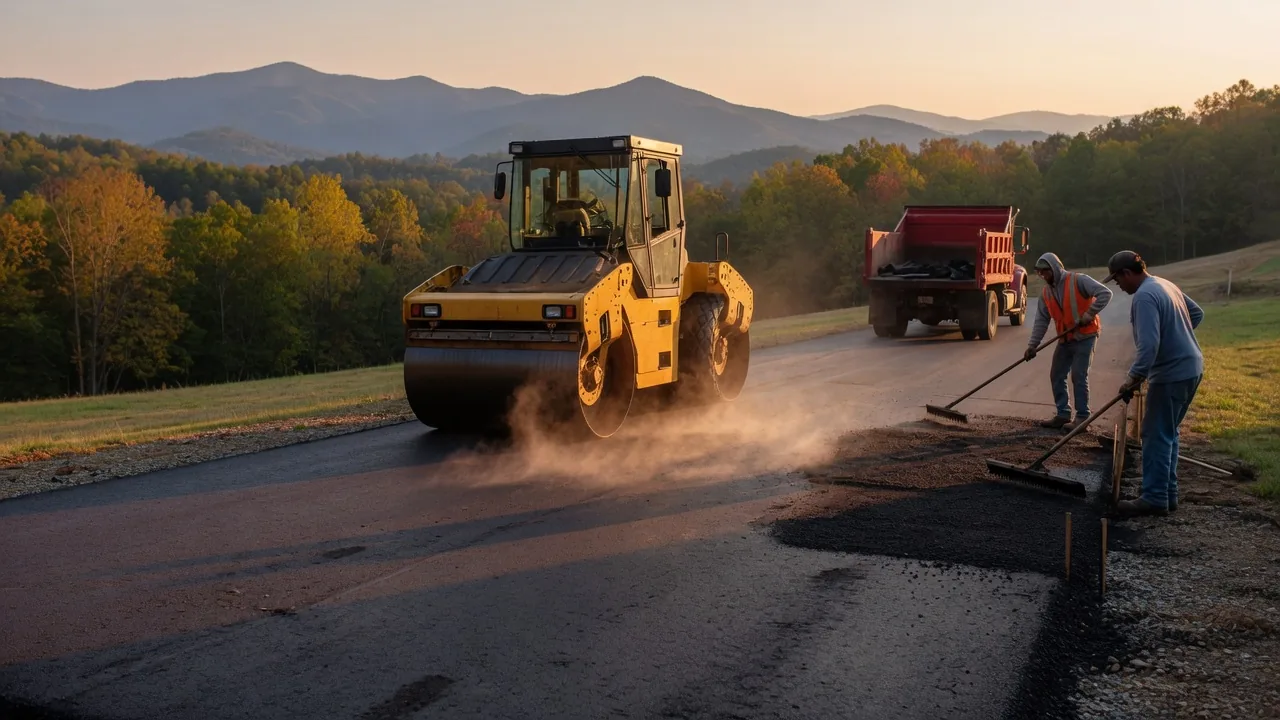
Asphalt is a perishable product. It leaves the plant hot, and the window to place and compact it is measured in minutes, not hours. That reality quietly shapes every Mills River bid. A crew working near the county line may run a longer haul than one working off the main corridors, and every extra minute of drive time is a load the crew has to manage around. The practical answer on bigger jobs is a staged schedule with the trucks running a tight loop — and a homeowner who understands the paving day is not flexible once the first load shows up.
Mix design also matters here. A mix that behaves on a hot Piedmont lot can get brittle through a Henderson County winter. Ask what mix is specified, and why.
Access is the other half of the haul story. A wide commercial apron lets a dump truck turn and back cleanly. A narrow residential drive with a rock wall at the road and a dogwood at the corner may require the crew to hand-work edges the machine cannot reach, and that labor shows up in the bid. The plants themselves serve a wide radius, so a job on the far side of the county can carry a haul premium a job near the plant does not. A scope written without a plant reference or a haul assumption is a scope with a hidden variable.
Permits, right-of-way, and the driveway apron
Most driveway work inside private property in Mills River does not need a county permit. The moment the work touches a state-maintained road or its shoulder, the rules change. Any new or modified driveway connection to an NCDOT-maintained road requires a driveway permit, and the application runs through NCDOT Connect — the state road access rules live at NCDOT. Get that settled before the crew mobilizes; a blocked apron turns a two-day job into a two-week one.
For larger paving contracts, the state licensing threshold is worth knowing: the North Carolina Licensing Board for General Contractors sets when a project needs a licensed general contractor, and commercial and multi-lot paving frequently crosses it. Residential driveway work usually does not, but a paving contractor working under a general contractor on a commercial site should be able to say who is carrying the license.
The apron detail trips up more homeowners than anything else. The transition from the road edge to the private drive has to match grade, shed water away from the pavement, and satisfy the access rules for the road class. A driveway that meets the shoulder at the wrong pitch will hold water at the mouth, and that standing water finds its way under the mat. On the corridor roads running through Mills River, the apron is often the first thing that fails and the first thing a sharp inspector asks about.
Getting a bid that holds up
Ask for the line items, not a lump number: square footage, base depth and stone type, asphalt thickness, mix design, compaction method, and how edges and apron ties are handled. Ask whether the old surface is being removed or overlaid, and what the base inspection showed. Then get the tear-out and drainage scope in writing. A binder-rich quote without a base spec is a quote for a driveway that fails in five years.
It also helps to walk the job with the estimator and ask what he sees. On a Mills River property, the honest conversation covers where the water comes from, how the grade drains, and what the soil does when it is wet. A bidder who can point at the uphill swale and explain how it will be handled is reading the site, not just measuring it. That is the difference between a number and a plan.
The Mills River driveway paving guide walks through the walkthrough itself, so the first visit produces an actual scope instead of a sales pitch.