Why Flat Rock lots age differently than Asheville's
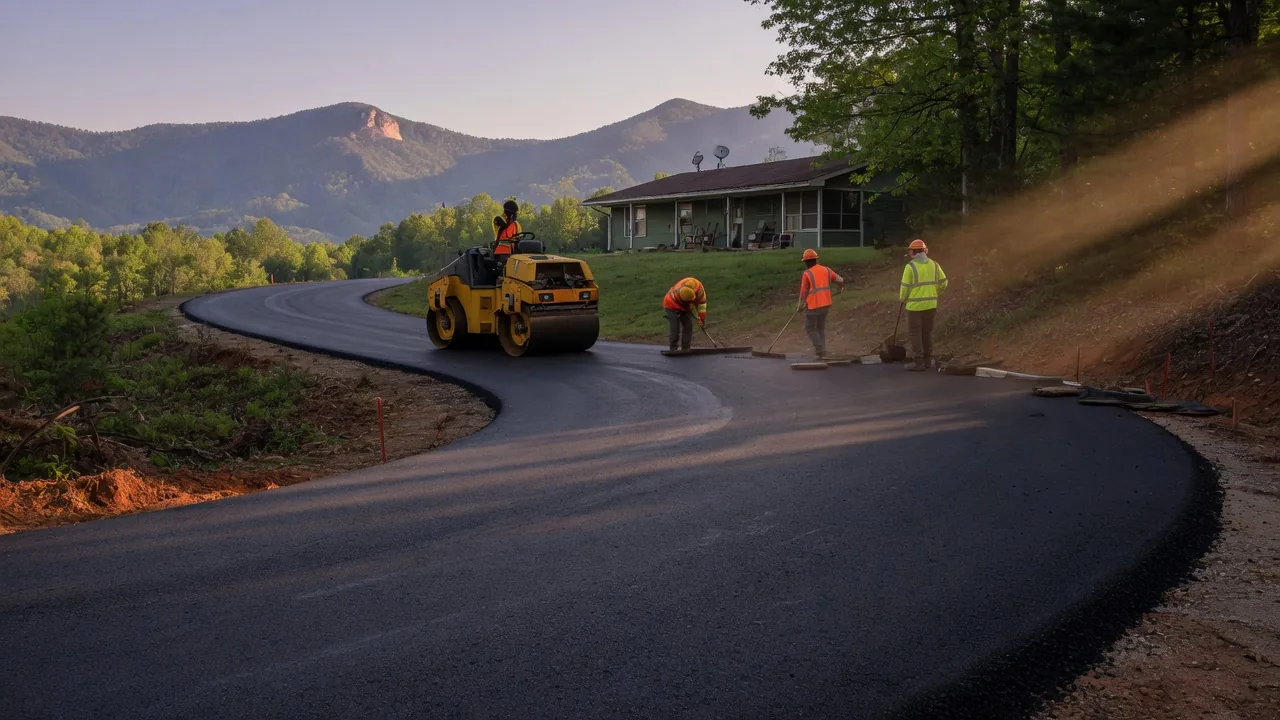
Flat Rock is a village of long driveways. Where an Asheville lot off Merrimon might be 30 feet from door to street, plenty of properties here sit 150 to 400 feet back, often climbing or dropping 20 to 40 feet along the way, and the parking area is really just the widest part of that drive. That single fact changes the work. Water has more runway to pick up speed before it hits the pad, tree canopy is heavier, and the pavement carries the weight of every delivery truck that has to reach the house.
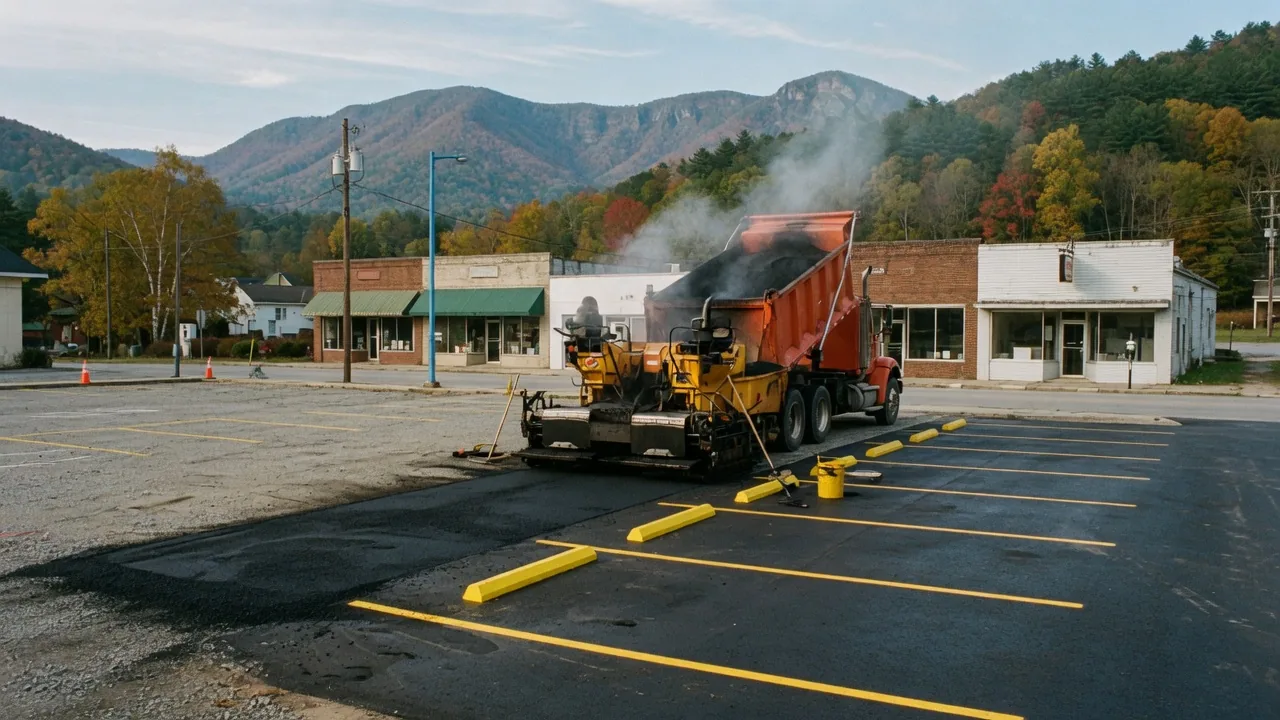
The housing stock follows suit: estate lots and older cottages near the Carl Sandburg home side, subdivisions like Kenmure and up around Pinnacle Mountain Road with long shared aprons, and commercial pads along Greenville Highway that were paved decades ago and have been patched ever since. Pavement failure here is usually not a traffic problem. It is a drainage and root problem wearing a pavement costume.
Compare that to a flat commercial parcel in Hendersonville proper, where the lot is graded at maybe two percent and the whole surface drains to a couple of curb inlets. On a Flat Rock drive, the same square footage might carry six or eight percent fall, and the water is still moving when it reaches the bottom pad. That is why a lot here can look fine at the top and be a spiderweb of alligator cracking at the bottom, where the sheet flow slows and soaks in at the edge of the mat.
Tree canopy is the second local signature. Tulip poplar, white oak, and hemlock shade a lot of these lots through the growing season, which sounds nice until you notice what it does to the pavement. Shade holds moisture on the surface longer after a rain, so oxidation and crack formation run differently than on a sun-baked lot. Roots from mature trees push up asphalt from below, especially where the drive was cut close to a trunk to save grading. A crack that looks like a random zigzag often traces back to a root lifting one side of the slab.
What actually needs to happen to your lot
Three tiers of work, priced in the table below. The honest question is not which is cheapest but which one your base can support. A lot with alligator cracking across the wheel paths is a base failure and no amount of sealcoat will hold it. A lot with a few linear cracks and faded surface is a maintenance job and an overlay would be overkill.
| Scope | What it covers | Typical range (Flat Rock lots) |
|---|---|---|
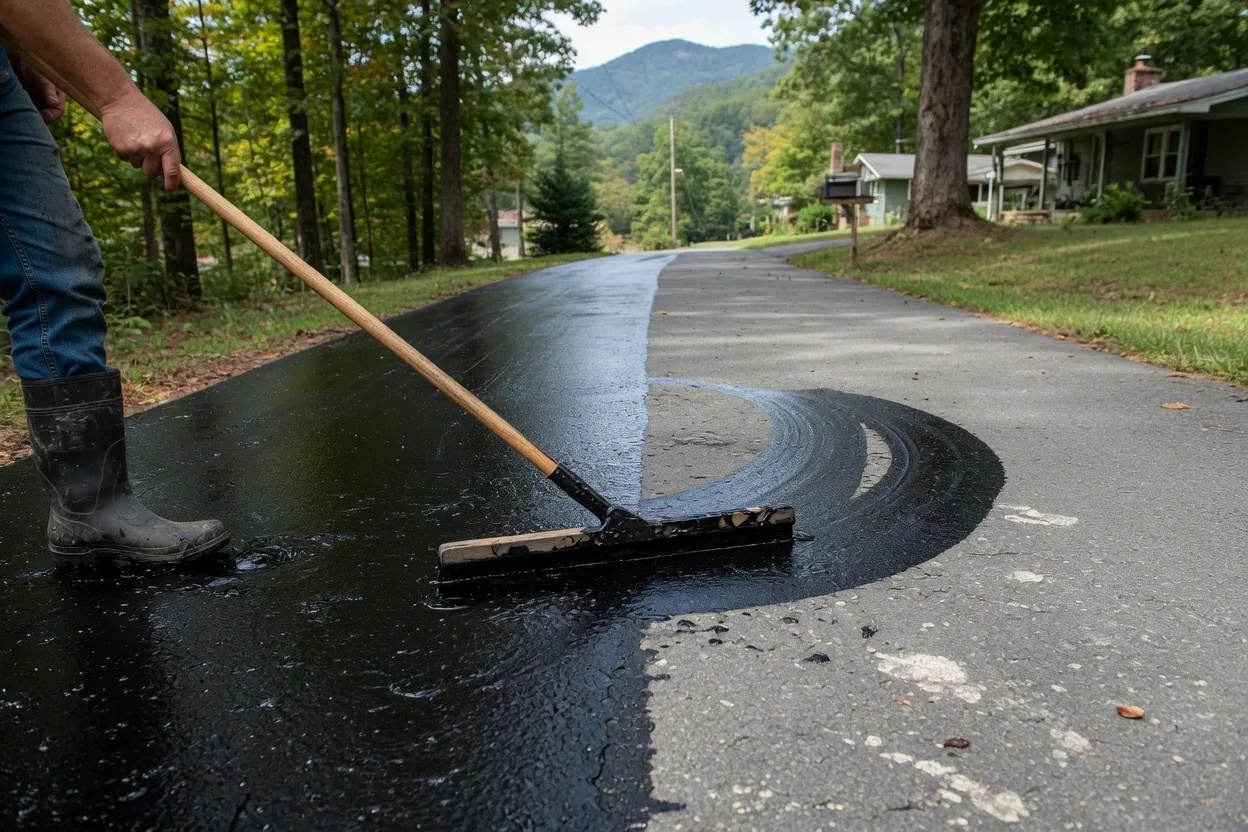
| Sealcoat + crack fill | Clean, fill linear cracks, two coats sealer, restripe | $2,900-$6,500 |
| Patch + seal + restripe | Remove failed areas, hot-mix patch, then seal and stripe | $5,500-$14,000 |
| Mill and overlay | Grind 1.5-2 in, leveling course, 1.5-2 in new asphalt | $9,000-$28,000 |
| Full-depth rebuild | Remove existing, repair base and drainage, new binder + surface | $28,000-$48,000+ |
Square footage, slope, and how much base repair is hiding under the surface move the number. On a sloped Flat Rock drive, expect the contractor to talk about drainage before they talk about asphalt. For a residential-scale comparison of the same math on driveways, see our Henderson County driveway cost page.
A worked example helps. Say a Kenmure-area lot runs 60 by 100 feet, about 6,000 square feet including the apron, with a moderate fall and a handful of linear cracks near the turn. That is a seal and restripe candidate, and it lands near the low end of the maintenance band. Now take the same footprint on a steeper drive off Pinnacle Mountain Road with alligator cracking across two wheel paths and a settled edge where the culvert dumps. That is a mill-and-overlay at minimum, and if the base under the cracked zone is gone, a partial rebuild gets the number into the mid five figures fast. The surface tells you very little. The base tells you almost everything.
Patch-only jobs are the most misunderstood middle tier. Hot-mix patching is right when failures are isolated and the surrounding mat is sound. It is wrong when the failures are a symptom of a drainage pattern that will just create new failures next season. A contractor who patches without fixing the water is selling you a repeat visit. For the same reasoning applied to a single-family drive, the comparisons on our parking lot paving overview lay out the tiers side by side.
Drainage, code, and the permits nobody mentions
If your lot connects to a state-maintained road, the apron and any change to the entrance falls under NCDOT's driveway permitting rules through NCDOT Connect. If the lot drains toward a creek, ditch, or storm system, the grading plan matters: sediment and runoff from paving work are regulated under NC Department of Environmental Quality rules, and a reputable contractor will keep washout contained rather than letting it run off the pad.
Storm frequency is the other factor. Henderson County has seen 16 federal disaster declarations over 1978-2026, mostly flood and storm events, and each one pushed water across pavement that was graded for gentler assumptions. The National Weather Service records for the Greenville-Spartanburg office cover this area on the ground. Paving that ignores how water actually moves here fails within a few winters.
There is also the soil side. Much of this county sits on clay-heavy ground that drains slowly once saturated, which is why a lot that was fine in a dry May can pond in a wet September. French drains, swales, and a crowned surface are not extras on a sloped lot; they are the difference between a mat that lasts and one that starts pumping fines up through the surface after a couple of freeze-thaw seasons. Any proposal that lists asphalt and striping but says nothing about where the water goes is incomplete, no matter how clean the price looks.
Hiring the right crew for a sloped or long lot
Three things to verify. First, is the crew experienced with steep or long pulls? A paver train that cannot hold grade on a 12 percent slope will leave you with a wavy surface and birdbaths. Second, does the proposal separate drainage from paving? If it does not, the price is not really comparable to one that does. Third, ask about licensing thresholds through the NC Licensing Board for General Contractors, since larger commercial lots can cross the dollar value where a licensed general contractor must be involved.
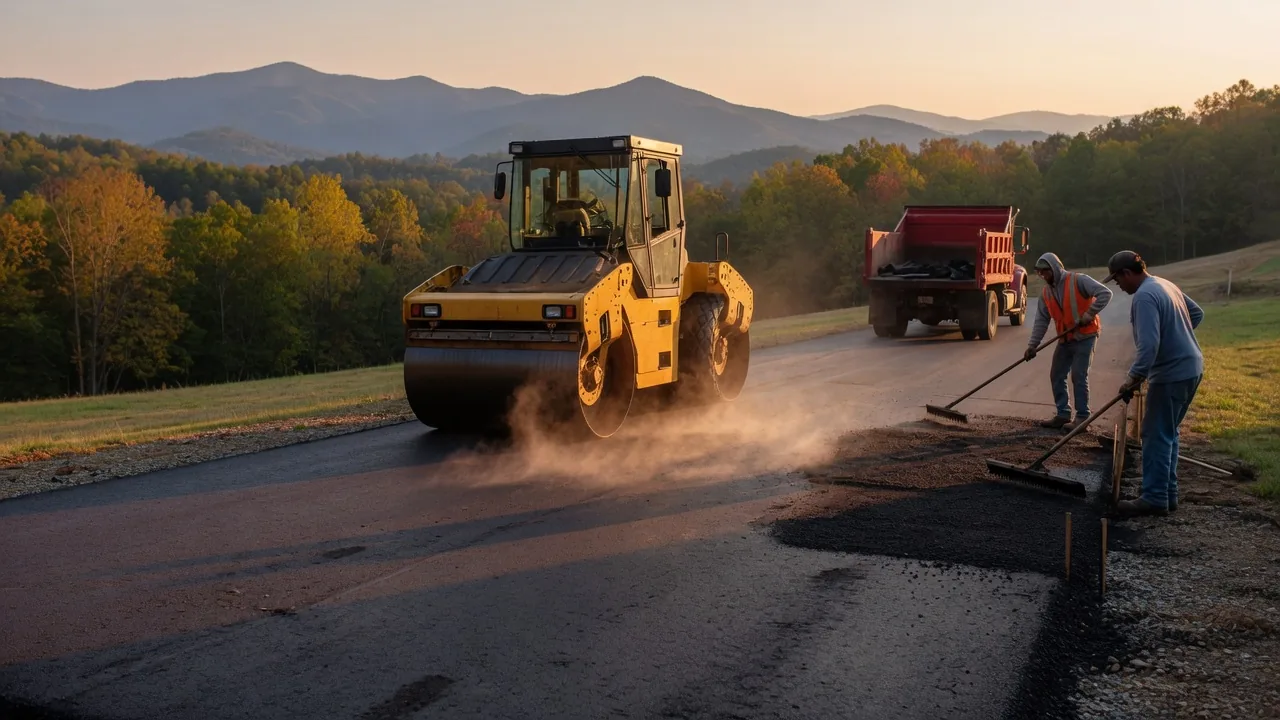
Ask, too, how the crew handles access on a long shared apron. Plenty of Flat Rock drives are narrow enough that a full-size paver and rolling train cannot turn around at the house, so the job has to be staged in passes and the material hauled in short loads. That affects both time and cost, and a bidder who has never worked a long mountain drive will usually discover this after the mobilization fee is spent. Experience shows up in how the schedule is described before work starts.
For scope comparisons across services, our parking lot paving overview walks through the tiers and where each one makes sense. When you are ready to get numbers, our Flat Rock paving contractors page is the fastest route to a local quote.