When the plant runs and the roller can roll
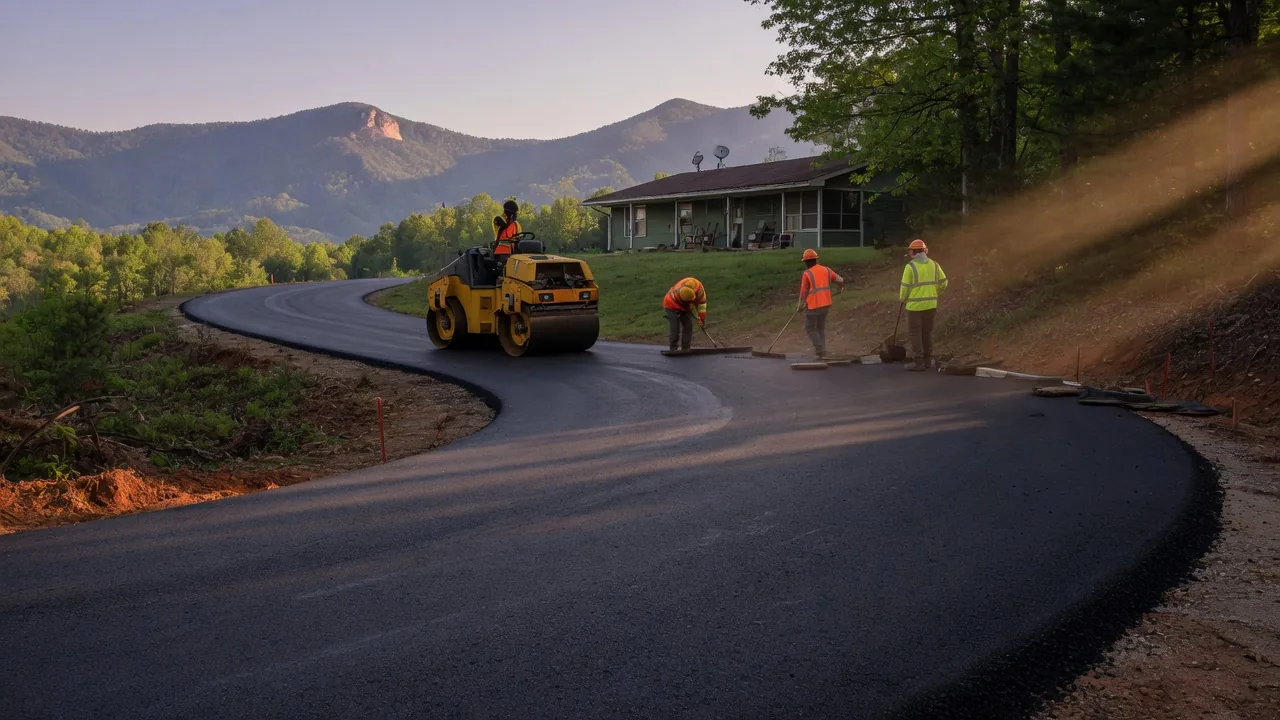
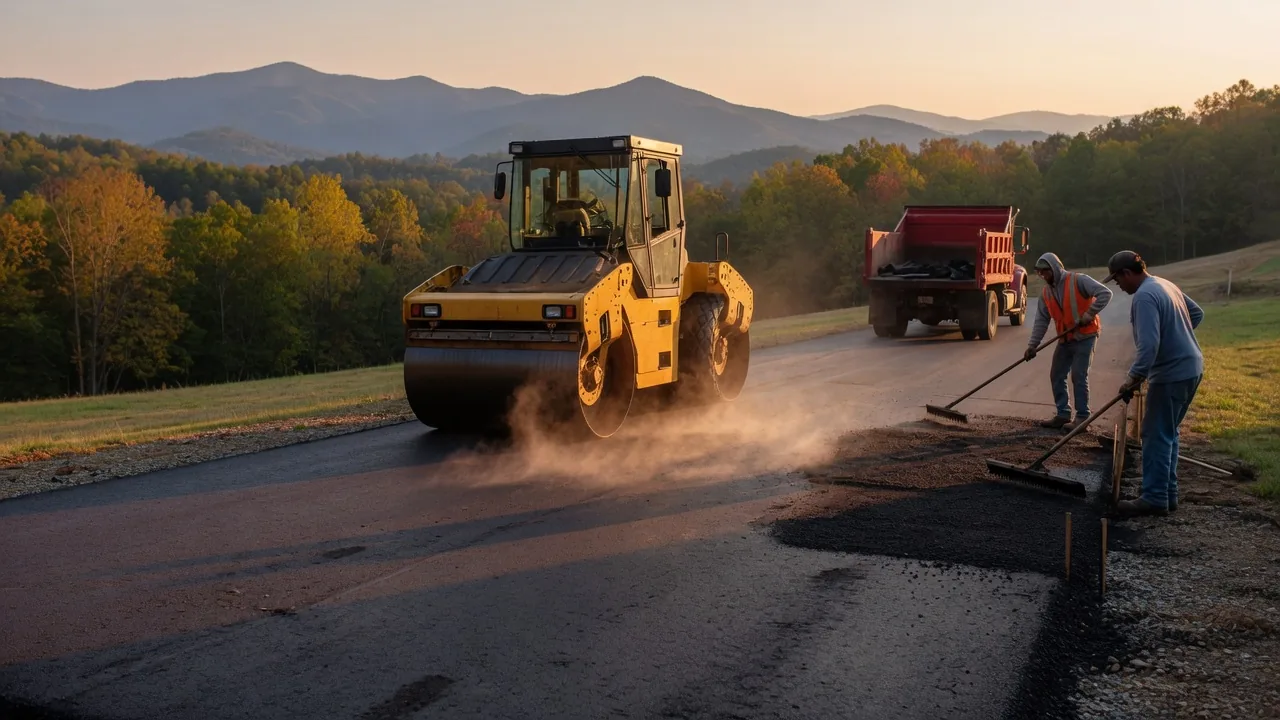
The single biggest scheduling fact in Asheville-area paving is that hot-mix asphalt plants in this part of the mountains do not run year-round. Plants typically open in spring once overnight lows stay above freezing and wind down in late fall before the first hard freezes. Mix has to leave the plant hot and arrive hot, and it has to be laid and rolled while it is still hot enough to compact. The practical window for reliable paving around Buncombe County is roughly April through October, with the shoulder months of March and November being hit-or-miss depending on the year's weather.
That window compresses everything. Contractors on the commercial paving calendar are already booking fall jobs in midsummer, and a lot that needs base work plus a new surface has to be sequenced so the base is dry and compactable when the paving crew arrives. A lot that needs drainage correction under it may need an earlier start still, because subgrade prep cannot happen on frozen or saturated ground.
Mountain shade is the underrated second factor. Lots tucked against a north-facing ridge above Haw Creek or in the shadow of a tree line in Weaverville can hold surface moisture and cold well after a sunny lot across town is ready to pave. Crews working around Asheville learn to read the site's sun exposure, not just the forecast, because the curing and cooling curve changes from one lot to the next.
There is also the matter of haul distance. Buncombe County is not a flat grid of plants. A crew working a lot off Leicester Highway or out toward Black Mountain may be pulling mix from a plant across the county, and that drive time eats into the temperature margin. In the heat of July there is slack in the schedule; in late October there is not. That is one reason fall paving quotes creep up as the season closes, and one reason a contractor who is already running a job in your part of the county can sometimes beat a crew coming from the other side of the ridge.
What Buncombe County lots actually cost to pave
National cost-per-square-foot figures you see on lead-gen sites assume flat ground, a long paving season, and cheap haul distance to the plant. Buncombe County is none of those. Between steep drive aprons, tight in-town lots in West Asheville, and larger commercial parcels out toward Arden and Fletcher, the honest range is wide and the middle is higher than the Piedmont.
| Scope of work | Typical Buncombe range | What drives it |
|---|---|---|
| Sealcoat only | $0.15 – $0.35 / sq ft | surface condition, prep, number of coats |
| Crack fill and patch | $0.50 – $1.50 / sq ft | crack density, patch depth, access |
| Mill and overlay, 1.5–2 inch | $2.25 – $3.75 / sq ft | existing base condition, thickness, tack coat |
| Full-depth reconstruction | $5.00 – $7.50+ / sq ft | base removal, subgrade repair, drainage, stone depth |
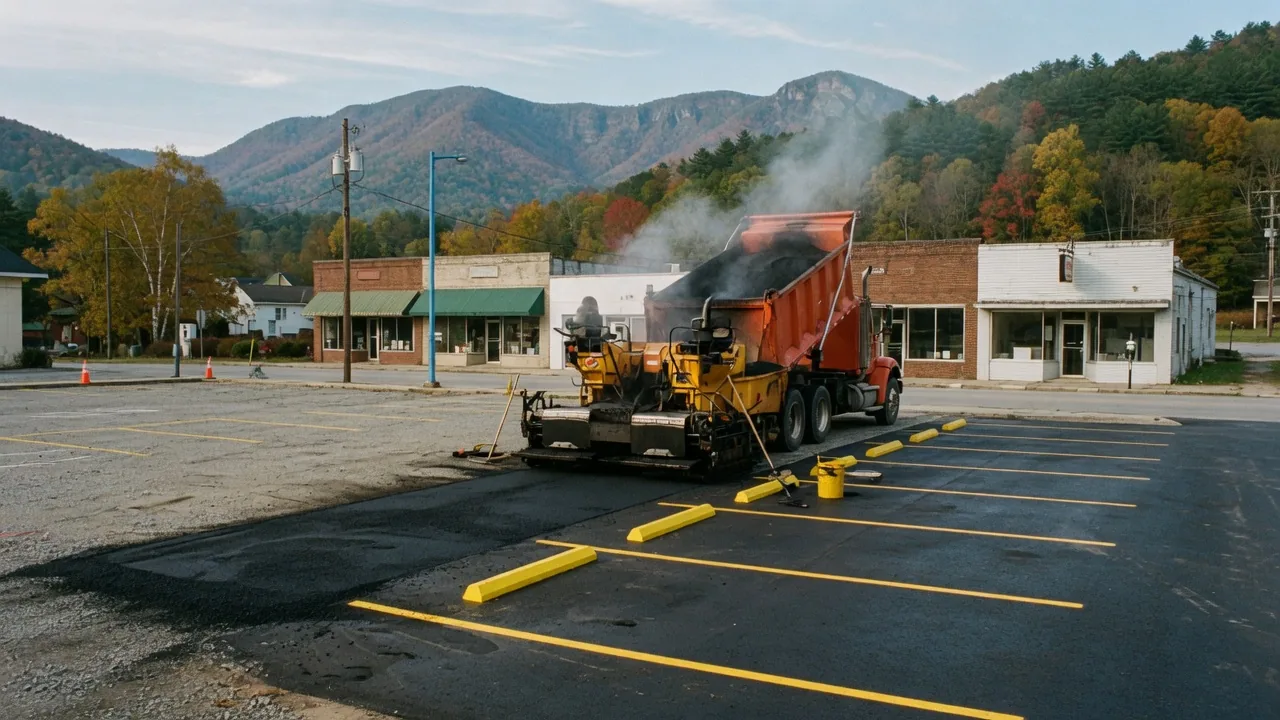
| Striping (per stall) | $8 – $20 / stall | layout complexity, ADA stalls, arrows, curbing |
Those are honest working ranges, not quotes. A crew that hands you a firm per-square-foot number before walking the lot and looking at the base is guessing with your money. The lower half of that reconstruction range assumes reasonable soil and good access; steep grades, narrow entrances, and wet subgrade push it toward the top.
Access is the quiet multiplier. A downtown Asheville lot hemmed in by buildings, where a dump truck cannot turn around and every load of stone has to be placed with a skid steer, costs meaningfully more per square foot than an open Fletcher lot where the trucks can drive the grade. Same square footage, same asphalt thickness, different day rate. When you compare bids, ask how much of the number is material and how much is machine time and access labor, because on the tight lots the access labor is the number.
Drainage correction is the other line that surprises people. A lot that grades away from the building but ponds at the low corner needs a catch basin, a pipe, and a discharge point that will not create a new problem downhill. That work is invisible once the asphalt goes down, which is exactly why it is the line item worth reading carefully rather than the tonnage of blacktop.
Frost, water, and why mountain lots fail early
Most premature asphalt failure in this county traces to water getting into the base and freezing. Buncombe sits in a wet, freeze-thaw climate: the federal record shows 19 federally declared disaster events touching the county (1973-2026), most of them storm and flood family. That is not trivia. It means a lot that drains poorly will heave, crack, and ravel far sooner than the same lot in a drier, flatter region, because the freeze-thaw cycle does its work on saturated base stone every winter.
Practical consequence: around Asheville, a paving quote that does not address grading and drainage is a quote for doing the job twice. Capture the uphill runoff before it crosses the lot, and fix the low spots where water ponds. The parking lot paving work itself is only as good as the base and drainage under it.
NCDOT regulates some of this directly. New or modified driveway and street connections onto state-maintained roads require an access permit through NCDOT, and lot grading that changes how stormwater leaves the property can raise local stormwater questions. Handle the drainage plan first, then the surface.
Freeze-thaw here is not a one-week event in January. It is a cycle that repeats through winter as daytime sun warms the surface and overnight lows drop below freezing, and every pass pulls at the edge of a crack and works water deeper into the base. That is why crack filling in this county is a fall chore, not a spring one: seal the cracks before the water gets in, not after a winter of it has already done damage. A lot that gets its cracks filled in October is buying itself years that a lot left alone is spending.
Permits, licensing, and code in this county
Commercial paving in North Carolina is not licensed as a standalone trade, but the general contracting that often wraps around it is. The state's NC Licensing Board for General Contractors sets the threshold where a project requires a licensed general contractor, and larger commercial lot work frequently crosses it. Structural and grading elements of a lot project fall under the NC Building Code administered through the Department of Insurance, and stormwater and erosion control on larger disturbance footprints run through NC Department of Environmental Quality. A lot that adds lighting or a building connection may also pull in electrical and other trades, which is where the NC State Board of Examiners of Plumbing, Heating and Fire Sprinkler Contractors licensing rules can surface.
In plain terms: a small mill-and-overlay with no new drainage may need nothing beyond ordinary permit review, while a full reconstruction with new stormwater infrastructure can require a general contractor and a site plan. If a paving contractor waves off permitting on a project that clearly changes drainage or disturbance, that tells you what their paperwork looks like too.
The terrain adds a wrinkle that flat-county projects never see. A lot cut into a slope above the French Broad or a hillside lot off Town Mountain Road may involve retaining walls, slope stabilization, or a grading plan that a flatland site would never trigger. Those are engineered elements, and engineers carry their own licensing and stamp requirements separate from the paving crew. On a steep site, ask early whether the scope includes engineering, because it changes both the timeline and who is responsible for the stormwater plan.
How to keep the number honest
Three moves protect you in this market:
- Get the water story first. Ask every bidder where stormwater goes before you talk asphalt thickness. The right fix order is drainage, then base, then surface.
- Price by scope, not by a lump sum. Ask for the square footage, the asphalt thickness, the stone depth, and the striping count broken out. Scope changes once digging starts, and a unit-priced bid keeps the change order honest.
- Compare against the county range. If a bid lands far outside the table above, make them walk you through why. Deeper stone, steep grades, and tight access are real reasons; vague answers are not.
One more piece of local advice: ask a bidder how many paving days they expect the job to take, and then ask what happens if it rains on day two. In this climate, spring and fall rain is not a maybe, and a crew that has not thought about the wet-day plan has not thought about your schedule. The good ones build a cushion into the sequence and tell you up front which parts of the job can be done in the rain (drainage, demolition, stone prep) and which absolutely cannot (the mat itself).
Wondering how striping and layout fit in? See the parking lot striping guide, or go back to the region-wide parking lot paving page for the full picture.