The plant season sets your calendar, not your contractor
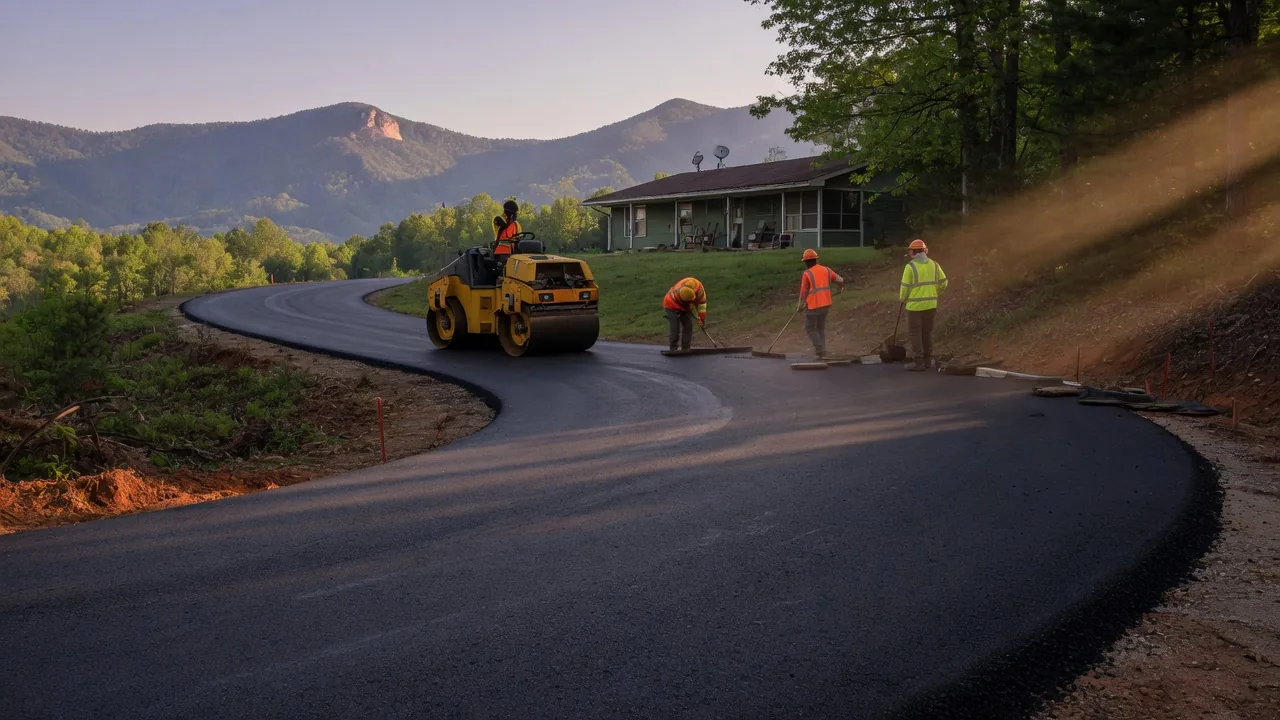
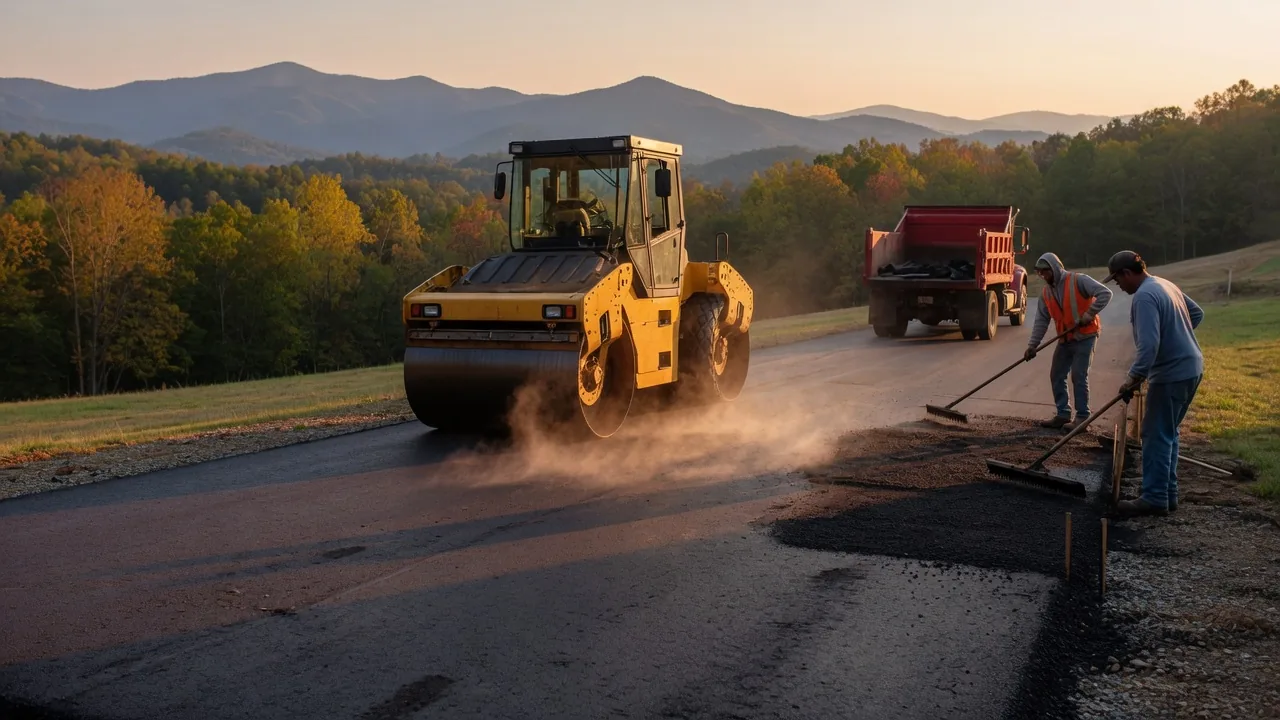
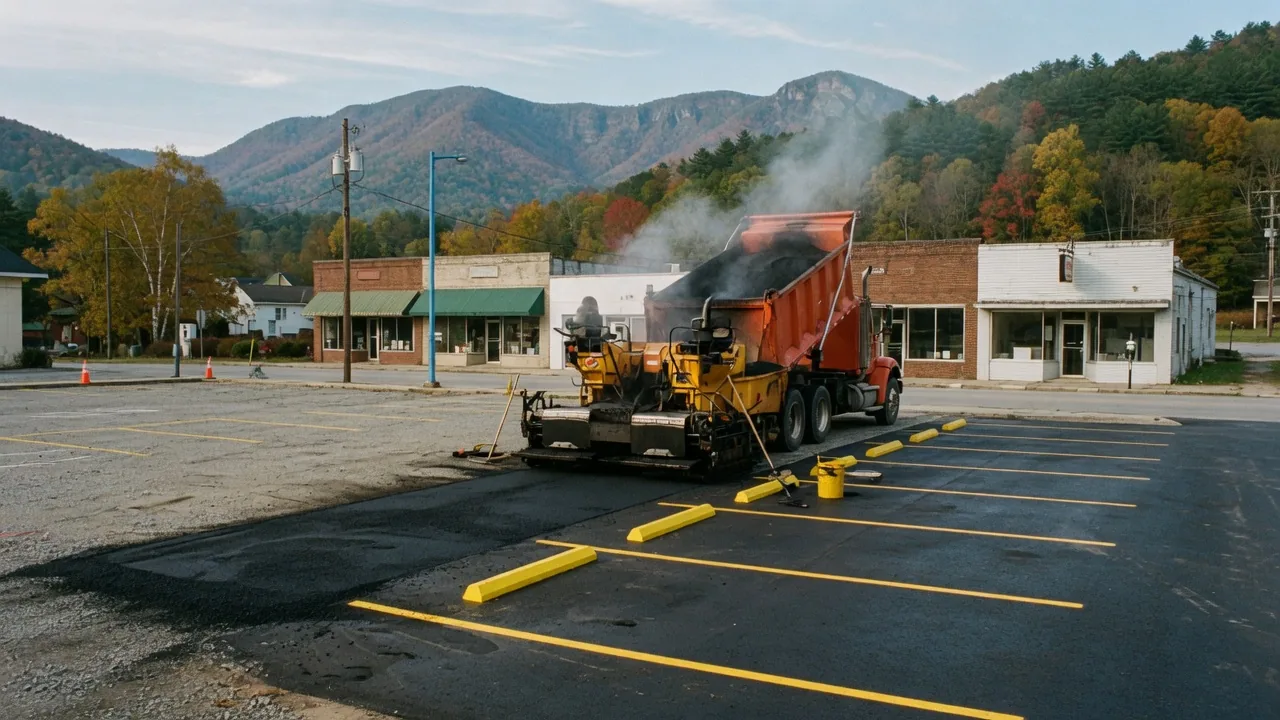
Asphalt plants in the Haywood County area don't run year-round. They fire up when overnight lows stay warm enough to keep mix workable, typically from mid-spring into early fall, and when they close you're either sealing existing asphalt or waiting. That single fact reshapes every driveway project around Waynesville — a new driveway off Jonathan Creek Road or Ratcliffe Cove has to be paved inside the plant window, then cured, then sealed the following season. Sealcoating itself is more forgiving, but not unlimited: most manufacturers want material down when air and surface temps sit above roughly 50°F and rising, with no rain forecast for 24 hours. In the mountains that window can close by mid-afternoon in October.
Waynesville's terrain makes it worse in a good way. The town sits in a valley ringed by ridges, so sunrise arrives late on north-facing driveways and frost lingers on shaded pavement well past the morning news forecast. A crew that seals a shaded drive at 9 a.m. in November is gambling. Ask any contractor how they read surface temperature, not air temperature, and you'll learn quickly who has done real work here.
What sealcoating actually costs on a Waynesville driveway
Rates here track the regional band, not a flat number. Most residential sealcoating falls between $0.15 and $0.35 per square foot, with the higher end applying to drives that need heavy crack filling, oil-spot priming, or two coats. A typical two-car driveway in a Waynesville subdivision runs somewhere between $350 and $800; longer rural drives with turnaround areas push toward $1,400 or more. See the working numbers on the Haywood County asphalt cost page for how sealcoating sits next to full replacement.
| Scope | Typical price range | Notes |
|---|---|---|
| Single coat, clean and sound asphalt | $0.15–$0.22/sq ft | Best on drives last sealed within 2–3 years |
| Two coats, standard prep | $0.22–$0.30/sq ft | Common recommendation for mountain sun and freeze cycles |
| Crack filling, per linear foot | $1–$3/lin ft | Hot-pour for working cracks; cold-pour as a stopgap |
| Oil spot priming | $50–$200 per drive | Needed where petroleum stains would bleed through |
| Full drive, 1,000 sq ft, two coats | $500–$900 | Typical Waynesville in-town driveway |
Any bid that omits crack filling as a line item on a drive with visible cracks is pricing the surface, not the driveway.
Freeze-thaw is what you're actually buying protection against
Haywood County's federal disaster record — 19 declared events across 1973-2026 — runs heavily to storm and flood categories, and the water those events deliver is the same water that gets into pavement cracks and works them open through winter. Waynesville sits high enough that freeze-thaw cycling is aggressive: water enters a crack by day, freezes and expands overnight, and widens it a little more each cycle. Sealcoating doesn't stop that, but a properly filled and sealed surface keeps most of the water out of the base, which is where the real damage starts.
Two related rules matter here. First, sealcoat is a wear surface, not a structural fix — sealing over alligator cracking or a settled base just hides the failure for one season. Second, if your driveway ties into a state-maintained road, any work that touches the connection point may fall under NCDOT driveway permitting (start at NCDOT Connect to check). Purely resurfacing your own drive usually doesn't trigger a permit, but replacing or moving a culvert or apron often does.
Reading a quote when the work is small
Sealcoating is one of the few paving trades where a handshake job can still be legitimate, but the consumer-protection math changes once the scope grows. North Carolina's general contractor licensing threshold — administered by the NC Licensing Board for General Contractors — applies to larger projects; a straightforward sealcoat of a residential drive generally sits below it, but a combined job that includes regrading, drainage work, or full replacement may not. Ask which portion of a mixed bid would be permitted or licensed, and get it in writing.
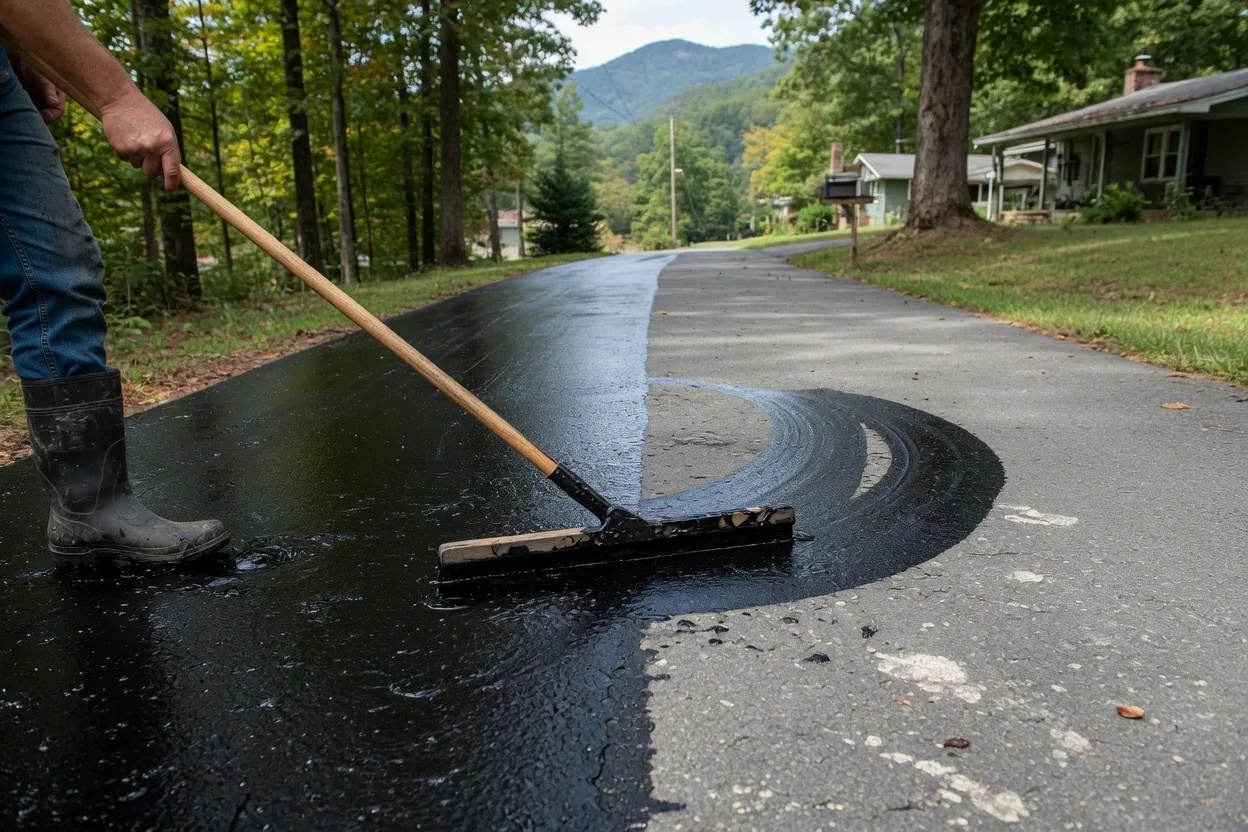
Also ask about cure behavior. Sealcoat needs to dry, not just set. A drive sealed in Waynesville's summer humidity on the shaded side of the house can stay tacky well into the afternoon. Crews who know the area schedule shaded drives for the sunniest slice of the day, even if it means coming back to finish the next morning. Read the full sealcoating overview for material options and how often to reseal, then use the Waynesville paving contractor guide to compare bids.
How often, and when not to bother
Most residential driveways in this climate want resealing every two to three years. More often than that wastes money on material that hasn't worn through; less often lets cracks open far enough that water reaches the base and the fix becomes repaving. Skip sealcoating entirely on a drive with structural failure — soft spots, settled slabs at the garage apron, or alligator cracking across a wide area. Those are base problems, and sealer over them buys one season at most.
One more local note: new asphalt needs to cure before its first sealcoating, commonly 6 to 12 months depending on mix and weather. If a contractor offers to pave and seal in the same visit, treat that as a sign to keep calling.