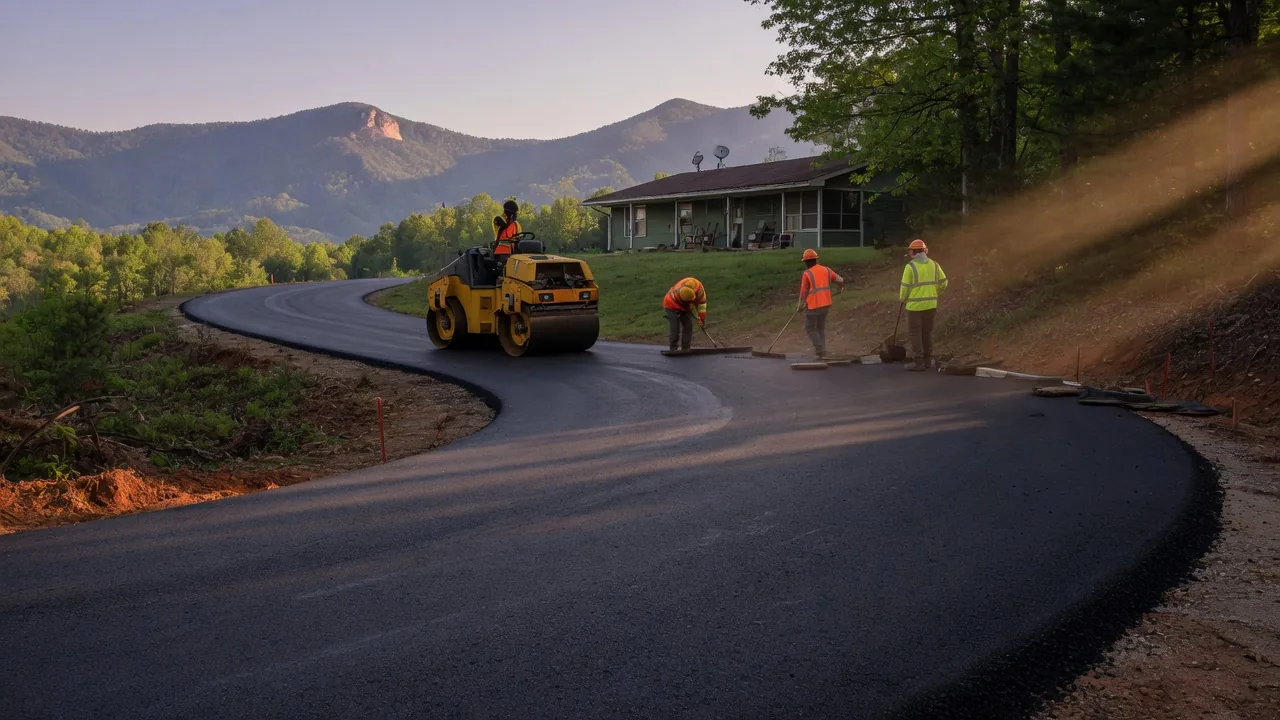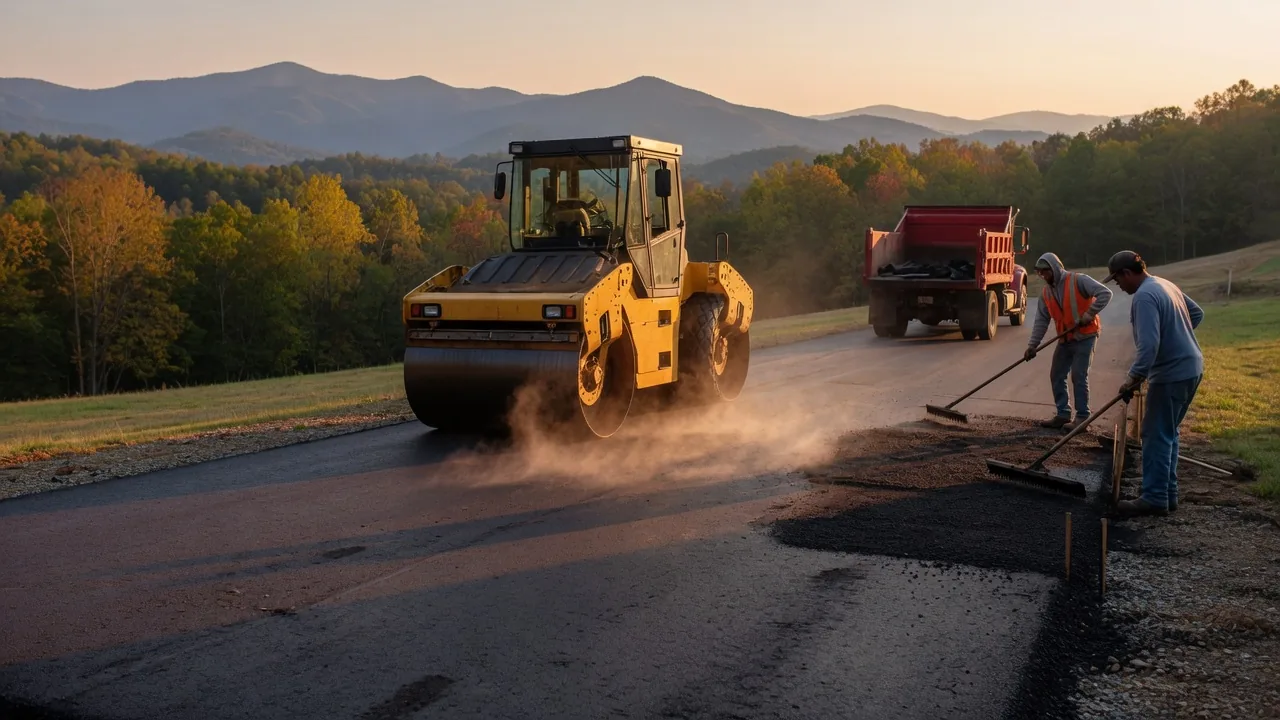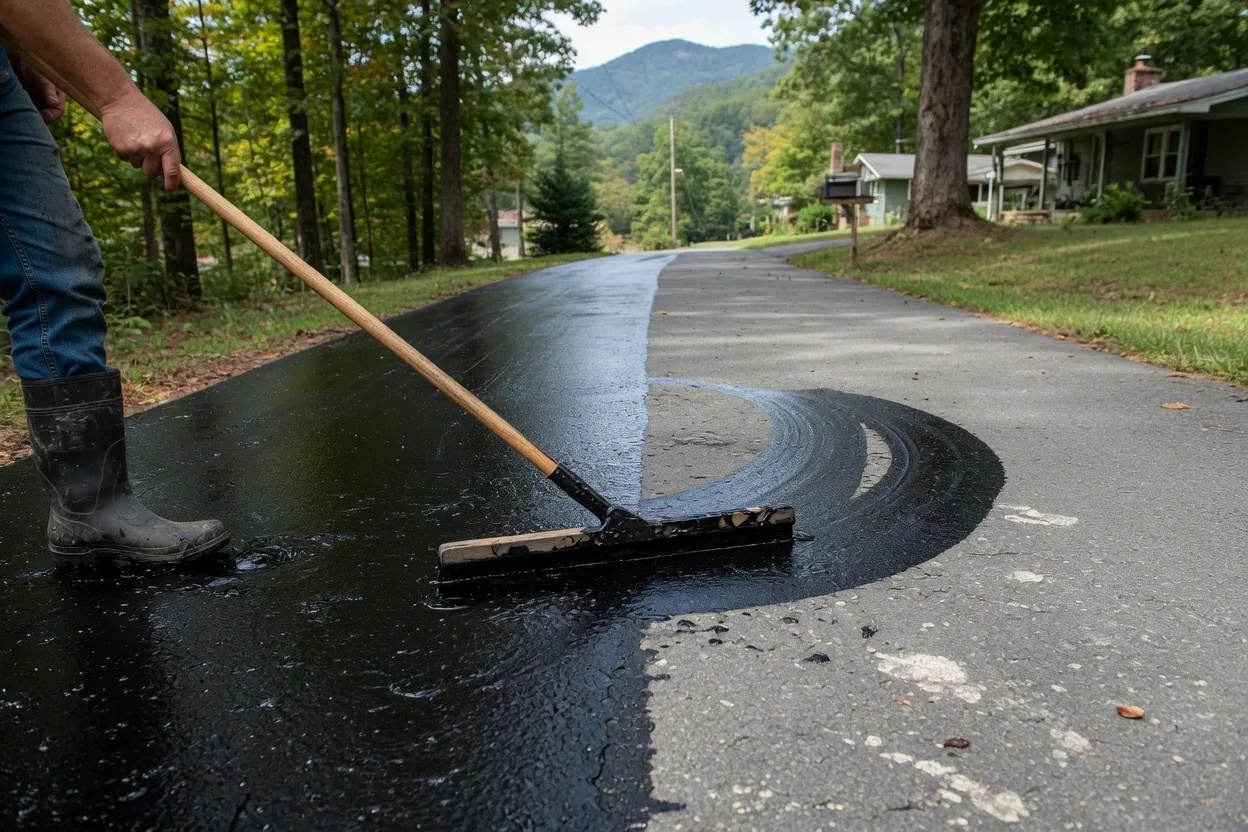
Read the driveway before you price the fix
Most Fletcher driveways that get replaced didn't need replacing. They needed a patch that was timed right and a base that was drained. Tar and chip is a forgiving surface, but it's only as good as what's under it, and in this part of Henderson County the thing under it is usually the problem.
Start with the cracks. Hairline cracks that stay hairline season to season are surface aging, and a chip seal or a slurry coat refreshes them at a fraction of replacement cost. Cracks that have widened, or that run in a line across the driveway, are usually telling you about base movement or a failing edge. Then look at the potholes. A pothole that keeps coming back after a patch is not a surface failure; it's water getting into the subbase and pumping it out. Then walk the edges. Edges that have crumbled or that sit lower than the surrounding ground are pulling water under the mat, and no overlay will fix that. Finally, press a boot heel into the soft spots after rain. If the surface gives, the base is saturated or the soil under it was never suitable.
Match those findings to a decision: surface-only problems get a seal or a thin overlay, base problems get a patch and re-grade, and structural problems get a tear-out and rebuild. Getting that call wrong is how homeowners pay twice.
What a Fletcher driveway actually sits on
Fletcher sits in the French Broad valley south of Asheville, and the ground reflects it: a mix of older valley-floor lots with shallow water tables, hillside properties climbing toward the Blue Ridge with cut-and-fill pads, and newer subdivisions where the driveway crosses fill that was placed by a developer. Each one fails in its own way.
Valley lots deal with the water table and with runoff from upslope neighbors. Hillside lots deal with slope drainage and with the fact that a gravel base placed on a graded incline will migrate downhill over years. Subdivision lots deal with fill settlement that shows up as dips and depressions within the first decade. The repair logic follows: water first, base second, surface last. That's also the order the NC Office of State Fire Marshal treats site drainage in its adopted codes, for the same reason.
Cost picture for tar and chip in Henderson County
See the full Henderson County driveway cost breakdown for line-item working numbers. The short version: tar and chip is one of the most cost-effective surfaces you can put down in this climate, but the price depends almost entirely on how much base work is done before the chips go on. Ranges below assume a typical Fletcher driveway of a few hundred to a couple thousand square feet, priced as a ballpark, not a bid.
| Scope | Typical price range | What it covers |
|---|---|---|
| Crack fill and seal coat | $450-$1,400 | Clean cracks, hot-pour filler, chip seal or slurry refresh over sound base |
| Spot patching and edge repair | $900-$2,800 | Cut out failed sections, re-compact base, re-surface those areas only |
| Full overlay on sound base | $2,600-$6,500 | Prep and re-surface entire driveway without removing existing mat |
| Tear-out, new base, new tar and chip | $4,500-$12,000+ | Remove failing surface, rebuild base with proper drainage, install fresh chip seal |
| Drainage correction (add-on) | $600-$3,500 | Regrade, add swales, culvert, or edge drain before any surface work |
Treat any quote that doesn't break out base work from surface work as incomplete. A low number with no base line item is not a bargain; it's a re-do.
Permits, licensing, and the paper trail
Most residential driveway resurfacing in Fletcher doesn't trigger a permit, but anything that changes the driveway's connection to a public road does. That means new curb cuts, widened aprons, and driveway work that touches the state-maintained right-of-way all need review through NCDOT, with applications handled through NCDOT Connect. If your driveway meets a state road — and many Fletcher driveways meet US 25 or the older state routes — assume a permit applies and that the apron detail has to match their spec.
On the contractor side, the NC Licensing Board for General Contractors sets the threshold where paving work requires a licensed general contractor. Ask for the license number before you sign, and ask whether the crew doing the base work is the same crew or a sub. The answer matters when something fails and you go looking for who's responsible.
Choosing a crew that reads the driveway, not just the square footage
The paving crews worth hiring in this part of the county will do three things before quoting. They'll walk the driveway in dry weather and again after rain if they can. They'll probe the soft spots and tell you how deep the base problem goes. And they'll separate the water conversation from the surface conversation, because in Fletcher those are two different bids. The crews that quote a per-square-foot number over the phone without seeing the base are not quoting your driveway; they're quoting an average driveway and hoping yours is it.
When you're ready to talk to someone, the Fletcher paving contractor guide walks through what a proper first visit should include. And if you want the background on how tar and chip (chip seal) actually performs in this region versus asphalt or concrete, the tar and chip overview covers the trade-offs honestly.