Rain on a Fletcher slope picks its own path, and it rarely picks your ditch
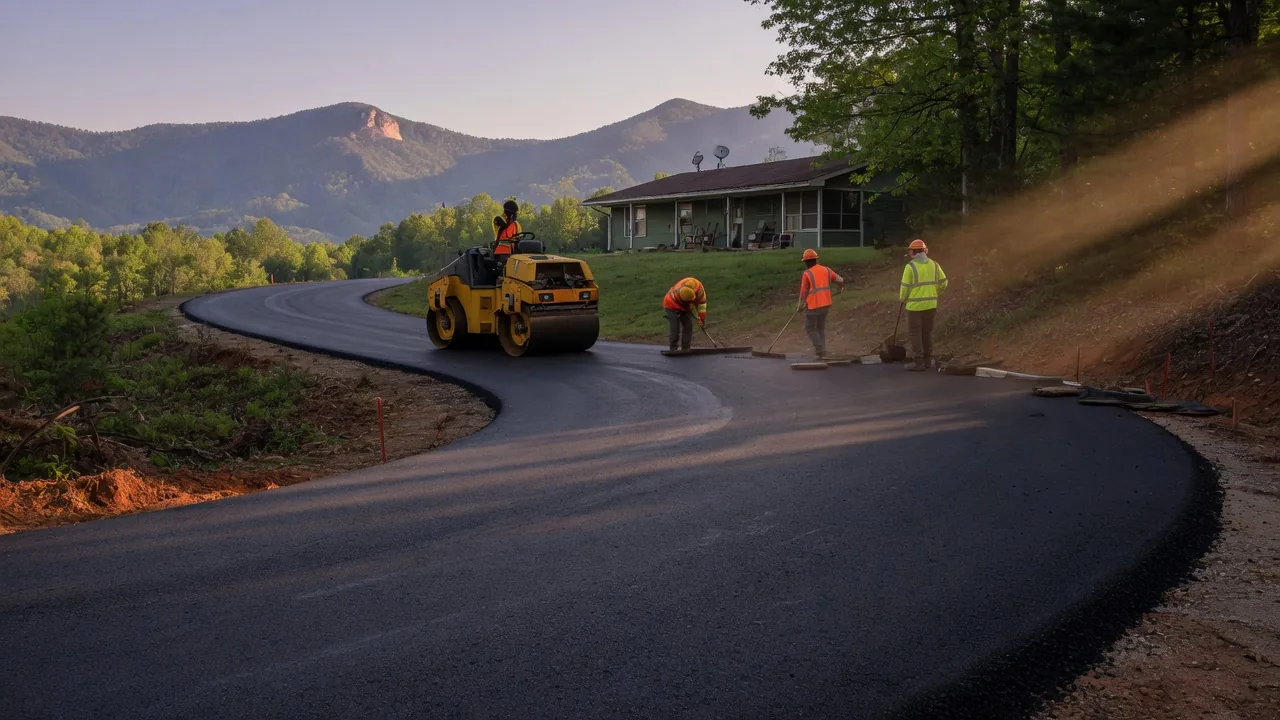
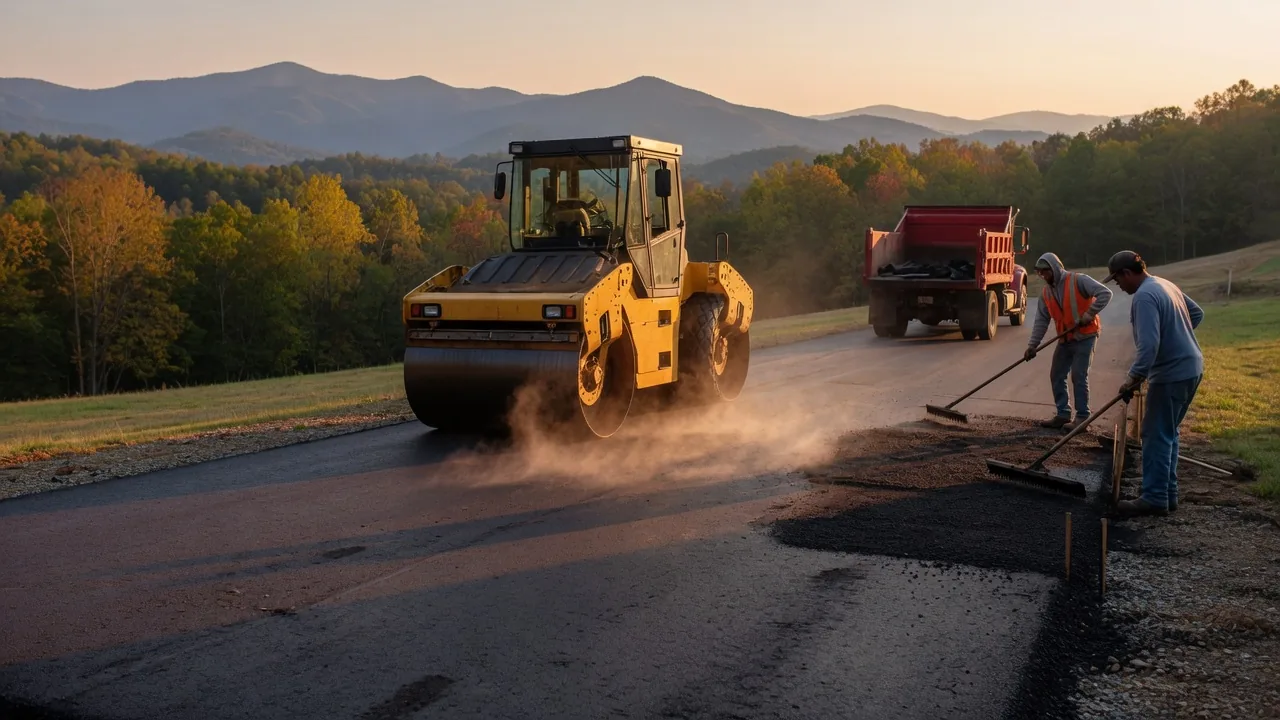
Fletcher sits in Henderson County at the foot of the Blue Ridge, on ground that tilts. Most residential lots here fall somewhere between gently rolling and genuinely steep, and a driveway cut into that ground is really a small stormwater channel that happens to also hold a car. Water leaving the top of the drive accelerates the whole way down. It will find the low corner of the asphalt, the joint at the garage apron, and the edge where pavement meets gravel or grass — in that order — unless the surface is shaped to send it somewhere specific.
That is why a first visit to a Fletcher driveway is mostly a water visit. Where does the rain that lands on this pavement actually go? Does the drive have a crown, a slight rise down its centerline, so it sheds to both edges? Does it have a consistent cross-slope instead? Are the edges tight against soil, or crumbling so water dives under the asphalt mat and lifts it? Where does the uphill neighbor's runoff cross your lot? On some Fletcher properties the honest first recommendation is not sealer at all — it is grading, a swale, or a turnout at the bottom of the drive so water leaves the pavement before it pools.
What sealcoating can and cannot fix about that water problem
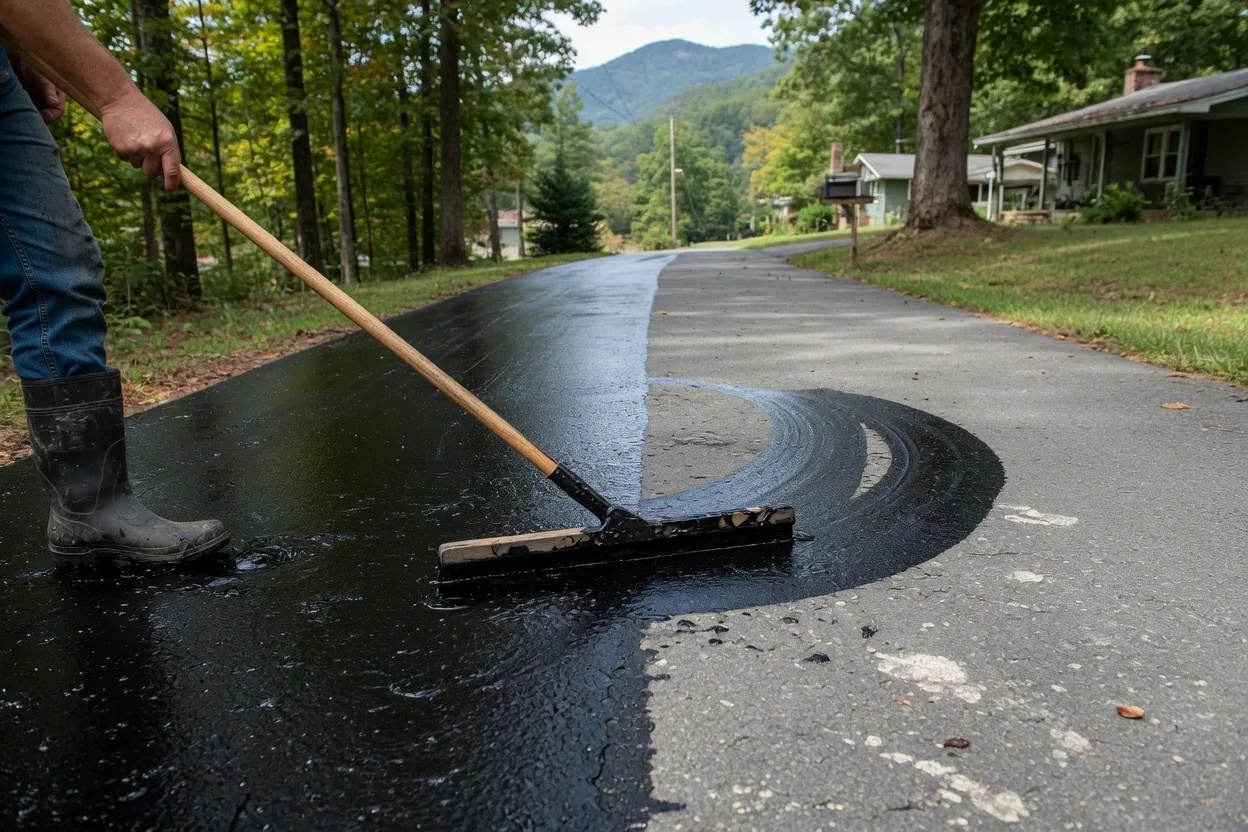
Fresh sealer restores the binder at the surface, slows oxidation, and buys the asphalt years before it goes brittle and gray. It also seals the small surface voids that let water sit and penetrate. What it will not do is reshape pavement. Sealer cannot put a crown on a flat drive, cannot raise a settled edge, and cannot convince water to stop flowing into a low spot in front of a garage door.
So the sequence matters, and a contractor worth hiring will say so out loud: correct the shape and the drainage first, then seal what is left. Two coats on a drive whose edges are already undermined is money poured onto a problem. Crack filling is its own line item for the same reason. Widened cracks and alligatored sections let water reach the base course, where the real damage starts, and a thin sealer skim over the top of them hides the symptom for one season.
A Fletcher driveway price table, by what's actually on the lot
Ranges below reflect typical Henderson County residential work, quoted as project ranges rather than flat rates. Square footage, existing surface condition, and how much edge and crack work the drive needs are the movers. Ask any bidder to break the number down the same way so you can compare scopes instead of totals.
| Scope | Typical range | What drives it |
|---|---|---|
| Single-coat seal, small drive, sound asphalt | $280–$550 | Under roughly 1,000 sq ft, no edge work, few cracks |
| Two-coat seal, standard residential drive | $520–$950 | 1,000–2,500 sq ft, normal oxidation, light crack filling |
| Two-coat seal with full crack fill and edge repair | $900–$1,400 | Long or wide drive, undermined edges, several crack lines |
| Seal plus drainage correction (swale, turnout, edge rebuild) | Quoted with the seal, often $600–$1,800 added | Where water crosses, ponds, or dives under the mat |
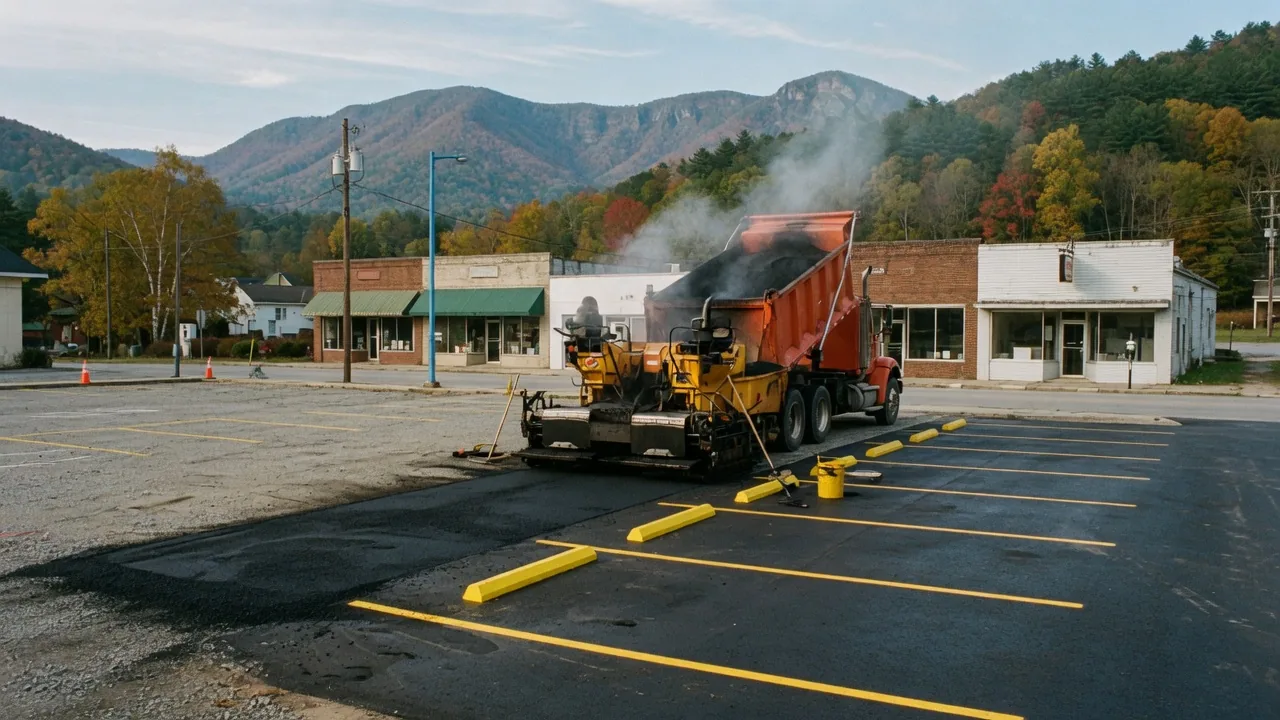
| Seal over failing asphalt (alligatoring, base failure) | Not recommended — repave or patch first | Sealer will not bridge structural failure |
For a fuller accounting of new pavement versus keeping what you have, the Henderson County asphalt cost breakdown lays out line items side by side. If the surface is genuinely past sealing, that comparison answers the question faster than any seal bid will.
Mountain weather sets the clock on when sealer goes down
Henderson County's federal disaster record is not abstract here: 16 declared events touch this county across 1978-2026, and the recurring family is storm and flood. Every one of those events put moving water against driveways that were shaped for calmer assumptions, and the asphalt that failed first was the asphalt already letting water underneath. The National Weather Service outlook is worth a look before scheduling, because sealcoating is temperature and moisture sensitive. Most manufacturers want the surface warm and the forecast dry for a stretch after application, and spraying ahead of a heavy system is how a job gets chalked up to bad luck when it was really bad scheduling.
Fletcher also sits in freeze-thaw country. Water that gets into a crack, refreezes, and expands does more damage in one winter than a summer of sun. That cycle is the practical argument for crack filling and for sealing before the first hard freeze rather than after.
Hiring, permits, and the paperwork angle most homeowners forget
North Carolina draws a licensing line: residential general contracting above the statutory threshold requires a license, verifiable through the NC Licensing Board for General Contractors. Sealcoating itself is maintenance, but the moment a scope grows into drainage regrading, edge reconstruction, or repaving, you are closer to that line than most bids admit. Ask directly whether the work is maintenance or contracting, and get the answer before you sign. If your drainage fix involves changing how water leaves the property toward a public road, NCDOT driveway access rules may apply.
Ask three more questions on a Fletcher job specifically. Has the crew worked slopes like yours, where the drive drops significantly from the road or climbs away from it? How do they protect the ditch or swale at the bottom of the drive from sealer overspray and from blocking? And what is their plan if rain arrives during the cure window? You can also read how a fair quote gets structured on the sealcoating overview, and compare local crews through our Fletcher paving contractor page before you commit.