What sits under the asphalt in Haywood County
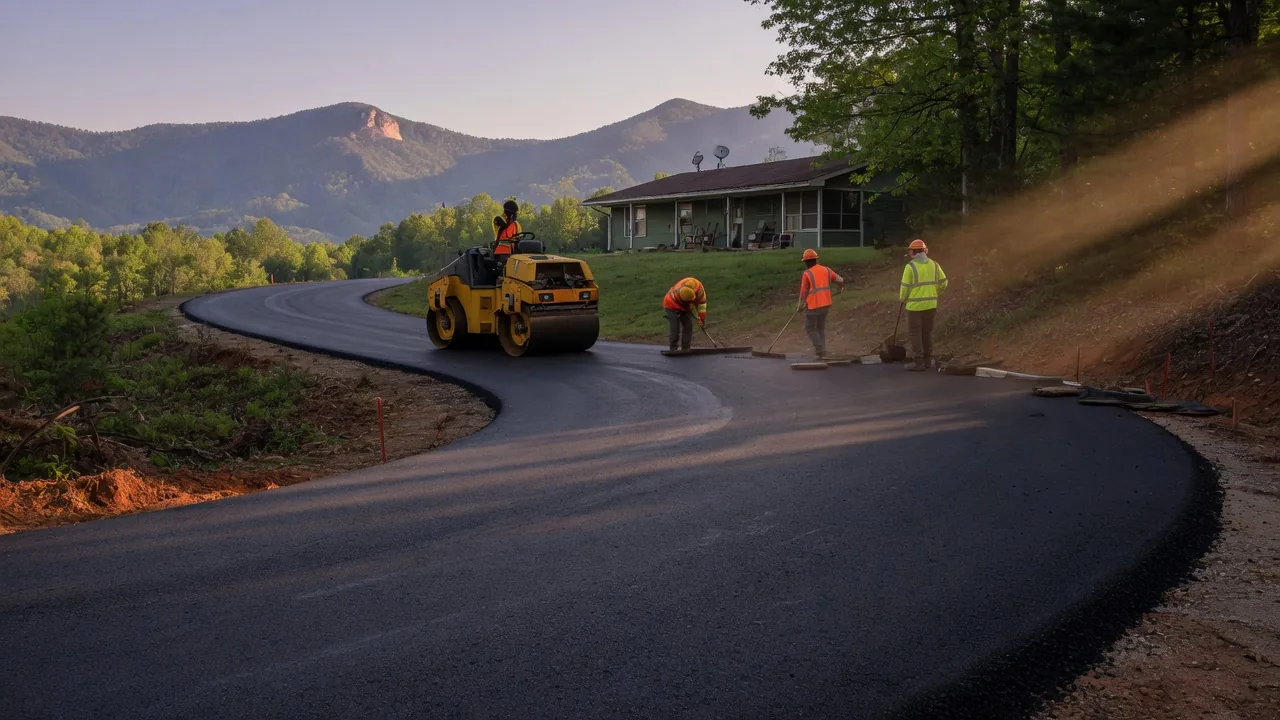
A driveway cut into a Waynesville hillside is not the same job as one on a flat lot near Clyde or Canton. Haywood County's residential ground is a mix of red clay, decomposed granite, old gravel drives that have been topped for decades, and fill placed when a house pad was carved into the slope. Each of those needs a different base before any hot mix goes down, and that base is usually 40 to 60 percent of what you pay.
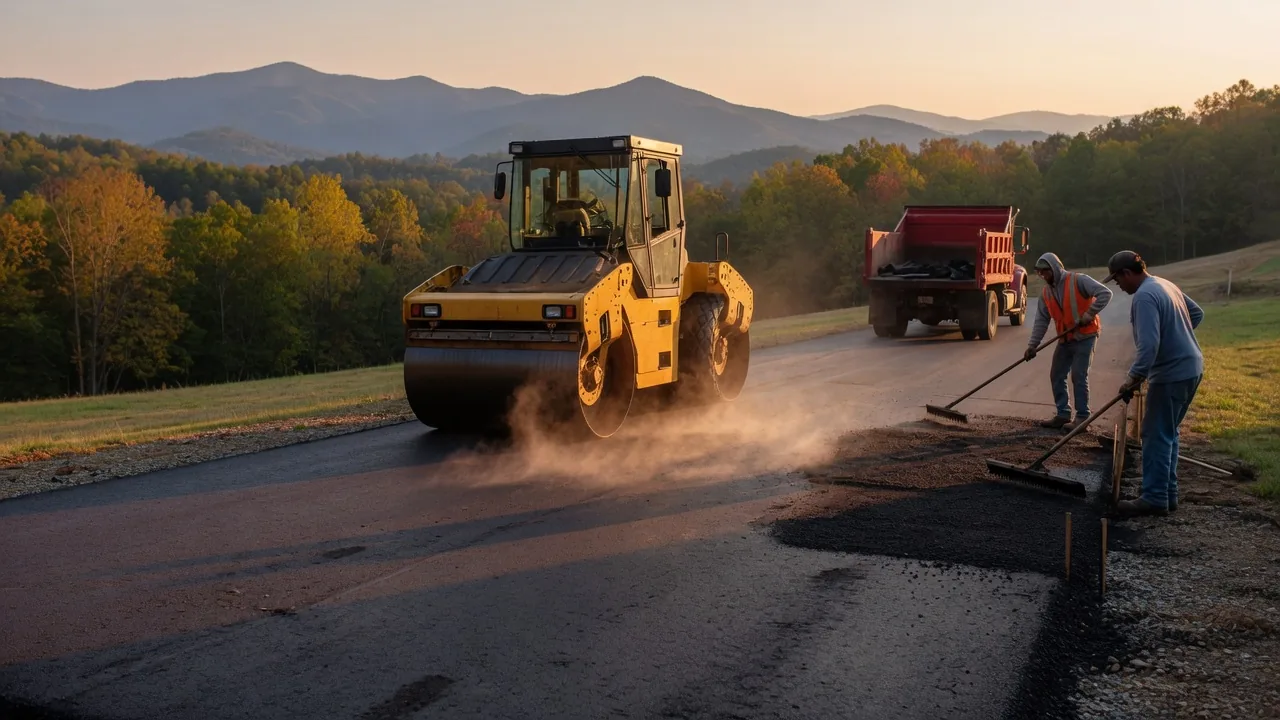
Red clay holds water and heaves in freeze cycles. Old gravel that's been packed and re-graded for years has lost its angular structure and stops draining. Fill on a hillside cut compacts unevenly and moves. A driveway that skips proper base prep—typically 4 to 8 inches of compacted crushed stone in two lifts, more on soft ground—will crack within two winters on a Haywood County slope. That is why a quote for $3 a square foot and a quote for $7 a square foot can both be honest: they are describing different ground.
Along US-19 and NC-209, many driveways climb at 10 to 15 percent grades. On those, the stone has to be deeper at the toe, where water collects, and the subgrade often needs geotextile fabric to keep clay from pumping up into the stone. On the flatter river-bottom lots near Canton and Lake Junaluska, the problem is the opposite: a high water table and silt that never drains, so the base has to be built up on a crowned grade rather than cut down.
Our asphalt driveways guide walks through base construction if you want the full picture before bid day.
The price bands Waynesville-area homeowners actually see
These are working ranges for Haywood County residential driveways, not quotes. The top row and the bottom row of this table can describe the same size driveway on the same street—the difference is what the crew finds when they strip the old surface.
| Scope of work | Typical Haywood range | What drives it |
|---|---|---|
| Overlay on sound existing asphalt or gravel | $1,800 – $4,200 | square footage, crack repair needed first, thickness of new lift |
| New driveway, moderate slope, standard base | $3,200 – $6,500 | length, width, stone depth, drainage away from the house |
| New driveway, steep lot or soft clay | $6,000 – $10,500 | extra stone, geotextile, culvert or swale, retaining where it turns |
| Full rebuild with drainage correction | $10,000 – $18,000+ | grading, haul-off, engineered swale, deep base on fill |
Per-square-foot pricing in this county generally runs $3 to $7 for a full new build, with the higher end tied to hillside access and stone depth. A driveway that needs a culvert under the county right-of-way adds cost that no flat-ground square-foot number captures.
Two local details move the number more than most homeowners expect. First, narrow mountain driveways—often 10 to 12 feet wide instead of the 14 to 16 feet a flat-lot subdivision allows—mean less total square footage but no reduction in equipment cost, so the per-foot price rises even as the total drops. Second, haul distance matters: a lot off a remote gravel road in the Bethel or Cruso area can add trucking time that a lot on a paved road in Waynesville's Russ Avenue corridor never sees. Neither detail is padding; they are the actual work.
Why the mountains change the number
Haywood County gets serious water. Storm systems that stall against the Balsams and Plott Balsams drop heavy rain on ground that is already saturated, and the federal record shows 19 federally declared disaster events touching this county over 1973-2026. That history is not trivia—it is the reason a driveway here needs positive drainage from the moment it is built. Water that cannot sheet off the pavement will find the base, and once the base is gone the asphalt is a roof over a hole.
The National Weather Service (NWS) issues flash-flood warnings for Haywood County's mountain headwaters regularly, and the terrain that makes those storms dangerous is the same terrain that makes driveway drainage difficult. A slope that sheds water fine in a light rain can channel a gully across the pavement in a summer downpour. Driveways on the north side of a ridge stay wet longer, and those are the ones that fail first.
Practical rule for this county: any asphalt driveway quote that does not talk about where the water goes after the pavement is a quote for a repair in three to five years. Pair the paving with grading, a swale, or a culvert sized for the flow. The asphalt paving page covers how drainage ties into the pavement structure.
Permits, right-of-way, and who can do the work
Most driveway resurfacing inside your own property does not trigger a county permit, but any new connection to a state-maintained road needs an NCDOT driveway permit before the first load of stone is delivered (NCDOT). Applications are handled through the department's online portal (NCDOT Connect). If your driveway crosses a public right-of-way, culvert sizing and sight distance are part of that approval, and skipping it can mean tearing out new pavement later.
On the contractor side, North Carolina regulates who can take on larger paving and grading jobs. The state's licensing threshold rules apply once a project crosses certain dollar figures and involves work beyond simple resurfacing (NC Licensing Board for General Contractors). For a small overlay it rarely comes up. For a full driveway rebuild with grading and drainage, ask the question before you sign. A paver who shrugs off both the permit and the licensing question is telling you how the base will be built too.
One more piece of the puzzle: if the job involves moving dirt near a stream or wetland—common on Haywood County properties that back up to a creek—federal and state erosion-control rules can apply. The Environmental Protection Agency (EPA) maintains the stormwater and erosion guidance that local inspectors reference, and it is worth a look if your driveway crosses or runs alongside a drainage. Most residential driveways stay under the threshold, but the ones that don't can stall for weeks without the right paperwork.
How to compare bids without getting burned
Haywood County has plenty of honest paving crews and a few that price the job as if the ground under it does not exist. Three habits separate them:
- Make them name the stone depth. A real quote states inches of compacted base, not just "proper prep." If the number changes once they start digging, the base was never priced.
- Ask where the water exits the property. Every bidder should be able to point to the swale, the culvert, or the grade change. If they cannot, the driveway will fail at the first big storm.
- Compare against the table above. A bid far below the range usually means thin base; a bid far above it should come with a written explanation of slope, haul-off, or drainage work. Both can be legitimate—the explanation is what you are buying.
For a wider regional look before you call anyone, the asphalt driveway cost guide breaks down the same ranges across Western North Carolina.