When the plants can actually roll asphalt in Transylvania County
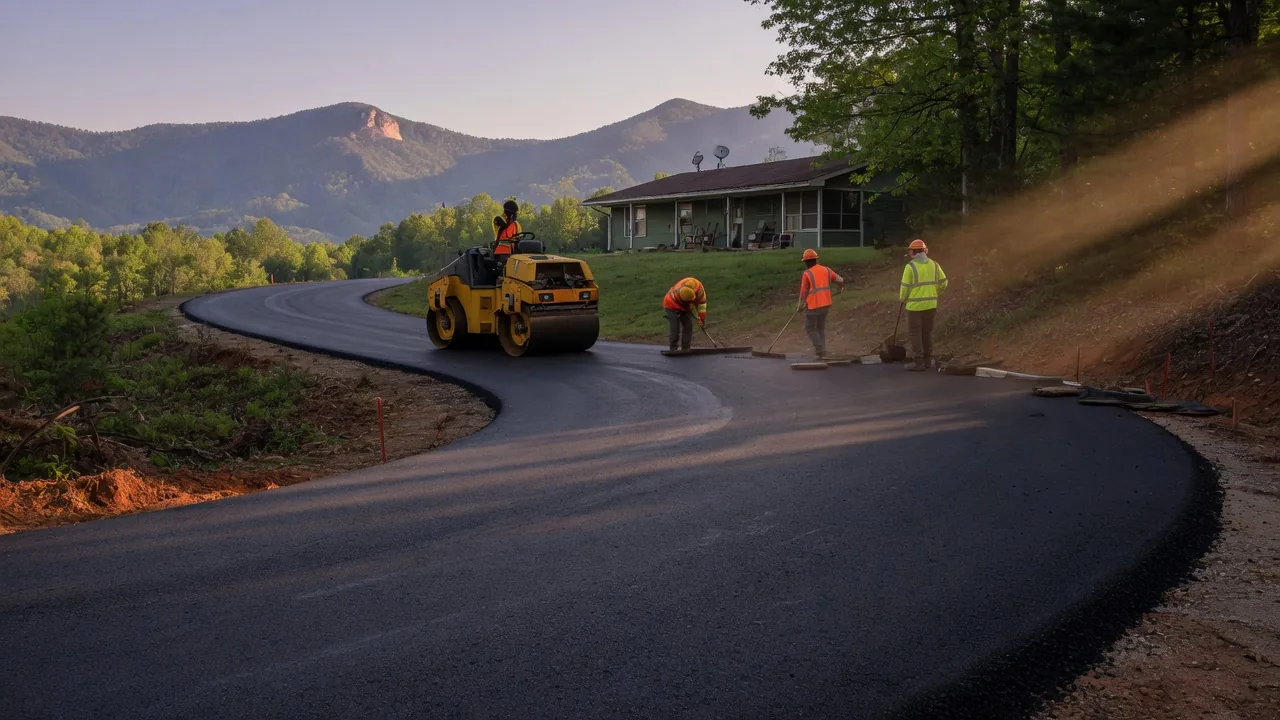
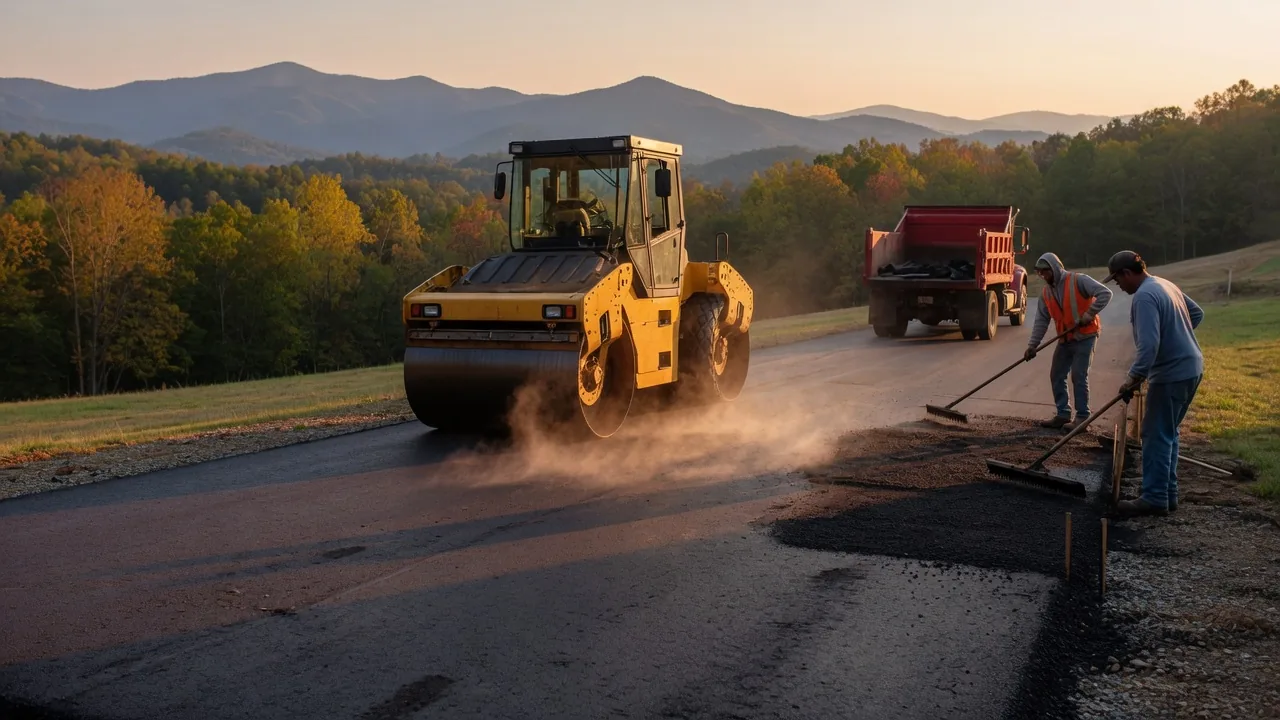
Asphalt does not care about your schedule, it cares about temperature. Around Brevard and the rest of this county, hot-mix plants generally stay busy from roughly April through late October, and crews want surface temps warm enough that the mix stays workable from the truck to the roller. Push a residential driveway into late November on a north-facing slope above the Little River and you are rolling cold, trapping moisture, and buying a driveway that will ravel at the edges before its first full winter.
The window is tighter here than most homeowners realize because Transylvania County sits in a cool, wet pocket on the Blue Ridge escarpment. The same elevation that makes Brevard and the surrounding coves so green also means more fog, more summer rain, and harder freezes than the Piedmont gets a couple hours east. A paving crew that shows up in June and knows the material has to be placed and compacted before it drops below the working window will lay a better mat than one that treats the job like flatland. When the forecast turns, a smart crew will reschedule rather than chase a bad day.
The other local reality is shade. Driveways cut into hardwood coves often stay damp well into the morning, and that moisture sits at the base of the asphalt until the sun finally reaches it. In deep shade off a ridge near Rosman or up toward Gorges State Park, the pavement may not dry out until midday. That is a curing and adhesion problem, not just a cosmetic one. It is also why two neighboring driveways on the same road can age very differently one lot apart.
What Transylvania County driveways actually cost
Quotes in this county vary more than homeowners expect, because a driveway in a flat subdivision off Highway 64 and a switchbacked drive up to a ridge lot near Rosman are not the same job. Even inside Brevard, a short in-town drive with easy truck access will price differently from a long gravel run climbing toward a Pisgah-adjacent ridge. Below are honest working ranges, not bids.
| Scope of work | Typical Transylvania range | What drives the number |
|---|---|---|
| Gravel driveway, graded and compacted | $1,200 – $3,500 | length, slope, base depth, culvert needs |
| Asphalt overlay over sound existing drive | $2,800 – $6,500 | square footage, existing surface condition, edge repairs |
| New asphalt install, gravel-to-asphalt | $3,500 – $9,000 | base prep, thickness, tonnage, access for the truck |
| Long or steep mountain drive, full build | $9,000 – $18,000+ | length, switchbacks, drainage, retaining or shoulder work |
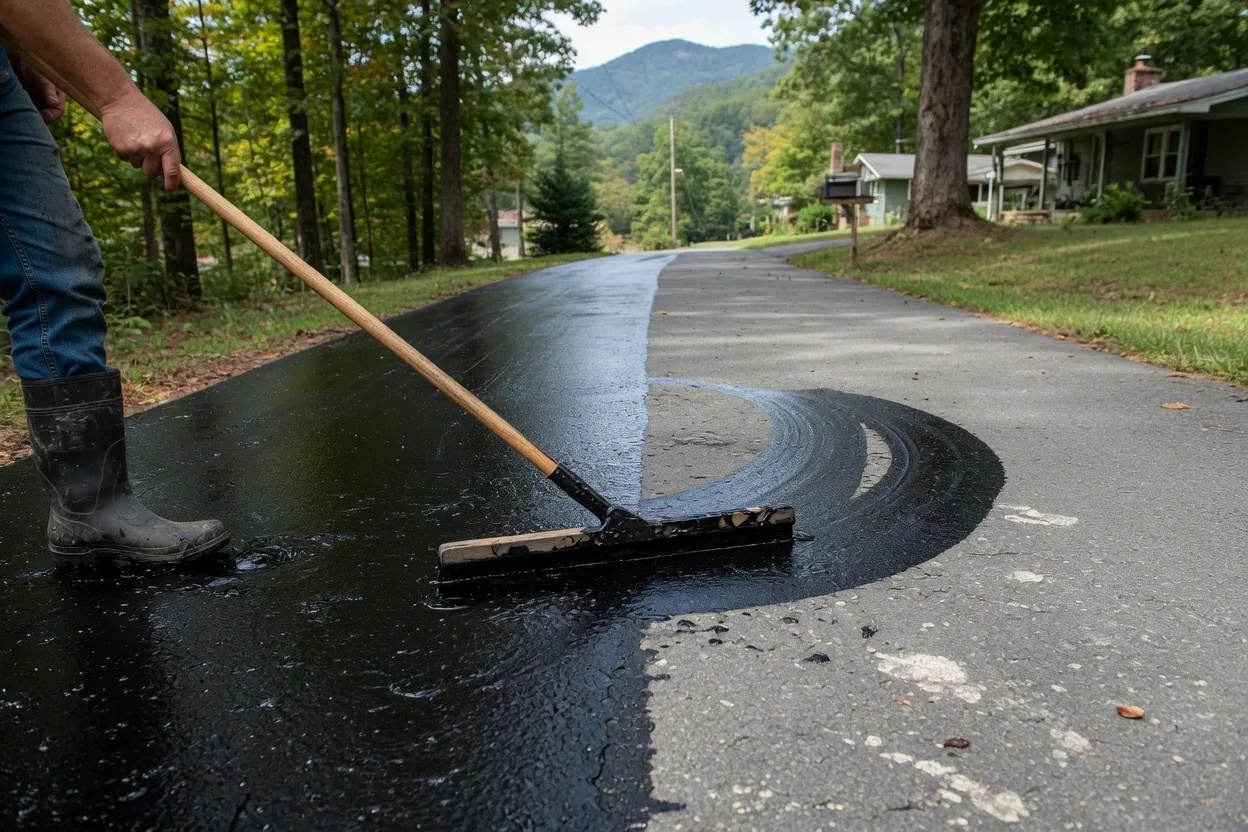
| Sealcoat and crack fill | $350 – $1,400 | square footage, crack count, prep |
Those numbers move with the tonnage math. Asphalt is sold by weight, and a steep, tree-shaded drive often needs a thicker base course to survive freeze-thaw than a flat sunny one of the same length. If the quote does not mention base thickness, ask. A one-number quote with no tonnage behind it is a price, not a plan.
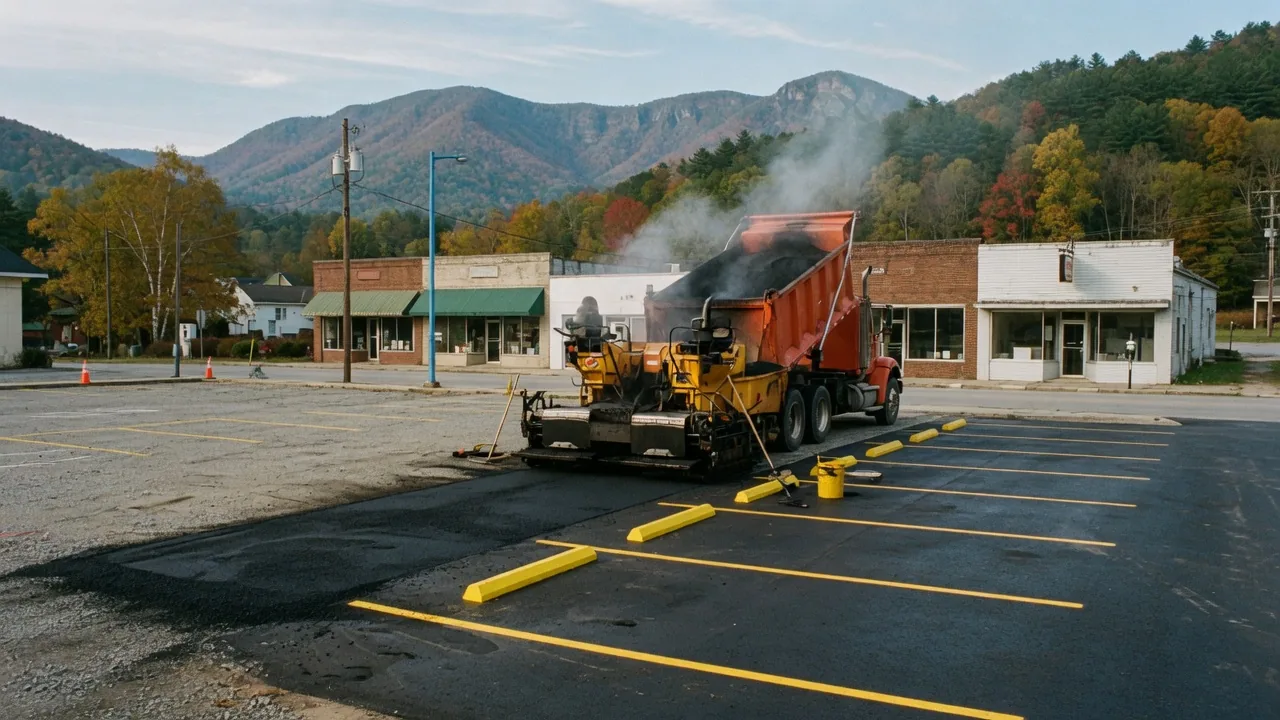
Mobilization is another line that hits mountain jobs harder. A crew dragging a paver and roller up a narrow drive has to plan how the trucks turn around, where they stage stone, and whether the grade will let a loaded dump truck back down safely. On tight Brevard-area lots, that logistics can add real time to a job that looks small on paper. Shorter driveways benefit from that math; long ridge runs get punished by it.
Frost, drainage and the Blue Ridge problem
Water is what kills mountain driveways here. Transylvania County's rainfall and freeze-thaw cycle work together: water gets into the base, freezes overnight, expands, and by spring the asphalt has heaved and cracked at the center seam. If your driveway runs downhill toward the house, that same water is also a grading problem for the foundation.
Every driveway in this county needs a drainage story before it needs a paving quote. That usually means a crowned drive, a defined shoulder, and culverts or a ditch on the uphill side to capture runoff before it crosses the asphalt. Federal records show 16 declared disaster events touching Transylvania County across 1993-2026, most of them storm and flood family, and that history shows up as washouts on unimproved slopes. Brevard's reputation as one of the wettest spots in the eastern US is not marketing; it is measurable, and it directly shapes how much stone your subbase needs. Before committing to a paving schedule, it is worth understanding how your driveway ties into the paving and drainage work a mountain lot actually needs.
Frost depth matters too. In the mountains, the ground can freeze deeper than flatland crews assume, and a thin base will heave in the first hard winter. This is why experienced local pavers budget extra inches of compacted crushed stone under shaded and north-facing drives even when the surface square footage looks modest. It is invisible in the finished product and it is the single biggest reason two driveways of the same size can last ten years apart.
Permits, access and who is allowed to do the work
In North Carolina, a residential driveway that connects to a state-maintained road generally requires an access permit from NCDOT before you cut the shoulder. Interior driveways usually do not, but slope and culvert work near a public road often does, and the county may weigh in on stormwater movement. Standard details for things like culvert sizing and shoulder transitions come from the state, and getting them wrong means rework.
Anyone doing driveway work as a general contractor crosses the state's licensing threshold rules once a job reaches the threshold set by the NC Licensing Board for General Contractors. Grading and drainage contractors are not always general contractors, so ask what they are licensed and insured to do, and check it. A paving contractor who cannot explain how stormwater leaves your property is selling you asphalt, not a driveway.
Structural changes on a slope, like retaining walls to hold a widened switchback, may pull in additional requirements depending on height and location. When in doubt, a quick call to the county before work begins saves a lot of arguing later. The cost of a permit is trivial next to the cost of undoing a driveway that violates a setback or blocks a drainage easement.
How to compare paving bids without getting burned
Paving in this county is a short-season trade, and that affects how you should shop. Three things protect you:
- Get the tonnage, not just the price. Ask how many tons of asphalt and how many inches of stone base per square yard. A cheap bid is usually thin stone, thin mat.
- Schedule before the window closes. Late summer is the sweet spot around here. Waiting until the maples turn means rolling cold mix and praying.
- Look at a driveway they paved two winters ago. Transylvania winters expose bad base work fast. A two-year-old drive in a shaded cove tells the truth a showroom will not.
Ask also about their plan for the edges. On a mountain drive, the shoulder has to lock the mat in place, and a crew that leaves soft or missing shoulders is inviting the freeze-thaw damage they will later call a repair job. A written scope that lists stone depth, asphalt thickness, compaction, and drainage is the fairest way to compare two bids that look different on paper.
Comparing this against other options? The region-wide guide to asphalt driveway cost covers what changes when you leave the mountains, and the overview of asphalt driveways walks through materials and lifespan.