The paving window in the Swannanoa Valley is shorter than the calendar suggests
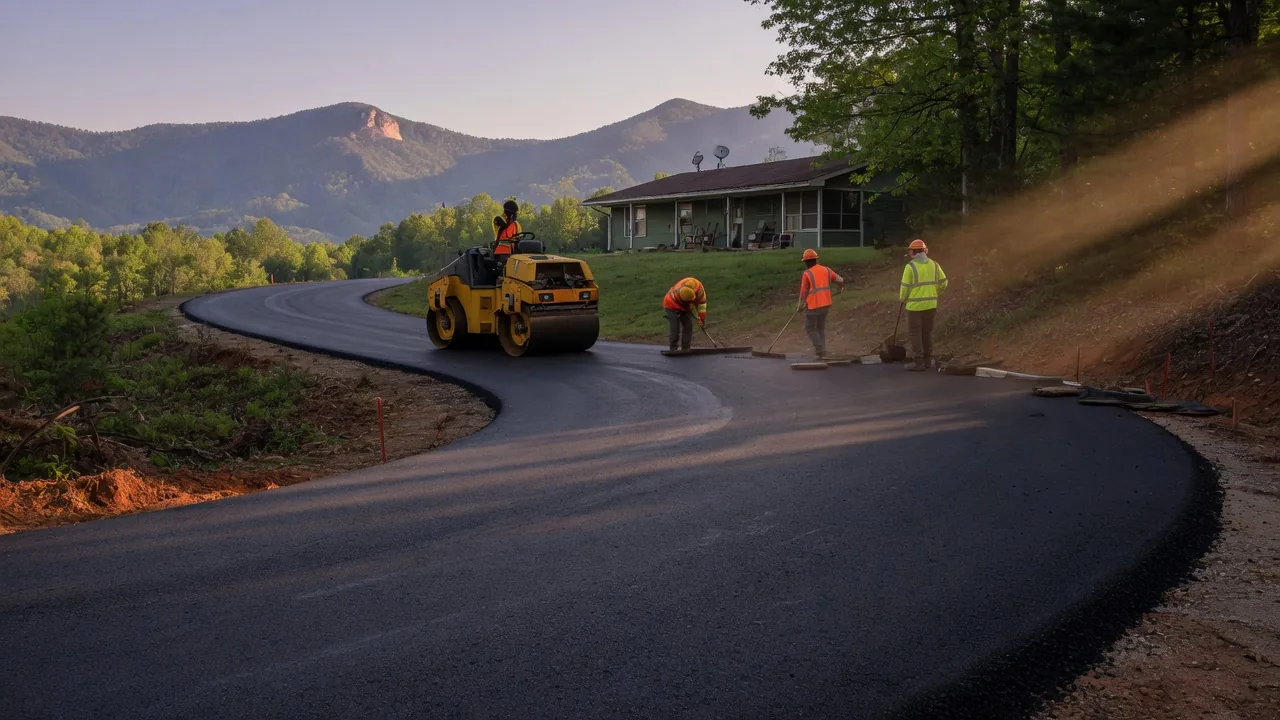
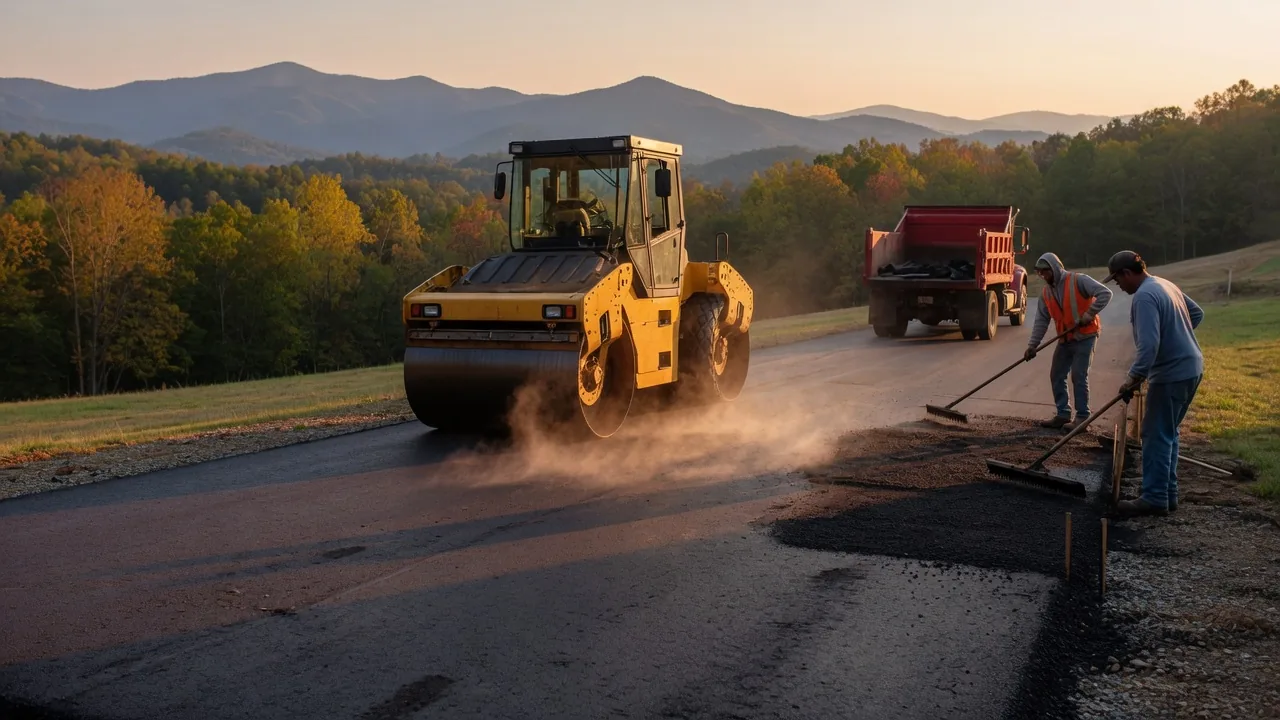
Swannanoa sits in a valley trench between the Blue Ridge on one side and the Black Mountains on the other, and that geography runs the paving schedule, not the calendar on the wall. Hot-mix asphalt has to leave the plant, arrive, and be rolled while it is still workable — generally above 50°F surface temperature with no rain in the hour before or after. Mix plants in this part of Buncombe County commonly fire up in spring and wind down in fall, and once nighttime lows start dipping toward freezing, compaction quality falls off fast. Crews working Swannanoa driveways chase the morning, not the afternoon. South-facing slopes in the valley warm first and hold heat longest; north-facing driveways under heavy hardwood shade may stay cool enough that a late-March date on one side of the road works and the other side doesn't. If you're scheduling, ask what time of day your driveway is slotted and why. A crew that shrugs at that question is not reading the site.
What Swannanoa driveways actually deal with
The housing mix here shapes the work. Older mill-era homes on flat valley-floor lots often have long, wide gravel drives that have been topped once and patched twice. Newer builds on the slopes above town run shorter but steeper, and steep asphalt sheds water fast — which is good until the base fails underneath and the whole mat slides. Tree canopy is the third factor: heavy shade keeps organic debris on the surface, holds moisture, and accelerates the surface oxidation that turns new black asphalt gray and brittle.
The tells worth acting on early: alligator cracking in the wheel paths (base failure, not a surface problem), a soft spot that flexes when a loaded truck crosses it, edge crumbling where the asphalt meets gravel or grass, and standing water that lingers more than a day after rain. Surface cracks under a quarter inch are usually a sealcoat conversation. Cracks that have widened year over year, or that step vertically, are a base conversation.
Scope and cost, line by line
Prices below are realistic working ranges for the Swannanoa and greater Buncombe County market — treat them as bands, not quotes, because base condition and access drive the real number. Long or narrow drives with no truck turnaround add labor. See the full Buncombe County asphalt cost breakdown for how these bands shift by town and lot type.
| Scope | Typical range | Notes |
|---|---|---|
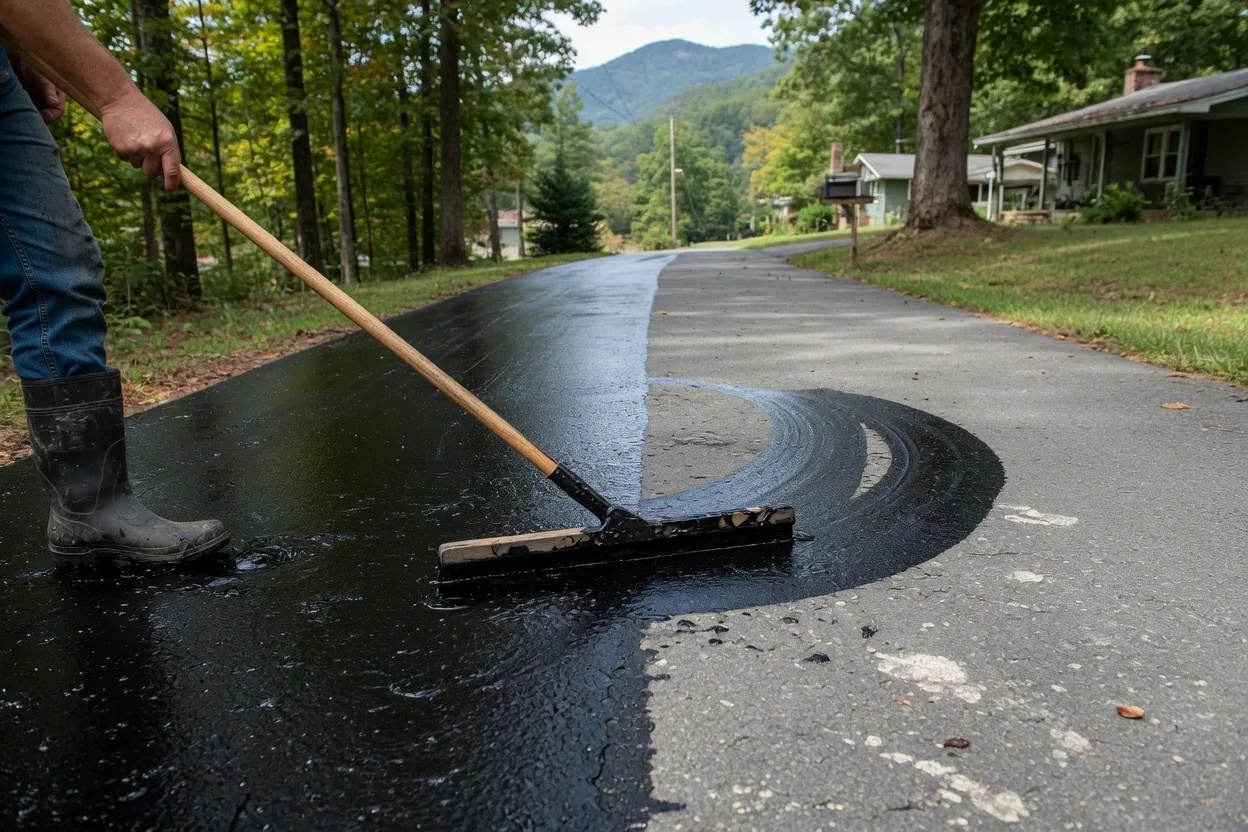
| Crack fill and sealcoat (maintenance) | $250–$800 | Depends on square footage; should be done on dry, warm days |
| Overlay / resurface over sound asphalt | $1,800–$4,500 | Only valid if base is intact; not a fix for alligator cracking |
| Full install, new driveway, standard access | $3,500–$9,000 | Includes grading, base, binder, and surface course |
| Full install, steep or long drive | $8,000–$16,000+ | Slope, drainage, and haul distance are the movers |
| Base repair / remove and replace failed section | $2.50–$6.00 per sq ft | Cheaper than a whole new driveway when the failure is localized |
Two line items flatland quotes skip and Swannanoa quotes shouldn't: drainage correction (where the water actually goes at the bottom of your drive) and base thickness. A driveway that fails in four years almost always failed because of one of those two, not the asphalt itself. Our asphalt driveway guide walks through what a proper base build looks like.
Water, frost, and the base nobody wants to pay for
Buncombe County's federal disaster record tells the story: 19 declared events touch this county across 1973-2026, overwhelmingly storm and flood family. Swannanoa's valley-floor position means runoff from the surrounding ridges concentrates here, and saturated subgrade is the single most common reason a driveway that looked fine in August heaved and cracked by March. Frost heave works on the same principle — water in the base freezes, expands, and pushes the asphalt up, then leaves a void when it thaws. The fix is not a thicker asphalt layer. It's a properly compacted aggregate base with a drainage path away from the pavement.
On the regulatory side, the EPA maintains stormwater guidance that matters if your driveway grading redirects runoff toward a neighbor or a waterway, and the NCDOT governs driveway connections to state-maintained roads — relevant for the many Swannanoa properties that abut a state route. If your driveway meets a state-maintained road, a permit and a compliant culvert or pipe may be required at the connection point.
Hiring a paving crew here without getting burned
Three checks specific to this valley. First, licensing: North Carolina requires general contractor licensure above certain project thresholds, and the NC Licensing Board for General Contractors is where you verify whether the work you're buying crosses that line — many residential driveway jobs don't, but grading and drainage work can push a project into licensed territory. Second, references on steep or shaded lots, not just flat ones; a crew that only paves flat valley-floor drives will struggle with a switchback. Third, ask what mix they're laying and where it's coming from — a plant more than about 45 minutes out on a cool morning means the asphalt may arrive too stiff to compact properly.
When you're ready to compare bids, our Swannanoa paving contractor guide covers how to read a quote and what a legitimate scope of work includes.