Reading the surface before you spend a dollar
A Brevard driveway rarely fails everywhere at once. The pattern tells you what to buy. Hairline cracks that wander across the whole slab usually mean the asphalt has oxidized and dried out, and an overlay can buy you real years there. Cracks that run in straight lines, or that open and close with the seasons, point to movement underneath, and covering them with new asphalt just hides the cause. Potholes that keep coming back in the same spot are a base problem, not a surface problem. And an edge that has crumbled and dropped away is water eating the shoulder from the outside in.
Walk your driveway after a hard rain. Water sitting in low spots, or sheeting off the asphalt onto bare soil, tells you more about its future than the surface texture does. In Transylvania County, where so many lots sit under a canopy of oak, white pine and rhododendron, shade keeps pavement damp and mossy far longer than a sun-exposed driveway in town, and that moisture is what drives most of the decay we see.
Feel the surface with your hand in a few spots. Chalky, gray, gritty asphalt that leaves dust on your palm has lost its binder to oxidation, which is normal aging and usually means the mat itself still has life. Dark, gummy, or spongy asphalt that flexes under a boot is a different story: that is moisture trapped below, and no overlay will survive it. Press a screwdriver into a suspect area. If it sinks easily, the base under that spot has lost its capacity to carry load, and you are looking at a repair before a resurface.
Also look at where the driveway meets the garage slab, the road apron, and any retaining walls. Those transition points in Brevard's hillside lots are where water concentrates, and they fail first. If the asphalt has pulled away from a garage apron or dropped below the concrete, that movement is a drainage signature, not a paving problem, and it needs to be solved before any new surface goes down.
Patch, overlay, or tear out: matching scope to damage
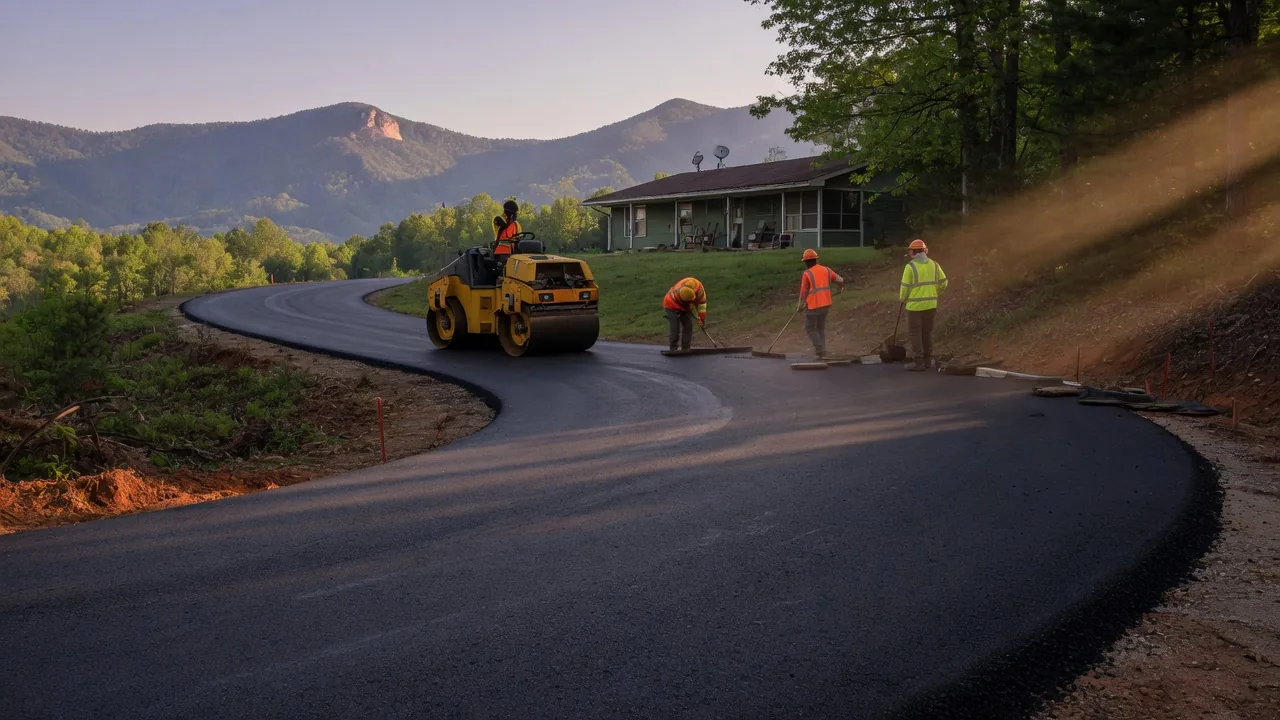
The decision comes down to how much of the driveway is still structurally sound. Patches address isolated failures, such as a pothole, a utility cut, or one soft spot, and only make sense when the surrounding asphalt is intact and draining well. An overlay, also called resurfacing, mills or levels the existing surface and lays a new wearing course over the whole thing, which is the right call when the base is sound but the surface is cracked and tired. A full tear-out removes the old asphalt and rebuilds the base, which is the only honest answer when the subgrade itself has failed.
Selling an overlay over a failed base is the most common mistake in this trade. It looks good for one season and then reflects every old crack back through the new surface. The table below shows how the three scopes compare for a typical residential driveway:
| Scope | What it addresses | Typical cost range |
|---|---|---|
| Patch repair | Isolated potholes, single soft spots, utility cuts | $250-$1,200 |
| Full overlay / resurfacing | Oxidized, cracked surface over a sound base | $3-$6 per sq ft; often $2,200-$7,800 total |
| Partial overlay with base repair | Localized base failure plus a new wearing course | $4,500-$11,000 |
| Full tear-out and rebuild | Failed subgrade, widespread alligator cracking | $6-$12 per sq ft |
For a deeper line-item breakdown by county, see the Transylvania County cost page.
One more distinction worth knowing: alligator cracking, the web of interconnected cracks that looks like reptile skin, is almost always a fatigue failure of the base, not the surface. A few small alligator patches can be cut out and repaired individually. Alligator cracking across more than about a third of the driveway is the signal that an overlay is money thrown at a symptom, and a tear-out is the only scope that holds.
Why Brevard driveways age the way they do
This town sits at the foot of the Pisgah National Forest, and the terrain and tree cover shape every paving decision here. Sloped driveways shed water fast but erode at the edges; flat lots under shade hold moisture and grow moss in the joints. Winters bring repeated freeze-thaw cycles. Water gets into a crack, freezes overnight, and pries it wider by spring. The federal record reflects how often weather has stressed this county: 16 declared events touch Transylvania County across 1993-2026, mostly storm and flood family, and each one pushed water at pavement that was already aging.
Housing character matters too. A lot of Brevard's residential driveways were poured decades ago, often as short gravel-to-asphalt conversions when these lots were first built out. Many were laid 1.5 to 2 inches thick over whatever was already there, with no real base compaction, and that history is why so many of them crack in the same diagonal pattern across the same slope. Knowing that the original install was thin changes how you read a new crack: it is often the mat following the subgrade's movement, and reflecting on it, not the asphalt itself, is what needs to be cut and patched.
The National Weather Service tracks the freeze-thaw and heavy-rain patterns that drive most of the cracking we see, and proper drainage is the single best defense. Grading, gutters, and where the uphill runoff goes matter as much as the asphalt mix itself. On the shaded north-facing driveways up toward the forest boundary, moss and algae live in the surface pores and hold moisture against the binder year-round, which is why those drives often need crack sealing on a tighter cycle than sunnier ones on the same street.
The resurfacing process, step by step
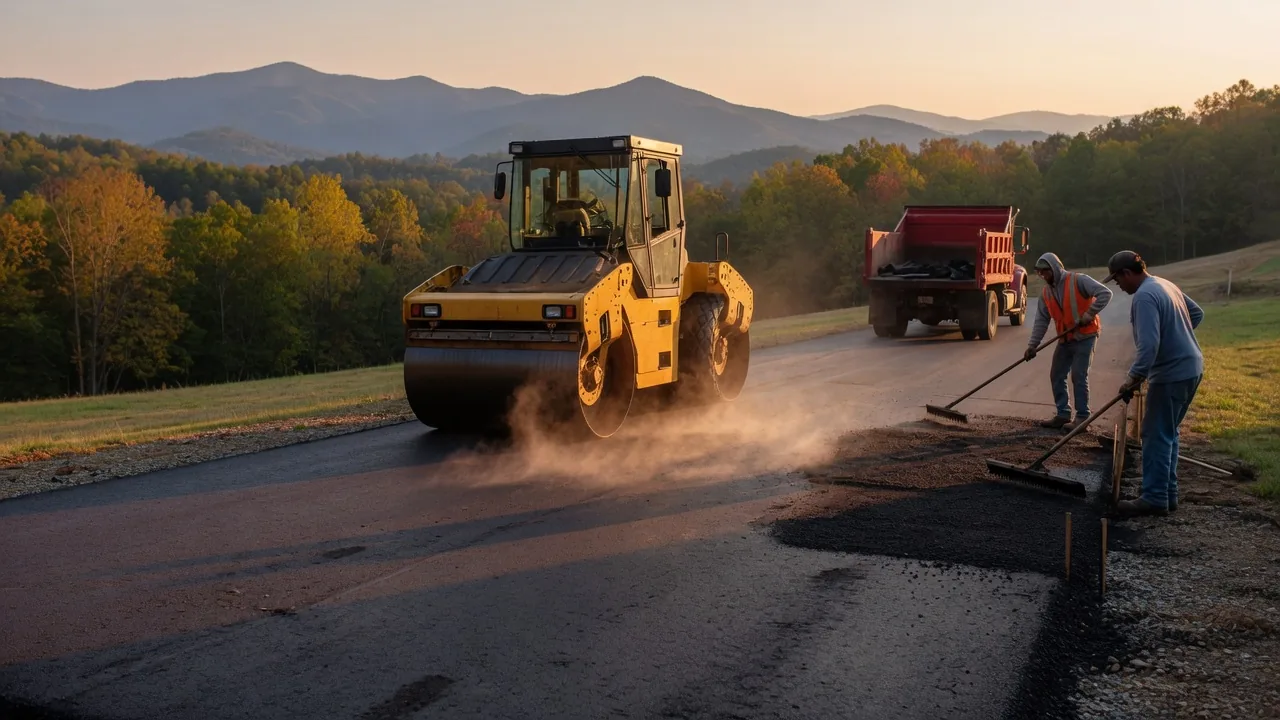
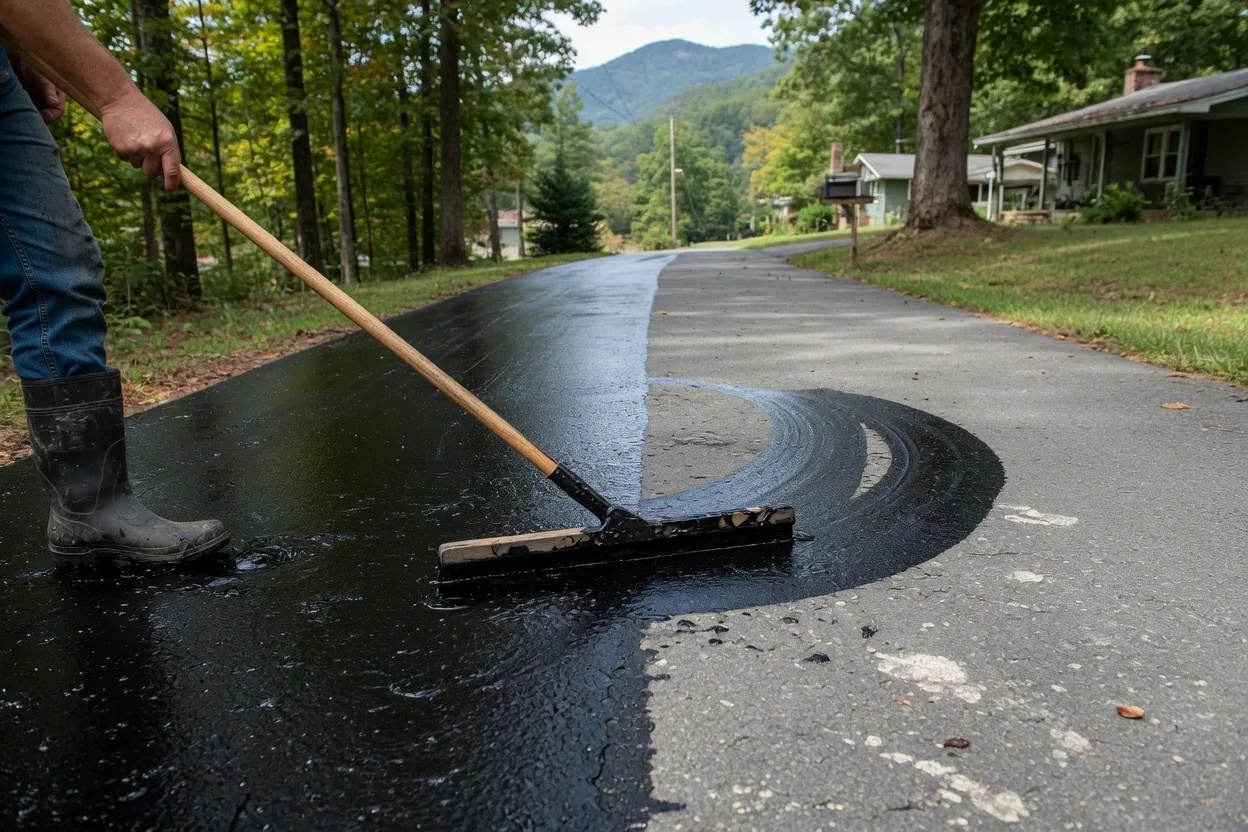
A legitimate overlay starts with cleaning, blowing out cracks and removing loose material and vegetation. Next comes crack filling and patching any isolated failures, because those defects will telegraph through a new surface if ignored. Then a tack coat bonds the old asphalt to the new. Finally the new wearing course goes down, typically 1.5 to 2 inches, compacted with a roller while it is still hot. Skipping the cleaning or the tack coat is how a cheap overlay fails in two winters.
Two things get skipped on tight-budget jobs in Brevard, and both are worth watching for. The first is crack routing, where the crack is chased open with a router to a clean edge before it is filled. Pouring crack filler into a dirty, narrow crack works for a season at best. The second is leveling the low spots before the surface course goes down, using a scratch coat or a leveling course where the old surface dips. If the new asphalt just follows the old dips, water will keep pooling in the same place, and you will be back to the same pothole in a few years.
If your driveway ties into a public road or you are changing the curb cut, the NCDOT controls driveway access permits for state-maintained roads, and applications run through NCDOT Connect. It is worth checking before any work that touches the right-of-way. Anything within the state right-of-way, including the apron, culvert, and ditch line, needs approval before excavation begins, and that applies whether the driveway itself is fully within private property or not.
Choosing a crew that reads damage honestly
North Carolina requires a general contractor license once a job crosses the state threshold, and the NC Licensing Board for General Contractors is where you verify it. Beyond the paperwork, ask any paving crew two questions: how do they decide between an overlay and a tear-out, and what is their drainage plan for your specific lot. A crew that answers with a real diagnosis rather than a flat per-square-foot number is the one to hire. Our Brevard paving contractor guide covers what to check before signing, and the asphalt resurfacing overview explains the trade-offs in more detail.
Get at least two written scopes, and make sure each one names the square footage, the overlay depth, and what prep is included. A bid that says only "resurface driveway" and a lump number is not comparable to anything. On Brevard's hillside lots, ask specifically how the crew will handle the downhill edge and any culvert at the road apron, because that is where most driveways here start to fail, and it is the first line item a low bid will quietly leave out.