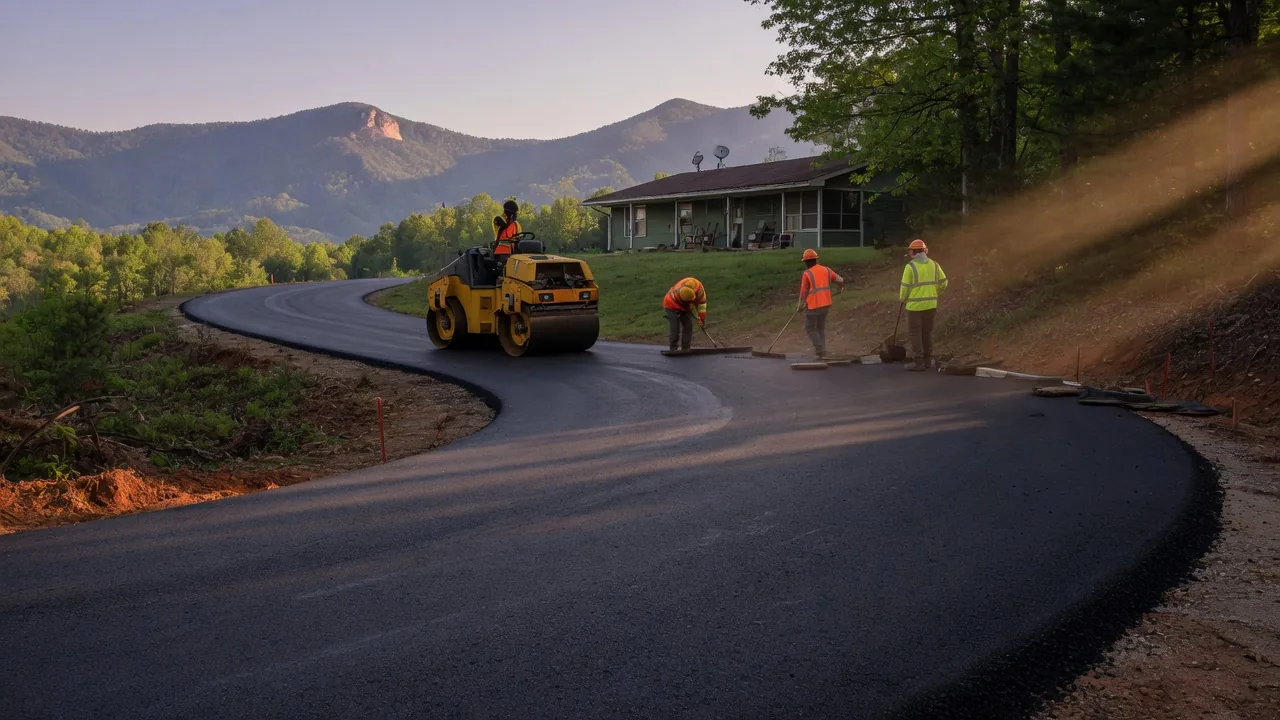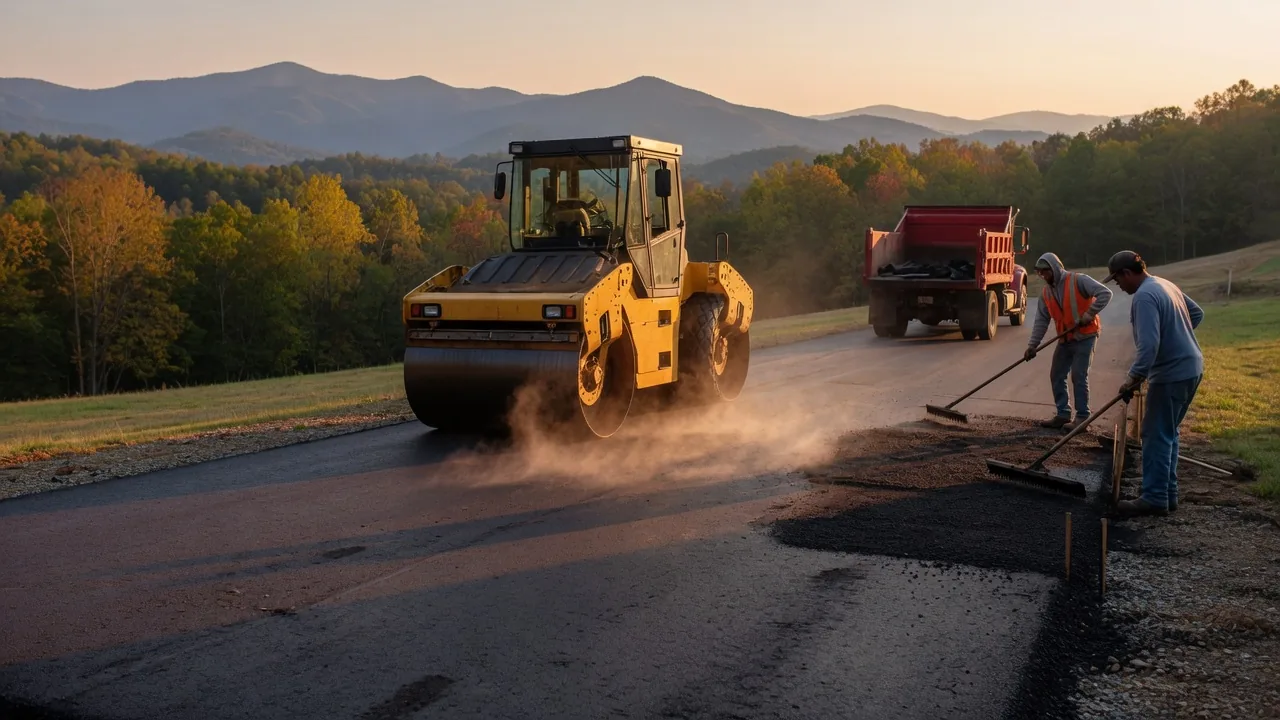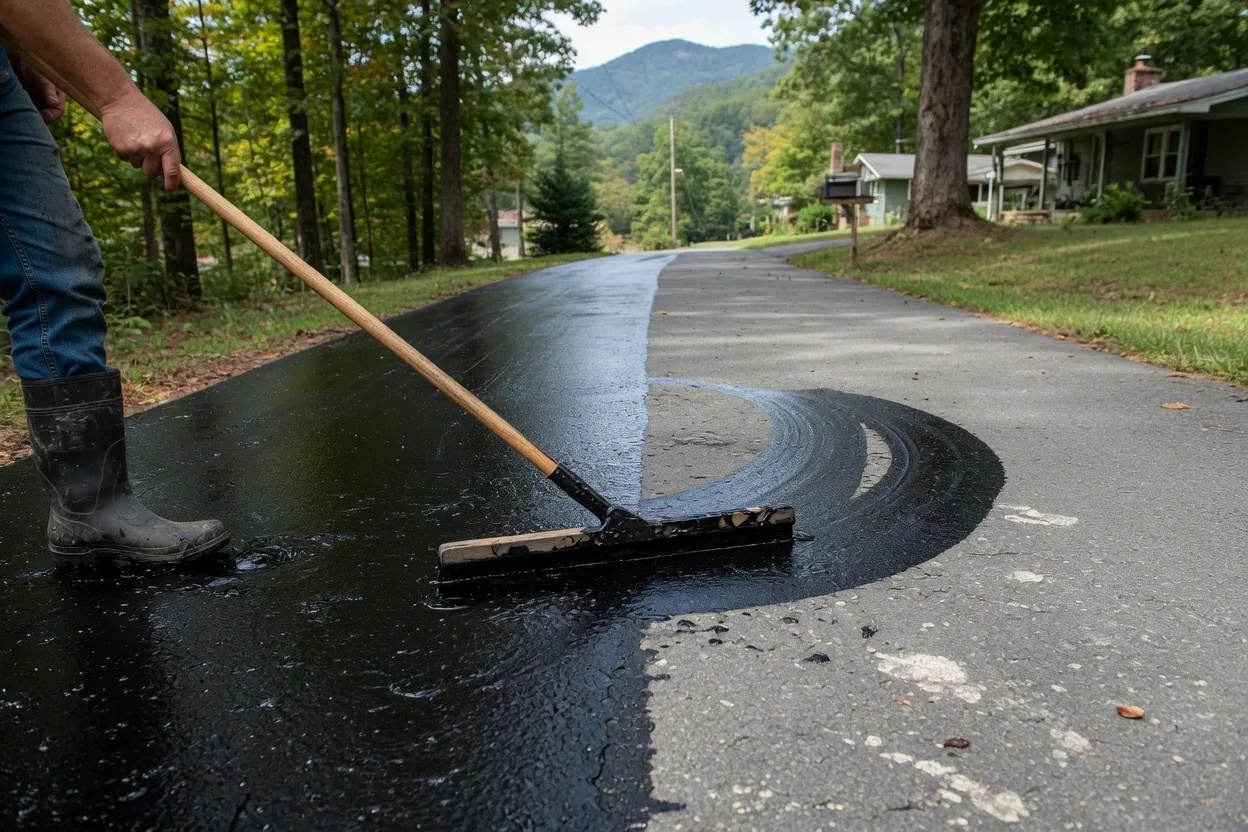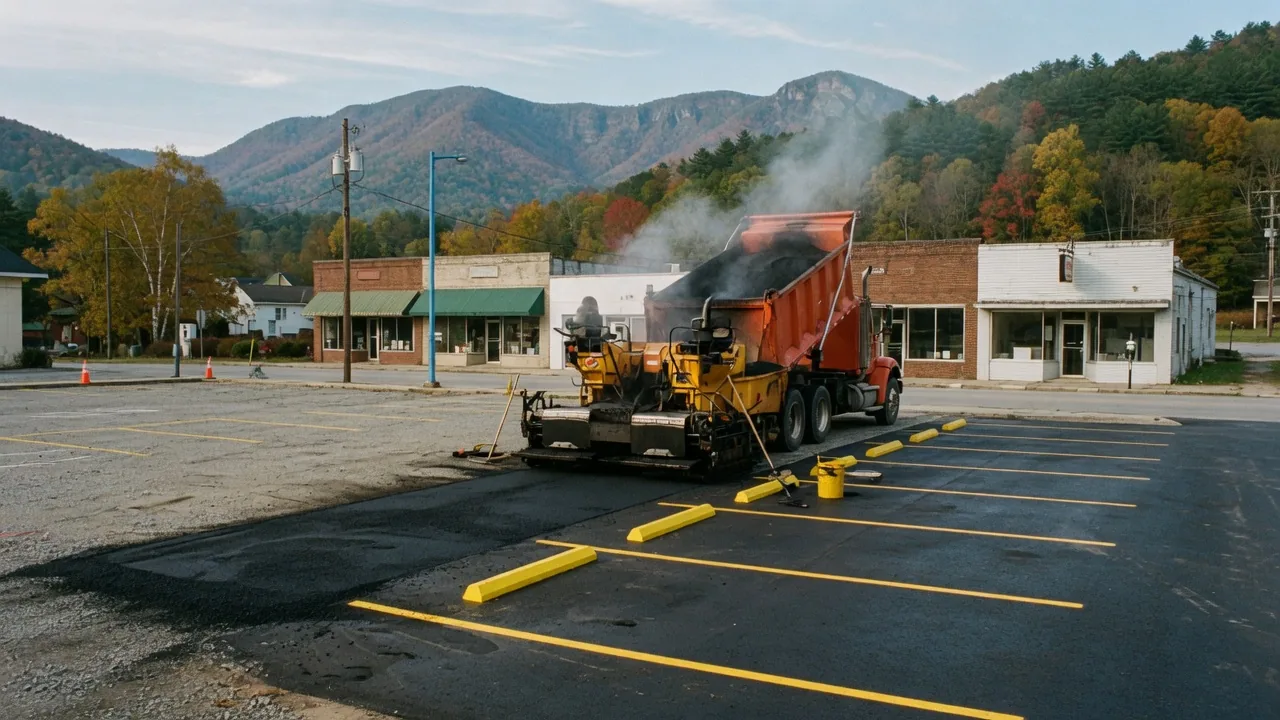
The first thing that moves a tar-and-chip quote in Hendersonville is not the stone and it is not the binder — it is the shape of the ground the drive has to hold on. Flat valley lots near the French Broad and Mud Creek bottoms price tight and simple. Sloped entries off Kanuga, off Howard Gap, off the roads that climb up toward Jump Off Rock, add line items before a single chip is spread. A chip-seal surface needs a stable, drained subgrade under it, and on Henderson County slopes that subgrade is the job.
The line items that decide your number:
| Scope item | Typical range | Why it moves |
|---|---|---|
| Tar and chip over sound existing surface | $1.75-$3.00 / sq ft | Cheapest case — prep, binder, one chip pass |
| Full install, new drive, good base | $3.50-$5.00 / sq ft | Grading, 4-6 in compacted base, two-chip finish |
| Full install over weak or wet subgrade | $5.00-$6.50 / sq ft | Underdrain, fabric, thicker stone, extra compaction |
| Hill-country cut or fill section | +$1.00-$3.00 / sq ft | Retaining, drainage swales, longer haul on steep ground |
| Culvert, turnout apron, or driveway pipe | $1,200-$4,500 lump | NCDOT connection work at the road edge |
| Chip-seal refresh on a drive already in service | $0.90-$1.60 / sq ft | Binder and chips only, no base work |
Read the table as anatomy, not as a menu. Most Hendersonville jobs are two or three of those rows stacked. The full working numbers live on the Henderson County driveway cost page; this page is about why the rows differ.
The base is the line item nobody wants to buy
Chip seal is a wearing course. It is two or three inches of nothing that protects whatever is underneath. Put it on ground that pumps when it is wet and you will have a rumpled, alligatored drive in three winters — and Hendersonville gets real winters at elevation, not Charlotte winters. The International Code Council family of codes exists because site drainage and foundation stability are structural questions, and a driveway is the same conversation in miniature: water has to leave, and the subgrade has to be stone, not topsoil.
So the honest quote includes excavation to stable material, geotextile where the soil is fine and wet, and compacted crushed base in lifts. That base line is often 40 to 60 percent of the invoice. Crews that skip it can bid $1.50 a square foot under everyone else and still make money — for one season.
Stone size and binder rate, chosen for this ground
Tar and chip is a local trade because aggregate is local. In Henderson County the practical spec is a washed, angular stone that locks into the emulsion rather than a rounded river gravel, which rolls out from under tires on a slope. Chip size and spread rate change the price: a single chip pass is cheaper and thinner, a double chip pass costs more and lasts longer on a drive carrying trucks or a steep pitch.
Binder rate is the other dial. Too lean and the chips shed; too rich and the surface bleeds in summer heat and tracks into the garage. On drives that climb, the applicator usually wants a slightly heavier binder and a chunkier chip so the surface keys together. That is a real cost difference per square foot, and it is one of the few places a homeowner can genuinely trade money for years of service.
The water line item, and why the county record matters
Federal disaster data for this county tells the story plainly: 16 declared events reach Henderson County across a record spanning 1978-2026, and the overwhelming majority are storm, flood, and wind family. That matters to a driveway because every one of those events is a test of where water goes when it comes fast. A drive that sheds a normal rain fine will still channel a hundred-year rain into a neighbor's cut bank or back onto your own base.
The movement is not theoretical here. Mountain ground, clay soils, and steep cut-and-fill lots mean a driveway is often the largest graded surface on the property. The National Weather Service forecast office in Greenville-Spartanburg issues the flood and flash-flood products that this county lives by, and the practical takeaway is upstream drainage. Culverts sized for ordinary flow, turnout aprons that do not erode, and swales that carry water off the road edge before it reaches your chip seal. You can see how our crews treat that in the tar and chip service overview.
Permits and who is allowed to do the work
Three things trip people up when a new driveway meets a public road or a big project goes out to bid. First, connecting a driveway to a state-maintained road requires a driveway permit from NCDOT, applied through the NCDOT Connect permit portal, and the road-edge construction has to meet their standards for sight distance and pipe sizing. Second, North Carolina draws a licensing line for general contracting: once a project crosses the state's cost threshold, the contractor in charge is expected to hold the right license, which you can verify through the NC Licensing Board for General Contractors. Third, work inside a city or county right-of-way can carry local review on top of the state permit.
Ask any installer two questions before signing: who pulls the NCDOT driveway permit, and who is responsible if the road-edge work fails inspection. A crew that answers both without blinking is the one you want. Start with our Hendersonville paving contractor page if you would rather compare crews than bids.
Reading a tar-and-chip bid on Henderson County ground
A complete bid on a slope-lot drive here should show separate lines for: mobilization, clearing or widening if any, excavation and haul-off, geotextile if used, base stone and compaction, prime or tack coat, binder application, chip spread, and a wearing pass or fog seal. If the bid is one lump number with no stone depth and no drainage description, you are not comparing prices — you are comparing guesses.
Two more local tells. A quote for a hill drive that includes no pipe, no swale, and no mention of where water leaves the property is missing the work that determines its life span. And a quote that promises a specific number of years is marketing; chip seal is a maintenance surface with a replacement cycle, and the honest conversation is about how long the base holds and how often the chips get refreshed.