Candler's driveways are not Asheville driveways
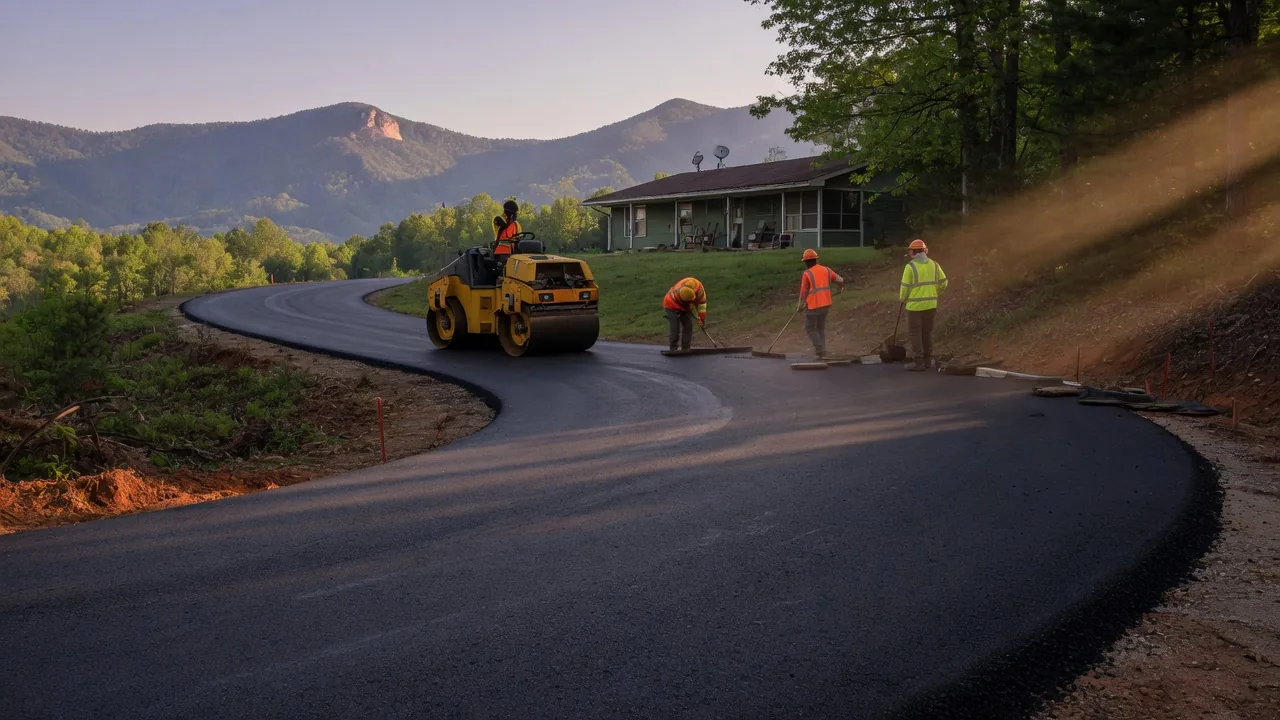
Drive west out of Asheville on Smoky Park Highway and the lots start stretching. Where a West Asheville driveway is a short strip between two houses, a Candler driveway is often 150 feet of pavement climbing away from the road toward a house set well back on the lot. That length changes everything about resurfacing: more square footage, more edge to contain, and more chance for water to find a soft spot on the way down.
The subdivisions off Sand Hill Road and the older rural stretches along Pisgah Highway tell two different stories. The newer neighborhoods have driveways that were engineered with proper crown and drainage; the older ones have pavement that was laid decades ago over whatever base was handy, and it shows in alligator cracking, settlement near the culvert, and edges that have crumbled back into the yard. Resurfacing either one is doable, but the scope is nothing alike. This is why the same square footage in Candler can price very differently from a job in the city.
Terrain is the other divider. Lots that back up toward Hominy Creek bottomlands drain differently than the ridge-side properties off Mount Pisgah Highway, where the driveway is essentially a retaining structure that happens to carry cars. On those grades, edge containment isn't cosmetic — it's what keeps the pavement mat from sliding downhill after a wet spring. A crew that hasn't worked slope in this part of Buncombe County will underbuild the edges and you'll see it within two winters.
What a real Candler resurfacing quote includes
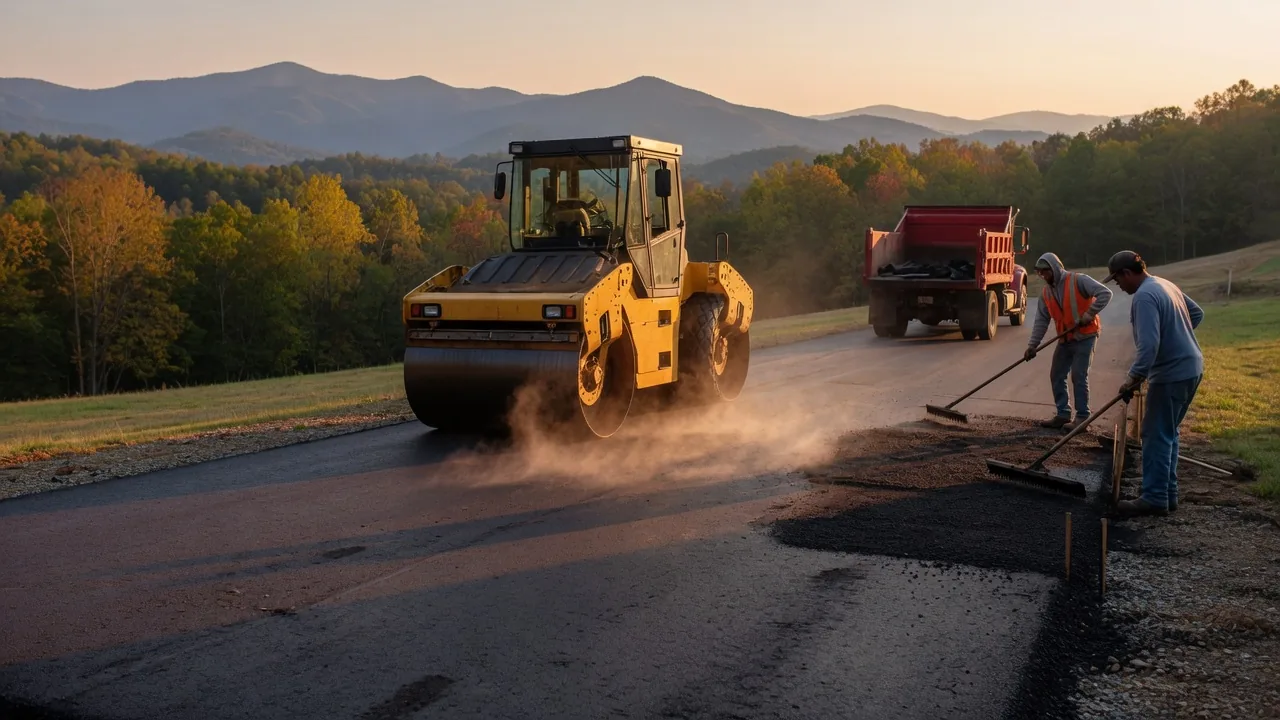
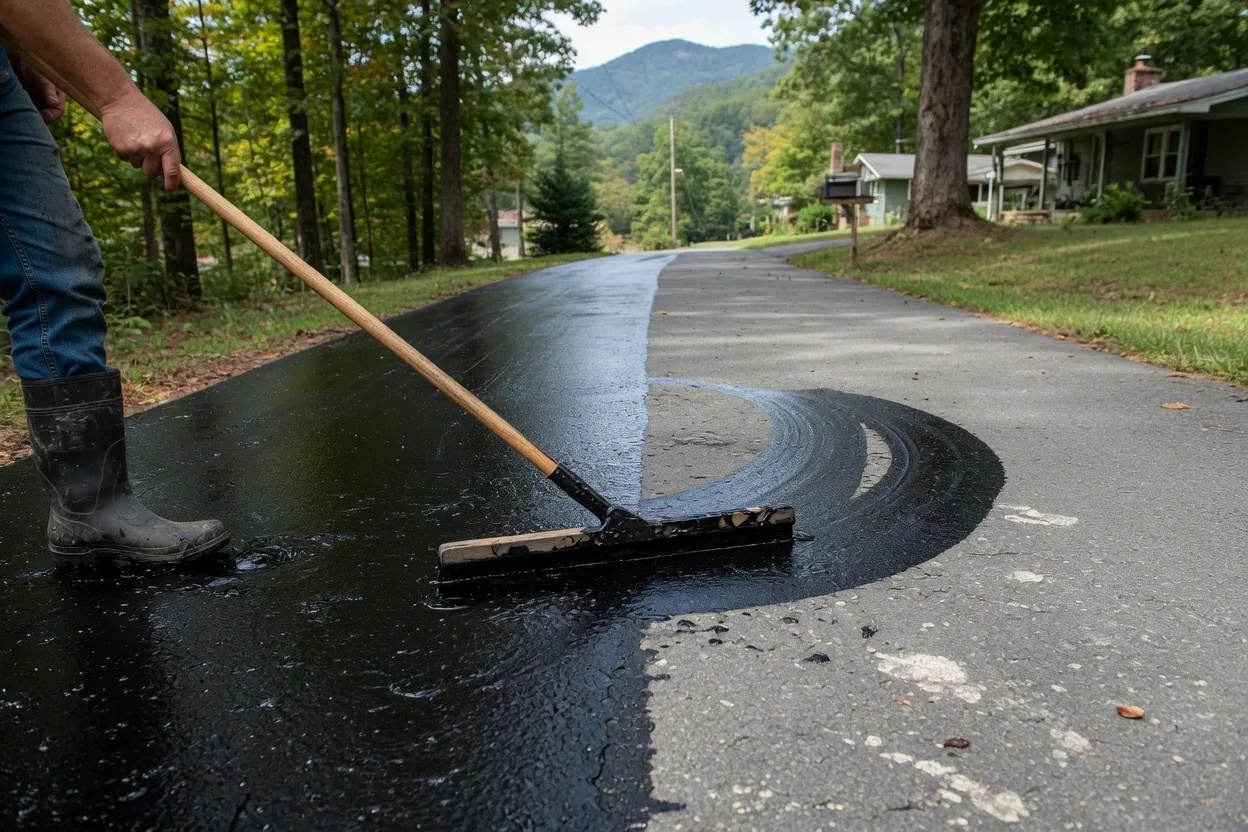
An honest overlay is a sequence, not a single pour. A proper scope clears loose material, addresses failed sections, levels depressions, applies a tack coat so the new layer actually bonds, then lays the wearing course at the right compacted thickness. Skipping the prep is how you get a driveway that looks new in April and shows cracking by the next fall.
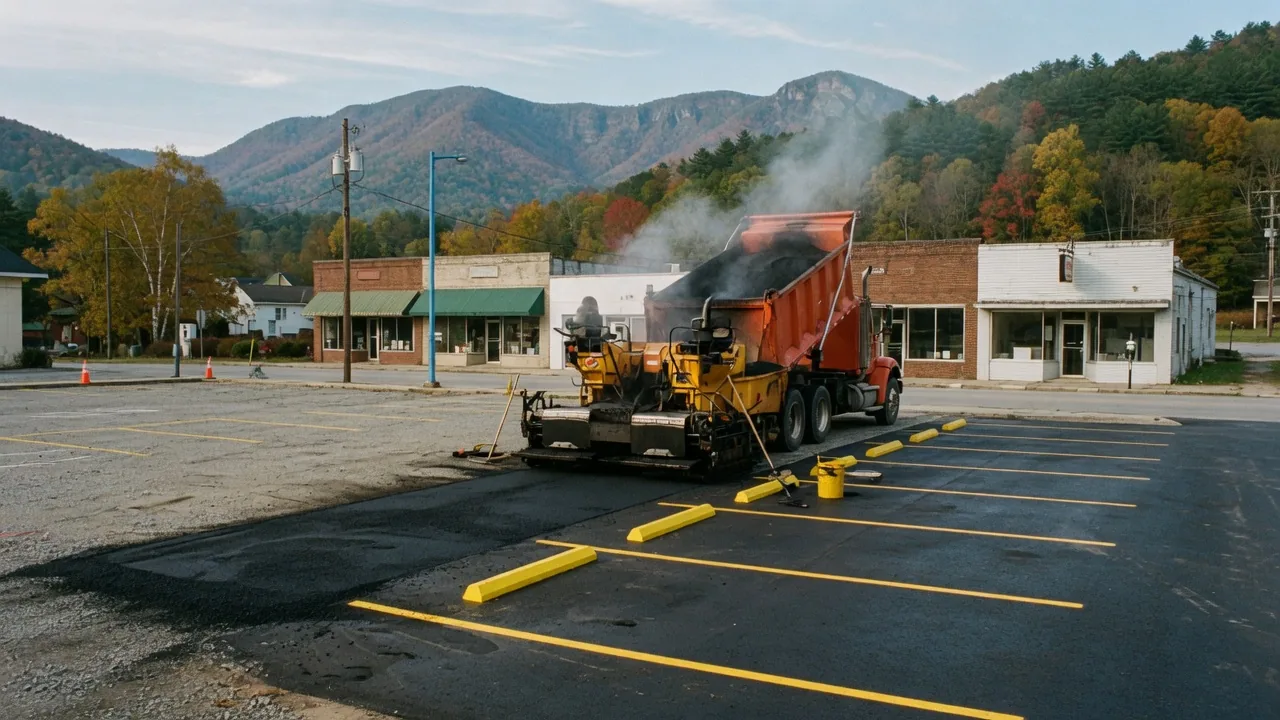
Where the existing surface is sound and the grade is gentle, a straightforward overlay is the right call. Where the base has failed under a low spot, patching isn't enough and partial reconstruction is the real fix. If your driveway climbs a real slope, the drainage question comes first — water pooling against the uphill edge will destroy the new surface regardless of how well it's laid. The same logic applies at commercial and multifamily sites around the Enka and Candler business corridors, just at a larger scale. See our resurfacing overview for how we separate the two.
On a typical Candler rural lot, the prep list also includes the driveway apron, the culvert inlet if there is one, and the transition where pavement meets gravel or grass at the house end. Those three spots are where most premature failures start, and they're the ones a low bid tends to gloss over. Ask any contractor you talk to how they plan to handle each one. If the answer is vague, the prep will be vague too.
The Candler price picture
Regional pricing for Buncombe County work is in the county cost breakdown, and the working numbers are below. Candler's long rural runs and sloped approaches are what push most jobs above the low end.
| Scope | Typical Candler range |
|---|---|
| Crack fill and sealcoat only (maintenance) | $450–$1,200 |
| Overlay on sound, flat driveway under 1,200 sq ft | $2,800–$4,500 |
| Overlay on longer or sloped driveway, 1,200–2,500 sq ft | $4,500–$8,400 |
| Overlay with patching, edge rebuild, or drainage correction | $6,500–$12,000+ |
| Partial reconstruction of failed base sections | Priced per square foot after inspection |
Those bands are honest ranges, not quotes. Slope, length, and how much base repair is needed move the number more than anything else, and a bid that ignores one of those three is incomplete rather than cheap.
Square footage is only the opening number. A 2,000-square-foot driveway on flat Sand Hill Road ground and a 2,000-square-foot driveway on a Pisgah Highway grade are not the same job, and no honest bidder will treat them as if they were. Expect the written scope to separate out patching, edge work, and drainage so you can compare bids line by line instead of by the one number at the bottom.
Water, storms, and why prep matters more here
Candler sits in the French Broad watershed below Asheville, and the federal record shows the county has been touched by 19 declared events across 1973-2026, overwhelmingly storm and flood related. That history is why so many Candler driveways have a soft, settled spot near the entrance or along the low edge — years of runoff that a fresh layer of asphalt alone will not fix. Prep and drainage aren't upsells here; they're the difference between a repair that holds and one that fails.
Weather service guidance for the region is worth watching for planning purposes, but the practical rule is local: any driveway that takes water off an uphill neighbor or a steep cut needs that water routed away from the pavement before any overlay goes down. The National Weather Service tracks the pattern; the fix on your lot is grading and drainage. Where a commercial or multifamily lot is involved, the stormwater rules that follow federal clean-water requirements through the state apply as well, and the NC Department of Environmental Quality is the starting point for those questions.
Two repair details come up again and again in this part of the county. First, the aprons: where a Candler driveway meets a county or state road, the apron takes the brunt of plow and runoff, and resurfacing should include rebuilding it rather than paving over a broken edge. Second, the cross-slope: lots that sit on even a mild hillside need the pavement crowned so water sheets off to one side instead of soaking in at the center, and that crown is easier to build during an overlay than to fix afterward.
Hiring well in this market
Two practical checks for Candler. First, ask whether the crew has worked on a driveway as long and as sloped as yours — long runs punish bad drainage and thin edges in ways short driveways never show. Second, if your work touches the state right-of-way where the driveway meets the road, there are NCDOT requirements for the connection; the NCDOT Connect system handles those driveway permits and is worth knowing before you sign anything.
For larger commercial or subdivision work, the state contractor licensing threshold applies and the NC Licensing Board for General Contractors is where to verify a company's standing. Residential driveway overlays usually fall below that line, but verifying the crew either way takes two minutes. When you're ready to compare bids, the Candler paving contractors page walks through what a proper first visit should cover.
Two more habits that save Candler homeowners money: get the scope in writing with square footage, thickness, and repair items listed, and ask what the crew does about existing cracks before the overlay. Cracks that aren't routed and filled tend to telegraph up through a new layer within a season or two, and that's a fix you pay for twice if it's skipped the first time.