What's under the blacktop decides the price
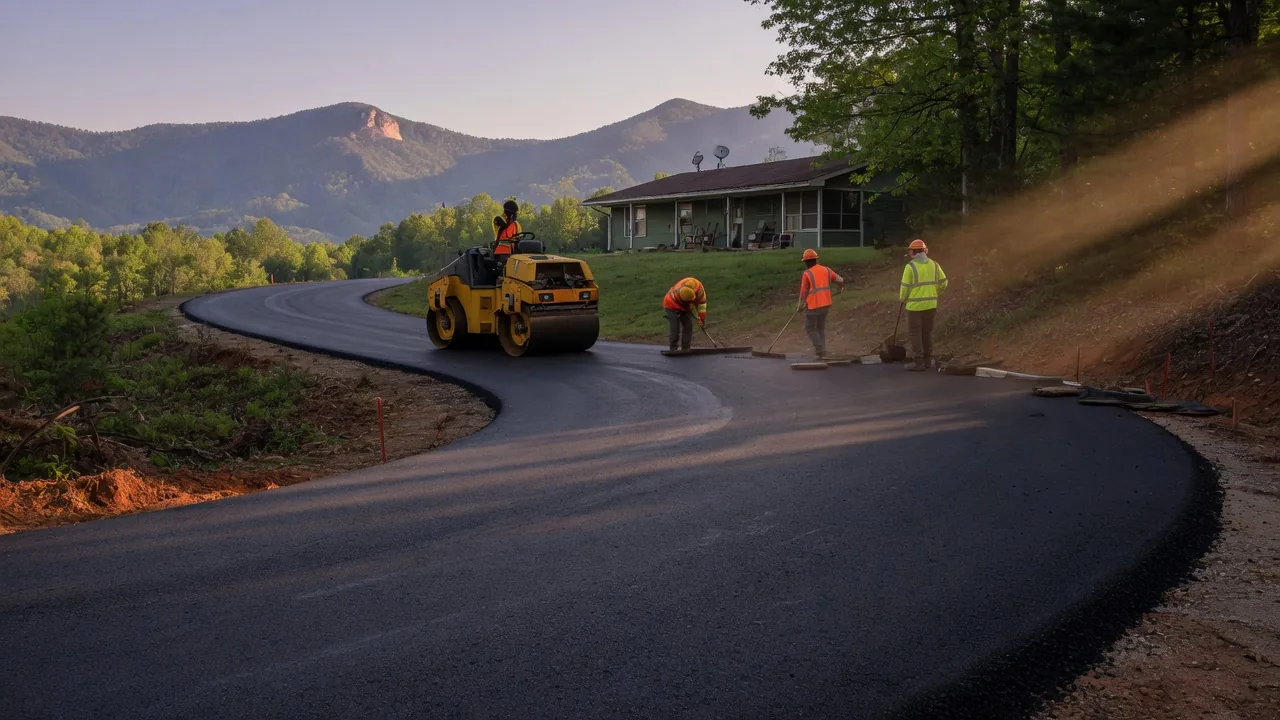
Drive out almost any Candler road — Sand Hill, Asbury, Pisgah Highway — and you'll pass driveways poured straight over native red clay that shrinks in August and swells all winter. Clay gives almost no drainage. Water sits, the subbase softens, and the asphalt above it flexes until it cracks. A driveway laid over a proper gravel base of four to six inches of compacted crushed stone hangs together for years; one laid on two inches over raw clay starts breaking apart in three. Sealcoat over the second kind is lipstick: the cracks keep opening underneath, and you re-coat the same failures every spring.
Older properties off the Smoky Park corridor often have a gravel drive that someone topped with a thin asphalt layer a decade ago. Those surfaces need the stone-and-compaction question answered before a sealer quote means anything. The right first step is reading the base, not measuring square footage.
Some lots around Candler sit on old fill pushed in when a homesite was graded — the fill settles unevenly, and the driveway dips where the fill was deepest. That dip is not a paving problem. It is a compaction problem dressed up as a paving problem, and coating a dip like that traps water in the low spot and accelerates the next failure. A crew that recognizes fill settlement will trench and re-compact that section with stone instead of floating a patch over it.
Reading the base before you sign a Candler quote
A contractor who never walks to the far edge of the driveway, probes for soft spots, or asks how the ground drains uphill hasn't seen your base. Candler lots slant — many homes sit on ground that falls toward Hominy Creek or the French Broad bottomland — and the low corner of a driveway is almost always where the base gave out first. When the soil beneath is saturated, no sealer holds.
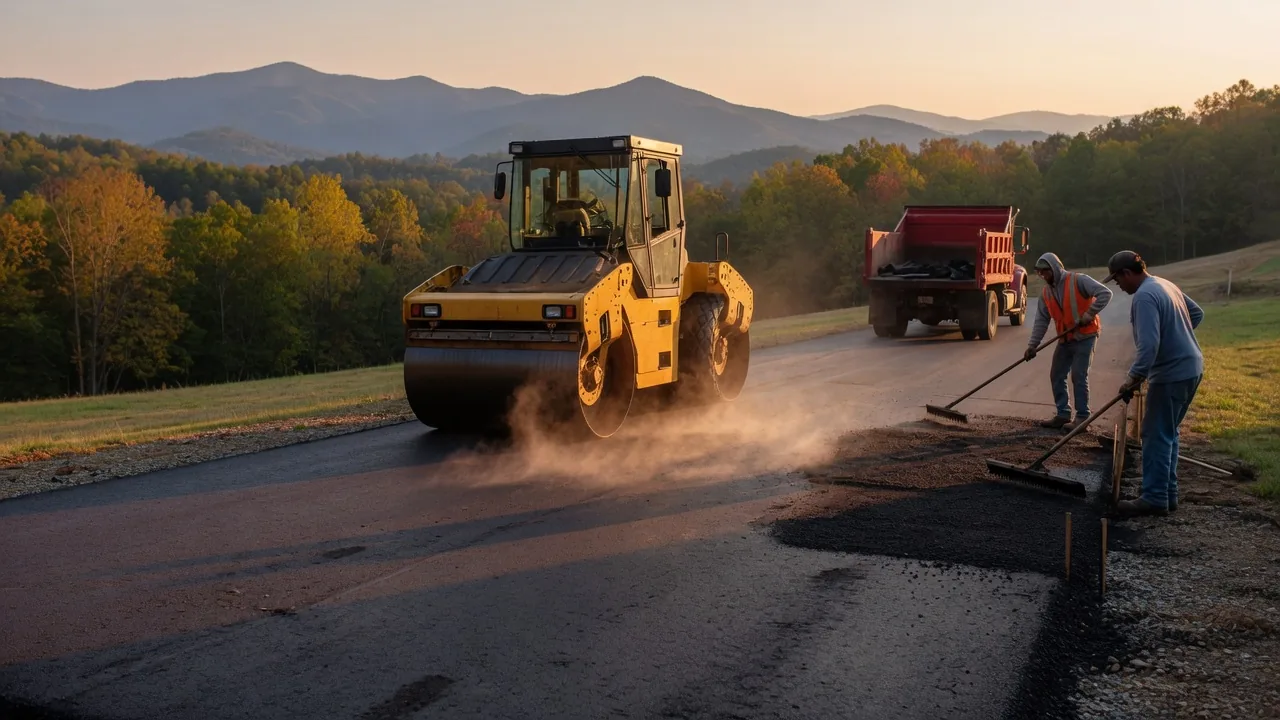
That's when the fix moves from coating to structure: re-grade the failed section, add and compact crushed stone, patch the broken asphalt, let it cure, then seal. The NC Department of Insurance, Engineering & Codes treats proper subbase and drainage as core to any paved surface, and driveway work that changes grade or drainage near a right-of-way can require a permit through NCDOT Connect. Ask about both before work starts.
Seasonal water is the honest test here. Candler gets long wet stretches and the ground can stay saturated well into spring. A good time to probe for soft base is after a soaking rain, not during a dry spell — that is when the weak spots announce themselves. Walk the drive then, and note where your boots sink or where standing water lingers. Those are the places a sealer quote should be pricing stone, not just coating.
Candler price ranges by scope
Prices here track what the driveway needs, not just its size. These are working ranges for the Candler and greater Buncombe area; a firm number comes after someone inspects the base. The full breakdown lives at our Buncombe County cost page.
| Scope | Typical range |
|---|---|
| Sealcoat only, sound asphalt, one coat | $350–$800 |
| Sealcoat only, large or two-lane drive | $800–$1,300 |
| Crack fill + seal, no base work | $550–$1,100 |
| Spot stone base repair + patch + seal | $1,200–$1,800 |
| Regrade, compacted stone base, patch, seal | $1,800–$2,400+ |
| Full resurface (beyond sealcoating) | $3,000–$8,000+ |
Anything quoted under a few hundred dollars for a full driveway usually means one thin coat over an unaddressed base. It looks good for a season and fails fast.
Steep Candler driveways tend to land at the higher end of whatever scope applies, because a grade that falls hard puts more shear on the asphalt and pushes water toward the base faster. On a steep run, the stone layer needs to be deeper and the water needs somewhere to go — a cross-slope, a swale, or a turnout at the bottom — or the coating is fighting gravity it cannot beat.
The right season and the right thickness
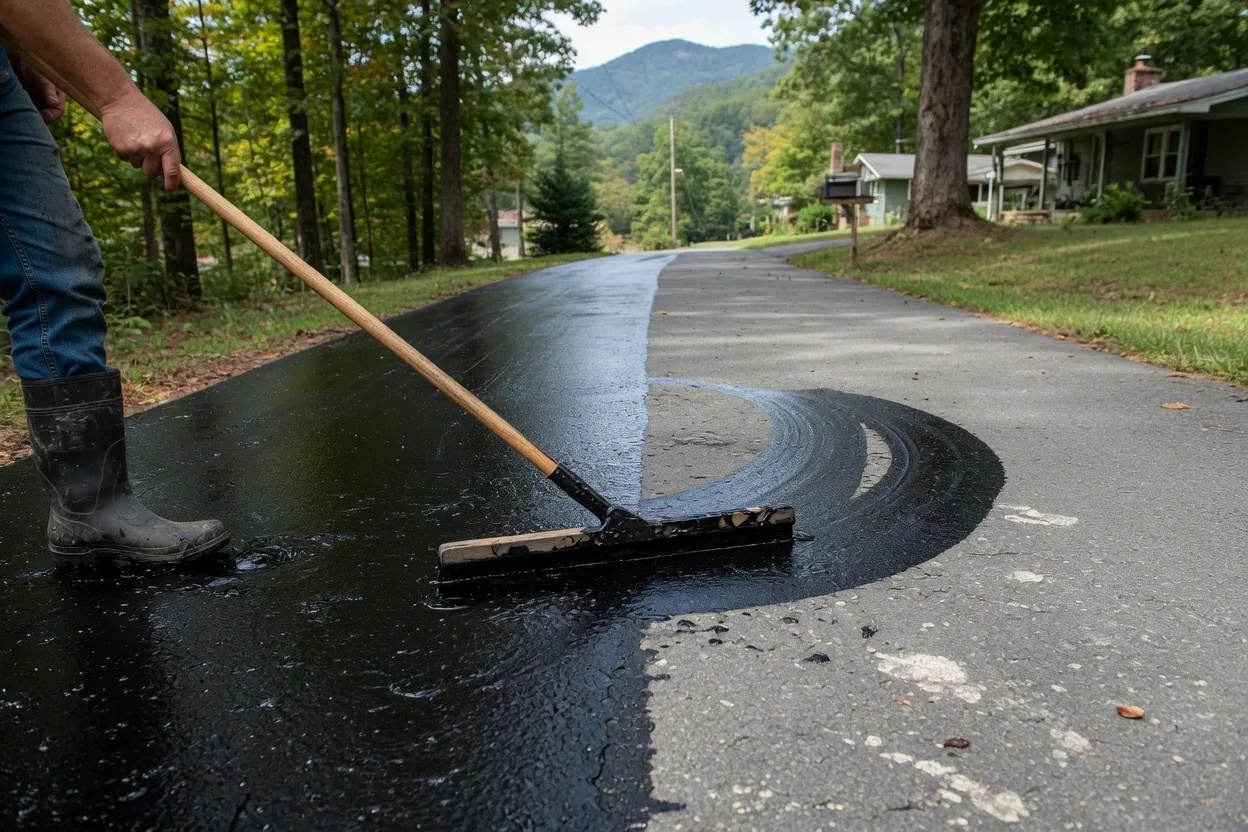
Sealer needs warm, dry weather to cure — Candler's mountain climate shortens that window. Spring rain and fall cold both work against a fresh coat, so most sealcoating here lands in late spring through early fall, when overnight temperatures stay reliably mild. Applying over a damp or recently wet surface is the single most common way a job fails prematurely, which is worth remembering before anyone promises a quick turnaround in a wet stretch. The National Weather Service forecast is the honest guide to whether a window is real.
Material matters too. Coal-tar and asphalt-emulsion sealers both exist; the EPA at epa.gov publishes guidance on their handling and runoff, which is relevant on any lot that drains toward the creek. A proper job uses the right number of coats for your surface, not the thinnest one that still turns black.
Candler's freeze-thaw cycle earns the coat its keep. Water finds a hairline crack, freezes, widens the crack, thaws, and the next freeze pushes it wider still. A sealed surface sheds that water before it can get in, which is why the timing and thickness of the coat matter more here than in a milder climate. A thin coat that wears through in one winter protects nothing.
Choosing a Candler crew
North Carolina requires a general contractor's license once a job crosses the state's threshold — verify any large resurfacing bid at the NC Licensing Board for General Contractors (sealcoating alone usually sits below it, but base rebuilds and full resurfacing can trip it). Ask three things: whether they'll grade and compact stone where the base has failed, how they handle drainage at the low side of the slope, and what cure time they expect given the forecast. A crew that answers the base question first is the crew that fixes driveways rather than re-painting them. See our Candler paving page and the sealcoating overview for what a proper job includes.
The best time to ask questions is before the rigs show up. A crew that walks the drive, probes the base with a bar or shovel, and points out where the stone is thin is telling you it has done this before in Candler. If the entire conversation is about price per square foot and the driveway never comes up, the base is not part of their plan — and the base is the whole job.