The hot mix has to get there before it cools — that's your price
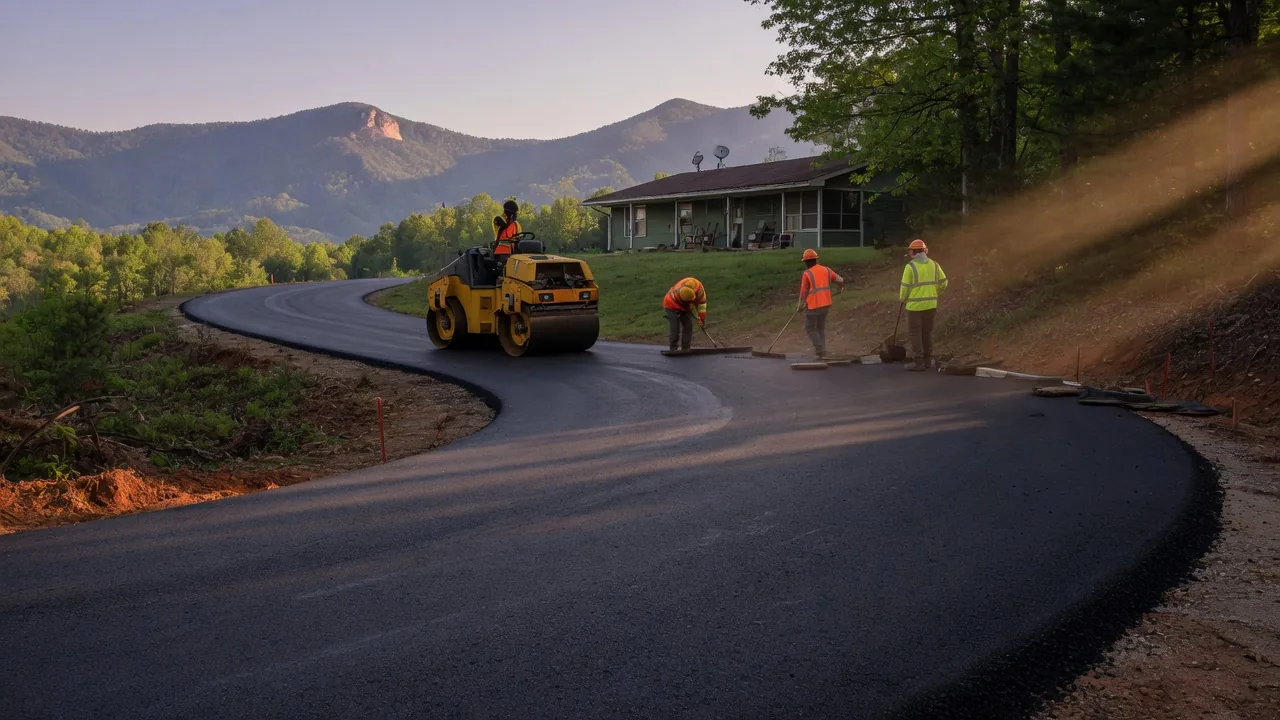
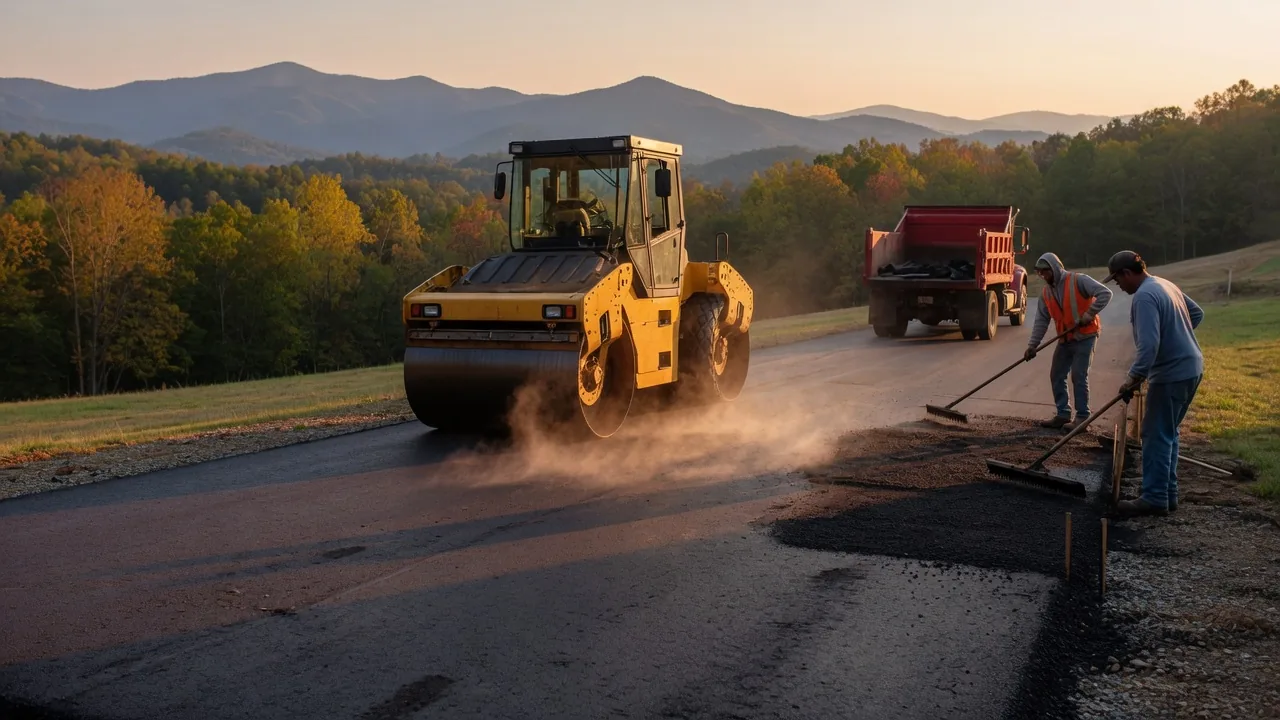
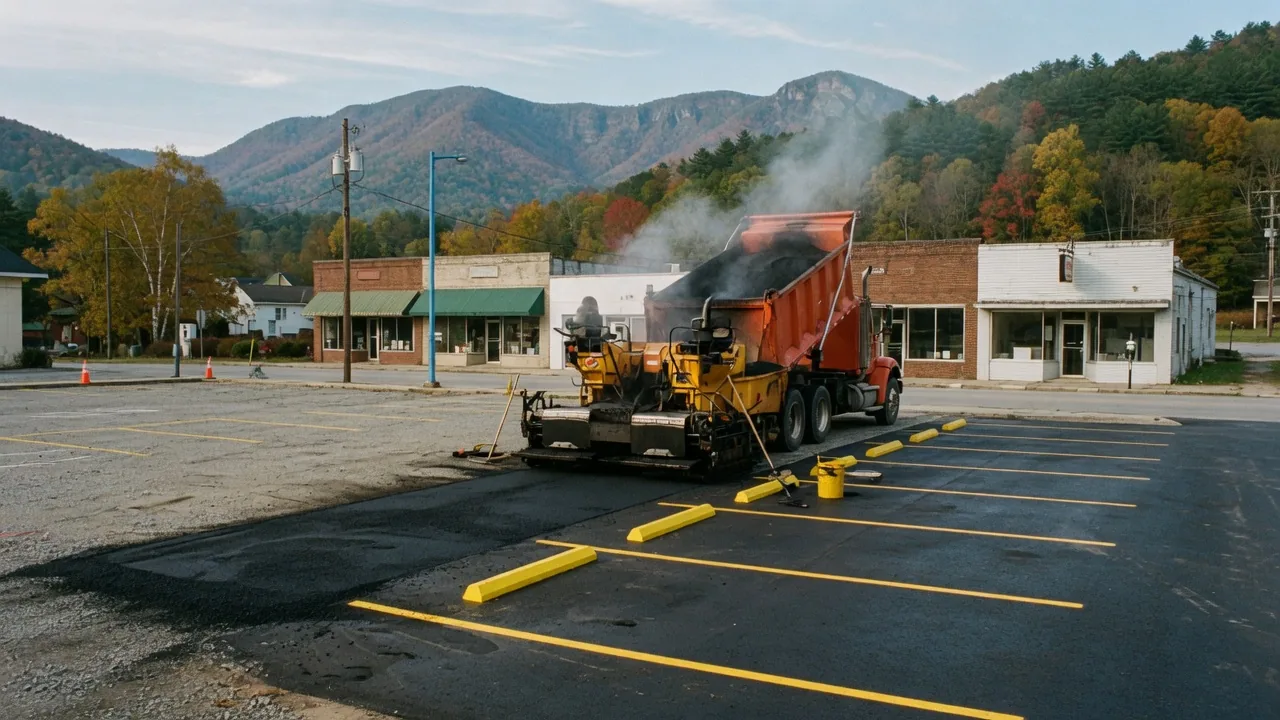
Asphalt is a perishable product. It leaves the plant at roughly 280-320°F and has to be placed and compacted before it drops below about 185°F — usually a window of 45 to 90 minutes depending on air temperature and wind. Lake Junaluska sits a real haul from the nearest hot-mix plants, which are typically down in the Waynesville and Clyde bottoms, and the drive up Highway 19 or through the lakefront roads eats into that window before a single ton is placed.
What that means on the ground: crews working Lake Junaluska often run shorter loads, sometimes a smaller truck, and sometimes a tack-and-patch sequence instead of one continuous mat. Every one of those choices costs money, and none of them show up in a per-square-foot quote you got over the phone. The first question worth asking any contractor here is where the mix is coming from and how they plan to keep it workable.
There's a practical rhythm to it. A crew that times its day around the plant's batch schedule can sometimes get two clean loads placed before the afternoon heat fades; a crew that shows up late or misjudges the drive ends up raking cold material and calling it done. On Lake Junaluska's lakefront loops, where the road narrows between stone walls and mature hemlocks, the truck itself may not be able to reach the far pad — the mix gets shuttled in a buggy or wheeled by hand, and the clock keeps running the whole time. That is the single biggest reason two neighbors with similar-looking driveways can get quotes that differ by thousands.
Why Lake Junaluska driveways cost what they cost
The lake itself shapes the work. Lots on the water side are tight, often 30-40 feet of frontage with a garage or boathouse at the end and no room to turn a tandem dump truck. Lots on the ridge side fall away at grades that would make a flatland paver walk. Add in that Haywood County's freeze-thaw cycles are harder than the Piedmont's — the ground moves, and asphalt that isn't properly based will crack at the seams within a few seasons.
Scope is the honest variable. The table below reflects what work in this part of Haywood County typically runs, not a national average.
| Scope | Typical range | What drives the number |
|---|---|---|
| Overlay over sound existing asphalt | $2,200-$4,800 | Sq ft, whether a leveling course is needed first |
| Full driveway replacement, standard access | $5,500-$9,500 | Removal, base repair, tonnage of new mix |
| Steep or tight-access driveway | $8,500-$14,000 | Haul restrictions, hand work, drainage correction |
| Gravel-to-asphalt conversion | $6,000-$12,000 | Base depth needed, grading, edge restraint |
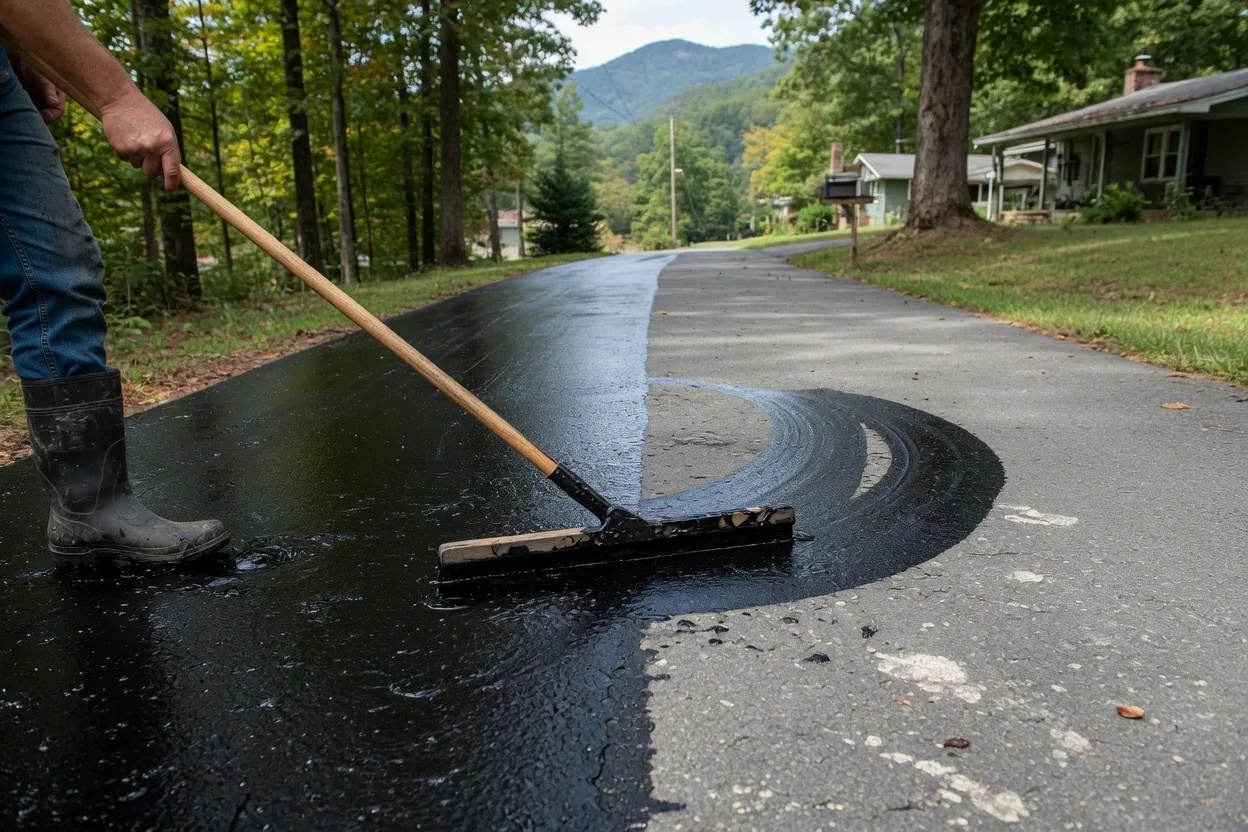
| Crack sealing & sealcoat (maintenance) | $450-$1,400 | Linear feet of cracks, sq ft of surface |
For a fuller line-item breakdown by scope and season, the Haywood County asphalt cost page has the working numbers. The short version: base prep and haul logistics move the price more than the asphalt itself.
Two more local cost drivers are worth naming. First, removal. On lakefront lots the old surface often has to come out in small loads because a full-size dumpster truck can't back to the work zone, and disposal fees at the county landfill apply per ton either way. Second, edge conditions. Many of these driveways are pinned between a retaining wall on the uphill side and a drop to the water or a creek on the downhill side, which means the crew can't just push material off the edge — every bit of shaping happens within a narrow band. That hand work is slow, and slow hand work is what the customer actually pays for on a tight lake lot.
What a real scope looks like before they quote
A paving quote that starts with square footage and ends with a number is not a scope. On a Lake Junaluska job, the useful quote answers four things: how much existing material comes out, what happens to the base underneath, where the water goes when it leaves the driveway, and how the mix gets from the truck to the far end of the mat. Any of those left blank is a change order waiting to happen.
The asphalt paving overview walks through the standard scope elements — milling, base repair, binder and surface courses, compaction — so you can compare bids on equal terms instead of on the lowest number. On steep grades, edge restraint and drainage are not optional; skip them and the first hard freeze will let the mat slide.
Ask specifically whether the bid includes a compacted stone base or assumes the existing gravel is adequate. On the ridge side of the lake, where the driveway has been shedding water onto itself for years, the existing base is often contaminated with fines and won't drain. A contractor who has actually walked the driveway will know that and price the correction. One who quoted from a satellite photo will not, and the difference shows up as ruts and alligator cracking within a couple of winters.
Water, freeze-thaw, and the federal record behind it
Haywood County's storm history is not abstract. 19 federally declared events touch this county across 1973-2026, and the pattern is familiar: heavy rain on ground that was already saturated, runoff looking for the lowest point, and driveways on the downhill side of a slope taking the hit. Asphalt is not waterproof by itself — it's a flexible surface over a base that has to drain.
Before anyone sells you a new mat, the drainage question has to be answered: where does the uphill water cross your driveway, and where does it go after. The EPA's stormwater resources are a useful starting point for understanding runoff on residential sites, and they apply here just as much as anywhere. A driveway that sheds water correctly outlasts one that doesn't by years.
In Lake Junaluska the water question is unusually concrete because so much of the surrounding ground is already managed: the lake level, the dam, the golf course runoff, the county-maintained swales along the lake road. That means a driveway that used to drain fine can start holding water after an upstream change — a new culvert, a cleared lot, a regraded shoulder. If your driveway has started ponding in the last season or two, the honest fix may be a small drainage correction before any asphalt is placed, not a thicker mat over a wet base.
Hiring and permitting in Haywood County
North Carolina does not license asphalt paving contractors as a standalone trade, which means the screening is on you. The state's general contractor licensing rules — the NC Licensing Board for General Contractors — kick in once a job crosses certain dollar and scope thresholds, and any contractor who won't tell you where they sit relative to those thresholds is a pass. Ask for references on driveways comparable to yours: same grade, same access problem, same mix source.
If your driveway meets a state-maintained road, a new or widened connection may need an NCDOT driveway permit — applications and guidance are at NCDOT Connect. In Lake Junaluska and the surrounding Haywood County areas, that's a real gating item for any job that changes where the driveway meets the road. Ask your contractor who pulls the permit before you sign anything.
It also helps to know that some Lake Junaluska properties sit under POA or community association rules that govern what surfacing materials are allowed and how close paving can come to the water. Those are not county permits, but they can stop a job just as fast. Pull your deed restrictions before you sign a paving contract, and if the driveway touches anything the association maintains, get their sign-off in writing first. The Lake Junaluska paving page covers the neighborhood-level considerations in more detail.