The paving window in Transylvania County runs shorter than you think
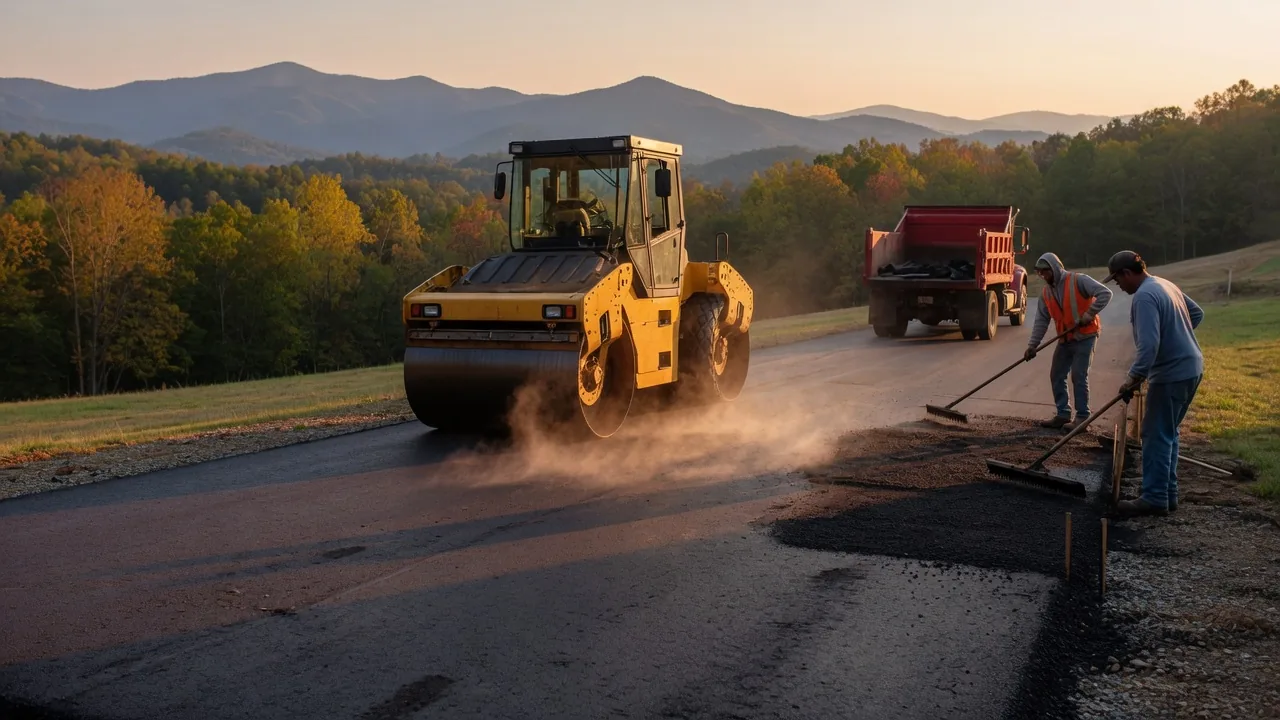
Brevard sits in a valley ringed by Pisgah National Forest, and that geography sets the calendar. Hot-mix asphalt needs air and surface temperatures comfortably above 50°F to lay, roll, and compact properly. In Transylvania County that workable stretch typically opens in April and closes by late October, with the shoulder weeks risky. Summer mornings here start cool enough that crews often wait for the sun to clear the ridges before the first load leaves the plant.
Summer afternoons bring their own complication. Pop-up thunderstorms roll over the Blue Ridge most afternoons in July and August, and a load of hot-mix that gets rained on before it is rolled is a load that has to come back out. Contractors who work this county learn to schedule pours for the morning and to leave a window in the afternoon for weather that was not in the forecast when the truck was loaded. That is one reason a Brevard driveway project can sit on the books for weeks even in the middle of the season.
The second factor is shade. A driveway cut into a north-facing cove off a road like a Forest Service spur never gets the solar bake that a flat lot in town does. Shaded asphalt cures slower, stays softer through the afternoon, and holds moisture longer after rain. That changes everything from how thick the lift should be to how long you wait before parking on it. A driveway across the valley in full sun is a different job at a different price.
Hemlock and white pine canopy matters too. Lots in the Brevard city limits and out toward Pisgah Forest often carry mature trees that drop needles, shade the drive for most of the day, and keep the surface damp well into the morning. Needle litter also works its way into cracks and holds moisture against the asphalt edge. If your driveway runs under a stand of hemlocks, plan on a slightly thicker mat and a longer cure window than a neighbor whose drive faces south across an open field.
What drives cost on a Brevard driveway
Three variables move the number more than anything else: the base under the asphalt, the grade, and the drainage. A driveway cut into a slope needs more gravel, more compaction passes, and often a culvert or swale to keep stormwater off the surface. The table below reflects typical regional bands for Transylvania County work; treat any bid far below them as incomplete rather than thrifty.
| Scope | Typical price range |
|---|---|
| Overlay on sound existing asphalt (light prep) | $2,200-$4,500 |
| New asphalt over existing gravel base | $3,200-$6,800 |
| Full install: grading, new gravel base, binder, top coat | $5,500-$11,000+ |
| Culvert, swale, or ditch work | $600-$3,000 |
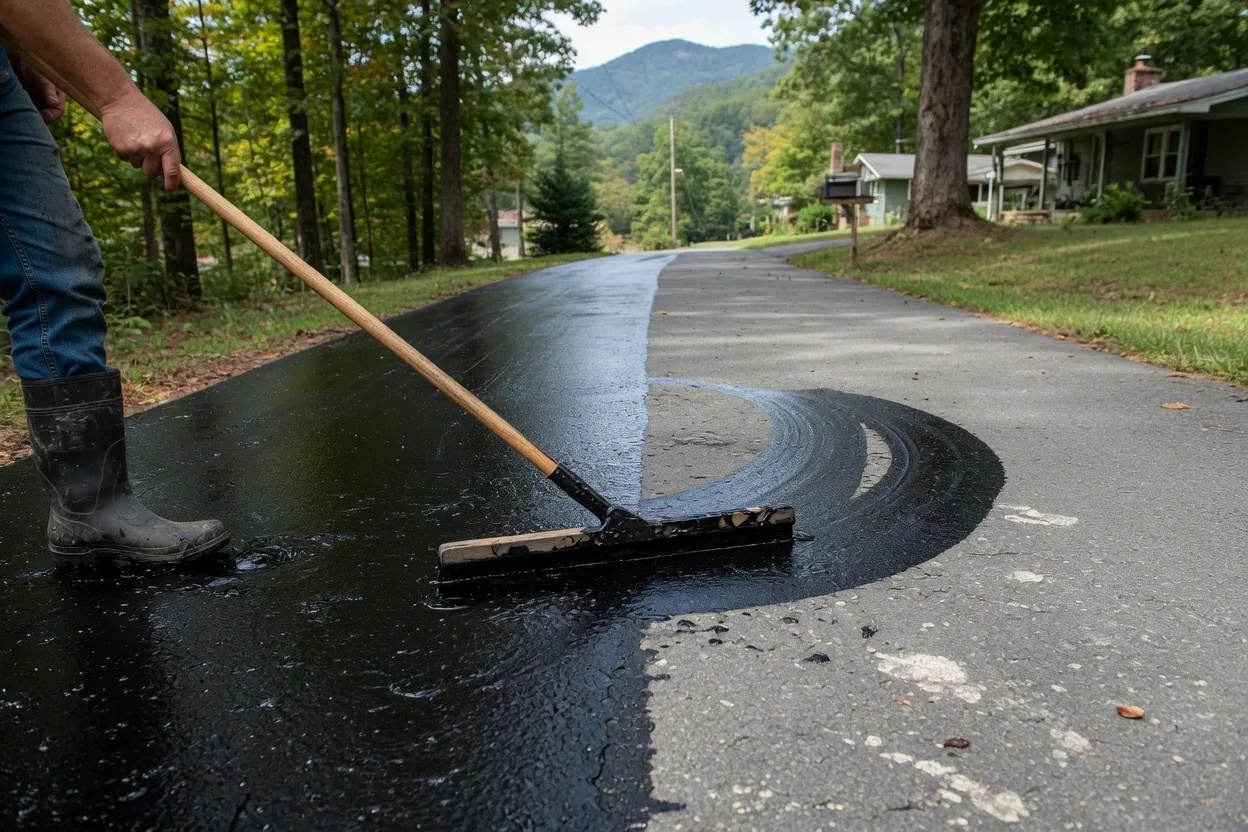
| Patch and sealcoat maintenance | $300-$1,200 |
The full line-item breakdown lives on the Transylvania County cost page, and the driveway guide walks through how each layer is built. Base work is where cheap bids hide their shortcuts.
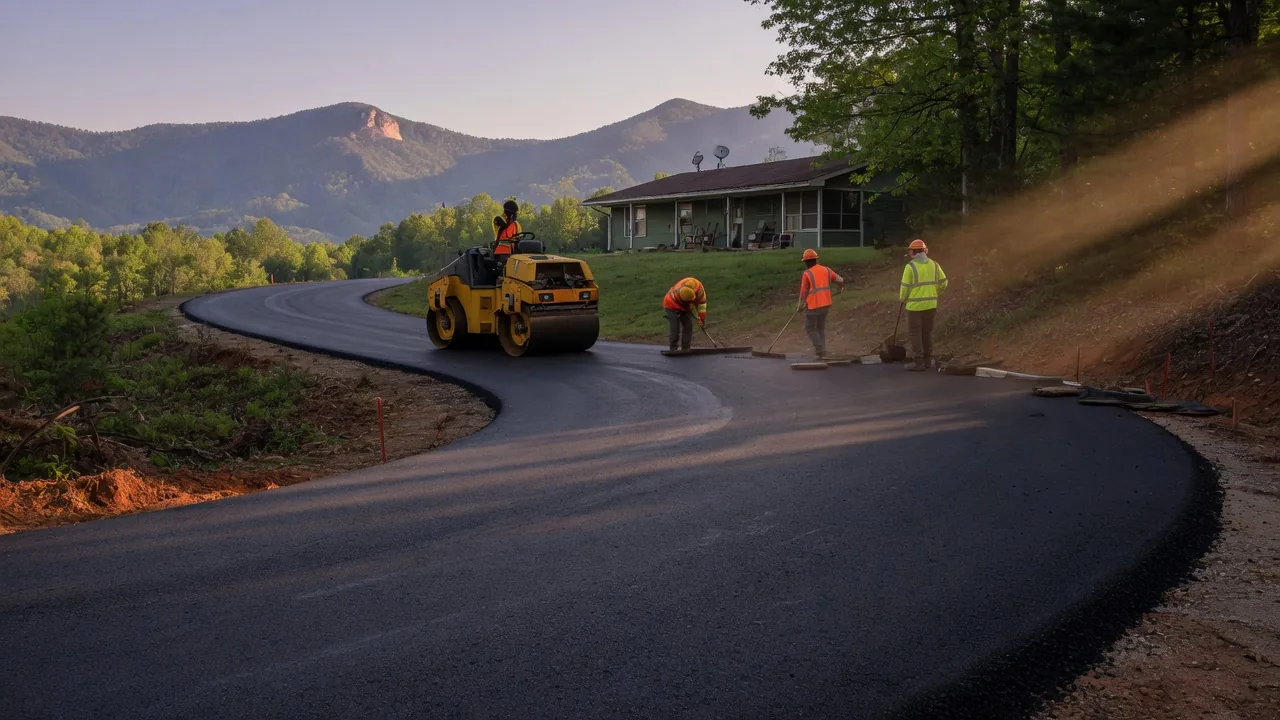
Grade is the quiet cost driver in this county. A driveway that climbs from the road to a house pad on a slope off a road like Wilson Road or Crab Creek Road needs a cut-and-fill that a flat lot never sees, and cut-and-fill means hauling spoils off site and bringing compactable borrow in. Length matters less than people assume; a short, steep drive with a switchback can cost more per foot than a long gentle one because every load has to be walked up the slope and rolled in lifts instead of one pass.
Access is the other invisible line item. If a loaded dump truck cannot turn around at the top of the drive, the crew hand-shuttles material with a skid steer, and that shows up in the labor. Driveways in the older parts of Brevard, where lots were laid out before anyone owned a pickup, frequently have this problem. Ask any contractor to walk the access before you compare bids.
Frost, wet winters, and what they do to your driveway
Transylvania County sees real winter. Ground freezes, thaws, and freezes again, and water that got into a crack expands each cycle. That is how a hairline becomes a pothole by March. The federal disaster record shows 16 declared events touching this county across 1993-2026, and the storm and flood family dominates that list. Every one of those events pushed water at driveways built for drier assumptions.
The fix is not more asphalt. It is drainage: crowning the surface, keeping the uphill side from draining onto the drive, and making sure gutters and French drains send water somewhere other than the sub-base. The EPA publishes stormwater guidance that applies directly to how residential runoff should be handled. If a contractor proposes new asphalt without addressing where water goes, that proposal is missing the part that determines how long the pavement lasts.
Winter also brings the county's salt and cinder trucks onto the state-maintained roads, and plowed slush gets pushed toward driveway aprons. That apron is usually the first section to fail. It is worth building the apron slightly thicker than the rest of the drive and keeping the transition at the road edge as smooth as the county will allow, because a lip there collects water, ice, and the plow blade all winter long.
Permits, licensing, and the paperwork that actually matters
Most residential driveway repaving in Brevard does not require a permit. Work that changes the driveway's connection to a state-maintained road does. If your drive meets an NCDOT road, the connection point is regulated and a driveway permit is required; applications run through NCDOT Connect, and the general rules are on NCDOT. If your driveway ties into a city street, check with the city before anyone cuts the curb.
On the contractor side, North Carolina requires general contractor licensing for projects above a threshold set by the NC Licensing Board for General Contractors. A driveway job usually falls below it, but any contractor who also does structural or drainage work may cross the line. Ask. The local paving contractor page covers what a legitimate operation looks like in this county.
One more piece of paperwork matters around here: stormwater and sediment. Any job that disturbs a meaningful area of ground on a slope can trigger erosion-control expectations from the county or the state, and that means silt fence or a similar barrier until the surface is stabilized. In a county where so many driveways sit on grades, that is not a formality. Uncontrolled runoff off a fresh cut is exactly the kind of thing the rules exist to prevent, and the contractor, not the homeowner, is normally the one responsible for getting it right during the job.
Reading a bid when the weather is already against you
Because the season is short, Brevard paving crews book out. A bid that shows up in September for a job the contractor cannot start until November is really a bid for next spring. Ask when the crew can actually be on site and what happens if the temperature drops the morning of the pour. A reputable operator will reschedule rather than lay asphalt that will not compact.
Ask also how the crew handles the transition between old and new pavement, and whether the bid assumes a base inspection or only surface work. A driveway that has settled in one section is a drainage and base problem wearing an asphalt costume. Repaving over it just moves the failure a season or two down the road. The contractor page lists what to ask before you sign.
Timing your own project has a version of the same logic. If you are moving into a Brevard house in the fall and the drive needs work, the honest answer is to use the winter for planning, get bids in early spring, and let the crew pick the first clear window after the ground warms. Trying to squeeze a pour into a cold snap to save a few weeks usually costs more the following winter, when the first hard freeze finds every weak spot the cold pour left behind.