The plant is in town; your driveway is not
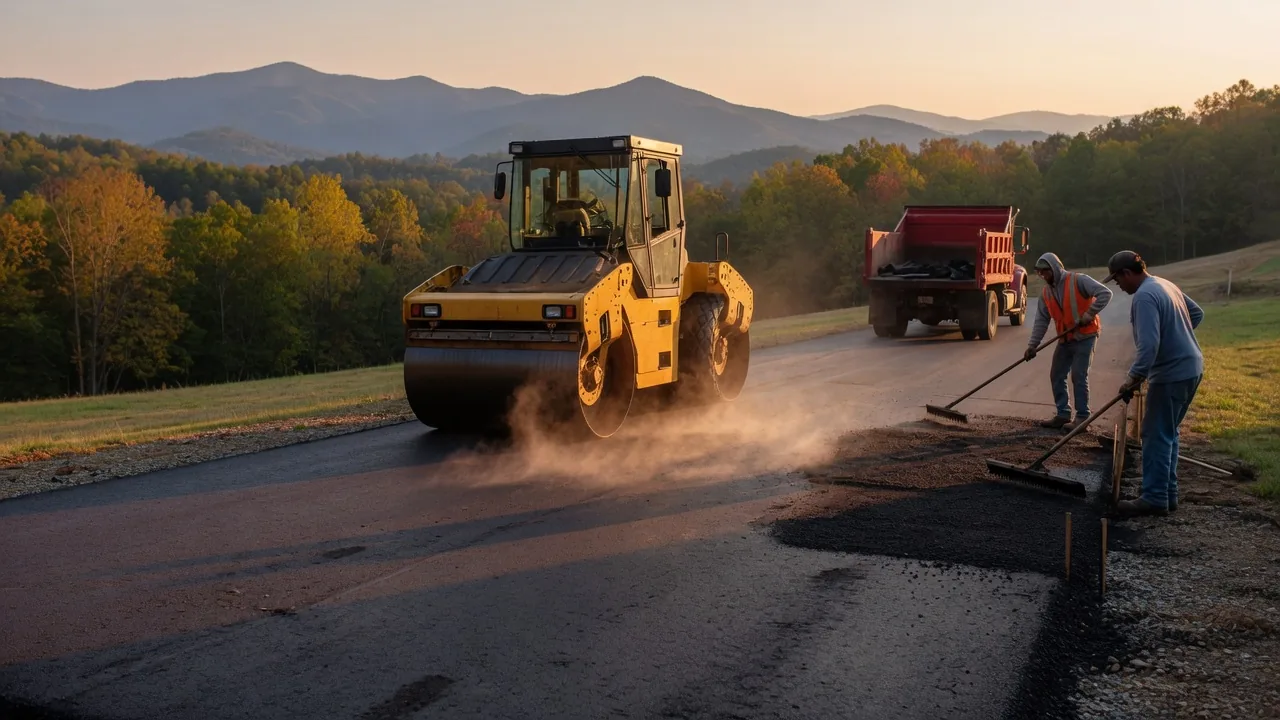
Fairview is a straight shot southeast of Asheville up US-74A, but the hot mix plants that feed this trade sit down in the valley near the city. That matters because asphalt is a perishable product. It leaves the plant somewhere in the 300°F range and it has a working window measured in hours, not days. On a normal in-town job the truck ride is short and forgiving. On a Fairview job up a winding two-lane with a loaded dump body, the ride alone can eat a real slice of that window, and the crew knows it before they ever quote you.
The practical result: the farther your driveway sits from the plant and the slower the road in, the more the quote bends upward, not because anyone is gouging you but because the day costs more to run. A short paved spur off a state-maintained road prices very differently from a quarter-mile gravel lane climbing to a ridge-top house. That difference is the whole conversation in this trade around here.
Steep, tight, and long: how access shapes the crew day
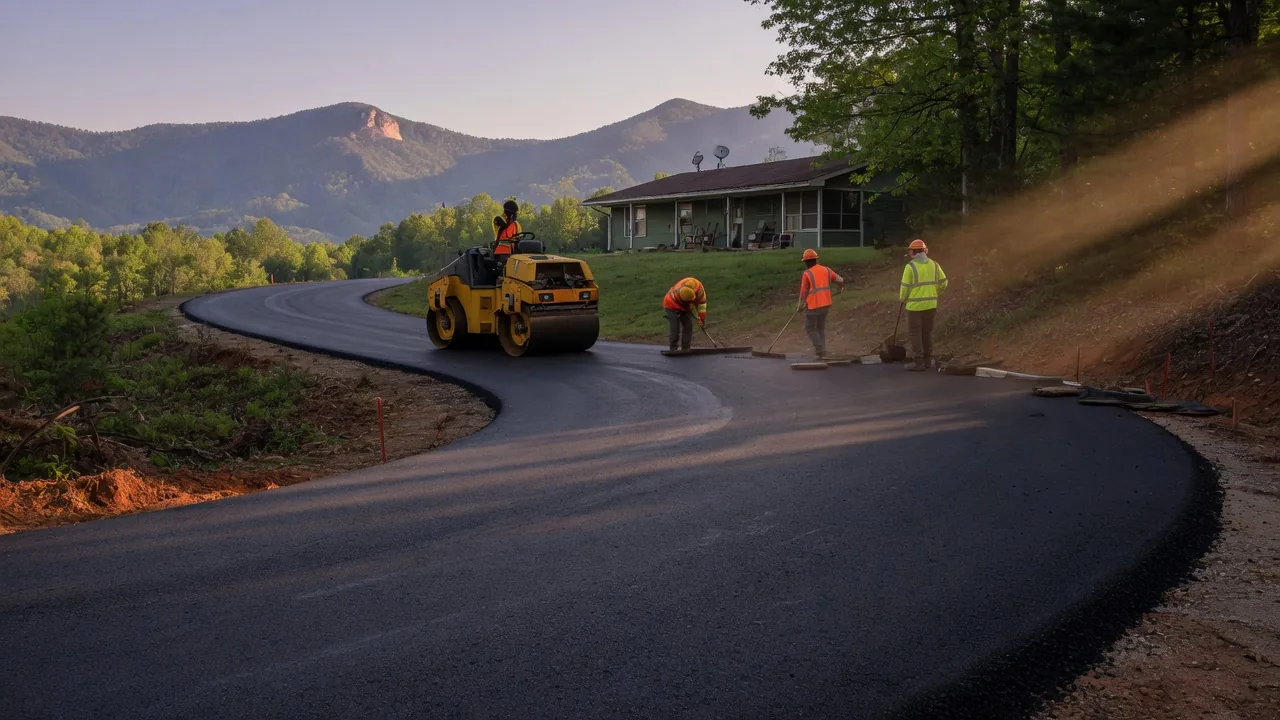
Fairview's housing is spread out, and a lot of it sits on ground that slopes. Driveways here tend to be long, gravel, and pitched, often with a switchback or a pinch point between trees or a bank. That creates real constraints a flat suburban cul-de-sac never sees. A standard tandem dump truck and a paver need room to turn, stage, and back without tearing up your yard or getting stuck on a grade too steep to hold traction loaded.
When a driveway can't take the big equipment, the job gets broken into smaller loads, smaller machines, or hand work on the finish, and every one of those choices adds labor hours. Grading is also heavier where water runs downhill at you. A Fairview driveway that has spent twenty years shedding mountain runoff onto its own base needs that base rebuilt before asphalt goes down, or the new surface mirrors the old ruts within a season. If the grade and drainage story is complicated, the honest move is to scope the fix properly rather than lay asphalt over a failing subgrade. Our asphalt paving overview walks through what a correct build actually includes.
What paving work costs in this corner of Buncombe County
Ranges below reflect typical regional pricing for the work, not a flat bid. Grade, access, base condition, and how far the mix travels all move the number. See the fuller line-item breakdown in the Buncombe County driveway cost table.
| Scope | Typical range |
|---|---|
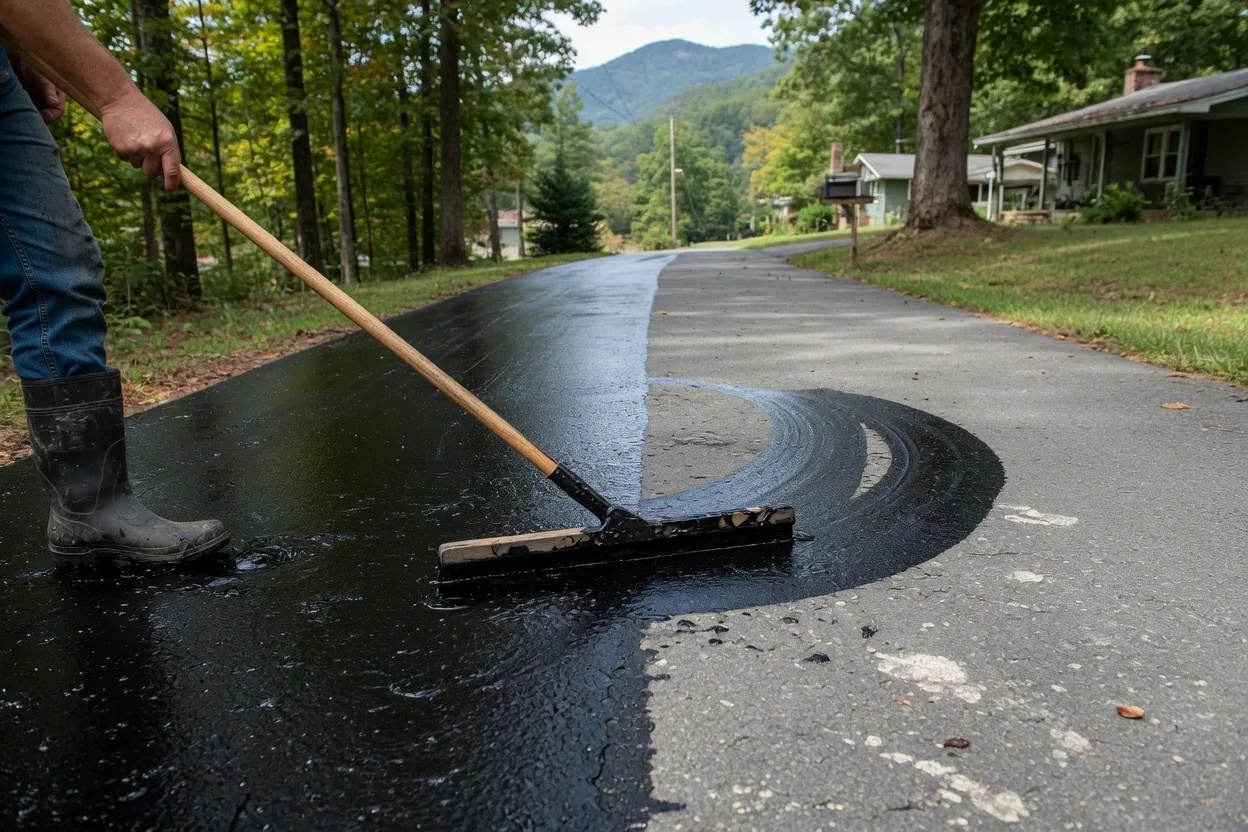
| Crack fill and sealcoat only (existing sound asphalt) | $400–$1,200 |
| Short driveway overlay, up to ~1,000 sq ft, base intact | $2,800–$5,500 |
| Standard driveway, ~1,000–2,000 sq ft, minor base work | $5,000–$11,000 |
| Long or steep approach with base rebuild and drainage | $12,000–$28,000+ |
| New gravel-to-asphalt conversion, typical Fairview lane | $9,000–$22,000 |
Treat any quote that arrives without a base and drainage line as incomplete, not cheap. On these lots, base is most of the job.
Water, freeze-thaw, and why the mix matters here
Mountain ground in Buncombe County moves through hard freeze-thaw cycles, and Fairview sits high enough and wooded enough that shade keeps moisture on pavement longer. Water that gets under asphalt, freezes, and lifts is the number-one killer of driveways in this terrain. That is why drainage gets addressed before paving, not after: crown the surface so it sheds, manage the uphill flow so it doesn't cross the drive, and rebuild any base that has turned to mush. The EPA's stormwater guidance is a useful reference for how runoff should be handled on a residential lot, and the federal disaster record backs up the local instinct — 19 declared events touch this county across 1973-2026, mostly storm and flood family, and every one of them pushed water at driveways built for drier assumptions.
On the material side, the mix specified for a job should match the climate and the traffic. A driveway that takes a loaded truck regularly needs a stiffer mix and a thicker compacted lift than a passenger-only spur. Ask what's being specified and why. A crew that can answer that question plainly is usually a crew worth hiring.
Hiring and the permits that catch people off guard
Two checks before you sign anything in Fairview. First, licensing: North Carolina draws a line, and larger or more complex jobs can pull a contractor under the NC Licensing Board for General Contractors rules, so confirm who you're dealing with and what's covered. Second, access: if paving or widening work touches a state-maintained road, the driveway connection itself is regulated, and the NCDOT driveway permit process via NCDOT Connect is where that gets handled. A driveway that only serves your property from a private lane usually sidesteps that, but a new or moved connection onto a numbered road does not.
Beyond paperwork, ask the questions that reveal experience on ground like this: how do they handle a grade too steep for a loaded truck, how do they sequence base work against a rain forecast, and can they show you driveways they've done on similar hillsides nearby. The answers tell you whether you're hiring a paving crew that understands Fairview's terrain or one that mostly works flat lots in town. For a closer look at the residential work itself, see asphalt driveway paving in Fairview.
Timing a paving job on mountain ground
Asphalt needs warm, dry conditions to go down and cure properly, and Fairview's elevation and tree cover can narrow that window. Late spring through early fall is the reliable stretch; a job pushed into cold mornings or a wet spell risks a surface that never sets right. If your driveway is failing now and the season is turning, a crack fill or sealcoat can buy time until a proper rebuild can be scheduled in good weather, which is almost always cheaper than forcing a bad-weather pave. Plan the work around the season, not against it, and you get a surface that lasts.