Rain does not stay where Etowah driveways put it
Drive north through Etowah off Brevard Road and you climb out of the river bottoms into ground that pitches in every direction. A lot that looks flat from the road usually falls three or four feet from the mailbox to the garage, and older drives here were laid to get cars out, not to move water. That is the whole paving conversation in this part of Henderson County: a driveway is a drainage structure that happens to carry a vehicle.
Walk your drive after a hard rain and you will find the answer yourself. Water sheets off the crown, hunts the low edge, and either leaves at a culvert or ditch, or it sits on the surface until it finds a crack. Asphalt that stays wet through the winter, then freezes into the aggregate, breaks down from the bottom of the lift up. That is why a contractor who quotes you a thickness and a price without walking the water line is quoting half a job.
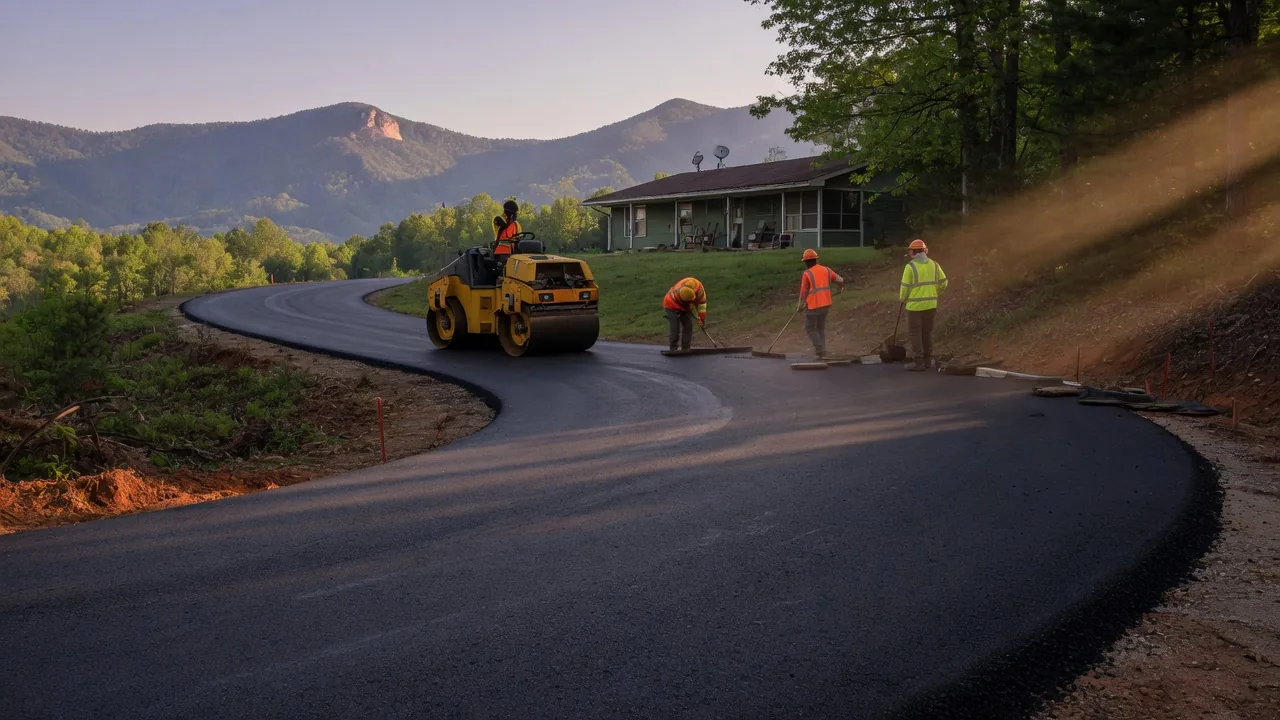
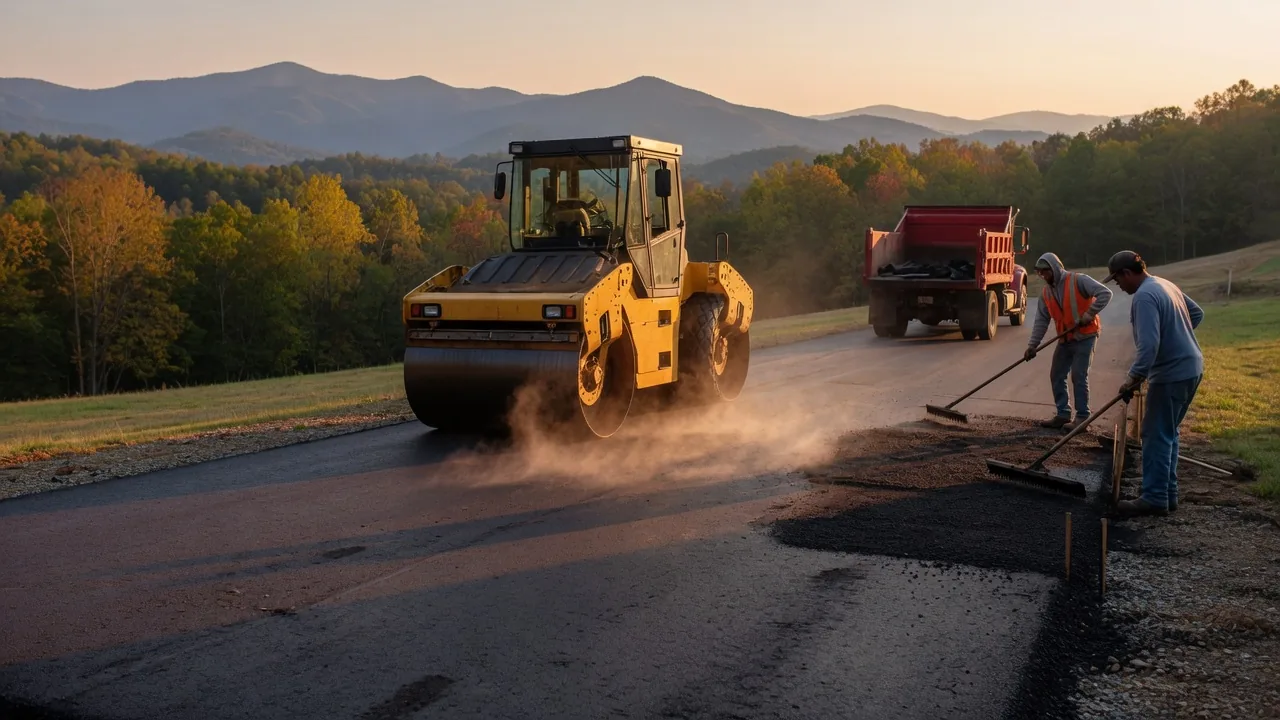
Paving contractors in Etowah NC get called most often in spring, after a wet winter has opened the same cracks the owner patched last fall. The pattern repeats because the surface gets repaired while the grade that feeds it does not. Crown, edge, and ditch are cheap to correct while a machine is already on site and expensive to chase one at a time. Ask any crew you interview to trace the path a hard rain takes from the top of your drive to its legal outlet before they quote a single ton of mix.
What Etowah driveways are actually made of
The housing mix here shapes the work. Mid-century and 1970s ranches off Etowah School Road sit on gravel-base drives that have been topped and patched for decades; newer builds on split parcels further up the ridge have longer, steeper runs that need real base and one or more drainage structures. A drive with a culvert under it is a driveway plus a drainage job, and those two things get priced separately.
Before anyone talks surface, ask what the base is. Asphalt placed over failing gravel, with no compaction or fabric, will mirror every crack in the old surface within a season. On Henderson County's clay-heavy soils, stone base that does not drain is just a sponge holding water under your new pavement. Current code guidance on subgrade and compaction is published by the International Code Council, and it is worth knowing that a proper base is specified, not eyeballed.
Depth expectations differ by slope, too. A flat pad at the bottom of the lot may hold with a thinner compacted lift; a run climbing toward a ridge build needs more stone underneath to keep the mat from sliding and rutting. Two Etowah drives with identical square footage can carry very different material lists, which is why comparing quotes on price per square foot alone hides the part that decides how long the pavement lasts.
Etowah paving price picture
Regional bands are honest ranges, not bids. Your number moves with square footage, access, how much grading and drainage correction the lot needs, and whether the old surface gets milled off or paved over. The full line-item breakdown lives in the Henderson County asphalt cost table; here is the working version:
| Scope | Typical range |
|---|---|
| Sealcoat and crack fill (existing sound asphalt) | $500-$1,200 |
| Patching and spot repair | $1,200-$3,000 |
| Resurface / overlay, standard drive | $3,500-$7,000 |
| Full removal and replacement, with base repair | $6,000-$14,000 |
| Drainage correction (culvert, swale, catch basin) | $1,500-$6,000 |
| Grading / re-crowning on a sloped lot | $2,000-$5,500 |
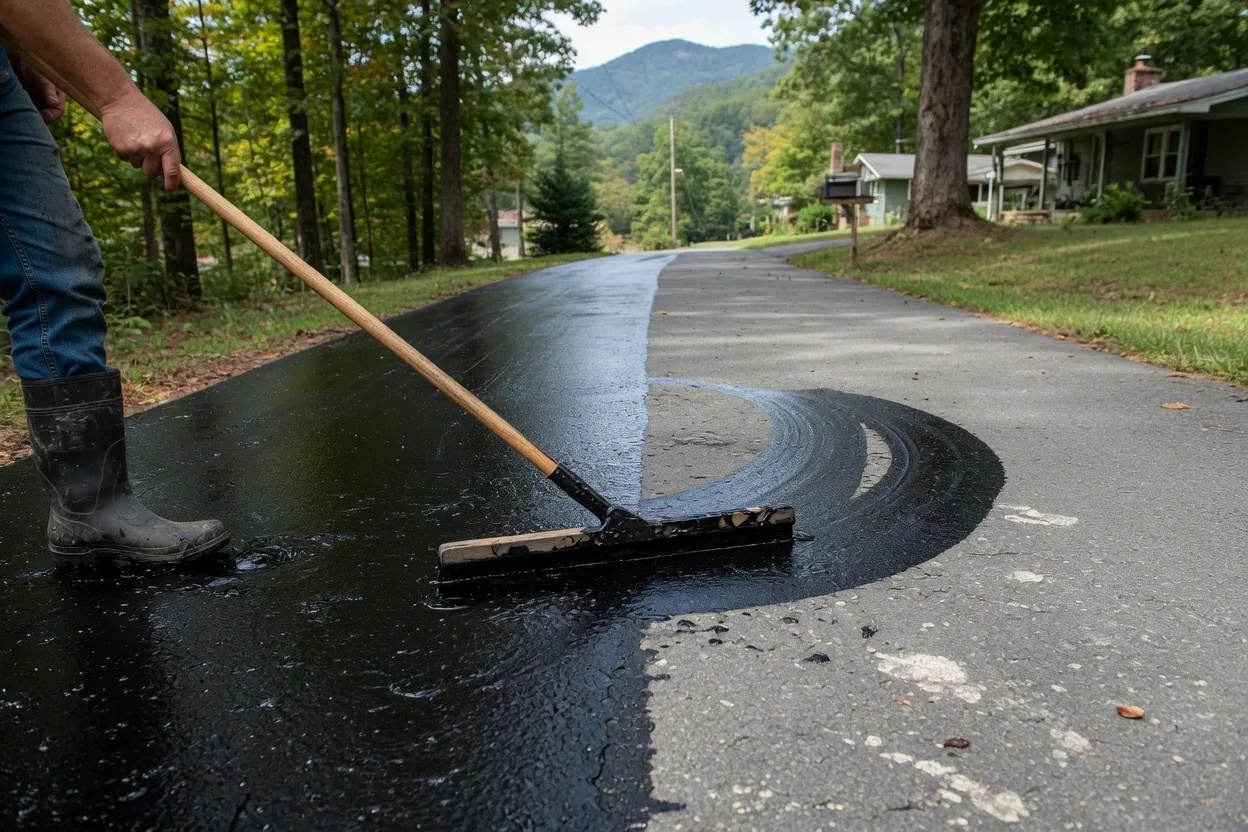
A long, steep run with a failing culvert can push past the high end. A short flat drive that only needs an overlay lands near the bottom. If your quote sits below these bands, ask what was left out — drainage is the usual answer. A sealcoat line on an otherwise failing drive is not a repair; it is a delay with a receipt attached.
Where the water has to leave your lot
Crown, edges, and ditch are the three places a driveway decides whether it survives. The crown is the slight high line down the middle that peels water toward both edges. The edges are where a drive meets soil, and if they are below the surrounding grade, water runs in instead of off. The ditch is the exit — a swale, culvert, or roadside gutter that carries it somewhere legal.
That last part is not yours to improvise. Where a driveway meets a state-maintained road, the connection needs a driveway permit through NCDOT, and the requirements cover the culvert size, the approach grade, and where runoff may discharge. Applications run through NCDOT Connect, with program details at NCDOT. County and private-road drives follow local standards, but the principle holds: water has to be sent to an approved outlet, not onto your neighbor's yard.
On a steep Etowah run, discharge volume after a summer storm is not a trickle. A ditch that worked for a gravel drive can be overwhelmed once asphalt sheds water ten times faster, so size the outlet for the paved surface, not the old one. If the only legal outlet is downhill across someone else's property, that conversation belongs in the written scope before mobilization, not after the first complaint.
Choosing a paving crew in this market
Three checks worth making before you sign anything. Ask how thick the compacted lift will be and whether the base gets reworked or just covered. Ask who handles drainage, and make sure it is in the written scope, not a verbal afterthought. And on larger jobs, understand the licensing rule — work above the threshold on the state's general contractor licensing law requires a licensed contractor, checked through the NC Licensing Board for General Contractors.
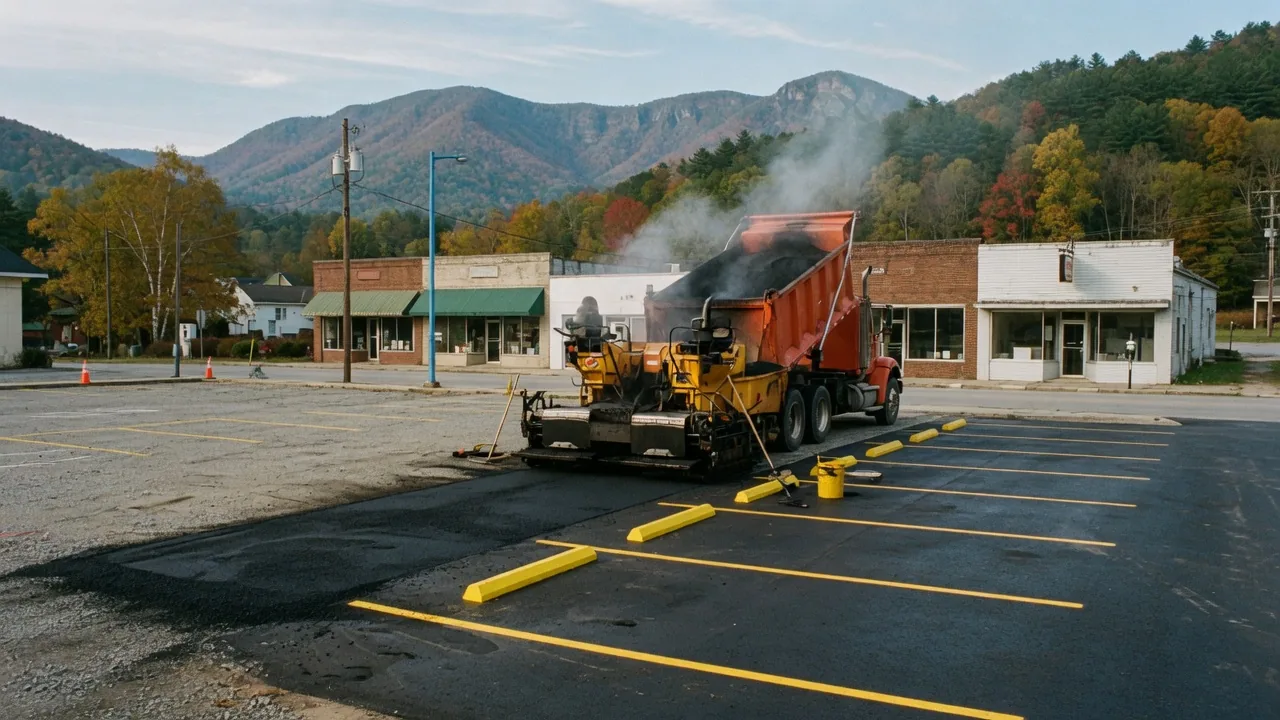
If the driveway ties into a public road or crosses a right-of-way, confirm the permit is in hand before the crew mobilizes. Rain that leaves your lot in the wrong place becomes a complaint, then a correction order. Our asphalt paving overview covers how the trades split between surface, base, and drainage, and the Etowah driveway paving page walks through what a standard local project includes.
Ask, too, what happens after the mat cools. A crew that hauls off old asphalt, restores the shoulders, and confirms the ditch runs clear is finishing the drainage job, not just the paving job. Payment schedules that tie the final draw to a functioning outlet after the next hard rain protect you better than any verbal promise.
Storms reset the clock on Henderson County pavement
Federal disaster records for this county — 16 declared events spanning 1978-2026 — are mostly flood and storm family, and the French Broad corridor through Etowah and Horse Shoe shows up in that history. Every one of those events pushed water across driveways at volumes the original design never anticipated. The practical read for a homeowner is simple: a paving job finished without answering where storm water goes has a shorter life here than the same job elsewhere. Grade and drainage first, surface second, and the pavement stops being the thing that fails.
That history repeats on a schedule nobody can predict, which is exactly why the drainage line in a quote deserves more scrutiny than the asphalt line. A drive that sheds water correctly can ride out a wet season with routine sealcoat and crack fill. One that ponds behind a too-small culvert will be back on your repair list after the next storm, and the second invoice usually costs more than the correction would have up front.