Reading cracks, potholes, and soft edges before you spend on the season
Walk any driveway in Buncombe County after a wet spring and the surface tells you which job you actually need. A drive off a Weaverville hollow that sheds water toward the house will show different wear than a flat pad on a Fletcher lot, and a steep grade cut into a Blue Ridge slope collects runoff that a level drive never sees. That difference decides whether you are buying a sealcoat, an overlay, or a full tear-out, and it decides how much weather window you need. Once you know the scope, the season question answers itself.
Cracks wider than a pencil, alligator cracking in the wheel paths, and potholes that refill every spring point past patching. Hairline cracks across a sound base are a sealcoat or thin-patch candidate. Edges that crumble underfoot, soft spots that sponges when you step on them, and a drive that dips where a culvert crosses underneath all say the base has failed. Paving over a failed base buys one warm season of good looks before the same cracks return, usually in the same places. If a contractor cannot tell you which category your drive falls into, that is a sign to get another bid.
The mountain terrain here adds a wrinkle flatland paving advice misses. A driveway on a 15 percent grade off a Haywood Road side street drains fast but erodes at the shoulders; a drive in a Swannanoa valley bottom stays damp into May and holds frost longer. Both affect scheduling. The steep drive wants dry summer weeks when the subgrade has firmed up. The shaded valley drive wants late spring or early fall when it finally dries out. Neither is a case for gambling on a wet forecast.
The temperature and rain calendar that actually governs scheduling
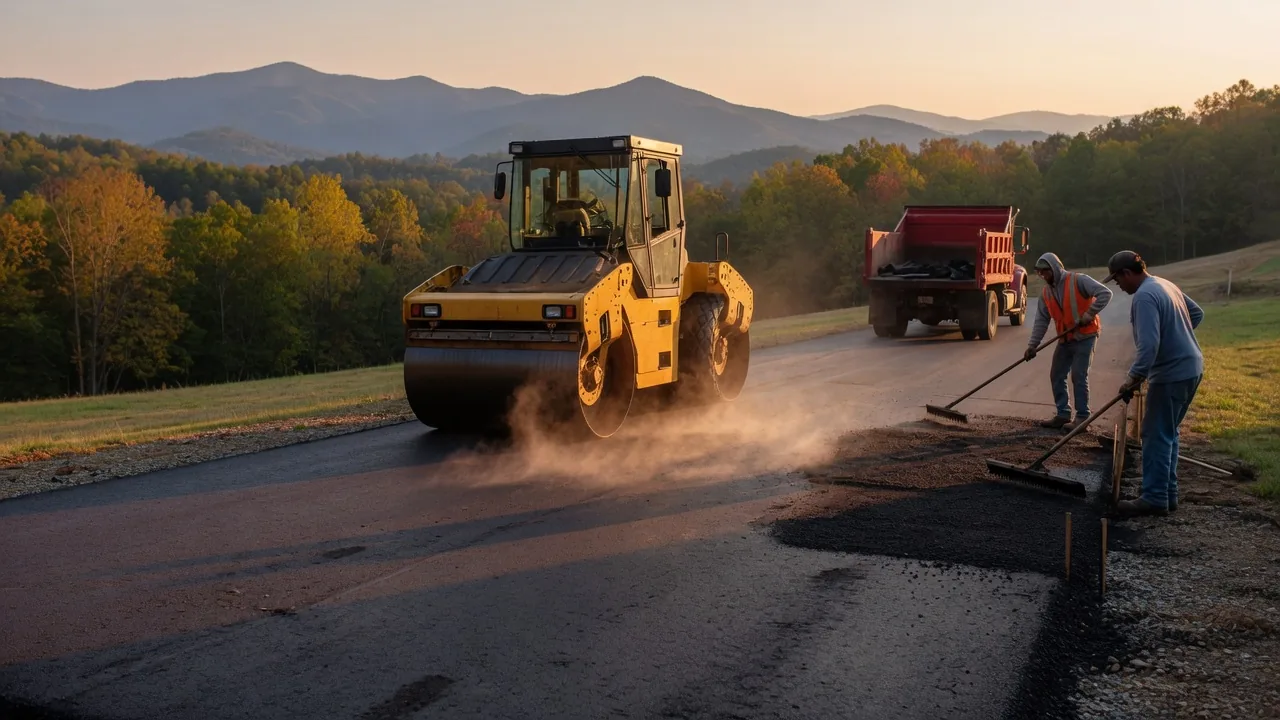
Asphalt needs a warm, dry base to compact properly. Hot-mix plants in western NC typically run spring through fall, and crews want surface temps comfortably above 50°F during placement and for the first hours of cure. That rules out most of December, January, and February in the Asheville area, where nighttime temps drop below freezing regularly and the ground stays saturated. Late April or May through October is the sweet spot; June through September is busiest and calendars fill fast, sometimes weeks out.
The catch is afternoon thunderstorms. Short, intense rain on fresh asphalt can cool the mat too fast and wash tack coats on overlays, which is why crews here often pour in the morning and watch the radar through lunch. 19 federal disaster declarations have touched this county over 1973-2026, mostly storm and flood events, and the wet-season pattern behind those numbers is exactly what interrupts paving schedules here. For current local forecasts, the National Weather Service remains the working reference crews use. Watching the seven-day outlook before you sign a work order saves more headaches than any other single step.
Elevation matters more than most homeowners expect. A drive at 3,000 feet in the Riceville or Fairview areas can run several degrees cooler than one downtown near the French Broad, and the paving window there can close two to three weeks earlier in fall. If your property sits up a hollow or backs against a north-facing ridge, plan your project toward the middle of the warm season rather than the edges. A job that works fine in August on a sunny slope may not cure properly in late October on the same slope in shade.
What the job actually costs in Buncombe County
Prices move with square footage, base condition, driveway grade, and haul distance from the plant. Below are realistic regional bands, not quotes.
| Scope | Typical price range | When it fits |
|---|---|---|
| Crack fill and sealcoat | $200-$650 | Surface cracks, sound base, no sinking |
| Patch or pothole repair | $350-$1,200 | Isolated failures, edges intact |
| Asphalt overlay (1.5-2 in) | $1,400-$4,200 | Alligator cracking, no base failure |
| Full tear-out and new drive | $2,400-$9,800 | Failed base, drainage, deep potholes |
| Gravel base rebuild plus asphalt | $4,200-$14,000 | Rutted, soft, or never-paved approach |
The asphalt driveway cost guide breaks the line items further if you want a tighter sense of which bucket your drive falls into. A long mountain drive with culverts and retaining work will land at the top of its band; a short flat city apron will land near the bottom. Haul distance matters here because some drives sit well off the main road, and plant time is not the only cost the truck logs.
Two line items catch Buncombe County homeowners off guard. The first is drainage: adding a culvert or reshaping a swale so water leaves the drive instead of pooling on it can add meaningful cost, but skipping it is why so many overlays fail within a few seasons. The second is grading. A drive that needs re-grading before any asphalt goes down is a different job than a drive that just needs a fresh surface. Ask each bidder which of those is included and which is extra, then compare the totals rather than the headline number.
Which season suits which job
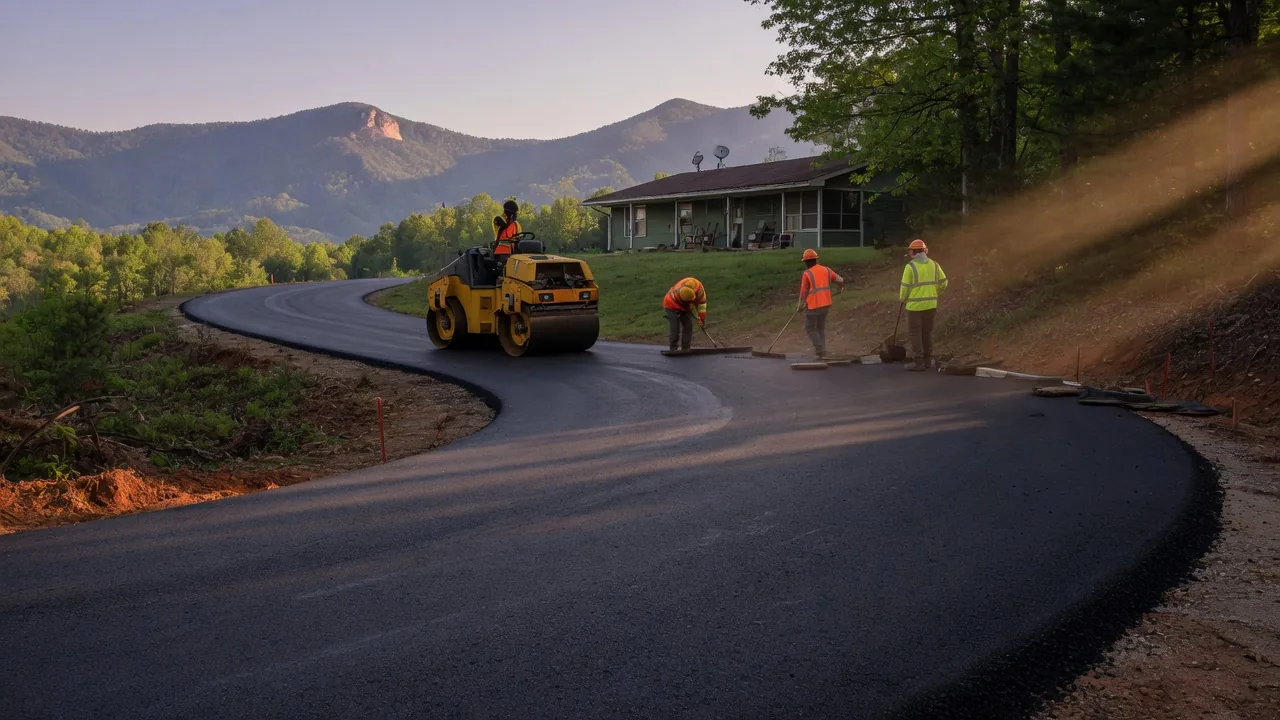
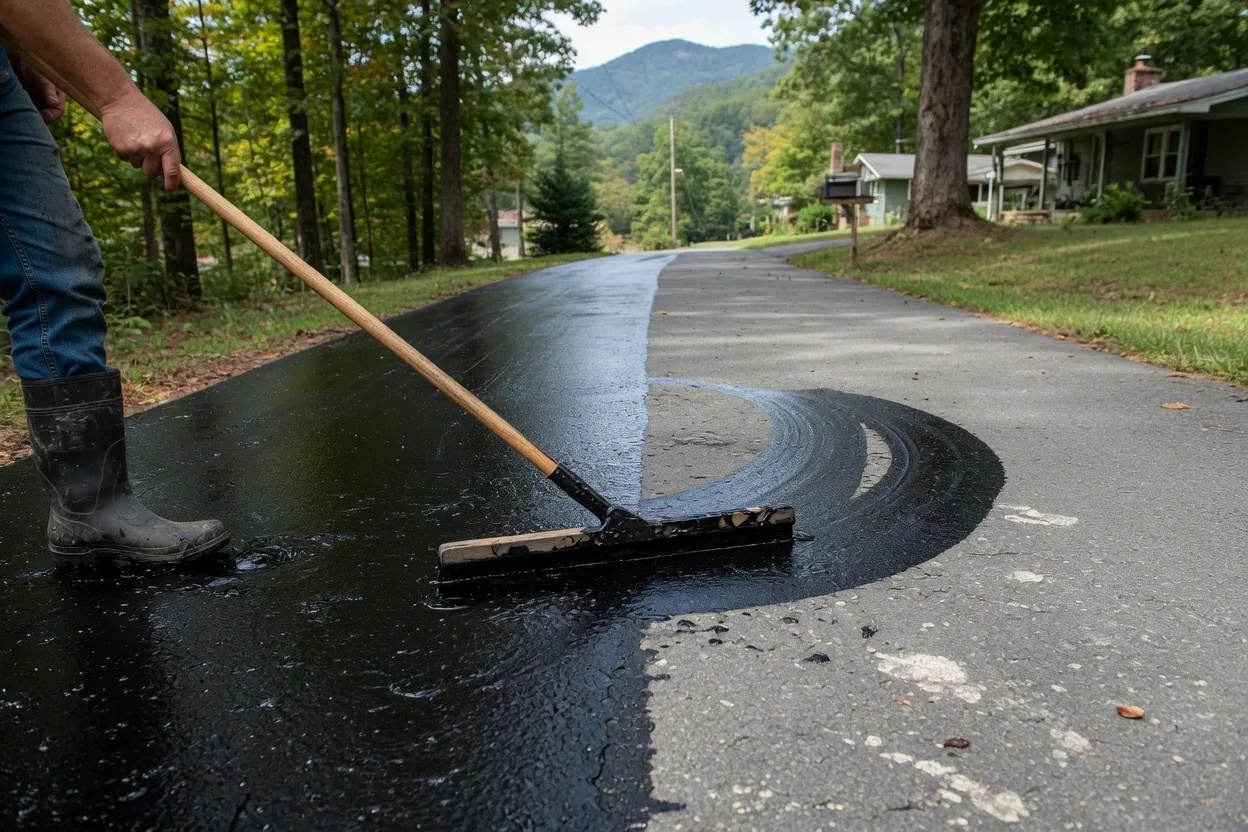
Sealcoating wants warm, dry days with no rain for at least 24 hours after application, so late spring and early fall are ideal and midsummer works if the crew starts early. Overlays prefer a longer dry stretch because the existing surface has to be clean and dry. Full tear-outs and new base work run best in the drier weeks of summer and early fall, when grading, compacting, and hauling aren't fighting mud. A drive shaded by hardwoods and staying damp into May is a reason to wait, not to gamble. Steep or curved mountain drives off the Blue Ridge slopes also carry erosion risk during spring storms, so scheduling around the wettest weeks saves callbacks.
There is also a bookkeeping angle. If your project touches the public right-of-way, widens an apron, or changes a culvert or drainage, plan permit lead time into the season. Permits don't care that the weather is perfect, and a two-week delay in June puts you into July's busiest stretch. Getting paperwork moving in late winter means your crew can start the day the ground is ready. The asphalt driveways guide walks through what a properly scoped job should include, which helps when you're comparing bids on the same footing.
Permits, licensing, and paperwork worth knowing
Any work that touches the public right-of-way, widens a driveway apron, or changes a culvert or drainage normally needs a permit through the NCDOT for state-maintained roads, and local approval for city or county streets. Residential paving itself is often unpermitted, but excavation, drainage changes, and fill placed near a slope can trip local review. On commercial or larger-scale jobs, general contractor licensing thresholds apply; check the NC Licensing Board for General Contractors before signing. When erosion controls are required on a graded site, NC DEQ rules govern what happens to disturbed soil and runoff.
In practice, most single-family driveway repaving inside the existing footprint in Buncombe County does not need a permit. What trips review is anything that changes how water moves, adds fill near a slope, or touches the road apron. If your contractor tells you they'll handle the right-of-way work without a permit because it's "just a driveway," ask again. A permit pulled properly is cheaper than undoing an unpermitted culvert or a driveway apron that fails an inspection later.
Booking the right window without overpaying
Get two or three bids in the off-season, ideally late winter or early spring, when crews are filling the calendar and prices are negotiable. Ask each bidder which base they plan on, how thick the lift will be, and whether they'll do any drainage work. A paving quote that never mentions grading, drainage, or base thickness isn't a short quote, it's an incomplete one. If the answer is 'sealcoat it now, repave later', that's often honest, but only if the base checks out. Use the asphalt driveways guide for what a properly scoped job should include before scheduling your window.
Timing also affects how much the crew can get done in a day. A long, narrow mountain drive with tight turnaround space takes longer than the square footage suggests, and a summer booking may need to be scheduled across two visits. Ask upfront whether your drive requires a second trip and what that adds. It's a fair question and a good crew will answer it plainly. Getting it settled before the season fills up keeps you out of the scramble and gets the work done in the right weather, not just the soonest weather.