The driveway here isn't Asheville's driveway
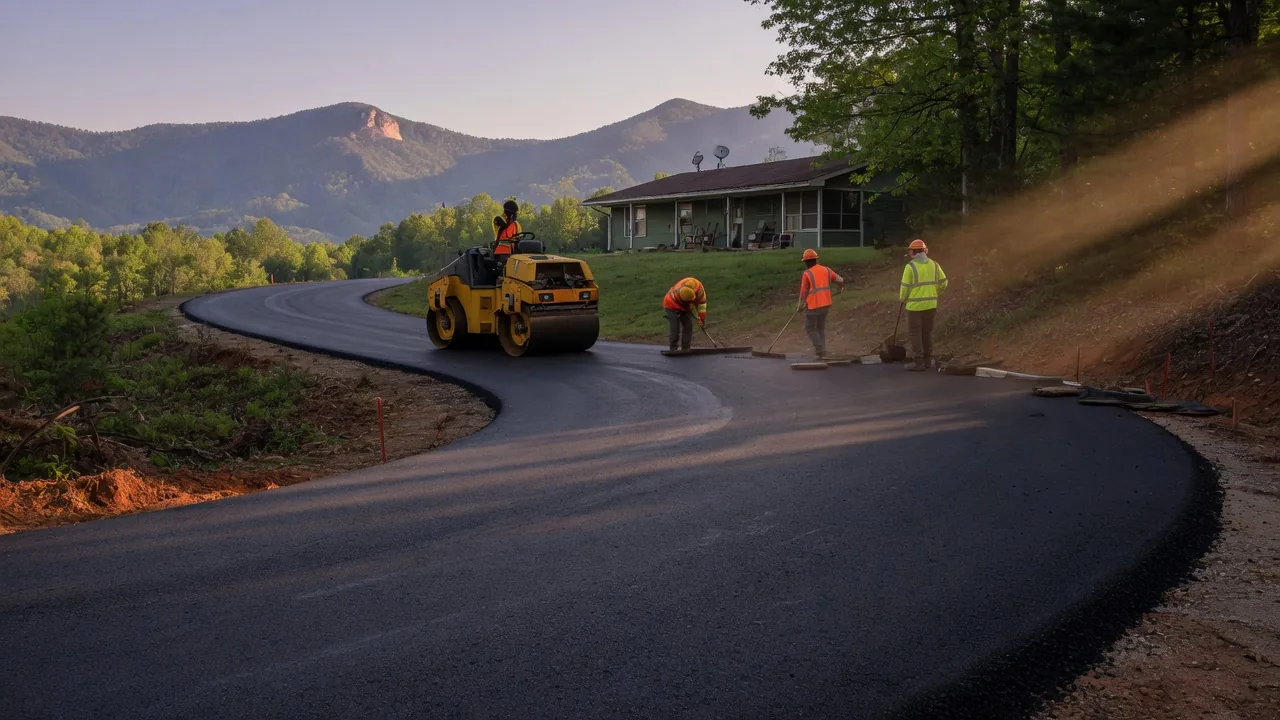
Out past the city limits — Leicester, Alexander, Fairview, Barnardsville, the ridges off Beaverdam and Old Fort roads — driveways run long, climb hard, and carry the kind of gravel that looked fine until a wet spring cut a channel down the middle. That matters for conversion because asphalt is only as good as the base under it, and a half-mile gravel drive on a 12% grade is a fundamentally different job than a 40-foot apron in West Asheville. The rock, the slope, the runoff, and the sheer length all change the price.
The other local wrinkle: a lot of these properties sit on gravel that was put down years ago, topped off a bag at a time, and never compacted properly. That informal history is exactly why a contractor can't quote a gravel-to-asphalt conversion over the phone. The old gravel has to be evaluated, and often it's not usable as-is. Start with the base, not the blacktop.
Compare that to a subdivision apron in a place like Kenilworth or a flat lot off Brevard Road, where the drive is short, the grade is gentle, and the gravel may have been placed in one pass with proper compaction from the start. Those jobs are simpler and price at the bottom of the range. The mountain properties — the ones up Weaverville or Alexander on switchbacked gravel — are a different trade entirely. You're not just paving; you're often engineering a road.
One more local reality: a lot of these rural drives share a right-of-way with a neighbor, or cross a culvert that serves two properties. That shared infrastructure matters. If the drain under the drive is undersized, converting to asphalt without fixing it means water backs up and undermines the new surface. Contractors who know the area ask about the culvert before they ever talk about square footage.
What conversion actually requires — and why it's not just paving gravel
A gravel-to-asphalt job is mostly a grading and base job. The sequence looks roughly like this:
- Assess the existing gravel. Depth, gradation, drainage, and how much of it is fines versus clean stone. Contaminated or thin gravel comes out or gets capped.
- Regrade and shape. The drive has to hold a crown and shed water to the sides, not down the middle. On slopes, that means cutting in drainage where none existed.
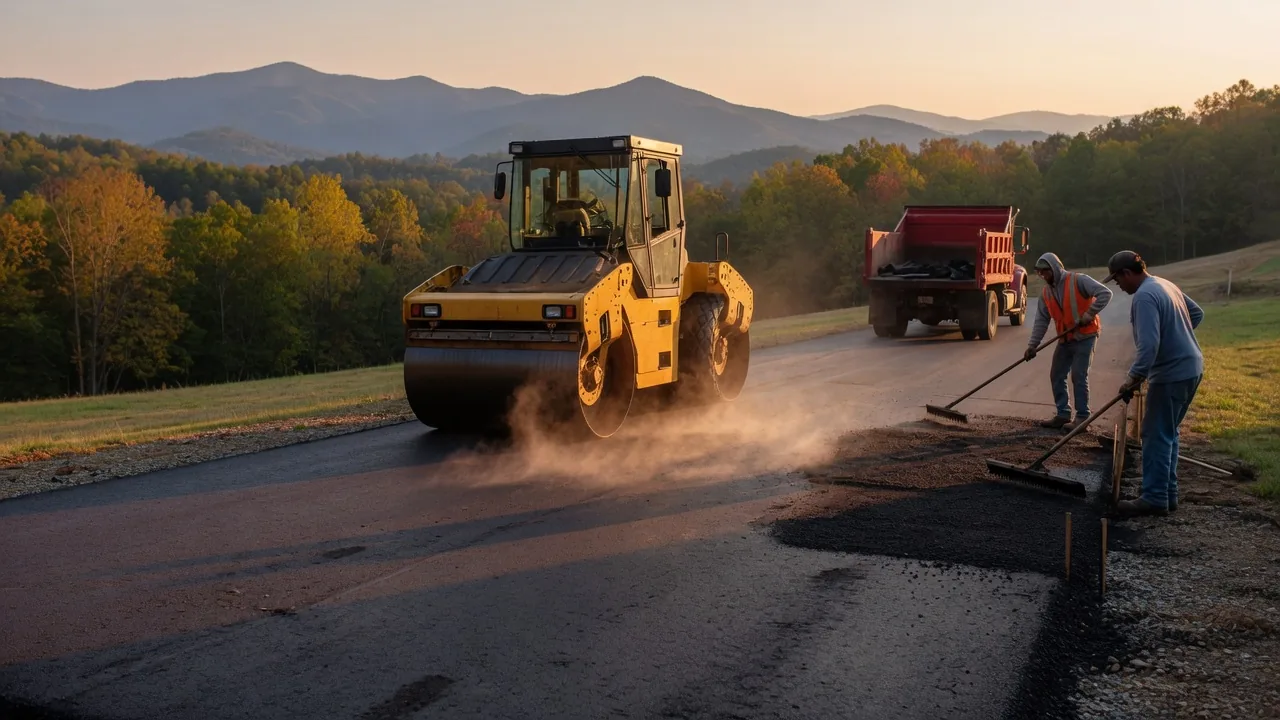
- Add and compact base. Usually a fresh crushed-stone lift, placed in lifts and rolled to density — the part that actually prevents the asphalt from cracking next winter.
- Asphalt in two lifts. A binder course and a surface course, typically 2-3 inches total for a residential drive, placed hot and rolled.
- Edge and drain. Gravel shoulders, ditch lines, and culvert inlets restored, because a paved drive with nowhere for water to go fails at the edges first.
Driveway work at the scale of a private residence generally doesn't trip the state's general contractor licensing threshold, but commercial or multi-unit paving may, and it's worth knowing where that line sits — the North Carolina Licensing Board for General Contractors publishes the dollar threshold and the exceptions. If any utility trenching or drainage structure work is involved, that's a separate trade question.
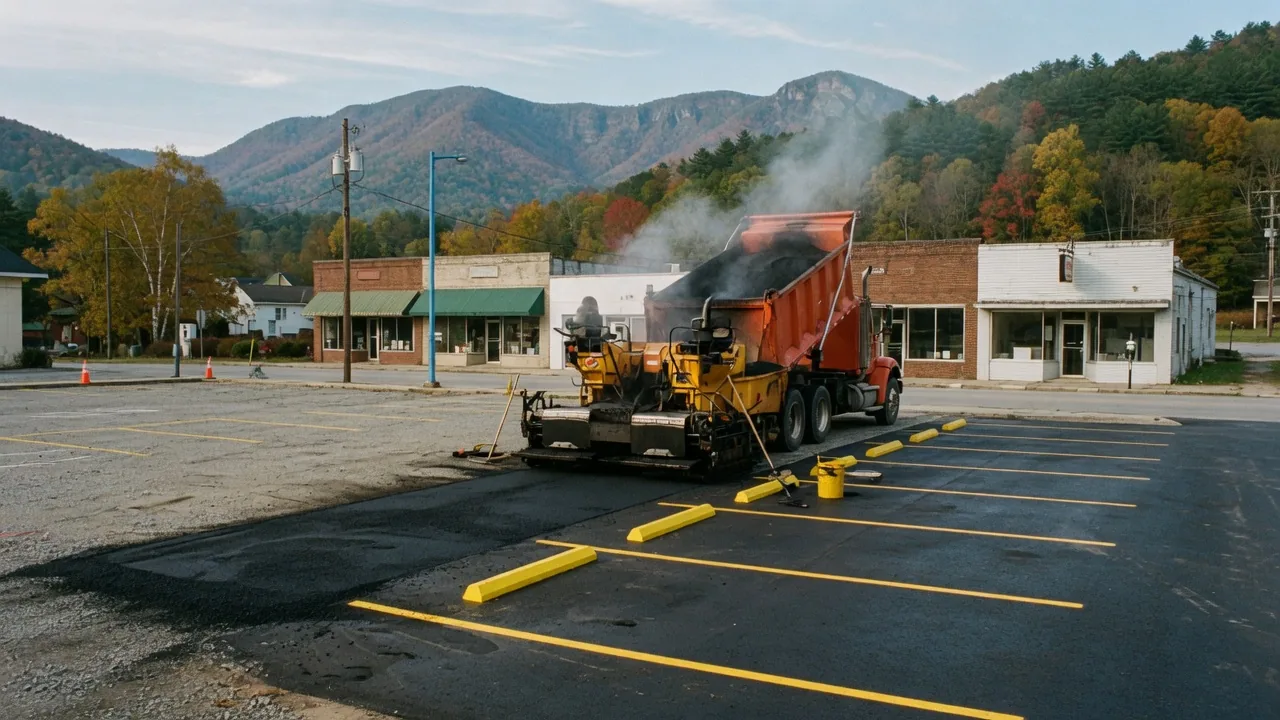
And if the drive serves a home-based business with regular truck traffic, or a small multi-unit property, the scope can shift into commercial territory — heavier base, thicker asphalt, sometimes a different permit path. That's where the licensing question stops being theoretical.
Steep drives in the Asheville area also raise questions about erosion control during construction. Bare graded soil on a 15% grade sheds water fast, and if a rain event hits mid-project, sediment can move downslope toward a neighbor or a creek. Good contractors plan for that with silt fencing or temporary diversion, especially on the ridges. It's not glamorous, but it's the difference between a clean job and a complaint.
The cost picture, scope by scope
Bands below are installed, in this region, and they move with slope, length, haul distance, and how much base has to be rebuilt versus reused.
| Scope | Typical installed range | What drives it |
|---|---|---|
| Short flat drive, gravel reusable as base | $6-$8/sq ft | Minimal grading, fresh surface lift, easy access |
| Standard drive, new base lift required | $8-$11/sq ft | Crushed stone, compaction, binder + surface |
| Long or steep drive, drainage added | $11-$14/sq ft | Haul distance, ditch work, culverts, slope shaping |
| Full rebuild (bad gravel, poor drainage) | $14+/sq ft | Removal, new subgrade, engineering the water |
| Tar-and-chip alternative | roughly 30-50% less | Thinner surface, shorter life — see tar and chip |
For a straight per-foot comparison against keeping it gravel, the cost to pave a gravel driveway page breaks down the same numbers from the other direction. If the budget is tight and the base is marginal, tar and chip is a real option — it's not asphalt, but it stops the dust and the rutting for years at a lower entry price, and it can be a stepping stone to full asphalt later. What you're really buying in any of these is the base and the water management. The blacktop is the cheap part.
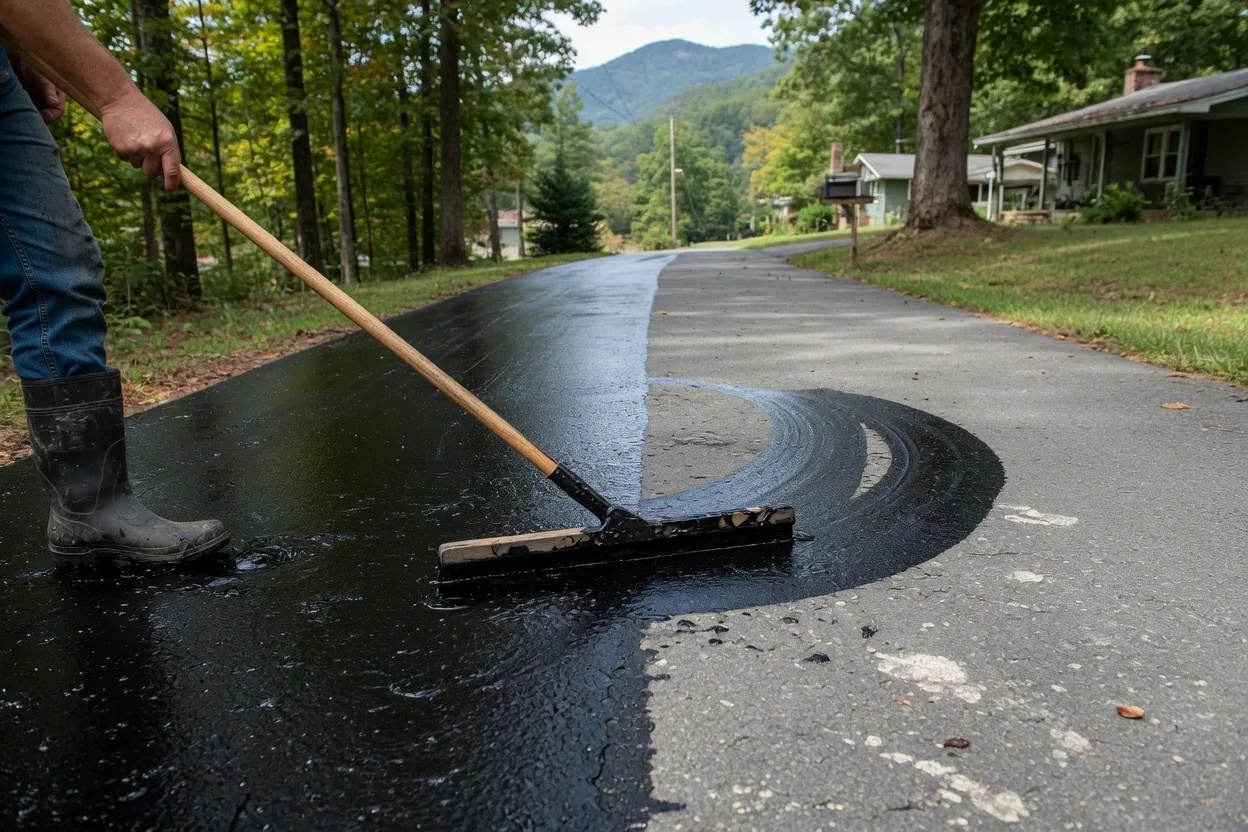
For context on what a finished asphalt drive looks like as a product — thickness, edge treatment, finish — the asphalt driveways page covers the material side. On a long mountain drive, the surface course is a small fraction of the invoice. The grading, the stone, the compaction, and the drainage are where the money actually goes.
Haul distance is a real variable here. A drive off a remote ridge in Barnardsville or up a forest service road can add significant trucking cost for stone and hot mix, simply because the plant is miles away and the last stretch is slow. That alone can push a job from the middle of the band toward the top.
Water, weather, and why the base is the whole story
Buncombe County has a long record of federal disaster declarations — 19 events spanning 1973-2026 — and a big share of those are flood and heavy-rain events, not snow. That's the local lesson: the drives that fail here fail because water gets under the asphalt, and once it does, freeze-thaw does the rest. A paved drive with a proper crown, compacted base, and working ditch lines holds up for decades. One laid over uncompacted gravel on a slope will crack within a couple of winters.
That's also why the conversion is seasonal. Asphalt plants in this region operate when temperatures stay warm enough to place and compact hot mix, and the window is roughly spring through fall. A wet fall can compress the schedule. The National Weather Service local climate data is a reasonable sanity check on when paving can actually happen.
Spring in the mountains is wet. That's not a minor detail — it's the single biggest scheduling and quality risk in the trade here. Hot mix placed on a saturated base, or in a cold drizzle, won't bond properly and won't compact to density. Contractors who work this county know to watch the forecast and to walk away from a marginal day rather than push a pour. Homeowners who want the job done right should expect some weather-related flexibility in the calendar.
Freeze-thaw cycles are also more aggressive at elevation. A drive at 3,000 feet off the Blue Ridge Parkway sees more cycles than one down in the valley, and that stresses both the base and the surface. It's another reason the base specification matters more up high — a thicker compacted stone section buys years of service life on a drive that would otherwise crack early.
Permits, access, and the things people forget
If the driveway meets a state-maintained road, any change to the connection — widening, resurfacing within the right-of-way, changing the pipe — generally needs a driveway permit. NCDOT handles those, and applications go through NCDOT Connect. Inside Asheville city limits, the City of Asheville is the place to check, and stormwater rules can apply if you're moving a lot of runoff. The rule of thumb: resurfacing an existing drive in place usually doesn't need a permit; changing the footprint or the water flow often does. Check before the first load of stone shows up.
Beyond permits, there's the question of what a paving crew can physically access. A narrow gravel drive winding between mature trees, or one that crosses a small bridge, limits the size of the equipment that can reach the site. A standard dump truck and paver need room to maneuver. On tight mountain properties, that can mean hand work, smaller equipment, or a longer schedule — all of which affect cost.
Homeowners also forget the utility question. If there's a buried water line, a septic field, or a power drop running under the drive, the paving plan has to account for it. Paving over a shallow utility that may need service later is a decision worth making consciously, not by accident. Marking those lines before any grading starts is cheap insurance.
Finally, think about snow and ice. A paved drive is easier to plow than gravel, but it also needs to be plowed carefully — a steel blade set too low will scar new asphalt. If you're hiring snow removal, tell them the surface is new, and consider a rubber-edged blade for the first winter or two while the mix cures. Small thing, but it's the kind of detail that separates a drive that looks new in five years from one that's already gouged.
Drainage at the road connection deserves its own mention. Where the drive meets a state road, water from the road ditch has to go somewhere. If the drive is paved and the ditch is blocked or the culvert is too small, the road water finds the path of least resistance — often right down the new asphalt. Getting that connection right is part of the permit review for a reason.