Which way the rain runs on a Buncombe County slope
Driveways in and around Asheville climb. A gravel spur off a switchback in Fairview, a paved run up a Weaverville ridge, a short but steep apron dropping off a Haw Creek hollow — the lot almost always falls away faster than whoever built the house allowed for. Rain does not soak in on these slopes. It arrives, joins whatever is already running downhill from the neighbor above, finds the driveway, and takes the shortest line to the street. If your driveway is that line, every storm will show it.
The fix starts with three questions: which way does the crown send water, what is the driveway edge doing, and where is the ditch supposed to be. A driveway with no crown sheds toward the middle and puddles there. A driveway with no shoulder has nothing to catch what the uphill slope throws at it. A driveway with no defined ditch simply becomes one, which is how you end up with a channel cut through your base course. Naming those three things is what separates a driveway that drains from a driveway that keeps flooding the garage.
Terrain in this county makes that harder than it sounds. Buncombe soils swing from clay-heavy bottoms in the valley to weathered rock and shallow topsoil up on the ridges, and the two shed water very differently. Clay sheds slowly and puddles; rock sheds fast and erodes the edges. The same fix that works on one lot type can fail on another, which is why a scope that ignores your soil is a template, not a plan.
The asphalt is almost never the actual problem
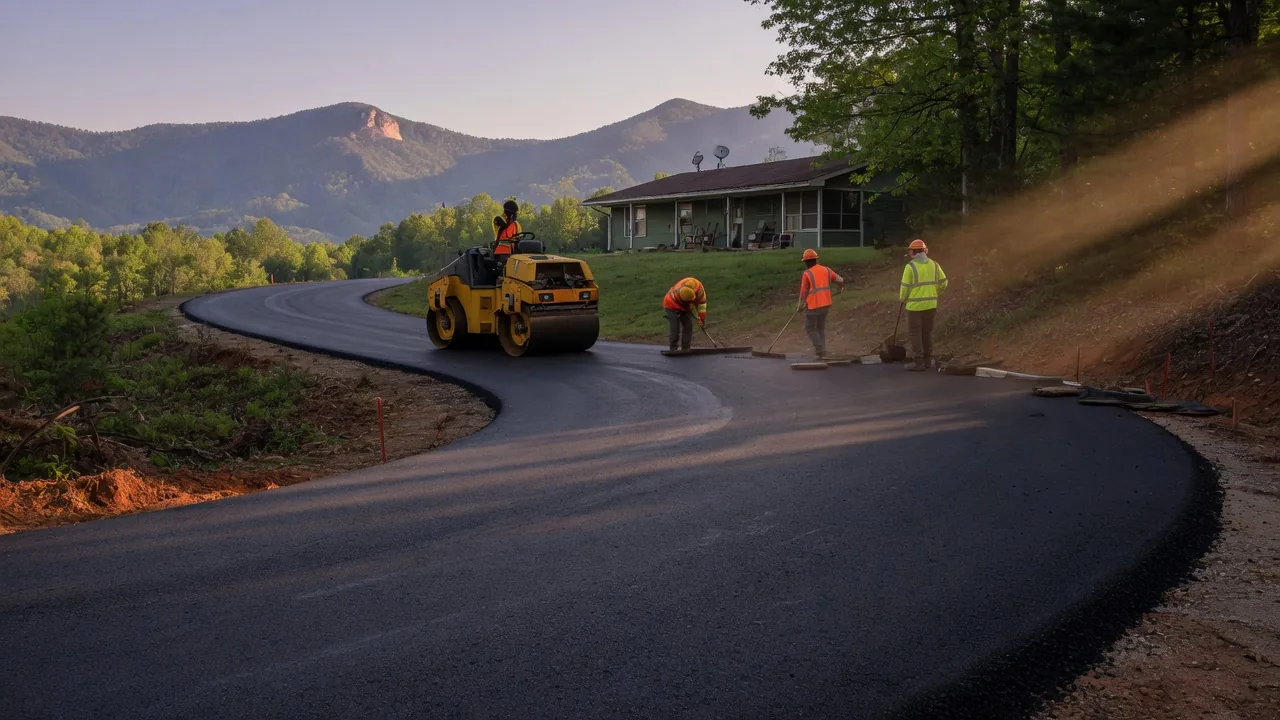
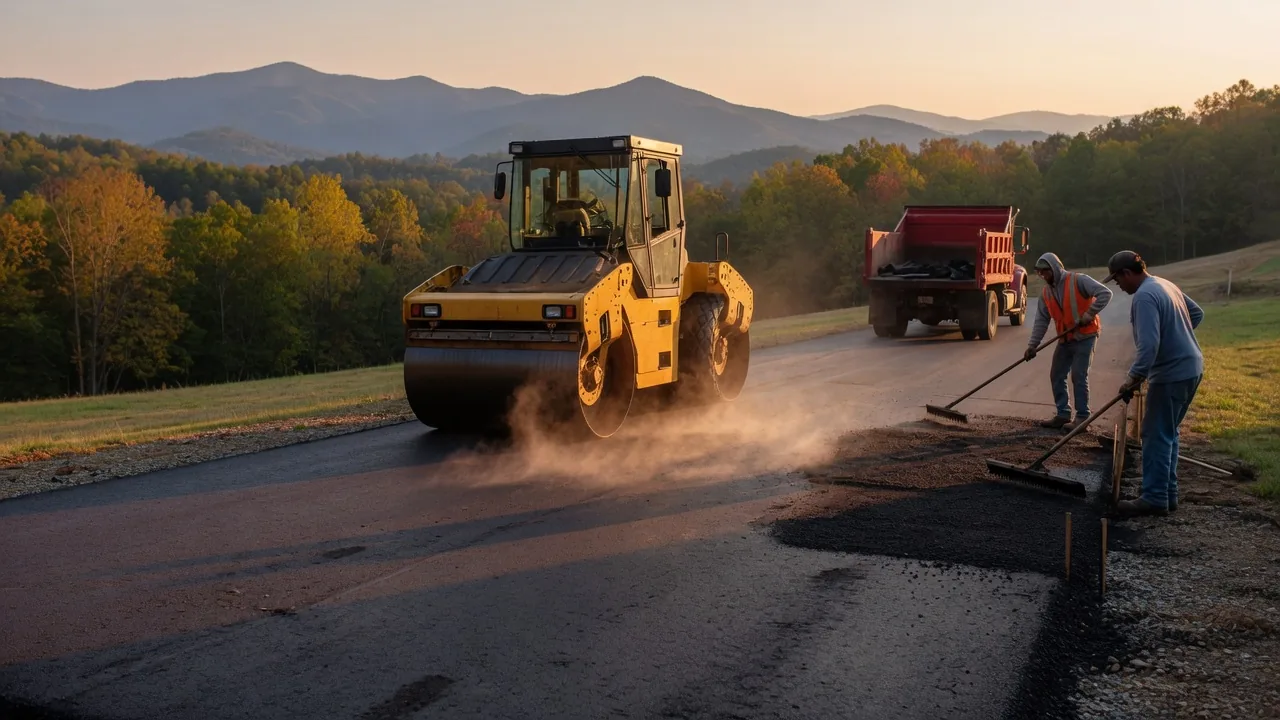
The single most common mistake on steep Asheville-area driveways is repaving over a drainage problem. Water that has been running down the surface for years has been cutting into the base course underneath. New asphalt laid on saturated, eroded base fails within a season, and you are back to the same phone call. Before new paving makes sense, the grade and the outlet have to be solved. See steep driveway paving for what proper slope work actually involves.
When water is the driver, most of the money goes underground, not on top. That is the part homeowners tend to resist, because you cannot see a swale the way you can see fresh blacktop. But an honest scope tells you which is which: if the water still arrives at the top of the drive, a surface-only fix will not hold.
What the work actually costs on a steep lot
Real regional ranges, not quotes. Every driveway is different, and on a steep lot, more money usually means more water moved. Use these as a sanity check against whatever you are handed.
| Scope | Typical range |
|---|---|
| Regrade surface crown only (light cut, roll, compact) | $800 - $1,800 |
| Add shoulder swale / roadside ditch with riprap | $1,200 - $2,800 |
| Culvert install, including headwalls and pipe | $1,800 - $4,500 |
| Edge drain / underdrain along one side, daylighted | $2,200 - $5,500 |
| Full regrade plus drainage plus repave (localized) | $4,000 - $6,500+ |
Anything that changes the driveway's connection to a public road may also need an NCDOT driveway permit. The state agency handles access permits for state-maintained roads, and it is worth checking before anyone digs (see NCDOT). If the driveway is a private shared access, the scope usually shifts toward the shared segment and the neighbors get involved, which changes both the price and the schedule.
On a long run, the fix is usually staged rather than done all at once. A crown regrade at the top, a swale partway down, and a culvert at the bottom may solve most of the problem for a fraction of a full rebuild. Ask any contractor to walk the drive with you and point out where water is actually entering. If they cannot answer that, they are guessing.
The order of operations that keeps you dry
Do it in this order and almost every steep-driveway water call gets solved: (1) confirm the uphill source, because a surprising share of "driveway" water is actually the neighbor's roof, road, or a spring surfacing uphill. (2) Rebuild the crown so the surface sheds to a defined edge, not to the middle. (3) Put something at the edge — a swale, ditch, or edge drain — with a defined outlet. (4) Only then repair or replace the surface. Skip straight to step four and you will be back in a year.
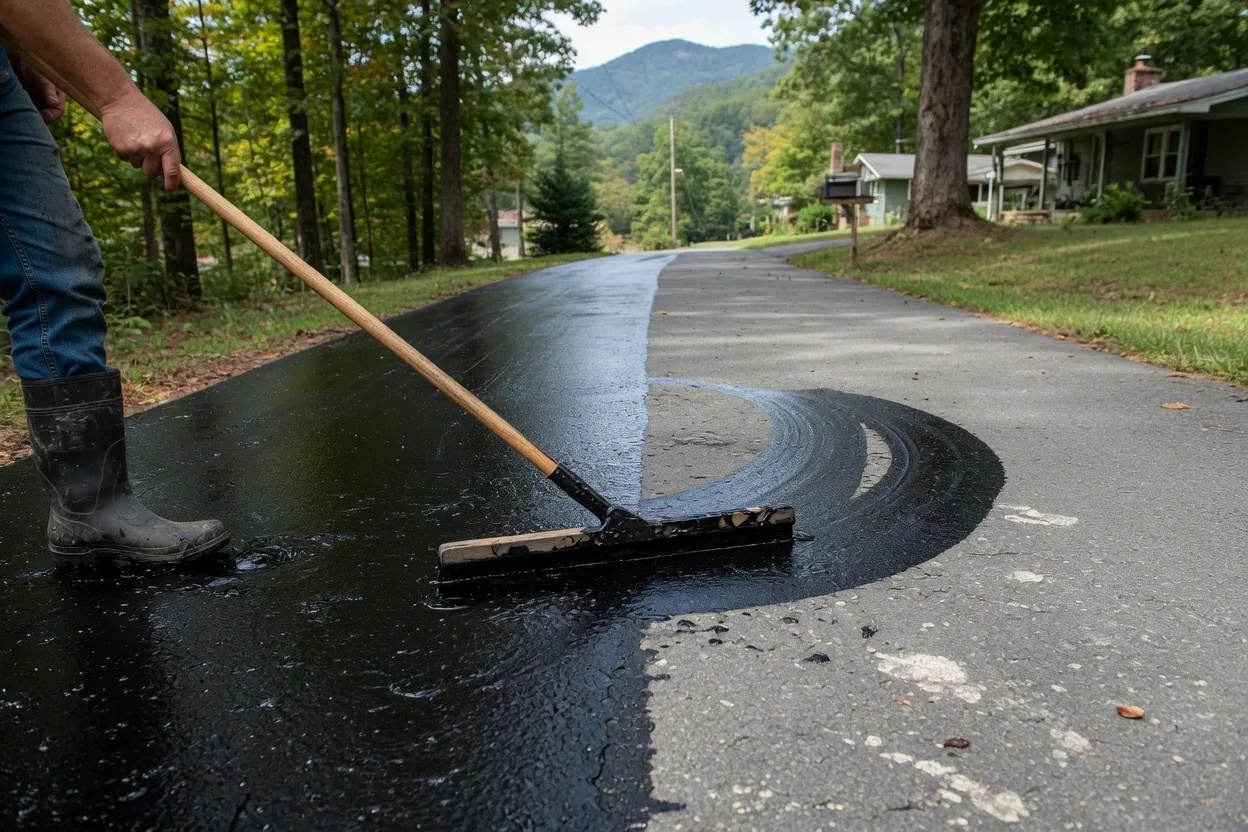
The state building code and related site-work requirements through the NC Department of Insurance treat drainage as part of the structure, not a cosmetic add-on. Contractors who cross project thresholds are licensed through the NC Licensing Board for General Contractors. Ask for the license, not a handshake. If the scope only calls for patching and small repairs, see asphalt driveway repair — but be honest with yourself about whether water is still arriving, because patching a saturated base is money spent twice.
What the weather record says about this county
Buncombe County has seen 19 federal disaster declarations across 1973-2026. The pattern is storm and flood family, and the ground truth is that hurricanes, tropical remnants, and summer cloudbursts all push several inches at once onto slopes that were already shedding. National Weather Service outlooks and flash-flood warnings through weather.gov are the signal to get the driveway's water path settled before the next round. Water with a defined route does not carve a new one through your base.
That matters here more than in flat country. A slope that is managing fine in a normal week can be overwhelmed by a single afternoon storm, and every one of those events leaves a little more of your base in the street. If the drive has been through a few seasons of that, the surface condition is a symptom, not the disease. Once the grade is right, asphalt driveways can be laid on a base that will actually hold.