Reading your lot before you spend a dollar on it
Drive any commercial lot in Asheville after a hard February and you can see the whole story in the pavement. Mountain freeze-thaw cycles work asphalt harder than almost any climate in the state, and the lots that fail first are almost never the oldest ones. They are the ones sitting on fill, on cut-and-fill slopes, or over the red clay that shows up the moment a grading crew goes three feet down. The parking lot at a West Asheville retail strip and the lot at a Fletcher industrial building can be the same age and look ten years apart.
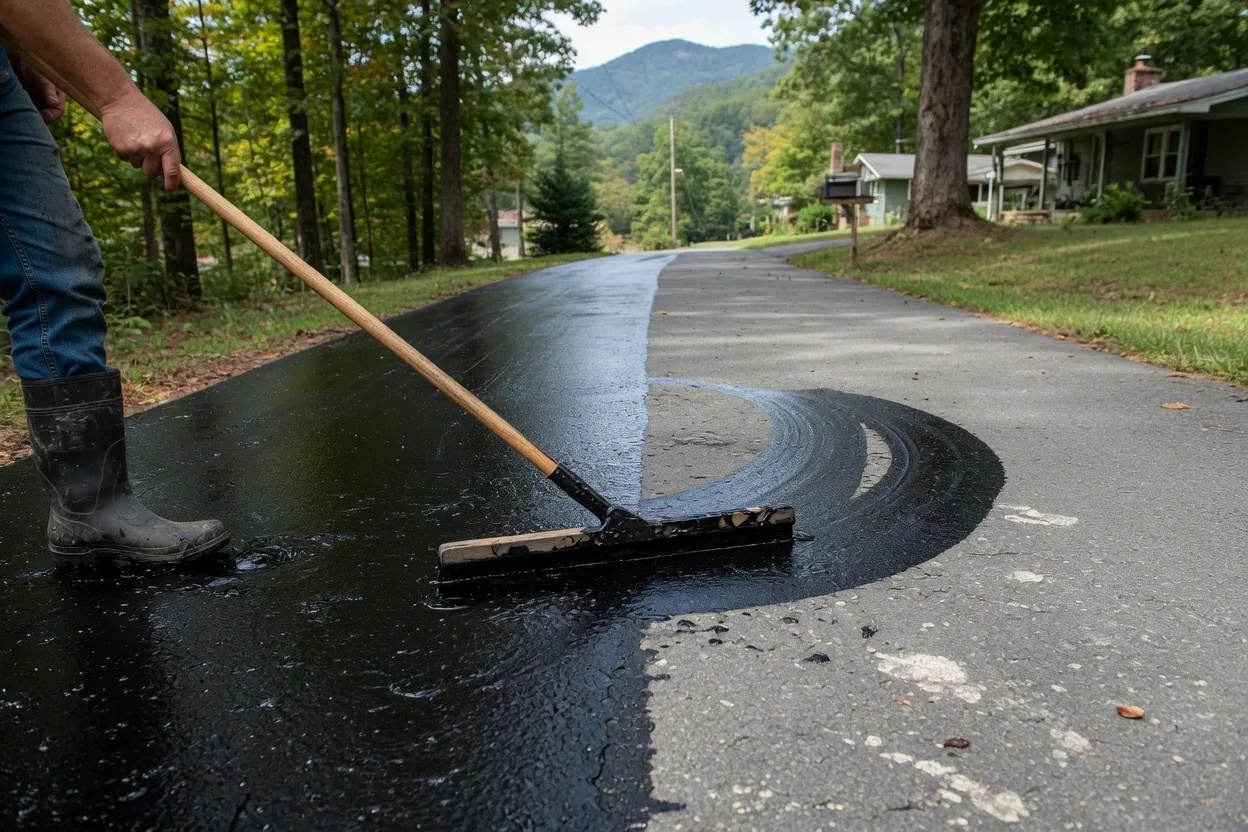
Before you call anyone, walk the lot and sort what you find into three buckets. Bucket one: cracks under a quarter-inch, raveled edges, faded striping. That is maintenance, and it is cheap. Bucket two: cracks a half-inch and wider, isolated potholes, a few settled spots at drain inlets. That is targeted repair, and it is still cheaper than replacement. Bucket three: alligator cracking (the web pattern), potholes that come back every spring, edges crumbling into the grass, and any area that pumps water when a loaded truck rolls over it. Bucket three means the base under the asphalt has failed, and this is where money gets wasted. An overlay laid over a failed base looks perfect in April and cracks again by the second winter. The resurfacing page covers what an overlay can honestly fix and what it can't.
What each level of work actually costs here
Pricing for commercial work moves with square footage, access, subgrade condition and how much of the existing pavement has to leave the site. These are realistic regional bands for Buncombe County and the surrounding counties — every lot gets its own number after someone walks it, but a bid outside these ranges needs an explanation.
| Scope | Typical cost per sq ft | When it's the right call |
|---|---|---|
| Crack sealing and sealcoat | $0.15–$0.35 | Sound pavement, hairline cracks, cosmetic refresh |
| Striping and re-striping | $0.10–$0.30 | Any lot where layout or ADA stalls are out of date |
| Full-depth patching (spot repair) | $4–$9 | Isolated failed areas with good pavement around them |
| Mill-and-overlay (1.5–2 in.) | $2.50–$4.50 | Sound base, surface cracking and raveling throughout |
| Full tear-out and replacement | $4.50–$6.50+ | Failed base, chronic potholes, drainage that can't be fixed from above |
Two things push a project toward the top of its band. First, haul-off: old asphalt has to be broken, loaded and trucked, and steep mountain lots with one narrow entrance slow every load. Second, base repair once the crew opens the pavement — the classic local surprise is finding six inches of soft clay where the plans assumed compacted stone. The parking lot paving cost breakdown goes deeper on how those variables get priced instead of guessed.
Stormwater, slopes and why this county is not flat
Buncombe County has recorded 19 federal disaster declarations over 1973-2026, and a large share of them involve flooding and saturated ground. That history matters to pavement. Water is the first cause of asphalt failure here, ahead of traffic and age combined. A lot that drains poorly will lose its base long before a well-drained lot of the same age, and the fix has to start with grading, inlets and how runoff leaves the property.
Slope cuts both ways. Water that sheets off a steep drive is fine; water that stands at the bottom because the outlet is undersized is a paving problem that no paving crew can solve from the top down. If your lot floods at the entrance every heavy rain, get that addressed before anyone quotes asphalt, because you will otherwise pay for the same repair twice. The North Carolina Department of Environmental Quality (deq.nc.gov) and local stormwater rules govern how runoff from a repaved lot has to be managed, and expanding impervious surface can trigger requirements that catch owners off guard. A contractor who never raises the question is not protecting your budget.
Permits, licensing and the paper trail to ask for
Commercial paving in North Carolina is not a licensed trade the way electrical or plumbing is, which is exactly why the paper trail matters more, not less. Any project above the state's cost threshold for general contracting falls under the North Carolina Licensing Board for General Contractors (nclbgc.org) — ask for the license number and verify it rather than taking a business card's word. Work that touches drainage, curbs or the right-of-way usually needs a permit, and any new or modified driveway connection to a state-maintained road requires an NCDOT driveway permit (ncdot.gov). Locally adopted code and inspection requirements come through the NC Department of Insurance and the Building Code Council (ncdoi.gov).
Whatever the scope, the bid package should spell out asphalt mix design and thickness, stone base depth, compaction method, how edges get restrained, and where the water goes. Vague bids are how a "great price" turns into a lot that needs patching in eighteen months.
How this plays out on the ground
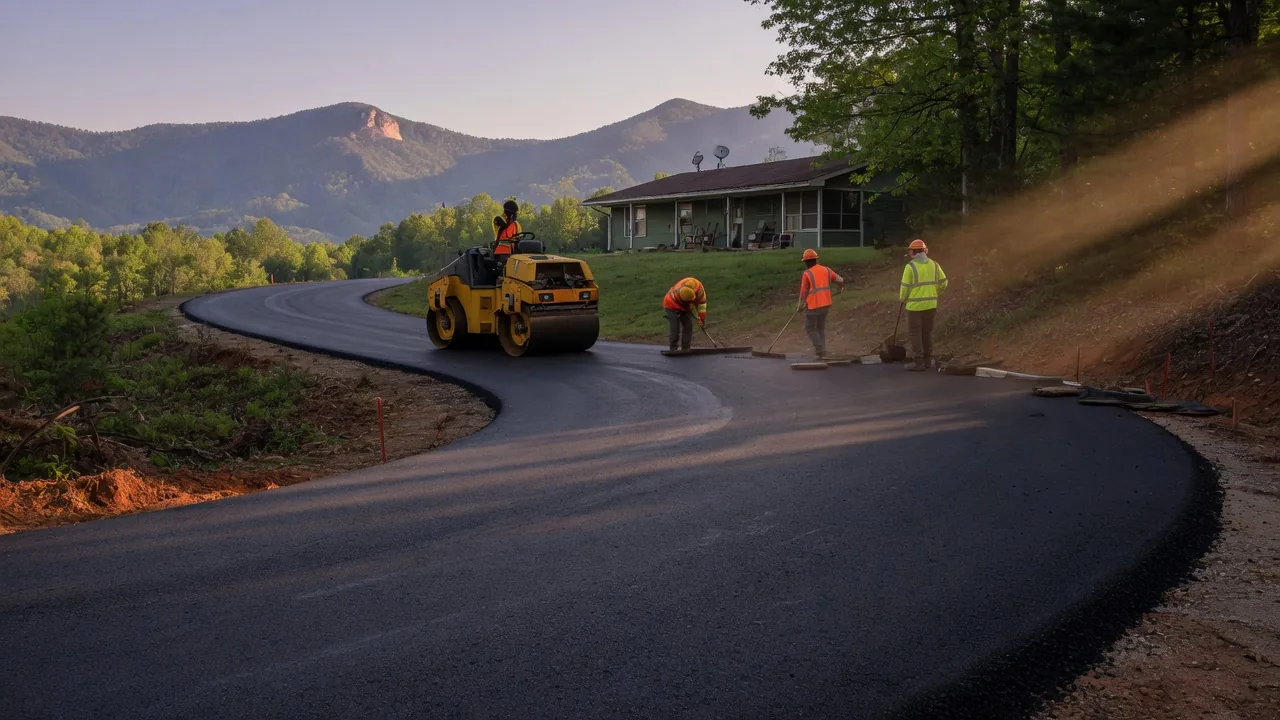
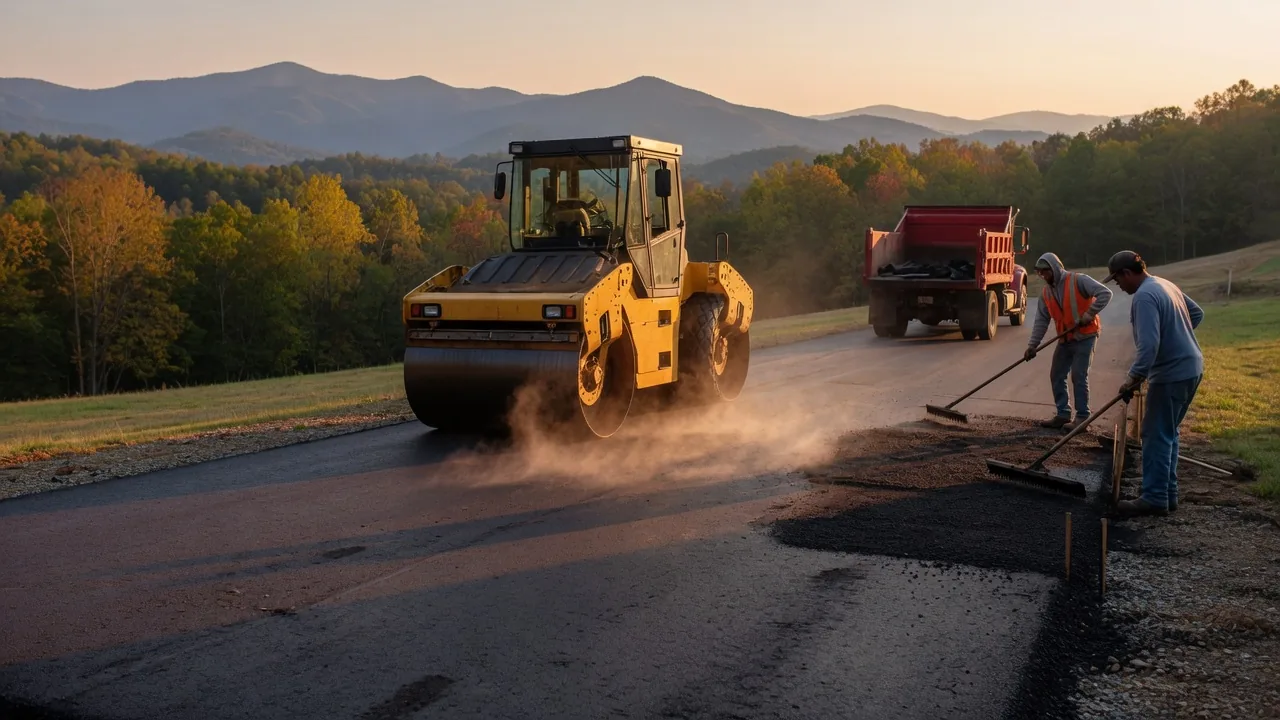
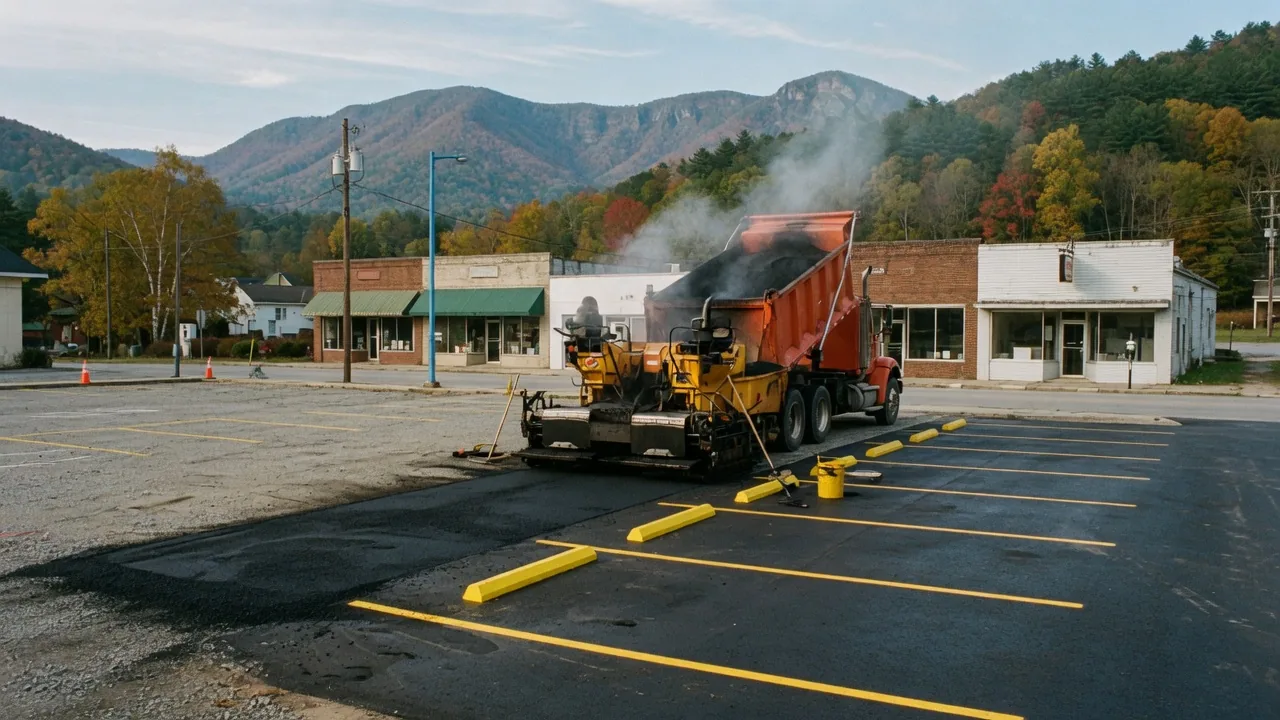
Most commercial jobs here fall into one of three shapes. A sound lot with surface wear gets milled and overlaid, usually over two to four days of work once scheduling and weather cooperate, with striping after. A lot with isolated failures gets cut out, base-repaired and patched, then sealed — the cheapest path that actually holds, and the one most owners should be asking about. A lot with a failed base and drainage that can't be corrected from above gets torn out, because anything less is a deposit on the same project later.
Timing matters in this climate. Asphalt plants in western North Carolina run seasonally, and winter mix is a different animal than what gets laid in June. Late spring through early fall is when quality work is easiest to schedule and when compaction and mat temperature are simplest to control. If you plan a tear-out or overlay, aim there. If you need to buy time on a failing lot, targeted patching and crack sealing through a winter is a reasonable bridge — not a fix, but honest money spent on a real problem. The parking lot paving service page lays out how a full project gets sequenced from grading to striping.