Reading your driveway before you spend a dollar on it
Most driveways in Canton don't fail all at once. They fail at the edges, then at the seams, then in the middle where a delivery truck parked. The difference between a driveway that needs a $400 patch and one that needs a $9,000 rebuild comes down to four things you can check yourself this weekend.
Cracks: hairline cracks that wander are surface aging. Cracks that run in a straight line, or form alligator patterns, mean the base underneath has moved. If a crack opens and closes with the seasons, water is getting in and freezing — that's the Pigeon River valley climate working on your asphalt every February. If it only widens, the subgrade is failing.
Potholes: one pothole in an otherwise sound driveway is a drainage or traffic issue. Three potholes in a line usually trace back to a soft spot running the length of the drive.
Edges: crumbling edges mean the asphalt is too thin at the perimeter, which is where every Canton driveway fails first. If you can push a screwdriver into the edge by hand in July, the mix is too lean or the compaction was rushed.
Soft spots: walk the drive after a heavy rain. Any spot that holds water and gives slightly underfoot is where you'll be patching again next spring unless the base gets fixed first.
Patch, overlay, or tear it out — which one Canton driveways actually need
A patch is a repair. An overlay is a resurface. A tear-out is a rebuild. Contractors who quote the same job three different ways aren't being wishy-washy — they're reading the same drive differently. The right answer depends on how much of the original structure is still doing its job.
Rule of thumb: if more than about a quarter of the driveway shows structural failure (alligator cracking, deep potholes, sunken areas), patching is throwing money at a losing battle. If the failures are isolated and the rest of the surface is sound, patch aggressively and sealcoat the whole thing. An overlay buys you 8-15 years on a driveway with a solid base and cosmetic wear; it fails fast over a bad base because the new asphalt inherits every movement underneath it.
| Scope | What it covers | Typical range |
|---|---|---|
| Crack fill / sealcoat | Routing and filling cracks, full-surface seal | $0.15-$0.35/sq ft |
| Targeted patch | Saw-cut removal and replacement of failed sections | $150-$500 per patch |
| Overlay (1.5-2") | New asphalt over sound existing surface | $1.75-$3.25/sq ft |
| Full tear-out & repave | Remove old asphalt, regrade base, 2-3" new asphalt | $3.50-$7.00/sq ft |
| Base rebuild + repave | Tear-out plus new gravel base, compaction, drainage | $5.50-$11.00/sq ft |
See the Haywood County cost breakdown for line-item detail on what drives each of those numbers up or down.
Why Haywood County driveways age faster than most
Canton sits in a valley that gets real winter — freeze-thaw cycles that crack asphalt from the inside, and summer storms that dump an inch of rain in an hour and test every drainage slope on your property. The federal record tells the story: 19 declared events touch this county (1973-2026), and most of them were water. Every one of those events pushed runoff against driveways built for a drier assumption.
The housing stock matters too. A lot of Canton's older neighborhoods grew up around the paper mill, and those drives were poured when a family had one car and a pickup. Fifty or sixty years of wider vehicles, delivery trucks, and heavier loads have taken a toll the original builders never planned for. Shaded north-facing drives under mature hardwoods stay damp through the morning, which means sealcoat intervals need to be shorter than the manufacturer's label suggests.
Drainage is the first question on any repave here. If the driveway slopes toward the house or garage, or if the uphill neighbor's runoff crosses your drive, no amount of new asphalt fixes the problem. Check the EPA's stormwater guidance on managing runoff at the property level — the same principles apply to residential driveways.
What a proper Canton paving quote includes
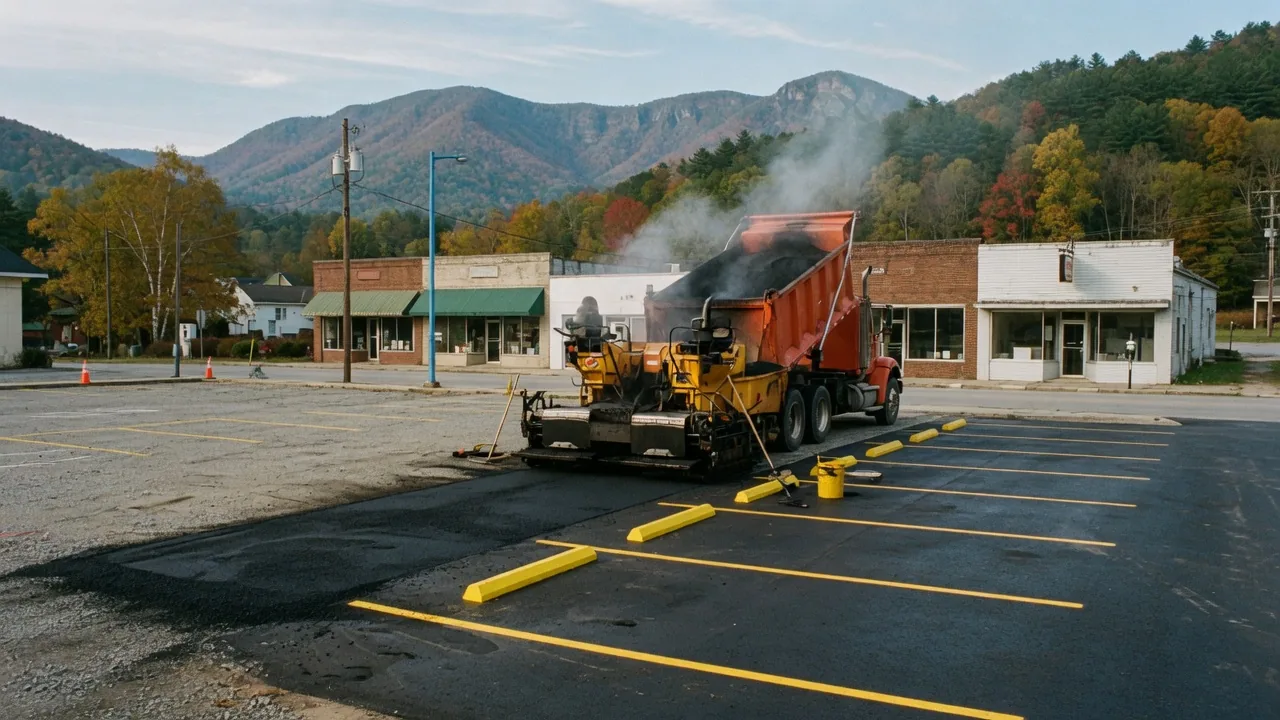
A real quote for asphalt driveway paving in Canton itemizes the base work, not just the top layer. Be skeptical of any bid that doesn't mention grading, compaction, thickness of the new asphalt, and where the water goes.
Contractors performing work above the state's threshold must be licensed through the North Carolina Licensing Board for General Contractors, and driveway work that touches a state-maintained road or right-of-way needs a permit through NCDOT. If your driveway meets a state road, that permit is the homeowner's responsibility in most cases — the paving contractor should be able to walk you through the application, but the paperwork gets filed in your name.
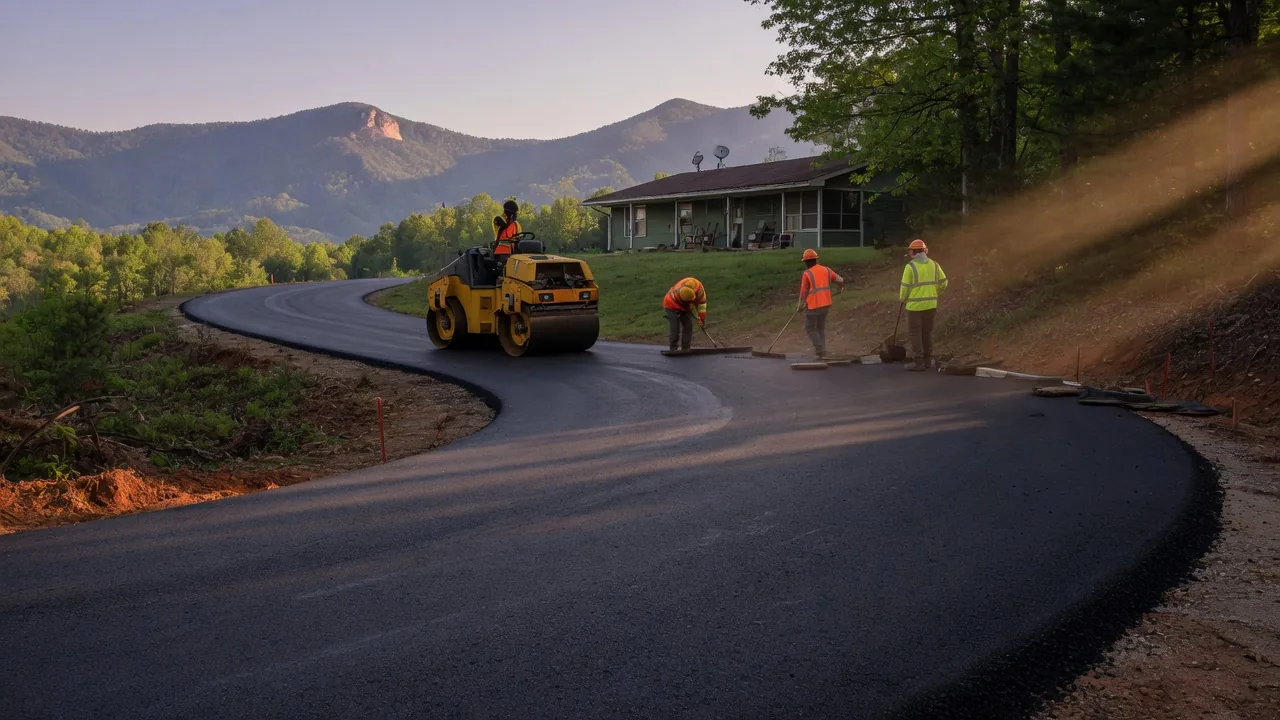
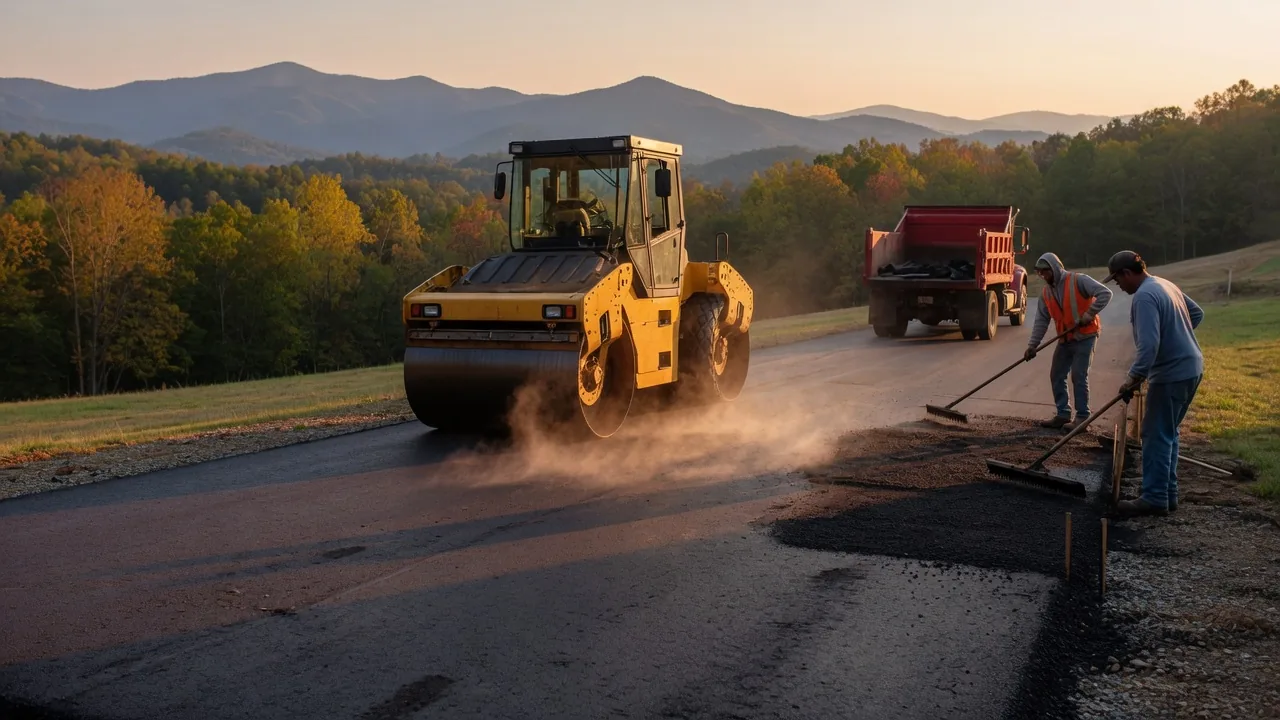
Local crews who know the terrain are worth more than the lowest bid from outside the county. Ask about their base prep: 4 to 6 inches of compacted gravel is normal for a residential drive, deeper if the subgrade is soft. Ask what asphalt mix they use and what thickness they'll compact to — 2 inches after compaction is the residential minimum, 3 inches if you'll have regular truck traffic. A Canton driveway built right the first time costs the same as one built wrong, except the wrong one gets rebuilt in eight years. When you're ready to get quotes, the Canton paving contractor guide covers what to ask before you sign.
Timing, weather, and what not to do this season
Asphalt paving in Haywood County has a real season. Hot-mix asphalt needs air temperatures above roughly 50°F to place and compact correctly, and the window tightens further if overnight lows drop. Late spring through early fall is the practical season; a December paving job either gets deferred or gets done with cold-mix patch that isn't meant to last the winter.
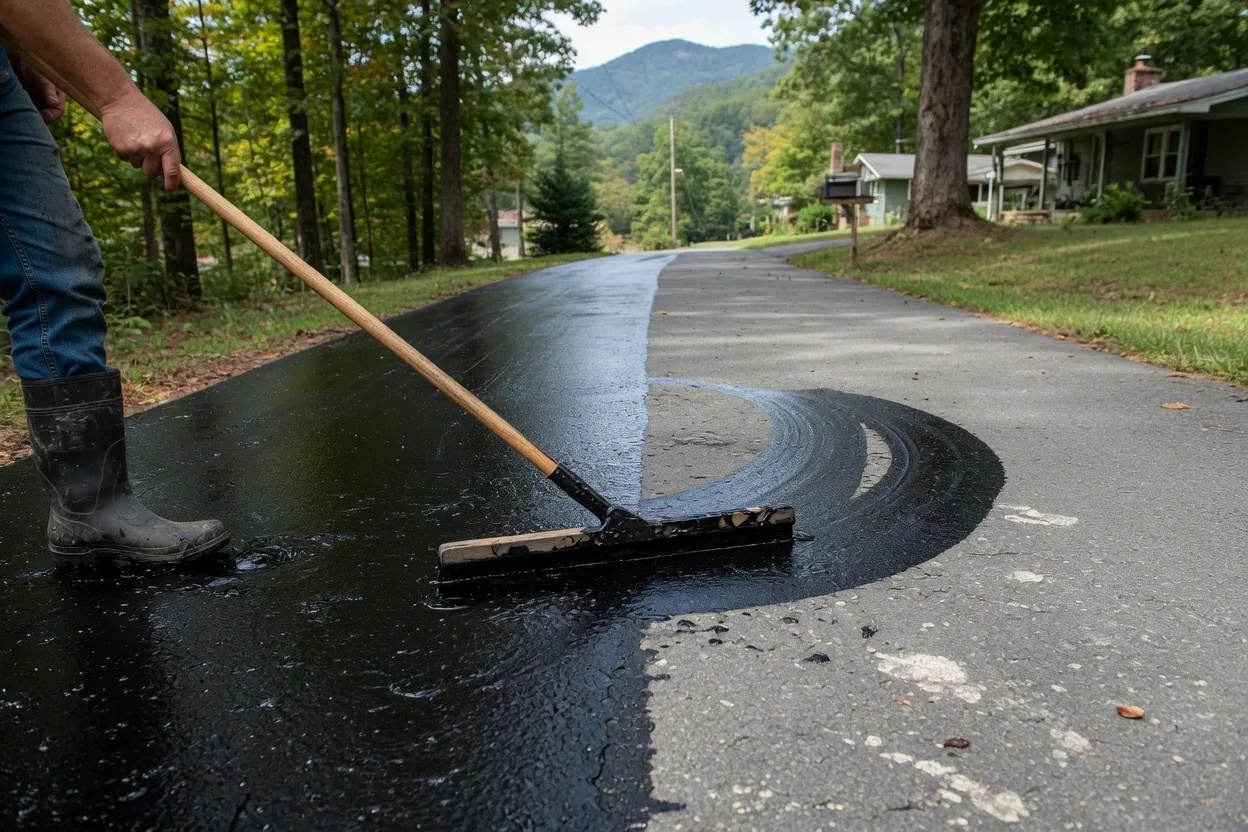
Sealcoating has its own rules. New asphalt should cure for six months to a year before sealing — sealing too early traps oils and causes the surface to fail prematurely. After that first seal, most Canton drives benefit from resealing every two to four years depending on shade and traffic. Cracks over a quarter-inch wide should be filled before sealcoat goes down, not after, or the sealer bridges the crack and hides the problem until it spreads.
Avoid paving over a driveway that's still settling from a wet spring. If the subgrade hasn't had time to drain and stabilize, whatever you put on top will mirror the movement underneath. The asphalt driveway overview walks through the full scope of what a proper installation covers.