Reading the pavement before you spend a dollar
Drive through Grovemont or along the older US 70 frontage in Swannanoa and you can sort driveways into two piles by eye. One pile has cracks, but they run as single wandering lines, the surface is still matte grey, and the edges hold. The other pile has cracks that connect into closed cells like reptile skin, sagging tire ruts, and gravel spilling off the shoulder into the grass. The first pile is a candidate for resurfacing. The second is already past it.
The difference is structural, not cosmetic. An overlay works when the blacktop mat has failed but the stone-and-soil base beneath it is intact. When the base has softened, an overlay just copies the shape of the failure and telegraphs it back through the new surface within a couple of winters. Swannanoa's ground makes that call harder than it sounds: valley bottom land off the river holds water, sloped lots above the old Beacon area shed it fast and undo their own edges, and both failure modes look like ordinary cracks from the driver's seat. A walk-over with a screwdriver, poking soft spots, and a glance at where the water leaves the pavement answers the question better than any photo estimate.
Where Swannanoa pavement actually fails
This is river valley and rail-corridor country — flat and low along the Swannanoa River, lifting quickly toward the Blue Ridge on either side. That profile produces three recurring problems. Low, level lots drain poorly and hold moisture under the asphalt, which softens base aggregate until it pumps. Sloped driveways and parking areas lose their edge because stormwater sheets off the surface and undercuts the shoulder. And the older commercial pads along the highway corridor were often paved in stages over decades, so today's surface sits on whatever was there before — sometimes old gravel, sometimes a previous overlay that is itself failing.
The weather record matters here too: 19 federally declared events reach this county (1973-2026), overwhelmingly flood and storm family, per the National Weather Service's regional record and the county's disaster history. Every one of those pushed water at pavement bases built for drier assumptions. If a driveway or lot has been under moving water even once, assume the base took the hit, not just the surface.
What each scope of work really buys
Four scopes cover almost every driveway and small commercial job in this valley. The table uses standard regional bands, not quotes — every job moves with square footage, access, and how much base repair is hiding under the failure.
| Scope | What it does | Typical range |
|---|---|---|
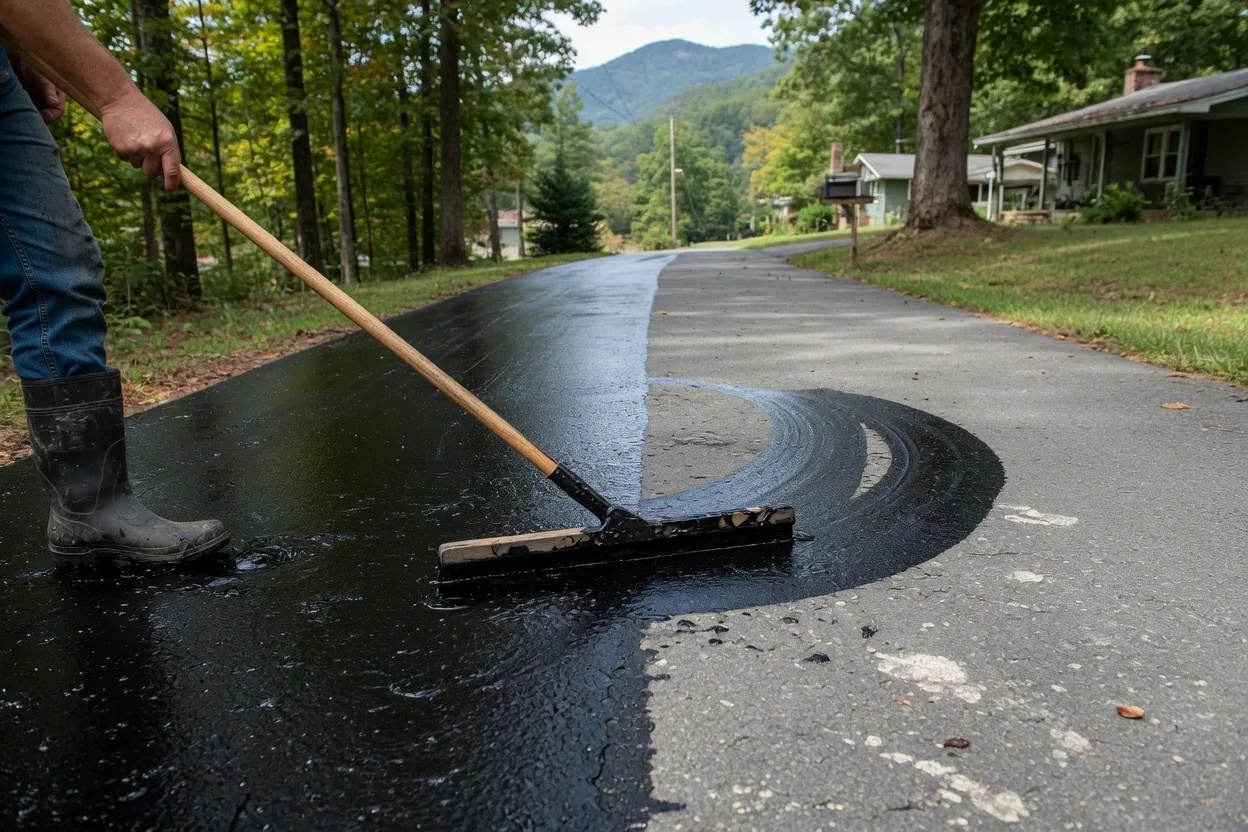
| Crack fill and sealcoat | Stops water intrusion on sound pavement only | $0.15-$0.35 / sq ft |
| Mill and patch repair | Removes localized failed areas to solid material, new hot mix | $350-$900 per patch |
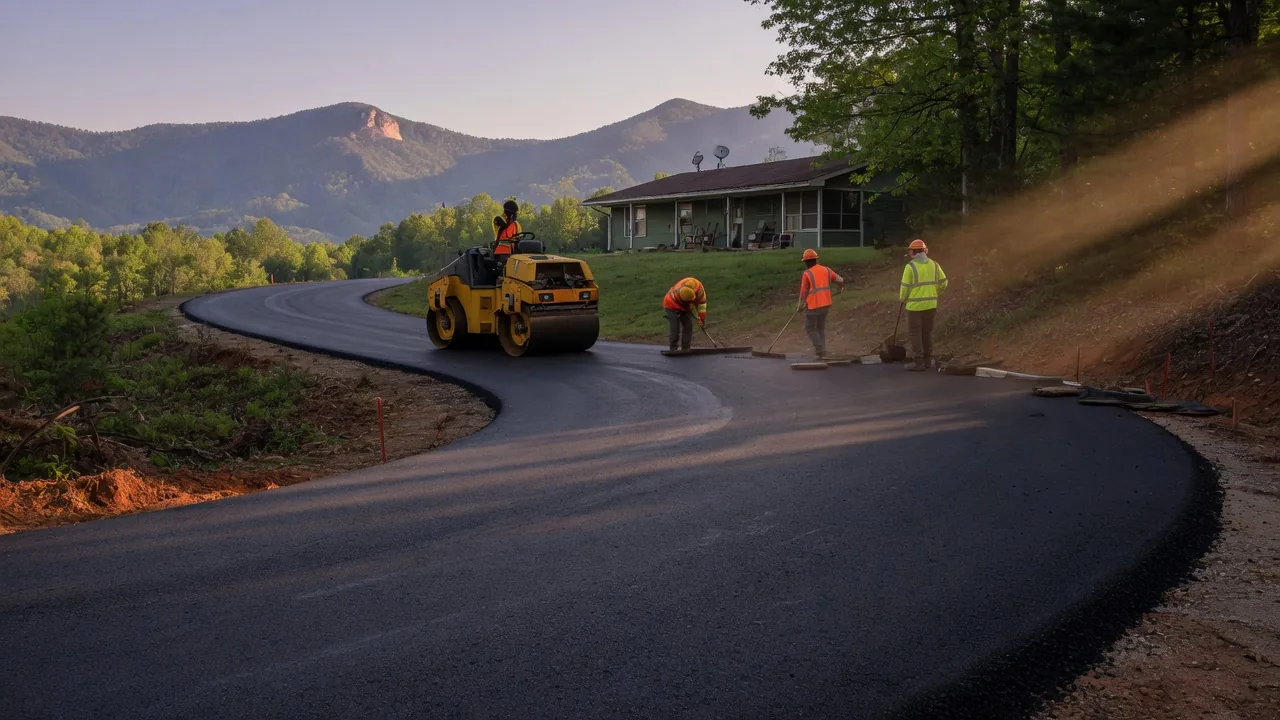
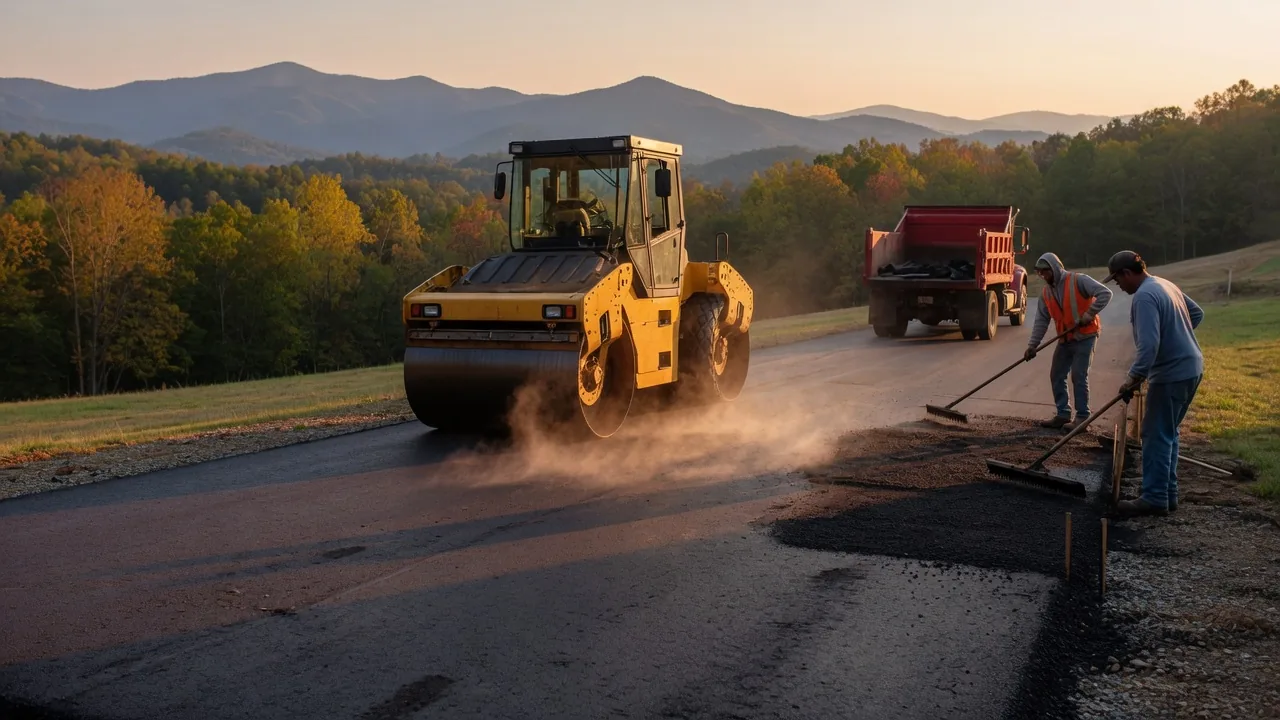
| Overlay / resurfacing | New 1.5-2 inch mat over a repaired, stable base | $2.50-$5.50 / sq ft |
| Full tear-out and replacement | Remove failed asphalt plus base repair, then new pavement | $6-$12 / sq ft |
Two cautions on the middle rows. First, a patch repair is only honest when the surrounding pavement still flexes as a slab; patching inside a web of alligator cracks buys a season. Second, overlay pricing rarely includes the base repair it exposes once the surface comes off — a quote that lists resurfacing without a line item for spot repair is either guessing or planning to bury the problem. The full resurfacing guide walks through how the pieces sequence.
Rules, permits, and why drainage keeps coming up
Work inside private property lines usually needs no permit. The moment you touch the connection back to a state-maintained road, though, the rules change: driveway and street-access work on North Carolina routes runs through the NCDOT permit process, with applications handled via NCDOT Connect. That matters for highway-frontage properties along the US 70 corridor, where resurfacing often reveals a failed culvert or a driveway apron that no longer meets the road profile.
Stormwater is the other regulatory thread. Paving and repaving change where water goes, and larger lots fall under state stormwater rules administered by the NC Department of Environmental Quality; the underlying construction standards live with the International Code Council family of codes adopted statewide. On a residential driveway the practical translation is simple: water must leave the pavement and go somewhere legal, not onto the neighbor's slope. Any resurfacing scope that raises the finished grade without addressing where water exits is a problem waiting for the next storm.
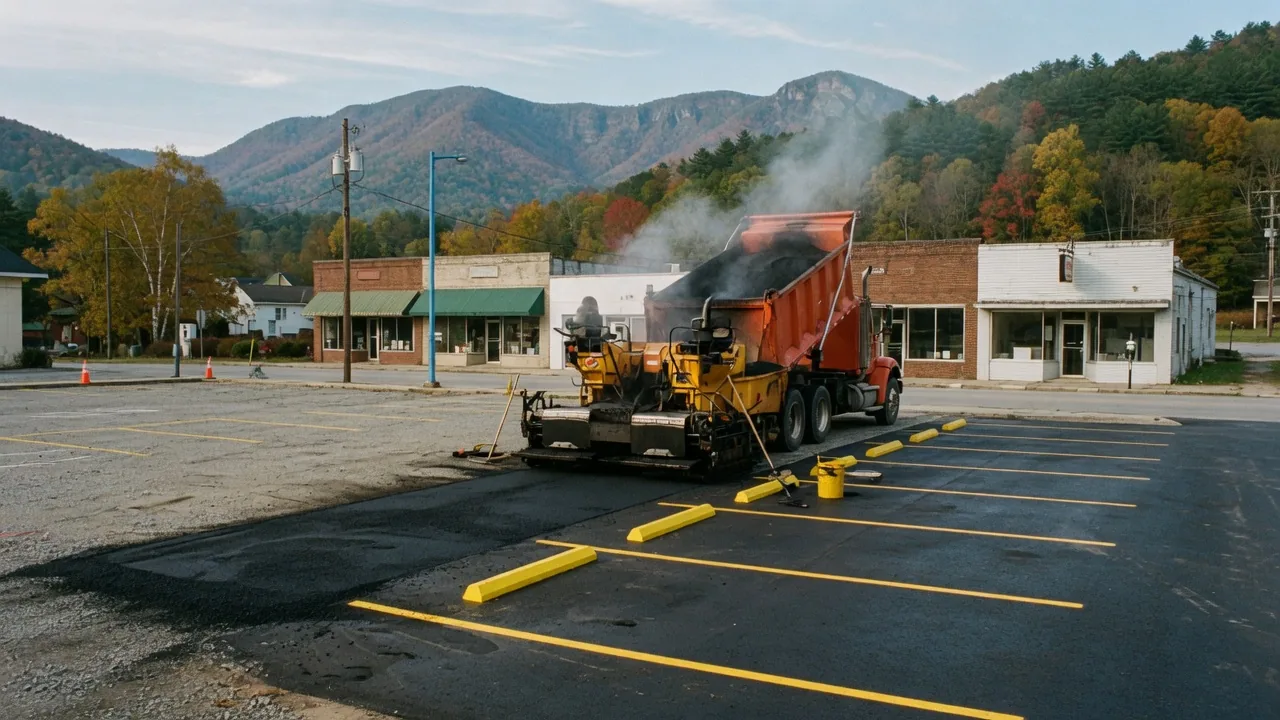
Licensing cuts in on commercial work. North Carolina's general contractor licensing threshold and its requirements sit with the NC Licensing Board for General Contractors — parking lots, shared drives, and anything structural can cross it, so it is worth asking on a non-residential bid. The Swannanoa paving contractor page covers what credentials to verify.
Getting a number that survives the first winter
A useful bid here separates three things: what is being removed, what is being repaired, and what is being added. If the quote collapses them into one square-foot price with no base-repair allowance, the scope is underdefined, not cheap. Ask directly what happens if soft spots open up once milling starts, and get that answer in writing before signing.
Timing matters in this valley. Hot-mix asphalt wants warm, dry conditions, so the practical season runs roughly late spring through early fall, with the best availability before summer heat and afternoon storm season settle in. A late-October overlay on a shaded, low-draining lot is a gamble against the first freeze. The county-wide numbers, including what drives the higher end of every range above, sit in the Buncombe County cost breakdown.