Rain always finds the low corner of a Clyde lot
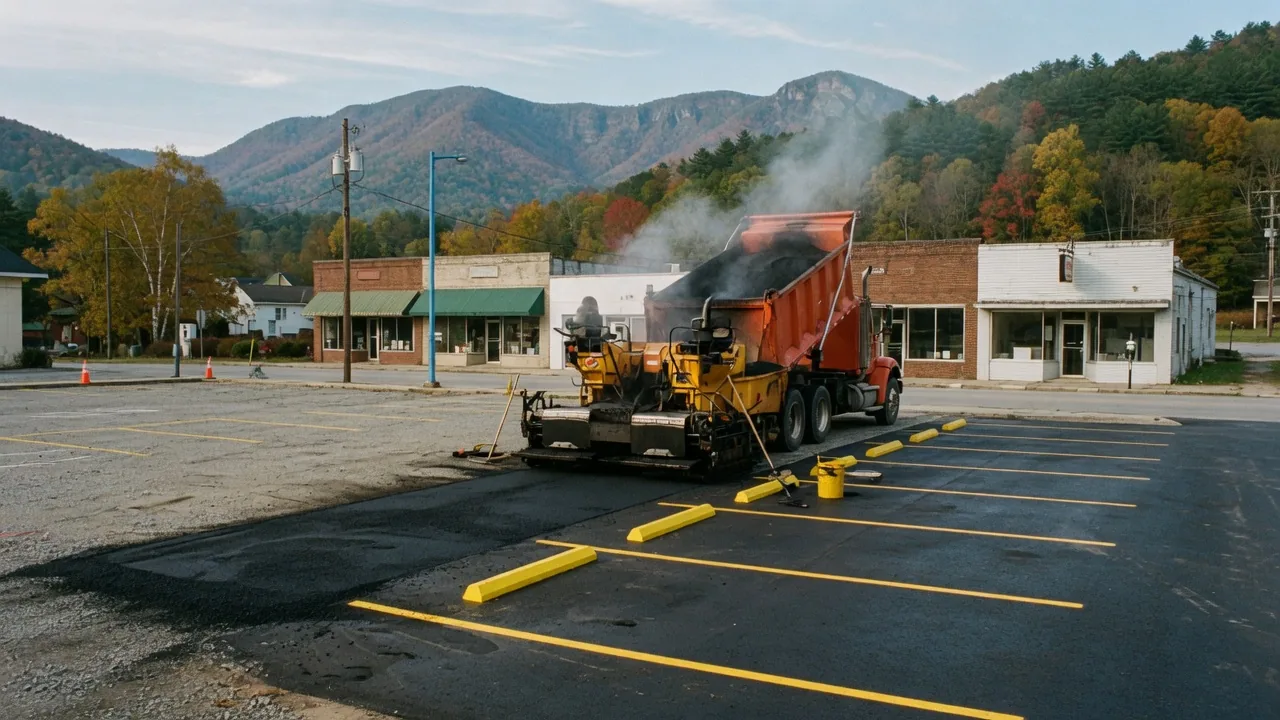
Stand at the bottom of a grocery lot on Carolina Boulevard in Clyde and you can read the whole drainage story in one rainstorm. Water sheets off the building roof, crosses the parking stalls, hits the low corner, and then has to go somewhere. If the lot was laid flat, that somewhere is the pavement itself — and asphalt that sits in standing water for two days after every storm is asphalt on a countdown. Haywood County gets the wet, frontal rain that comes off the Smokies; a lot built with zero fall is a lot built for failure.
The paving rule that actually matters here is grade. A new lot should shed water toward a defined edge, a crown, or a catch basin, and it should get there before the water has time to pond. If your current lot holds puddles more than a day after rain, you do not have a paving problem yet — you have a grading problem that is about to become one.
That is why a real paving conversation in Clyde starts with a site walk and a fall check, not a price per square foot. The parking lot paving overview walks through what that first visit looks like, and it is the right place to start before anyone quotes you a number.
Where the crown, the edge and the ditch have to send it
Every paved surface has three drainage jobs, and on a Clyde lot they are all visible. The crown is the slight high line down the middle that splits water left and right. The edge is the shoulder, curb, or gravel strip where that water exits the pavement. The ditch or swale is where it goes once it leaves. Miss any one of the three and the water does not disappear — it just moves the damage somewhere you cannot see it until the base has softened and a stall drops a half inch.
On the older lots around the mill and depot side of town, edges were often set years ago to drain toward a neighboring parcel that has since been built on or regraded. Runoff that legally left the lot then may not legally leave it now. That is the kind of thing that a grading plan catches before the paving crew shows up. The NC Department of Environmental Quality takes stormwater seriously for exactly this reason, and any lot expansion worth the name should be checking runoff before it changes grade.
If the lot connects to a state-maintained street, the outlet may also need an access or encroachment permit through NCDOT. Getting that straight early is cheaper than discovering it mid-job.
Haywood County lot pricing, line by line
Numbers below are typical regional bands for a Clyde-area paving job. They are ranges, not quotes — slope, soil, and how much base repair you need decide the final number. The full working breakdown for smaller surfaces lives in the Haywood County asphalt cost table, but for parking-scale work this is the shape of it.
| Scope | Typical range |
|---|---|
| Mill and overlay existing lot, good base | $2.50-$4.50 / sq ft |
| Full-depth asphalt on new base | $3.00-$6.00 / sq ft |
| Full-depth repair, failed sections only | $4.00-$8.00 / sq ft |
| Grading, crown and drainage correction | $1,500-$9,000 per lot |
| Base stone, 4-6 inch compacted | $1.50-$3.00 / sq ft |
| Sealcoat, crack fill and striping refresh | $0.20-$0.60 / sq ft |
| Concrete curb, apron or dumpster pad | $22-$45 / linear ft |
A small church or retail lot in the 10,000-15,000 sq ft range usually lands somewhere between $4,500 and $38,000 depending on how much base is salvageable. The grading and edge line items are the ones that separate a lot that lasts from a lot that ponds again in two winters.
When water is the real problem, the fix is not asphalt
Haywood County has seen repeated federal disaster declarations over a 1973-2026 record — 19 events, driven mostly by flood and severe storm family. Any lot that has taken that kind of rain knows where its low spots are whether or not the owner admits it. If the corners pond, if the asphalt is alligatored across a broad area, or if there are dark stains along a building wall, the asphalt is a symptom. Re-paving over a bad drainage plane just buys a year.
The useful order of operations: figure out where the water is supposed to go, correct the grade and the outlet, then pave. That sequence is also how the International Code Council treats site drainage in the model codes, and it is how the federal disaster histories keep re-teaching the same lesson. For a small lot, fixing the grade is often a few thousand dollars; letting the water sit and repaving twice is not.
Who should be on the job in Clyde
North Carolina draws a line around how much construction work a contractor can do without a general contractor's license, and the thresholds are low — which means most real parking lot jobs in the Clyde area fall on the licensed side of the line. Verify before you sign. The NC Licensing Board for General Contractors publishes the thresholds and the license lookup, and a two-minute check is worth more than any reference call.
Two more questions worth asking any crew bidding a Clyde lot: have you graded a lot on this slope and soil before, and what is your plan for the edges and the ditch. The second answer tells you whether you are hiring a paving contractor or a paving salesman. When you are ready to compare local bids, the Clyde paving contractor list covers who works this area and how to screen them.