The haul distance problem: why the same driveway costs more off the parkway
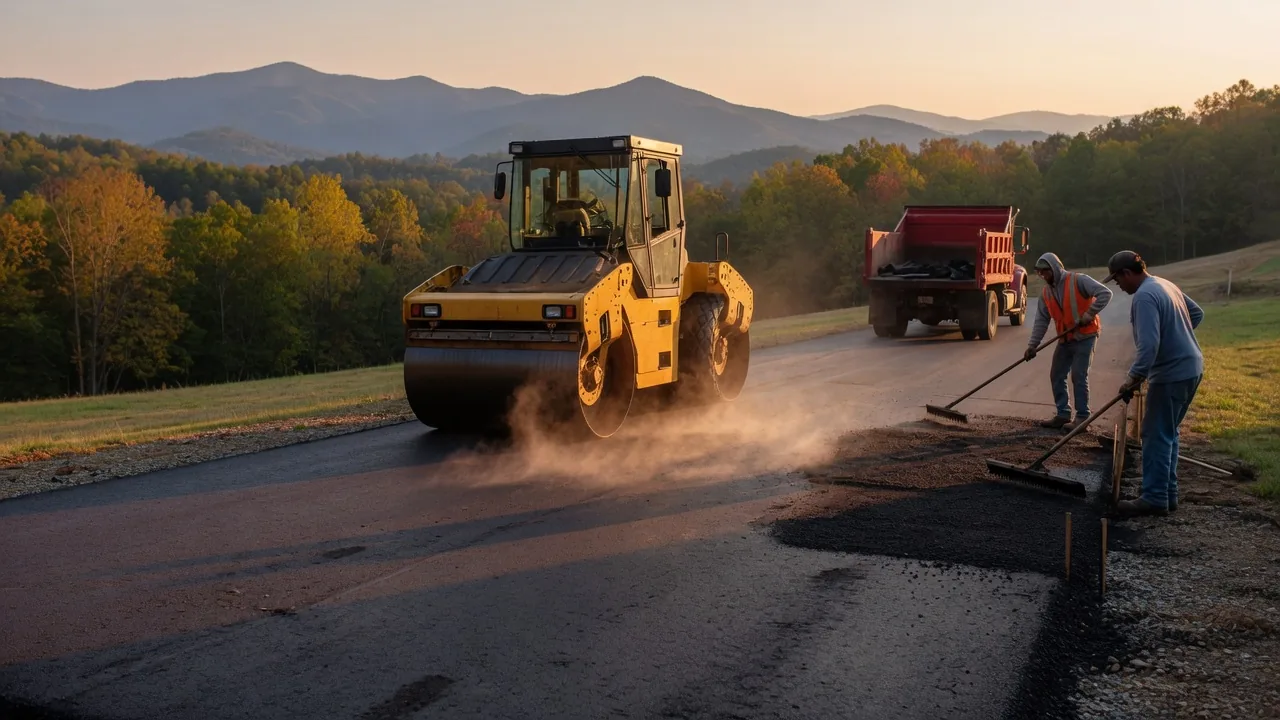
The hot mix that will top your driveway is a perishable product. It leaves the plant between 275 and 325 degrees Fahrenheit and has to be placed and compacted while it's still workable — typically inside 90 minutes in cool mountain air. Waynesville sits in a spot where that clock is not a formality: depending on which plant the truck left, the drive up from the county's main production areas, around the 19/23 corridors, and then out a winding cove road like the ones off Plott Creek or Ratcliff Cove eats most of the window before the screed ever touches your drive.
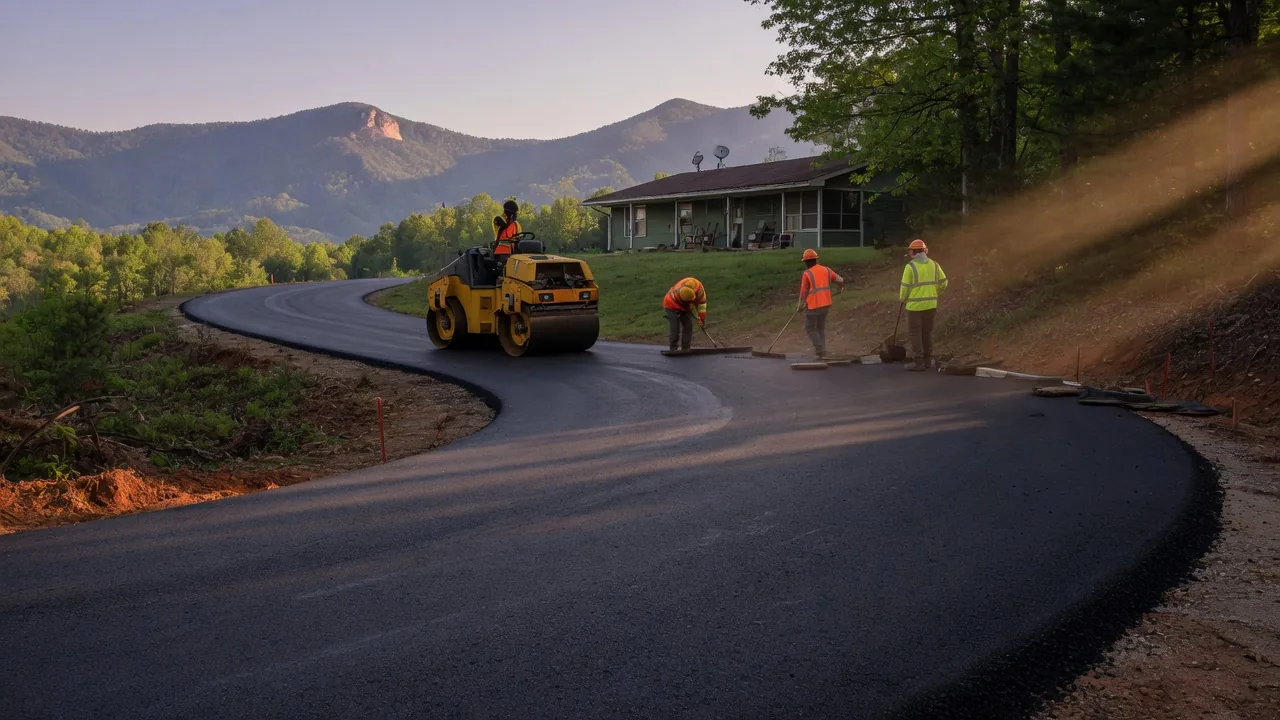
What that means for a Waynesville homeowner is straightforward. A flat, wide, easy-in driveway near a main road is a fast job, and crews can price it almost like production work. A steep gravel-turned-paved drive up a switchback, with the roll-off bins and the paver trailer parked a hundred yards downhill because the truck physically can't get to the top, is a materially different day. On the tightest drives, part of the crew is hand-shuttling material in wheelbarrows. The mix costs the same. The day does not.
This is the access-and-haul tax, and it's the single biggest reason two neighbors on the same ridge can get quotes that differ by thousands. The right bid states the assumption out loud: how many tons, how many trucks, where they stage, how far they shuttle, and how many hours they've allowed. A one-line "resurface driveway" number that ignores all of that is not a quote — it's a guess you'll pay to correct later.
What resurfacing actually scopes in Haywood County
Waynesville's housing mix matters here. The town proper has older in-town lots with short, narrow, often shared drives that haven't been widened since they were built. The county stretches out in every direction into hillside parcels with long private drives that climb to a house pad, and those drives fail differently — more edge break-off, more shoulder washout, more cracking along the centerline where water sits. On top of that, freeze-thaw at 2,700-plus feet of elevation does what freeze-thaw does: it works cracks open every winter, and if water gets under the surface, one season can turn a hairline into a pothole.
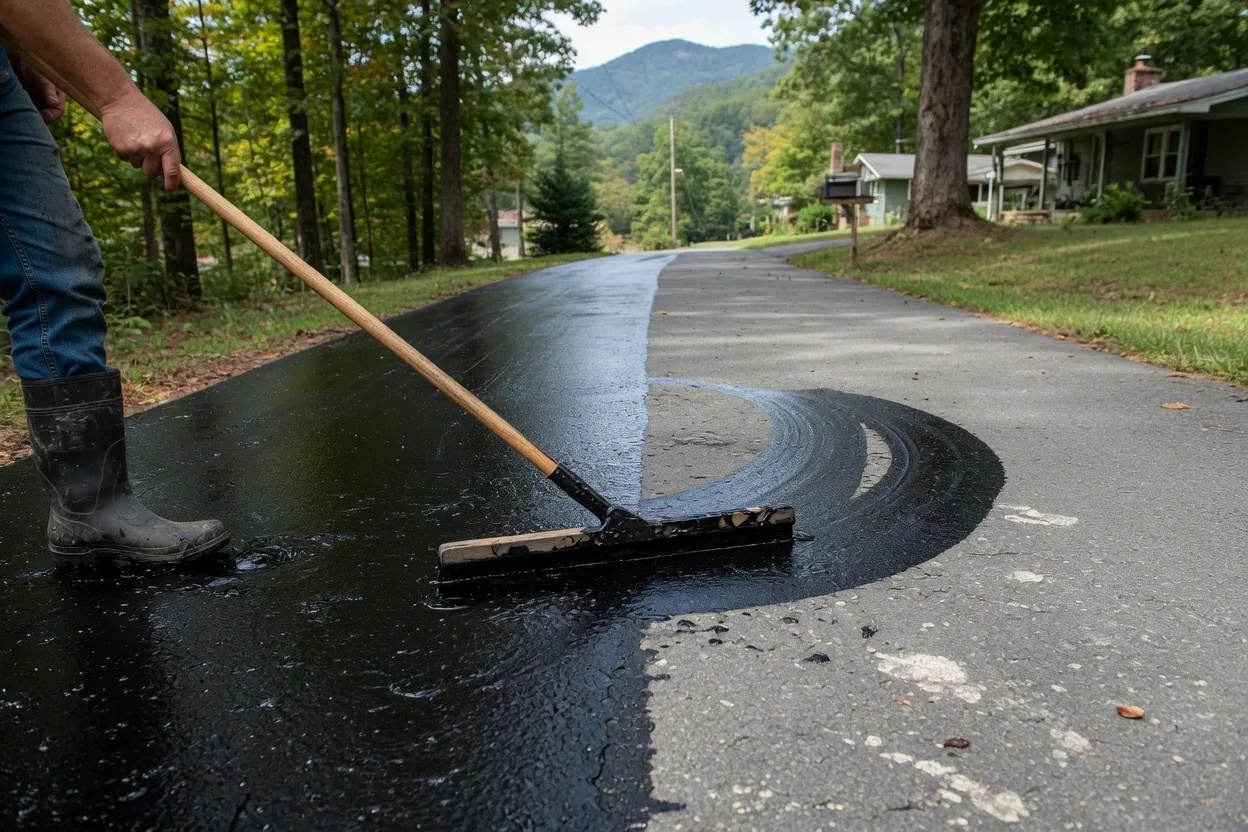
Resurfacing is the right call when the existing asphalt is structurally sound — no soft alligator-cracked zones, no base failure, no ponding — and what you're really doing is adding a new wearing course. The standard residential scope is 1.5 to 2 inches of compacted hot-mix asphalt over a cleaned, tack-coated, crack-treated surface, with the edges feathered or butt-jointed and the perimeter touched up. In Haywood County terms: in town you're usually looking at a partial-day job, one truck maybe two, done before lunch. Out on a long cove drive, the same square footage can take two days, three or four loads, and a plan for getting a paver and roller to a section that a loaded truck can't reach.
Resurfacing is the wrong call when the base is gone. If you can push a screwdriver into the asphalt after a warm afternoon, or the drive drained into a low spot that now holds water, an overlay is a cosmetic fix over a structural problem and it will fail within a couple of winters. The right answer there is removal and reconstruction — a different job with a different number, and one worth confirming before you sign anything.
Waynesville resurfacing price ranges by scope
The working ranges below assume a normal weather window, a plant that's running, and a driveway that a truck can reach. They are the starting point for a conversation, not a flat rate — every job is priced on measured square footage, tonnage, access, and the day the crew will actually spend. For a fuller line-item view of a Haywood County driveway build, see the Haywood County driveway cost breakdown.
| Scope | Typical range (Haywood Co.) | What moves the number |
|---|---|---|
| Crack fill + seal only | $450–$1,400 | Linear feet of cracking, number of potholes, whether sealing is the whole job or a prep step |
| Standard overlay, easy access | $3.00–$4.50 / sq ft | Tonnage, number of loads, whether edges are feathered or butt-jointed |
| Overlay, steep or tight access | $4.50–$7.00 / sq ft | Shuttle distance, staging, hand work, extra time, possible smaller equipment |
| Long cove / ridge driveway overlay | $7.00–$9.00 / sq ft and up | Total length, switchbacks, turnaround, whether the top section is paver-accessible |
| Overlay + section base repair | Overlay range + $900–$3,500 | How much failed asphalt and base gets cut out and replaced before paving |
| Full removal & reconstruction | Quoted as its own job | Depth, base material, drainage correction, haul-off of old asphalt |
Read the ranges as directional. The honest version of a Waynesville resurfacing quote is a measured number, and nobody can give you that without seeing the drive and knowing what the truck can and can't do on it.
Drainage, code, and the things a good bid has to include
On a mountain property, the asphalt is only half the job. Water that leaves the drive and pools at the garage or runs down into the foundation does more damage than the asphalt it crossed. That's the reason the International Code Council maintains residential provisions requiring grade to drain away from the structure, and why any resurfacing scope here should be paired with a quick look at where the water goes. If the drive has never been crowned or the shoulder has grown grass, the overlay can lock in a drainage problem rather than fix it.
Two county-specific items worth knowing. First, if your driveway touches a public road or state-maintained street, work in the public right-of-way — a widened apron, a culvert, a new connection — generally requires a driveway permit through the North Carolina Department of Transportation, and applications run through the NCDOT Connect portal. Topping asphalt inside your own property line usually doesn't, but expanding the entrance to the road does, and the permit almost always includes a culvert-size requirement tied to drainage. Second, for projects that cross the threshold into general-contracting territory, the licensing rules enforced by the NC Licensing Board for General Contractors apply — worth a moment's check before you sign with anyone on a large driveway or a commercial lot.
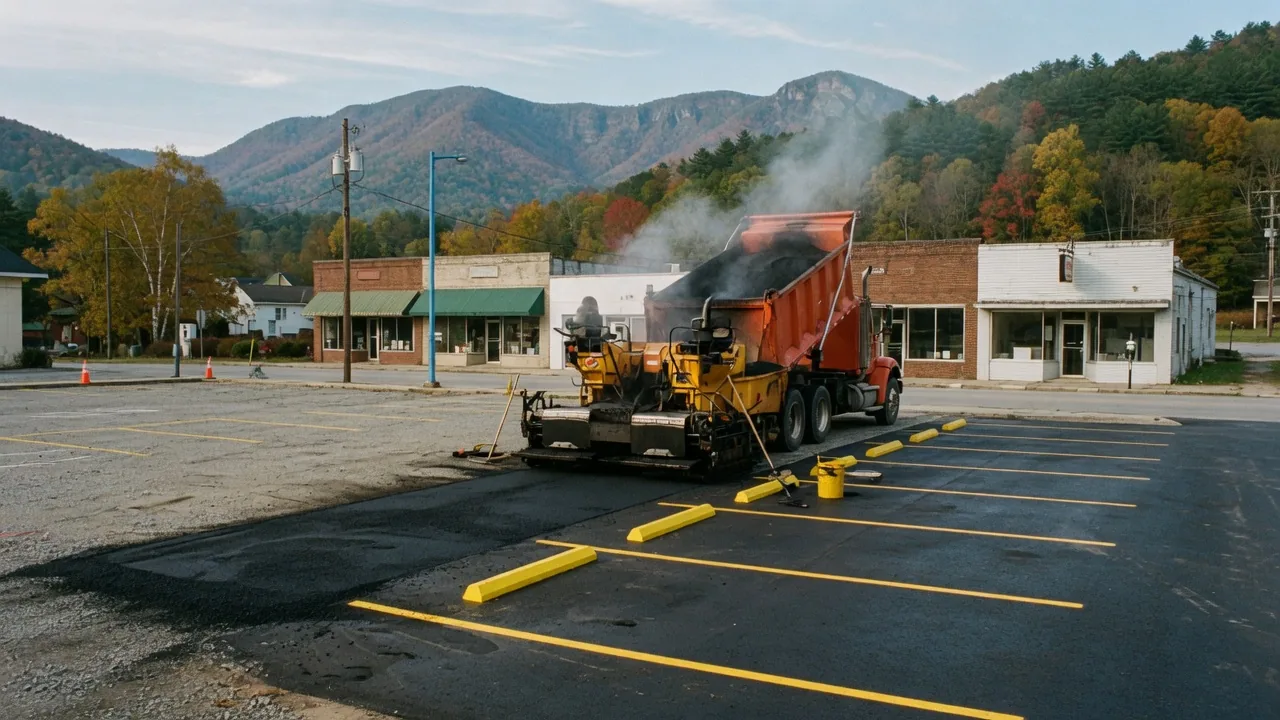
A complete Waynesville resurfacing scope reads like this: square footage and average thickness; tonnage estimate; prep (cleaning, crack fill, tack coat, bad-spot removal); edge treatment; drainage notes; haul and staging plan; weather contingency; and a clear payment schedule that doesn't ask for the full job up front. If a bid is missing the staging plan and the drainage line, ask why. The answer tells you whether the crew has actually done mountain drives or is pricing a flat-lot template.
Scheduling around the season and the mountain
Asphalt in Haywood County has a real season. The plant won't run and the surface won't compact properly when temperatures are low or the forecast is wet, and the National Weather Service mountain forecasts for the Waynesville area can turn a paved morning into a rained-out afternoon fast. Late spring through early fall is the practical window for a durable overlay; late-season jobs are doable with the right mix and timing but carry more weather risk and less scheduling slack. Storm history here adds a second layer: 19 declared federal disaster events touch this county over a record spanning 1973-2026 — overwhelmingly storm and flood family — and a single heavy-rain event can push back or reschedule work across the whole area. A crew that explains its weather plan up front is a crew worth keeping.
If you're comparing contractors, the Waynesville paving contractor page walks through how to evaluate them. The short version: ask for the staging and haul plan, ask what they'd do if your drive fails the soundness check, and ask when the plant they use runs. The answers separate a resurfacing company from a company that occasionally does driveways. When you're ready to reset the drive, start at the asphalt resurfacing overview and work from there.