The line items that decide a Laurel Park conversion price
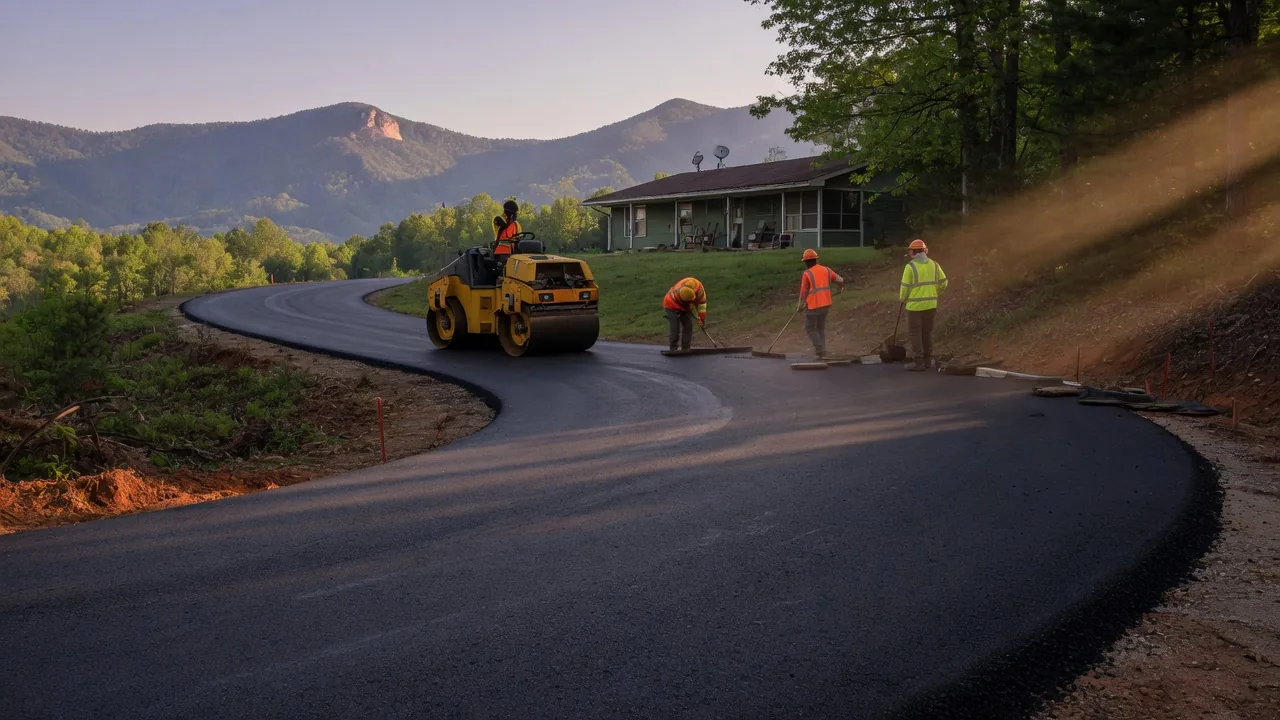
In Laurel Park, the asphaltic surface is rarely the big number. The big numbers are grading, base depth, and drainage, because the town sits on hillsides above Hendersonville where driveways were often cut into a slope, then topped with gravel decades ago. A conversion on a fairly flat lot off Hebron Road is one job; a switchback drive climbing toward a ridge lot off Fleetwood or Davis Mountain is another.
What actually moves the number:
1. Subgrade correction and grading. Gravel drives are usually crowned, rutted, or potholed. The crew has to cut to a true grade, re-crown, and compact. On a slope, this often means added fill and a much slower machine pass. Laurel Park's lots frequently sit on hillsides where the original builder pushed a gravel pad and left the slope to shed water wherever it wanted. Correcting that grade means re-shaping the whole drive, not just smoothing the top inch.
2. Base course depth. A driveway that will carry only cars needs less base than one carrying an RV, boat trailer, or loader. Most Carolina conversions land on 4-6 inches of compacted base. In Henderson County's clay, the base depth matters more than in sandy lowcountry soils because clay holds water and pumps under load if the base is too thin. A drive that sees a dual-axle trailer or a landscape truck should be built thicker from the subgrade up.
3. Drainage and culverts. Any spot where water crosses the drive needs a culvert, swale, or turn-out. Without it, the new surface cracks at the low side within a couple of winters. This line item is invisible in many cheap quotes and expensive later. On the ridges above town, a drive that looks dry in August can carry a sheet of water in a February thaw, and the pavement takes the hit.
4. Tree roots and rock. Laurel Park's oak and rhododendron canopy is beautiful and priced in. Surface roots have to be excavated and backfilled. Rock encountered during the cut is the wild card that blows open a bid. The town's name comes from the laurel thickets that still line many slopes, and those root systems run wider than the visible canopy. A crew that guesses at root depth is guessing with your money.
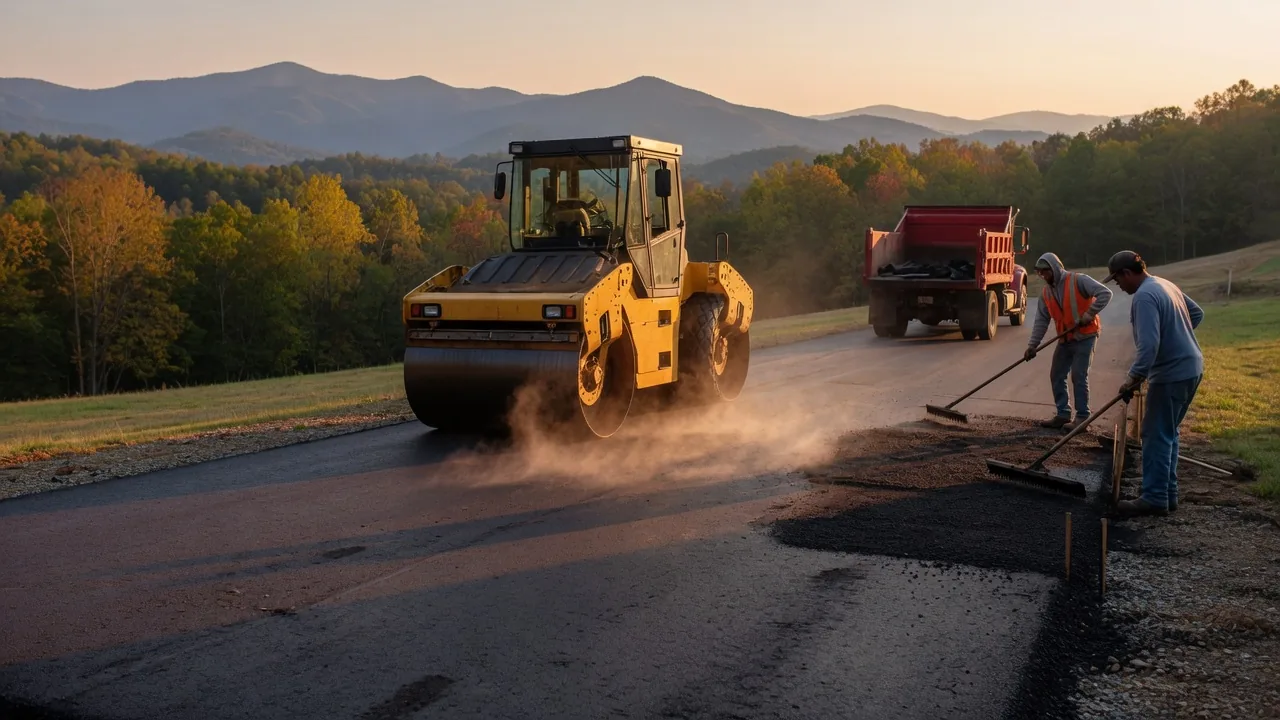
5. Pavement: the surface itself. Asphalt binder course plus a compacted finish, 2-3 inches total on a residential drive. That is a real cost, but on most Laurel Park jobs it is under half the invoice.
A scope-by-scope price table for Henderson County
The following bands reflect what residential conversions generally cost in Henderson County. Treat them as ranges, not estimates — the on-site drive length, slope, and base condition drive everything. For a more detailed regional breakdown, see our Henderson County asphalt driveway cost page.
| Scope | Typical price range |
|---|---|
| Short, flat drive (under 60 ft), existing gravel base solid | $6,500-$10,000 |
| Standard drive (100-150 ft), culvert and grading needed | $10,000-$18,000 |
| Sloped or switchback drive, base rebuild | $16,000-$26,000 |
| Long drive (250 ft+), two culverts, tree work | $22,000-$40,000+ |
| Asphalt overlay only (gravel removed elsewhere, existing base reused and graded) | $4,000-$8,500 |
If any of these ranges feels low for your drive, it is because your drive has one of the four cost drivers from the first section. That is normal here.
Two local patterns push jobs toward the higher end. First, many Laurel Park drives were built to reach a house pad that was carved out of a slope, so the drive climbs and turns at the same time — hard to grade, hard to compact, and easy to get wrong. Second, the town's canopy means shade almost everywhere, and shaded asphalt cures more slowly in cool weather. Crews working here learn to watch the calendar and the tree cover together, because a mix that sets fine in full sun on a July morning can stay tender under oaks well into the afternoon.
On the low end, a short drive on a flat lot inside the town limits where the gravel is still sound is a genuinely straightforward job. Those are the exceptions rather than the rule. Most quotes land in the middle two rows, and the swing between them is almost always base and drainage, not the blacktop.
Why water discipline matters more than the paving crew
Laurel Park's storm history is not gentle — the county sits within the federal disaster record with 16 declared events over 1978-2026, and the dominant family is flood and storm. Every drive on a slope above Hendersonville moves water whether it wants to or not. A conversion project that skips a proper turn-out, ditch, or culvert is a pavement failure scheduled for two or three winters out.
The NC Office of State Fire Marshal oversees code enforcement for the built environment in the state, and residential driveway grading and drainage are addressed in the NC residential code that code officials reference. The EPA's stormwater guidance is aimed at larger sites but the principle — keep runoff from concentrating on a paved surface — applies to every Laurel Park drive. Before asphalt goes down, the water has to have somewhere to go.
What that looks like in practice on a hillside lot here: a shallow swale cut along the uphill side of the drive to intercept sheet flow before it reaches the pavement, a turn-out or two on long slopes to bleed water off the edge instead of letting it run the full length, and a culvert sized for the flow at any low crossing. None of those are glamorous line items. All of them are cheaper than replacing a failed drive.
The National Weather Service issues the flood and storm watches that matter for this county, and the pattern is familiar to anyone who has lived here a while: long dry spells, then heavy rain on ground that cannot absorb it. A gravel drive tolerates that cycle by letting water soak through. A paved drive does not. The conversion decision is really a drainage decision with asphalt on top.
Permits, licensing, and the driveway-to-street tie-in
Two regulatory questions come up on almost every conversion: who can legally take the job, and what does the street connection require.
Any project crossing the threshold for a general contractor — which many full conversions do once grading, drainage, and paving are bundled — falls under the NC Licensing Board for General Contractors. Ask before signing. A crew without the right license is your risk, not theirs.
Where the driveway meets a state-maintained road, the apron and any culvert under the shoulder fall under the NCDOT driveway-access rules. On state roads, the permit application goes through NCDOT Connect. Laurel Park has both state and town-maintained streets, and the answer changes street by street. Ask the crew whether they handle the permit, expect you to, or only work private drives.
In town, the streets that feed the older neighborhoods tend to be narrow, with the drive apron meeting the road at a tight angle. That geometry matters when a culvert has to fit under the shoulder without disturbing the road edge. A crew that has worked these streets before knows to check the drop from the drive to the road crown before cutting anything, because a driveway that drains toward the street in a heavy rain carries gravel and sediment into the storm system — and that is a problem the town notices.
For driveways that stay entirely on private property and never touch a public shoulder, the permit picture is simpler, but grading and drainage still fall under local code. The practical advice is the same either way: get the permit question answered in writing before work starts, not after a red tag shows up.
Sequencing a conversion so the money lands where it should
The order that protects your budget in this terrain: (1) establish drainage first — swales, turn-outs, culverts — while the surface is still gravel and cheap to manipulate; (2) fix base and grading next, because asphalt over an uneven base telegraphs every rut within a year; (3) pave last, in a warm, dry window, so the binder cures properly. Crews who want to skip to step 3 are selling you a topping, not a driveway.
Our guide to the full gravel to asphalt conversion process walks through each stage. When you are ready to compare crews, the Laurel Park paving contractor page covers what to ask and what to expect on a site visit.
One more local note on timing: in Henderson County the paving window runs roughly from late spring through early fall, with the shoulder seasons usable only when the forecast holds dry. Laurel Park's elevation and tree cover make the mornings cool and the shade deep, so a crew that starts early and works a long day can sometimes beat the weather in a way that a mid-morning start cannot. If you are scheduling a conversion, ask the crew where your job falls in their season and whether they will hold the base work until the pavement window is genuinely open. Splitting the job across two visits is normal and often smart: get the grading and drainage right in one pass, then bring the paver back when conditions are right.