Why the calendar matters more here than on flatland
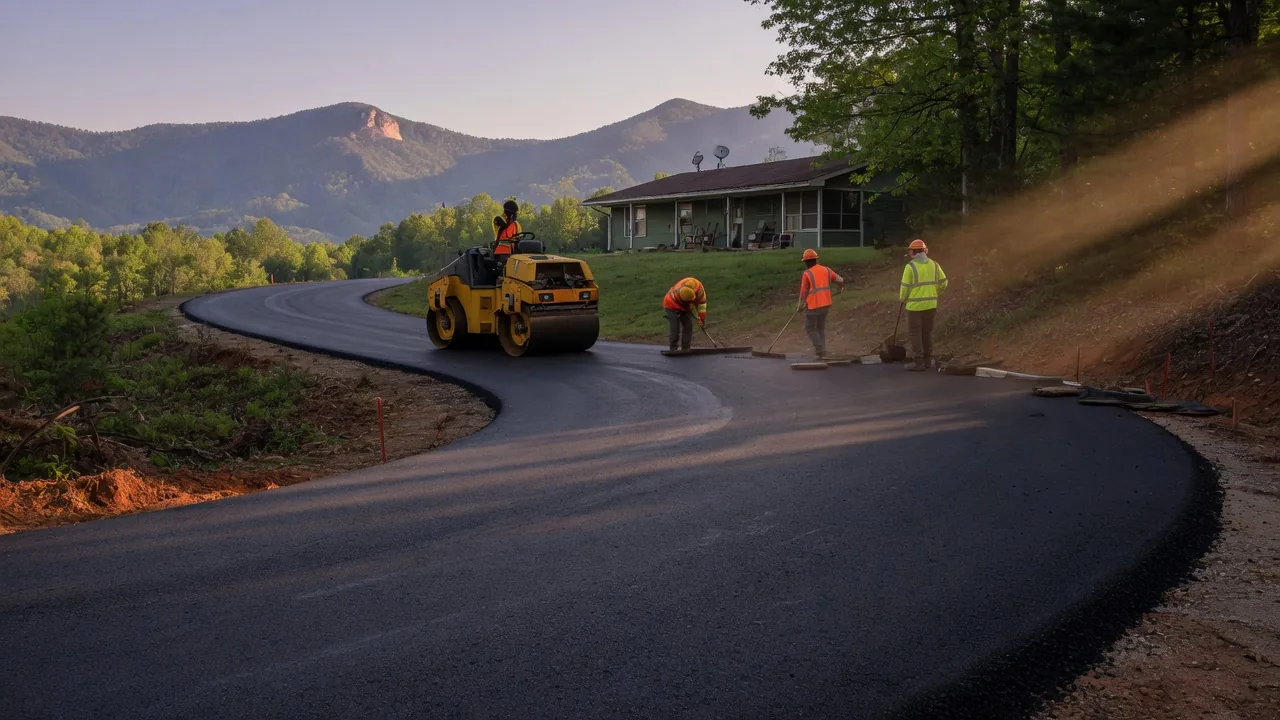
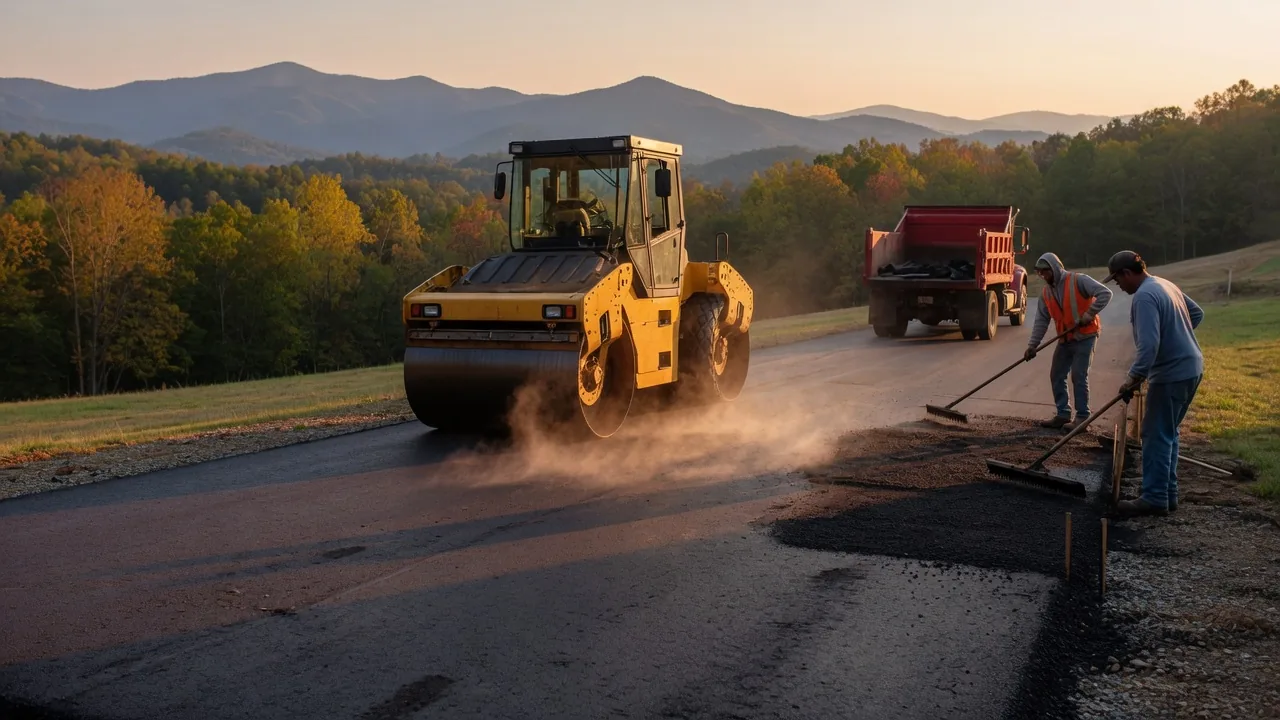
The chip spreader and rubber-tired roller will not do honest work in a mountain October the way they do in July. Lake Junaluska sits at roughly 2,600 feet in Haywood County, with the town of Waynesville running uphill from the lake and the ridgelines above it a few degrees cooler still. Those few degrees decide whether the emulsion in a chip-seal coat breaks down properly or sets soft and smears. They decide whether rolled chips actually key into the binder or just ride on top until the first plow drags them off.
Practical window: mid-May through early October, dry, with pavement surface temperatures warm enough for the emulsion to cure. Shaded switchbacks that never see sun until mid-morning can push that window shorter than the calendar suggests. A crew that has laid chip seal here knows to start on the sunny side of a property and work toward the trees, because the shaded lanes need every degree they can get.
What chip seal does that smooth asphalt will not
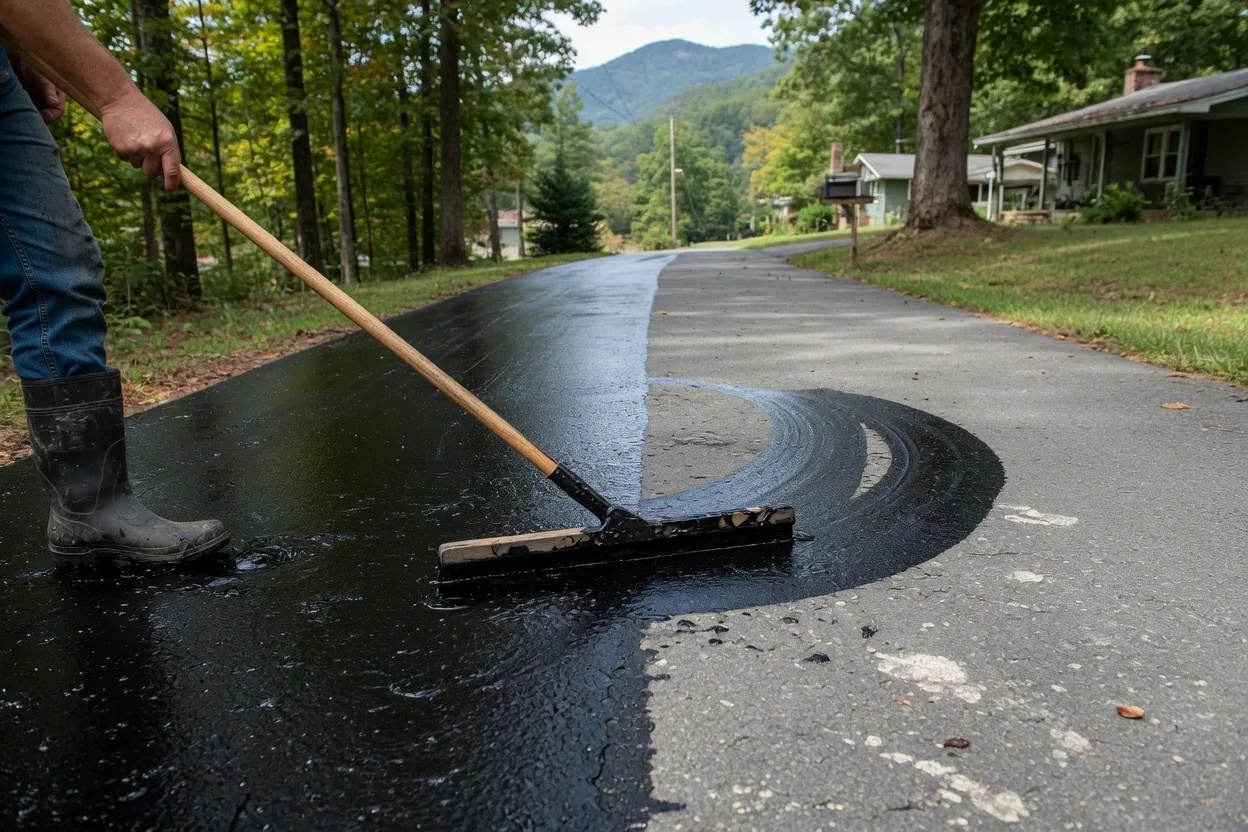
Lake Junaluska's terrain narrows options fast. Plenty of driveways here lift at grades that rain or mountain runoff will eventually find, and a smooth asphalt surface on that grade turns slick in a hurry. A chip-seal surface — hot binder sprayed down, aggregate chips broadcast over it, rolled in — carries better grip and lets stormwater pass over a textured surface rather than sheet across a glassy one. That is the whole reason the material shows up on driveways this steep.
It also wears in a way that suits properties where a premium mix would be overkill. A tar and chip driveway tends to hold up against winter freeze-thaw movement and spring rain as long as the drainage underneath is handled correctly. If the sub-base is wrong, no surface treatment will save it. Contractors who work these grades know that.
A straight scope-versus-price table
Asphalt questions get real when a quote itemizes scope instead of naming a lump sum. The table below shows typical Haywood County ranges; your job's number depends on slope, run length, chip selection, and how much base prep the drive needs.
| Scope | Typical range | Notes |
|---|---|---|
| Chip seal over sound existing base | $3,200-$5,500 | Best case; base passes inspection |
| Chip seal with minor grading and patching | $4,500-$7,000 | Adds prep time and equipment |
| Full build-up with new base stone | $6,500-$9,500 | Long or steep runs, thin sub-base |
| Gravel driveway conversion to tar and chip | $4,000-$8,000 | Requires regrade and compaction first |
| Slope-grade or switchback driveway | Quote by site | Engineering may be required; see Haywood County asphalt cost data |
The full method is broken down on our tar and chip service page. For driveways that must be paved rather than chip-sealed, the same crews handle both.
Waterproofing the grade before the chips go down
Tar and chip does its job when water has somewhere to go. On the slopes around Lake Junaluska, that means reading runoff before the chip spreader shows up. Spring rain off the ridge above a driveway can overwhelm a shallow ditch in minutes, and if the drive edges into the grade rather than sitting on top of a crowned base, the binder strip on the low side fails first and the chips wash out of it.
This is also the layer where code matters. Statewide residential code treats site drainage as part of the driveway structure, and a driveway cut into a hillside is no exception. Any contractor who scopes the project without talking about where water leaves the property has skipped the part that determines how long the surface lasts. The material is not the variable here. The prep underneath it is.
Plowing, salt, and mountain winter
Tar and chip handles mountain snow better than a smooth overlay if the right chips were used and the binder cured thoroughly. But the drive-edge is where plow damage concentrates. A plow blade that rides a foot into the shoulder on a driveway without defined edges will strip the chip mat and open a raveling channel. Establishing the drive edges during construction, or restoring them with a fresh chip coat before winter, is cheaper than a mid-January repair call.
Salt is a smaller concern for chip seal than for asphalt in most cases, but excess de-icer accelerates deterioration on any surface. Sand for traction is the better match. The National Weather Service outlook for the mountains offers the freeze-thaw picture a Haywood County drive will see.
Choosing a crew that knows these hills
The tell is base prep. On flat ground, a marginal sub-base can be masked for a while by a good surface course. On the grades around Lake Junaluska, it cannot. A driveway that rolls and ruts in the first spring thaw was built on inadequate compaction or a thin stone layer, and the chip-seal surface on top was never going to prevent that.
Before hiring, ask where the crew works most often, and whether they've laid chip seal on the specific slope of your driveway. The NC Licensing Board for General Contractors (nclbgc.org) sets the dollar threshold at which a project requires a licensed general contractor, and driveways cut into a hillside often cross it once grading and drainage are scoped together. Ask to see the itemized scope before signing. When you're ready, our Lake Junaluska paving contractors page explains what a solid first visit should look like.