What your Laurel Park driveway is sitting on
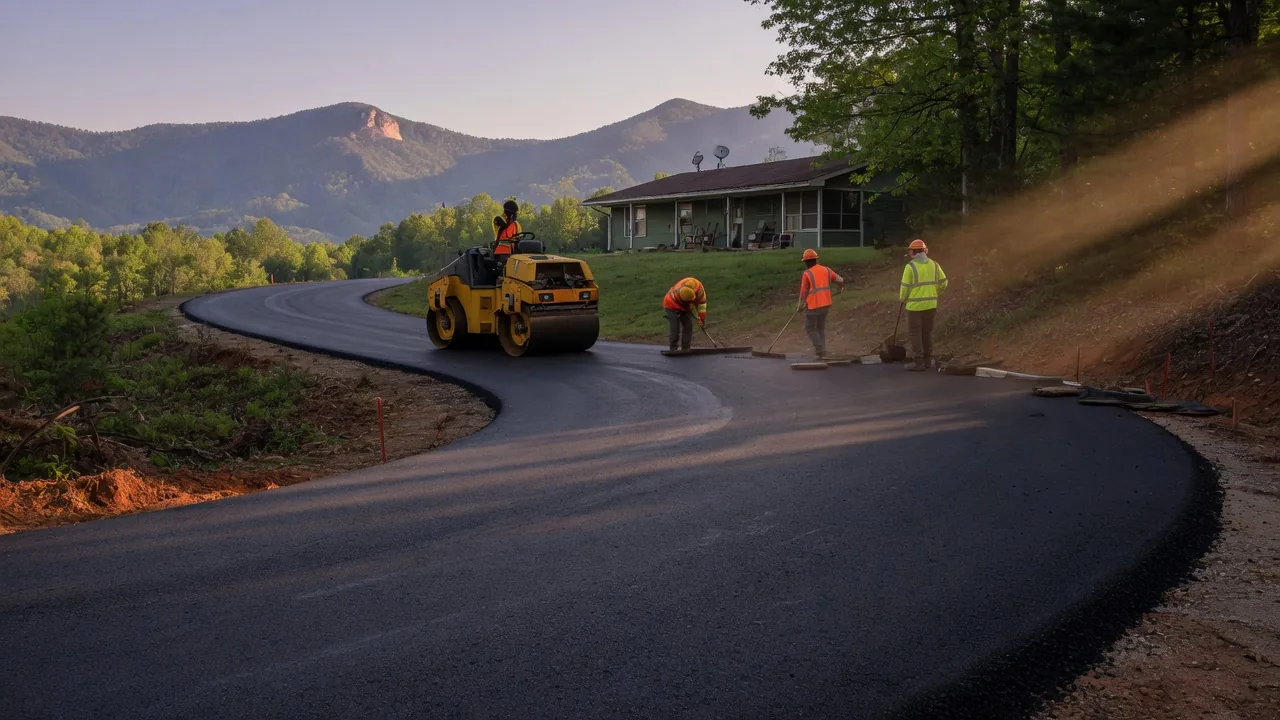
Laurel Park is built into the slopes between Hendersonville and the Greenville Highway corridor, and the ground under its driveways is almost never uniform. On the older in-town streets off Laurel Park Highway, you'll find driveways laid decades ago over a thin gravel lift that has since pumped full of red clay from the hillside above. On the newer ridge lots, the driveway often rests on cut-and-fill ground where the builder compacted one side and simply placed the other. Those two driveways look identical from the road and behave nothing alike.
This matters because asphalt is a wearing course, not a foundation. A quarter-inch of new hot mix will faithfully copy whatever the base underneath is doing. If the base is moving, the new surface cracks in the same places within a season or two. Before anyone quotes you a resurfacing number, the honest question is how much crushed stone has to go down first, and whether any soft spots need to be cut out and rebuilt rather than paved over.
Reading the surface before you spend anything
The tells that separate a true resurfacing candidate from a rebuild: alligator cracking in the wheel paths means the base has failed and an overlay will inherit the pattern. A single long crack that reappears every spring is usually water getting under an edge, which is a drainage fix, not a paving fix. Depressions that hold puddles after rain are subgrade settlement. In Laurel Park specifically, watch the uphill edge of any driveway cut into a slope — that is where hillside runoff enters and where the failures start.
When the surface is merely oxidized and raveling at the edges but the base is sound, resurfacing is exactly the right call and the cheapest real fix available. When more than roughly a quarter of the surface is alligatored, most crews will tell you honestly that patching and overlay is money spent twice. Our asphalt resurfacing guide walks through how that decision is made in the field.
The Laurel Park price picture, by scope
Numbers below are working regional ranges for Henderson County, phrased as what most jobs actually run. Driveway length, slope, and how much stone correction the base needs are the three variables that move the number. For a fuller line-item breakdown, see the Henderson County cost table.
| Scope | What it covers | Typical range |
|---|---|---|
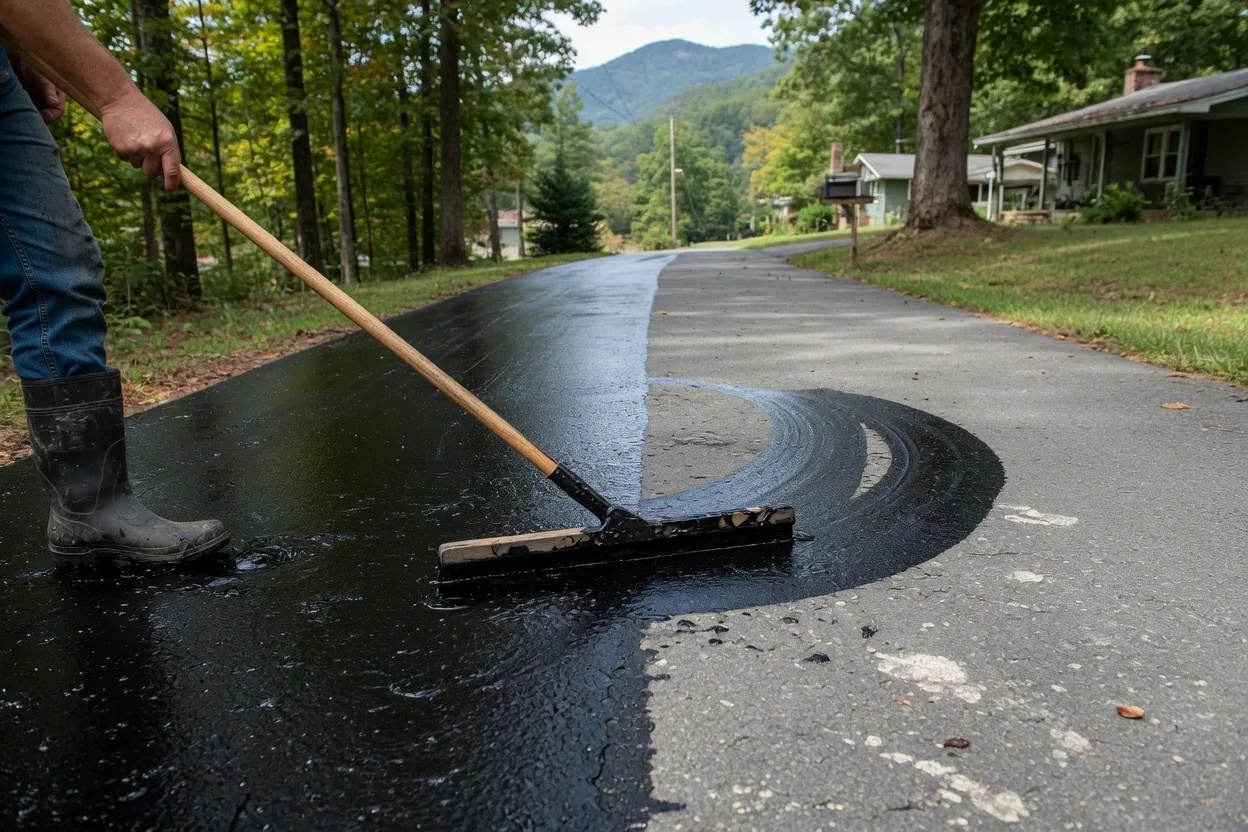
| Crack fill and sealcoat only | Cleaning, hot-pour crack filler, one seal coat | $450–$1,400 |
| Thin overlay, sound base | 1.5–2 in. hot mix over intact existing asphalt, edges tacked | $2,800–$5,500 |
| Overlay with base correction | Soft spots cut out, crushed stone added, then 2 in. overlay | $4,500–$9,800 |
| Full removal and rebuild | Haul off failed asphalt, new stone base, new 2 in. surface | $8,500–$18,000+ |
Two line items that legitimately show up on Laurel Park quotes and rarely on flatland ones: drainage correction at the uphill edge, and stone import when the driveway is too steep for a dump truck to tailgate-spread evenly. A bid that omits both on a slope lot isn't cheaper, it's incomplete.
Stone first, mix second: what a real scope includes
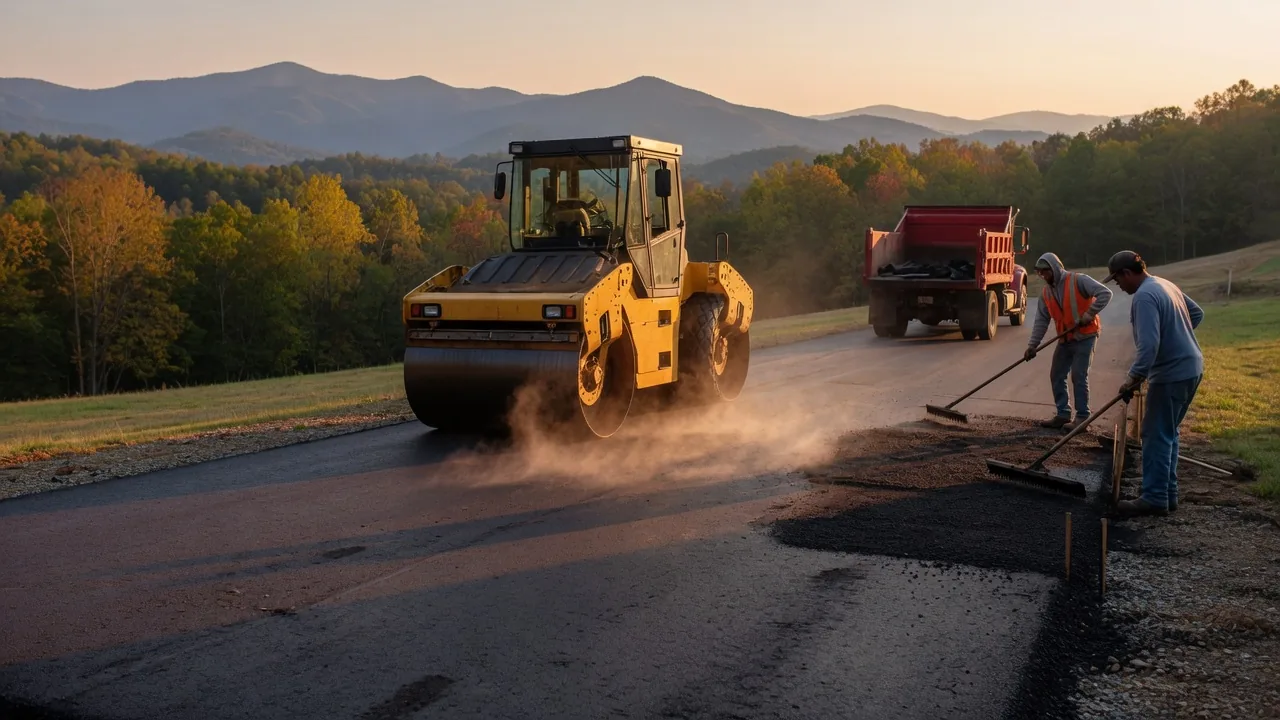
Crushed stone base is where the money actually lives on these jobs. A proper correction lift means the crew cuts out the failed section, grades it to drain, and brings in stone compacted in lifts — not dumped in one pile and smoothed. Hot mix goes down over a primed and tacked surface, usually 1.5 to 2 inches compacted for a residential driveway. Slope lots in this town often need a crown or a slight cross-slope so water leaves the pavement instead of sheeting toward the garage.
On any job near a state-maintained road, the driveway apron is regulated: connections to NCDOT right-of-way require an access permit, and NCDOT Connect handles those applications. Inside Laurel Park town limits, check with the town before you widen an apron or change a driveway's footprint — a resurfacing in place usually doesn't trigger a permit, but new impervious area often does.
Weather, water, and why timing matters here
Henderson County's storm record is the quiet driver behind a lot of asphalt failures. 16 federal disaster declarations touch this county across a 1978-2026 span, and the pattern is familiar: heavy rain onto clay slopes, water finding every crack, freeze-thaw working it wider through the winter. Paving right after a wet stretch is a mistake — a saturated subgrade can't be compacted, and the stone you pay for disappears into the mud.
Practically, that means scheduling resurfacing for a dry window and expecting crews to be busy after every wet spell. If a contractor will pave over a driveway that is still pumping water, that is a warning sign, not a bargain. For forecast-aware scheduling, the National Weather Service is the honest source to check before you commit a date.
Choosing a crew in this market
Three checks worth running before you sign anything. First, ask what stone depth they plan and where it's coming from — a real answer includes a number and a source, not "enough." Second, any project that involves regrading, drainage structures, or work near the town right-of-way can cross the state general contractor licensing threshold, so it's reasonable to verify a contractor through the NC Licensing Board for General Contractors. Third, ask how they'll protect the edges where asphalt meets lawn or stone wall, because on Laurel Park's tight, sloping lots edge failure is what undoes most overlays.
See our list of paving contractors serving Laurel Park for crews who work this terrain regularly, and use the form on this page to get a scope and a number.