Why the calendar matters more here than the brochure
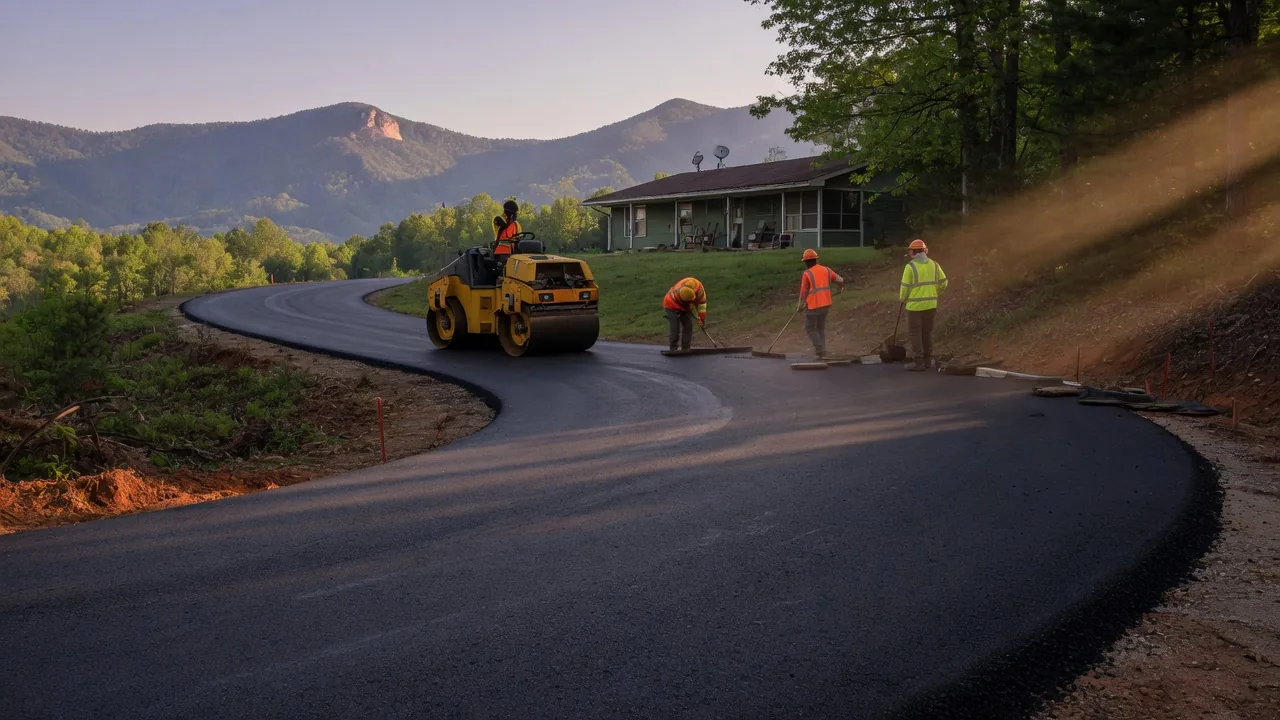
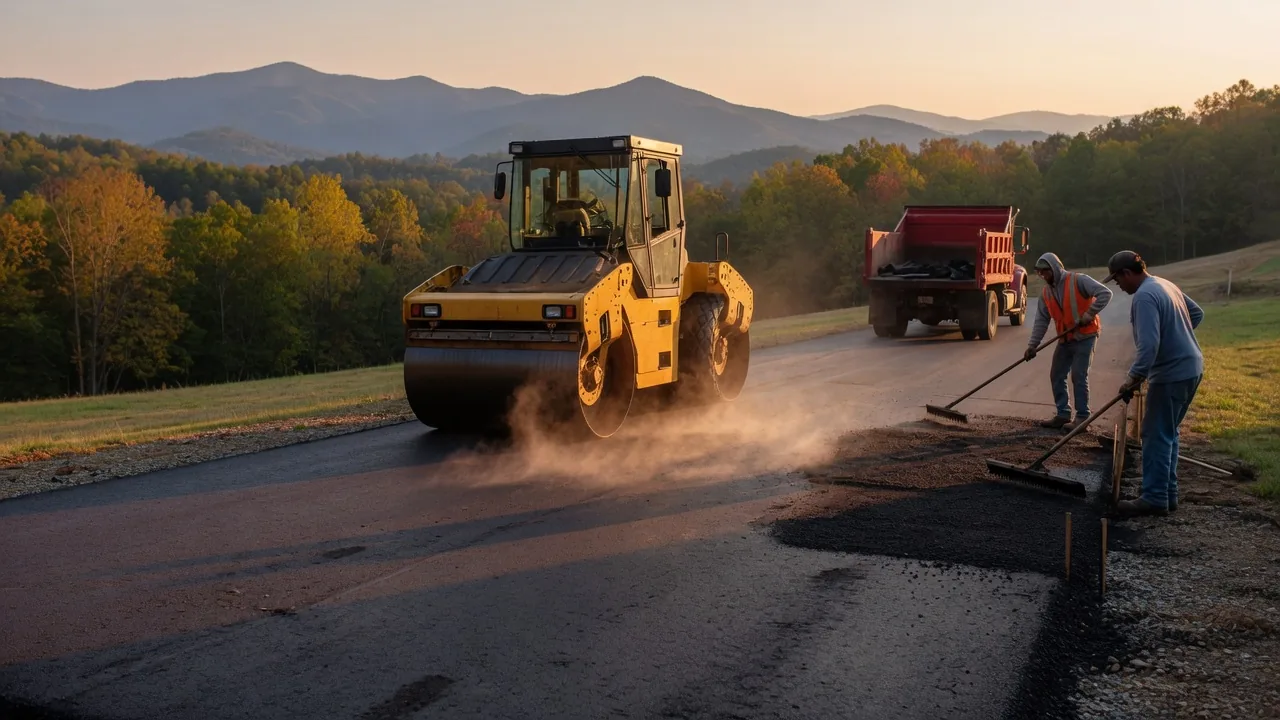
Tar and chip is a heat-dependent process. The asphalt emulsion has to be fluid enough to wet the stone and the roller has to seat that stone before the binder sets. In Fairview, that gives you a real window: roughly late April through early October, and not every week inside it. Ridge-top shade off Garren Creek and the higher ground toward Bearwallow drop surface temperatures faster than the valley floor, so a crew that can spray at 2pm in Asheville may already be losing tack up here by 4. Frost shows up earlier, too, and a driveway laid too close to first frost will shed stone all winter.
The practical rule: book in spring, expect summer crews to run early mornings, and treat any late-October quote as a question. The National Weather Service frost and freeze outlooks for the Asheville area are the same ones your paver is watching, so it costs nothing to check them yourself.
There is a second timing layer that surprises new residents. Fairview sits in a rainfall belt where summer thunderstorms can drop a half inch in twenty minutes, and a freshly sprayed binder that gets hit before the chip is broadcast is ruined. Crews who work this area watch radar the way other trades watch the clock. If your driveway is on a north-facing slope under mature hardwoods, the surface may stay damp until mid-morning, which compresses the workday further. That is not a sales pitch for a bigger crew — it is why two Fairview driveways a mile apart can be quoted a week different on the calendar.
What actually gets built, layer by layer
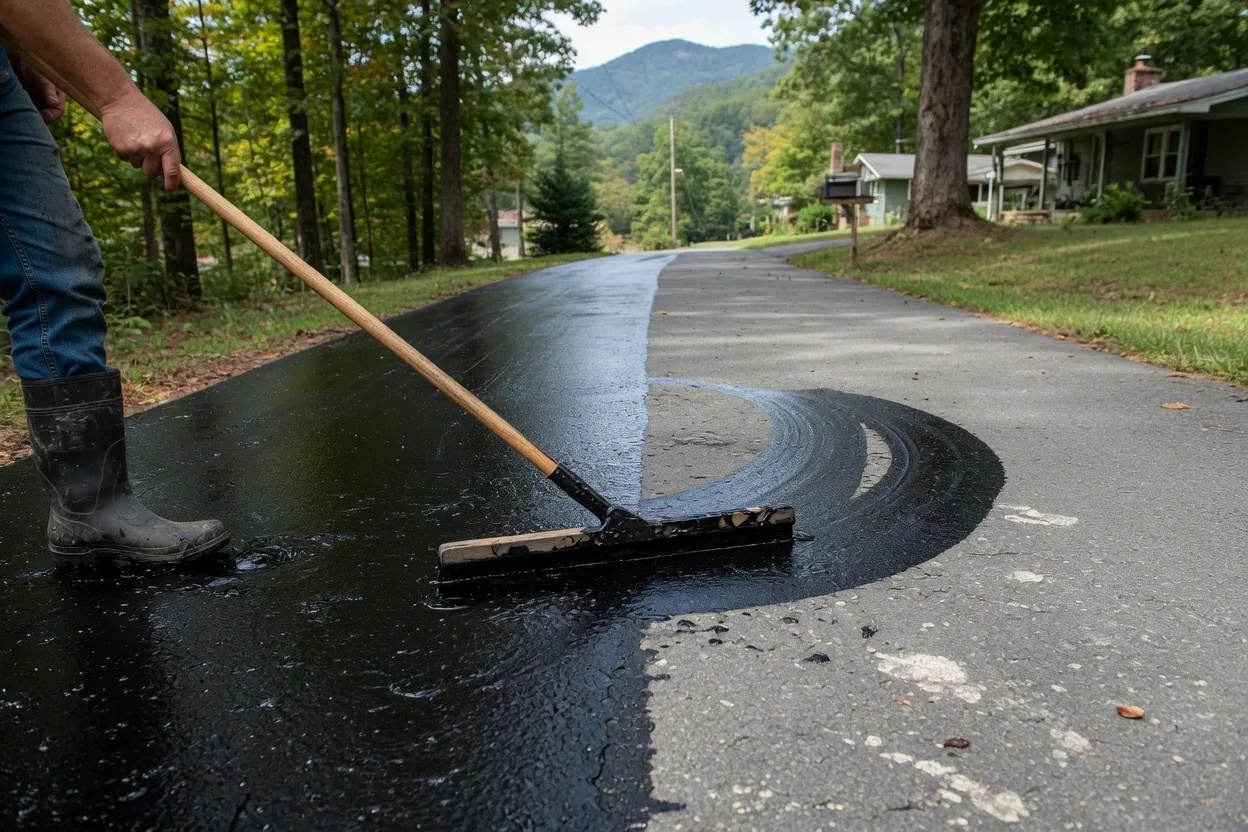
A tar and chip driveway is not a thin coat over dirt. It is a stone base graded for drainage, a sprayed asphalt binder, a broadcast layer of crushed stone, and a rolled finish. In Fairview's terrain, the base is where money disappears or gets saved badly. Sloped entries need crowned or ditched drainage or the first hard rain stripes the surface. Long runs off a gravel county road need a stabilized apron so gravel does not migrate into the chip mat.
If you are comparing tar and chip against a full hot-mix asphalt driveway, the full tar and chip surface guide walks through texture, maintenance, and expected life so you can price the difference honestly.
Grade matters here in a way it does not on flat ground. A Fairview driveway that climbs from the road at fifteen percent will move water fast whether you want it to or not, and the chip mat has to be built to survive that. That usually means a deeper compacted stone base at the steep sections, a crown or a cross-slope to push water to a ditch instead of down the middle, and sometimes a turn-out or a culvert at the bottom to keep the road edge from washing. None of that is exotic, but it is extra labor and extra stone, and it is the difference between a driveway that lasts a decade and one that sheds its surface after two winters.
Fairview cost table
Bands below are typical for Buncombe County mountain properties and assume reasonable access for a distributor truck and roller. Steep, switchbacked, or heavily treed entries push toward the top of each range. See the Buncombe County paving cost breakdown for the wider comparison across surface types.
| Scope | Typical range |
|---|---|
| Tar and chip over sound existing base | $3-$5 per sq ft |
| Tar and chip with new crushed stone base | $5-$8 per sq ft |
| Single-coat seal refresh over failing chip | $1.50-$3 per sq ft |
| Drainage correction (ditching, crowning, culvert) | $1,200-$4,500 per job |
| Gravel apron and road-transition stabilization | $800-$2,500 per job |
Any quote that does not separate base preparation from surface work is not a comparable quote. Ask for the line items.
Two other line items commonly show up on Fairview estimates. Tree-root grinding or stump removal inside the driveway corridor is often priced separately, and it is not optional when roots are heaving the existing surface. And on long driveways, crews sometimes quote a mobile-distributor surcharge if the load has to be staged off-site because the truck cannot turn around at the top. Neither is a red flag by itself, but both should be written down rather than discovered on the invoice. The pricing bands above are meant as planning ranges, not a bid; the only number that matters is the one a local estimator writes after walking your slope.
Permits, right-of-way, and who has to sign off
Work entirely inside your own property line generally does not require a building permit, but the moment your driveway meets a state-maintained road, you are in NCDOT territory. Driveway connections on NC routes need an access permit, and the application runs through NCDOT Connect. Buncombe County roads have their own review. This is the single most common delay on Fairview jobs, and it is worth resolving before a crew is scheduled.
On the contracting side, the NC Licensing Board for General Contractors sets the threshold where a project requires a licensed general contractor. Paving itself is not a licensed trade in North Carolina, which is exactly why you should verify insurance and references yourself. The state fire marshal's code officials, reachable through ncosfm.gov, handle code questions on structures near the driveway, not the paving surface.
There is also a stormwater angle that catches people on larger regrades. If a driveway project changes how runoff leaves your property, county and state stormwater rules can apply, and the EPA maintains plain-language guidance on why uncontrolled runoff matters. For most Fairview driveway jobs this is a non-issue because the work is resurfacing, not re-routing a watershed. But if you are cutting a new driveway or re-grading a slope that drains toward a creek or a neighbor, ask the question early. Resolving it on paper is cheap; resolving it after a washout is not.
Hiring a crew that knows this hillside
Ask three questions. First, how do you handle water on a slope above 10 percent? Second, what stone size do you spec for a shaded north-facing drive where melt lingers? Third, what is your plan if the base fails inspection after you strip it? Crews working Fairview regularly have answers ready. Crews pricing it as flatland work do not.
A fourth question is worth adding in this county: how do you handle the freeze-thaw cycle on a drive that gets plowed? Fairview sees enough winter to matter, and a chip surface that was laid late or thin will ravel at the plow edge first. Ask whether the crew recommends a slightly larger stone in the top course for drives that see regular plowing, and whether they will come back for a post-winter check. That follow-up is a reasonable ask, not a favor.
For local vetting, the Fairview paving contractor directory covers what to check before you sign anything.