Why Buncombe driveways eat sealer faster than flatland ones
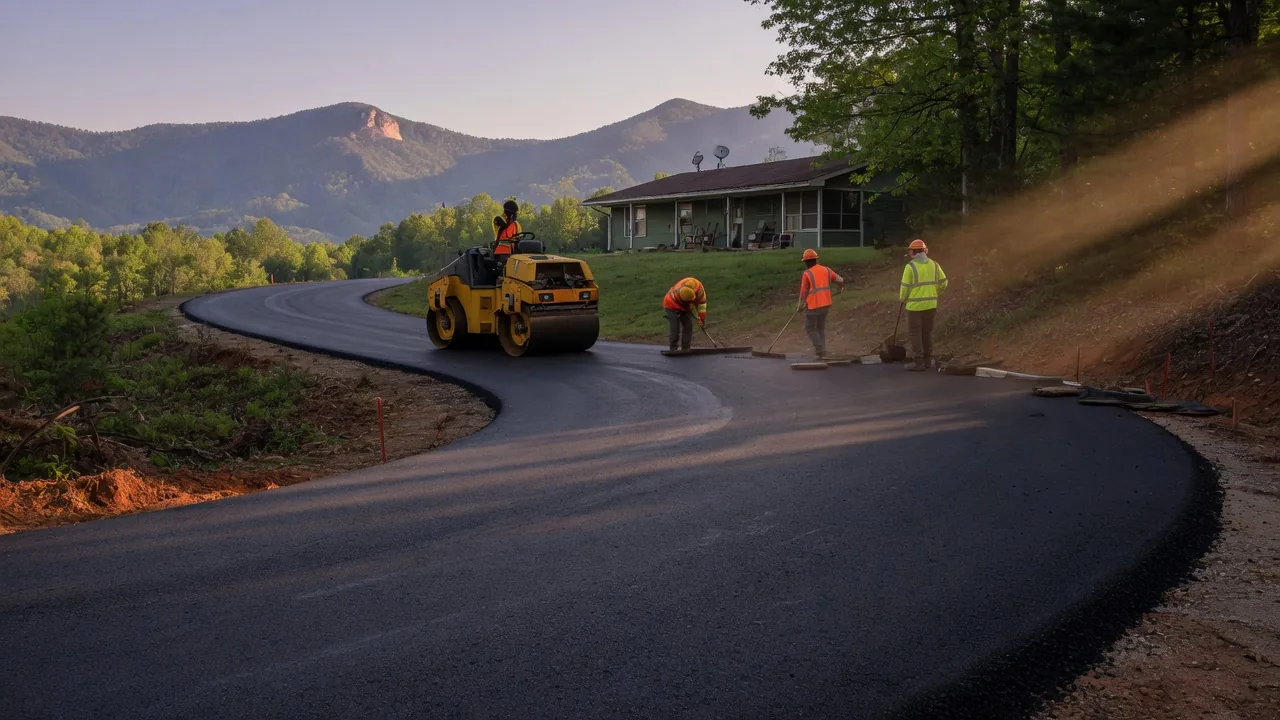
Stand at the end of a Fairview or Weaverville driveway after a hard rain and you can see the whole problem in the runoff. These lots climb. A steep asphalt pad drains fast, which is good, but every winter it also heaves a little, cracks a little, and lets water into the subgrade. Add the tree canopy that comes with a wooded lot and you get shade, needles, and organic debris sitting on the surface for weeks. That combination — pitch, water, shade — is why so many driveways here show surface damage well before a comparable driveway in flatter parts of the state would.
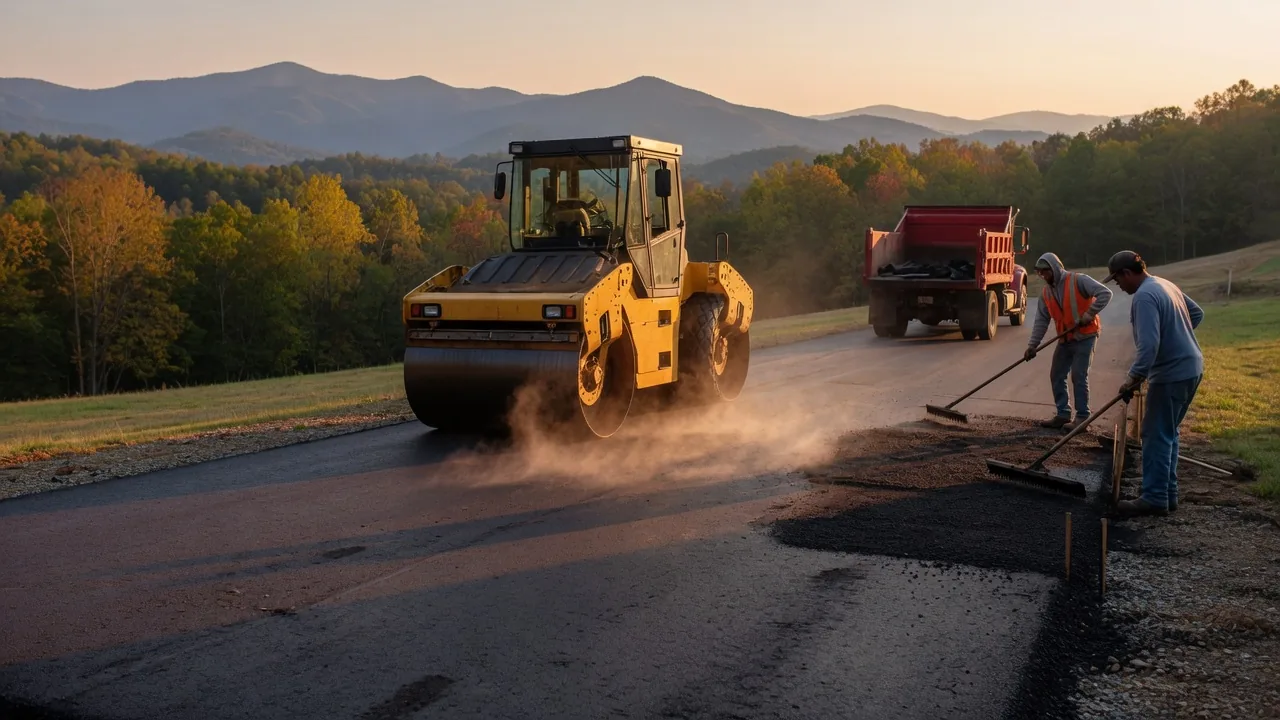
Then there's the mix and the lift. A lot of mountain driveways were paved in one lift about two inches thick. Two inches of asphalt is fine for a passenger car on flat ground. Point a loaded contractor truck, a landscape trailer, or a delivery box truck at a sloping two-inch driveway and turn the wheel, and you are asking that surface to do something it was not built for. Three inches in two lifts, laid over a properly compacted base, is the difference between a driveway that needs sealer every few years and one that starts raveling at the edges. You can't add thickness with a sealer coat, so it's worth knowing what you have before you spend on maintenance.
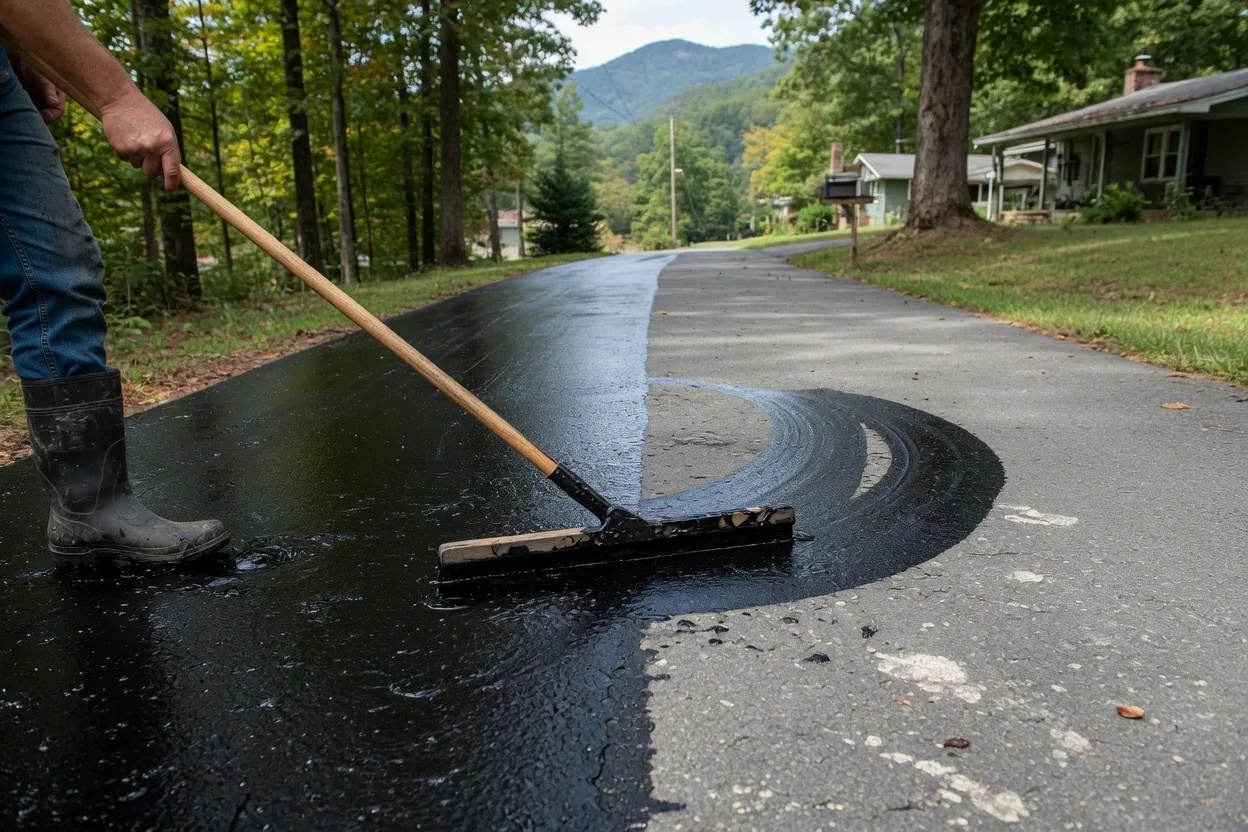
Sealcoating is the last line of defense, and it does real work — it protects the surface from oxidation, UV, and minor fuel and oil drips. It does not restore structure. If your driveway is rutting, alligating, or moving, the honest answer is that you're looking at crack sealing and possibly a patching or repaving conversation, not a fresh black coat over a failing base.
What the money actually buys, by scope
Prices here are quoted per square foot because the work scales that way, and they move with prep intensity, grade, and access. A flat, clean, once-sealed driveway is the cheapest thing to maintain. A cracked, shaded, sloping driveway with vegetation growing out of the joints is a completely different job. The table below reflects typical ranges for the Asheville area — treat them as bands, not quotes.
| Scope of work | Typical price range | What drives the number |
|---|---|---|
| Single coat, clean surface, low grade | $0.10–$0.20 / sq ft | Linear feet of crack filling is minimal; easy truck access |
| Two coats, standard prep and cleaning | $0.18–$0.35 / sq ft | Most mountain driveways land here; grade and canopy work add time |
| Two coats plus crack filling | $0.30–$0.55 / sq ft | Crack volume, crack length, whether cracks are routed or hand-poured |
| Full prep, patching, two coats | $0.55–$0.90 / sq ft | Patching square footage, edge repair, drainage corrections |
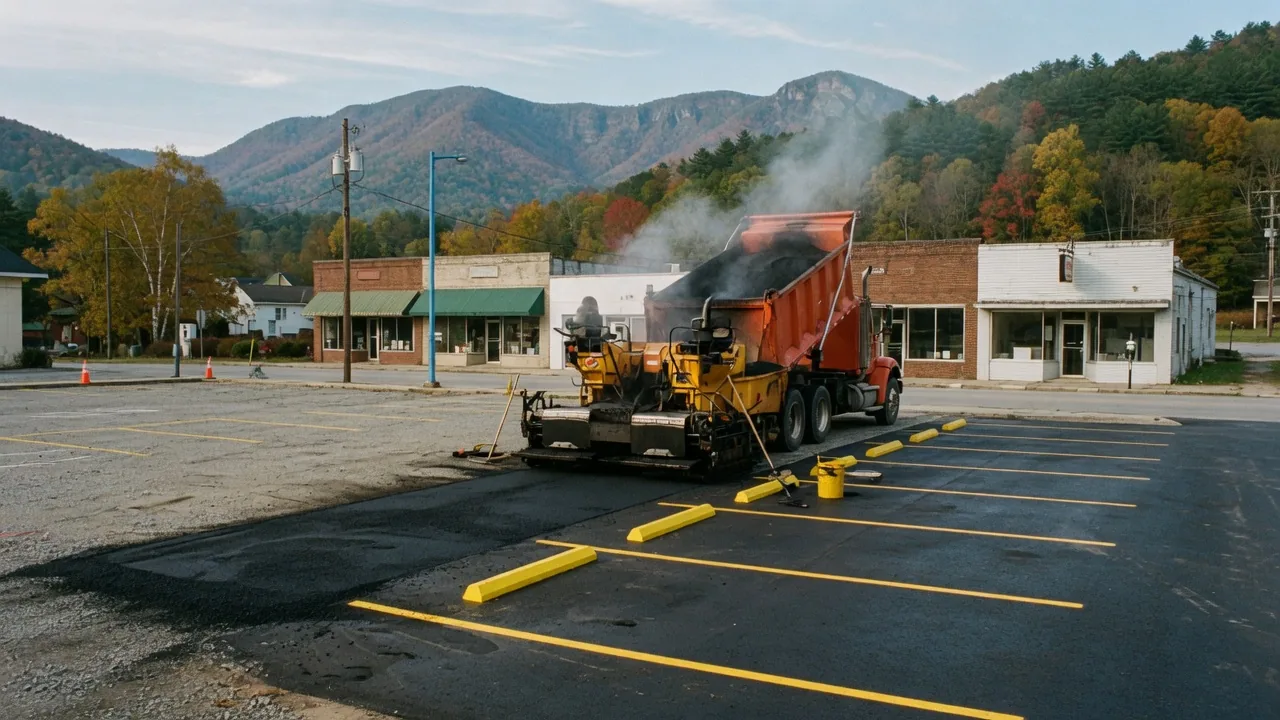
| New asphalt, first seal after cure | Quoted with sealer only | Too-fresh asphalt will not bond; timing matters more than price |
The full breakdown of how prep, crack work, and coat count stack up lives on the sealcoating cost page, which walks through the same ranges line by line. Two things drive the number more than anything else: how much crack filling is involved, and how much time the crew spends on grade and access. A driveway that drops steeply toward the road and has a culvert at the bottom takes longer to seal properly than a flat one, full stop.
When to seal, and when sealing is a mistake
New asphalt needs to cure before it will hold sealer. The old rule of thumb — wait a season, sometimes a bit longer — exists because sealer applied to green asphalt traps oils and solvents that need to escape, and it can peel instead of bond. Our guide on how long to wait before sealcoating gets into the specifics, but the short version is that the calendar matters as much as the clock. A driveway paved in late fall in Buncombe County may sit longer than one paved in May, because cooler temperatures slow cure.
Once a driveway has cured, the reseal interval depends on sun exposure and traffic. Full-sun driveways oxidize and gray out faster; shaded, wooded driveways stay darker but stay damp longer and collect debris. A reasonable starting point is every two to three years for a maintained mountain driveway, inspected each spring. If the surface looks uniformly dark and water still beads, you probably have another season. If you can see the aggregate, or the surface looks chalky and dry, it's time.
Where sealer is the wrong call: active movement, wide structural cracks, soft spots that flex underfoot, or a driveway that's less than the cure window old. Applying sealer over any of those is a cosmetic fix on a structural problem. It looks good for one season and then fails with the surface underneath it. Experienced crews will tell you when to hold off — and in this region, the good ones do.
Licensing, permits, and the boring rules that protect you
Sealcoating is generally treated as surface maintenance rather than construction, so a small residential job often doesn't trigger state general contractor licensing. But scope matters. If the work grows into repaving, base repair, drainage changes, or anything involving the right-of-way at the road, you may cross into licensed contracting territory. North Carolina's licensing thresholds and what counts as contracting are published by the North Carolina Licensing Board for General Contractors, and it's worth a look if your project is bigger than a reseal. If your driveway ties into a state-maintained road and you're altering the entrance, that's a conversation with NCDOT about access permits, not a call your sealcoater should be making.
Two more practical notes for this county. First, stormwater. Driveway runoff that leaves your property and enters a creek or a storm system is regulated, and improvised grading changes can create real problems. The North Carolina Department of Environmental Quality publishes guidance at deq.nc.gov if you're touching drainage. Second, product safety. Coal-tar-based sealers have drawn scrutiny for the polycyclic aromatic hydrocarbons they contribute to runoff; the U.S. Environmental Protection Agency has published on this, and many property owners in Western North Carolina now ask for asphalt-based or modified emulsions instead. Ask what's going in the bucket before the crew starts.
The other thing worth knowing: this county has an unusually heavy federal disaster record — 19 declared events over roughly 1973-2026 — and the National Weather Service's local outlook at weather.gov is a better predictor of when to schedule than any calendar. Sealer needs dry, warm conditions to cure; a job done right before a multi-day rain event is a job wasted.
What a fair quote looks like, and the questions to ask
Get at least two written quotes, and make sure they describe the same scope so you're comparing apples to apples. A quote that says "seal driveway" is not a quote. What you want on paper: square footage measured, number of coats, product type and brand, whether cracks are included and how they're filled, whether vegetation is removed from cracks, how the surface is cleaned before application, and what happens if it rains. If a contractor refuses to put any of that in writing, that's your answer.
Three questions separate the careful crews from the quick ones. "What's the application method?" Spray, squeegee, and brush each behave differently on a sloped driveway; squeegee and brush tend to lay a more even film on grade. "What dilution ratio are you using?" Over-thinned sealer goes on fast and cheap and wears off in a season. "When did this driveway last get sealed, and with what?" Sealer over an incompatible previous product can fail to bond, especially on driveways with a history of coal-tar applications. Those three questions will tell you more about the crew than any review.
Timing-wise, Western North Carolina gives you two workable windows: late spring into early summer, and early fall. Mid-summer heat can flash the sealer too quickly on a full-sun driveway, and late fall risks a cold snap that stops cure. Between rain events, elevation, and canopy, this is not a place where you can seal any day the truck is free. Plan it, don't improvise it.