Read the driveway before you seal it
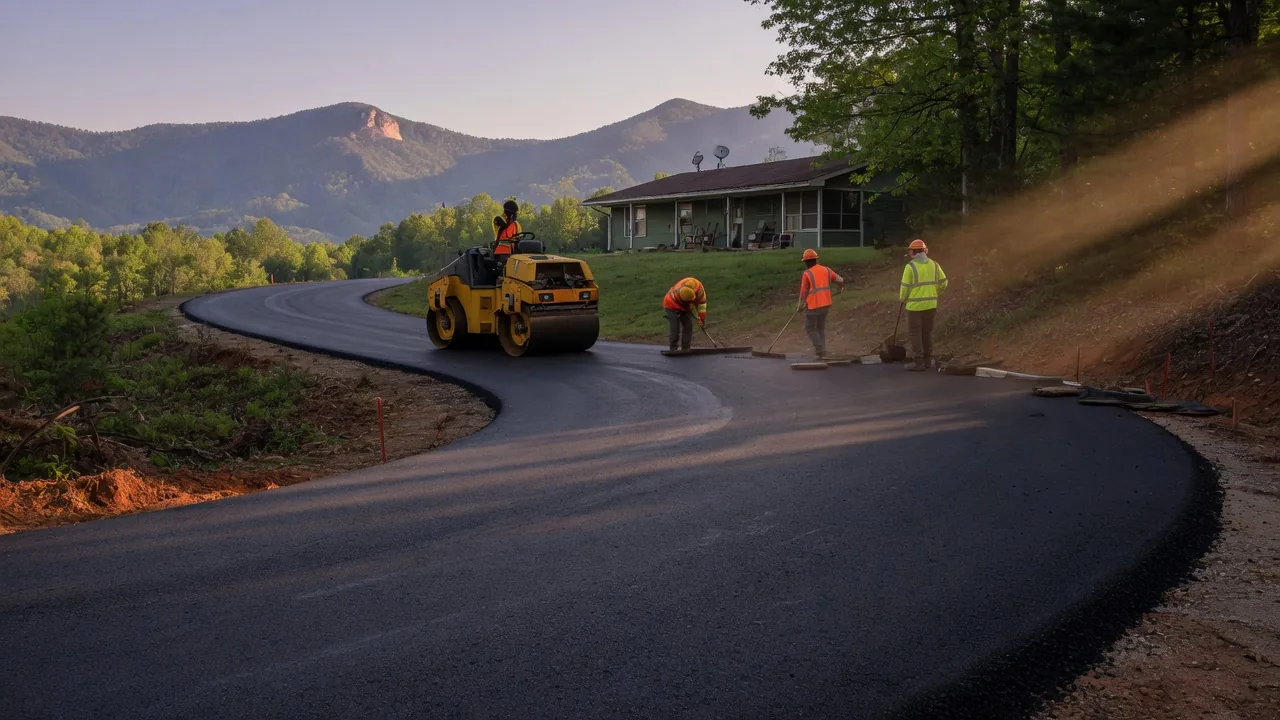
A Mars Hill driveway that gets sealed in the wrong condition is money poured onto a problem. This is mountain ground: steep gravel-to-blacktop transitions, runoff that charges downhill across every apron, and winters that freeze water in every opening it can find. Sealcoat is a wear coat, not a structural fix. So the first honest question isn't 'how much to seal', it's 'what am I actually looking at?'
The tells: hairline cracks you can trace with a fingernail, alligator cracking in wheel paths, a soft spot that flexes underfoot, a pothole that keeps returning after a fill, an edge crumbling where the asphalt meets lawn or gravel. Hairline and surface oxidation? Seal it. Alligator cracking over a soft base? That's a base failure, and a coat of sealer will hide it for one season and crack again. A returning pothole, a rutted section, a delaminating edge get patched, milled, or cut out and replaced first. Only after that structure question is answered does sealcoating make sense, and it's why a real quote starts with a walk of the driveway, not a per-foot number over the phone.
Walking a driveway here also means reading the transition zones. Mars Hill sits between the town core around the university and the steep hillside lots scattered out toward Mars Hill Road and the Big Laurel area, where grades hit fifteen, twenty percent and the apron never fully dries after a rain. On those pitches, a driveway that would only need a light seal on flat ground can be two winters from full base failure, because water moves faster and stays in the cracks longer. Pull a core sample by hand: if the asphalt under a crack is broken and crumbly, you're past sealing. If it's dark and intact under the surface, you can save it.
What hard mountain winters do to Mars Hill driveways
Madison County sits in a freeze-thaw belt. Water gets into a crack, freezes overnight, expands, and widens the opening a little more each cycle. Repeat that across a season and a hairline becomes a channel. The federal record backs the pattern: 21 declared events touch this county across 1978-2026, heavily weighted toward storm and flood family. That's why drainage and grading matter as much as the sealer. A driveway that sheds water off the crown and away from the garage will outlast one that ponds at the low end. Before any coating, look at where water goes: the uphill cut, the gutter downspout, the gravel shoulder that spills onto the blacktop. The NC Department of Insurance — Engineering & Codes treats site drainage as a first-class concern for exactly this reason, and the National Weather Service tracks the freeze-thaw and flood patterns that drive most driveway decay here.
Seal, patch, overlay or tear out: the price picture
Costs move with prep, not with the sealer bucket. A clean, sound driveway is fast. A cracked, soft, root-lifted driveway is not, because the surface has to be opened, cleaned, sometimes milled, before anything is applied. The table below is a working range, not a quote — every driveway in the Mars Hill and Woodfin area gets a walk first.
| Scope | Typical range | When it's the right call |
|---|---|---|
| Sealcoat only, sound surface | ~$0.18–$0.35 / sq ft | Oxidized but intact; hairline cracks only |
| Crack fill + sealcoat | ~$0.35–$0.60 / sq ft | Cracks up to a quarter-inch, no soft base |
| Patch potholes / soft spots + sealcoat | ~$0.60–$1.25 / sq ft | Isolated failures; base otherwise sound |
| Overlay (new asphalt over prep) | ~$2–$4 / sq ft | Widespread alligator cracking, still structurally fine |
| Tear out & repave | ~$4–$7 / sq ft | Failed base, ruts, repeated repairs in same spots |
Compare that with the wider Madison County asphalt cost breakdown if you're weighing a full repave against maintenance, and the sealcoating service overview for what proper prep includes.
Prep, product and the crew you hire
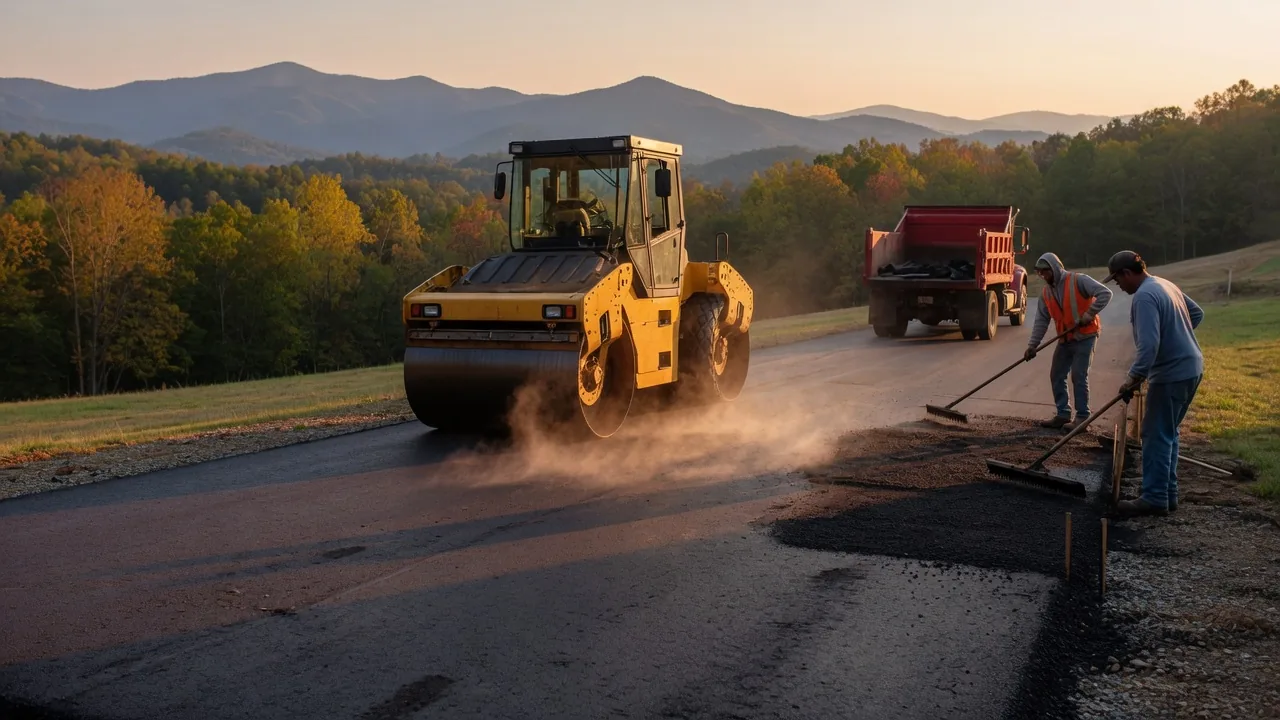
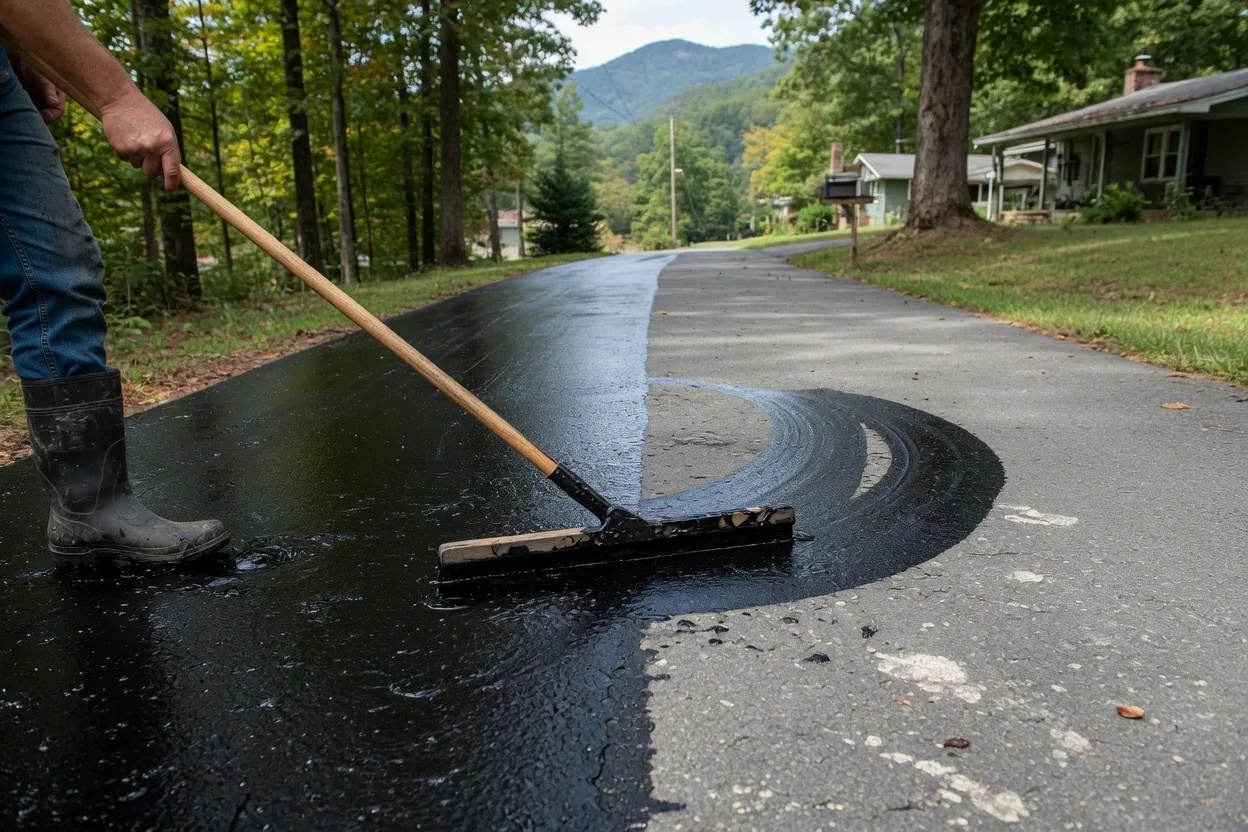
Good sealcoating starts with prep most homeowners never see. Power-washing or blowing off grit. Scraping vegetation out of the edges. Filling cracks before the sealer goes down, not after. Cutting back an edge that's crumbling so the new material has something to bond to. Skipping any of these is how a driveway needs another coat in two years instead of four to five. On product: a quality coal-tar or asphalt emulsion sealer applied in two thin coats beats one thick coat every time. Thick coats skin over, trap moisture, and peel at the first hard freeze.
On hiring, know the threshold: North Carolina requires a license from the NC Licensing Board for General Contractors for many paving and construction projects above certain dollar amounts, so ask about licensing and insurance on anything beyond a straightforward maintenance seal. If your driveway ties into a state-maintained road, the apron often needs an access permit through NCDOT — see the permit side via NCDOT Connect. Find crews working this county through our Mars Hill paving contractor page.
Timing it for the mountains
Sealcoat needs warm, dry weather and a surface that's fully cured. On this ground that points at late spring through early fall, with enough dry window for the material to set before the first frost. Seal a driveway too cold and it cures brittle; seal it too soon after a fresh overlay and the solvents in the sealer can soften new asphalt. If you're planning a repave, seal it the following season, not the same one. If you're maintaining an existing surface, catch it before the first hard freeze puts water back into the cracks — that timing alone is the difference between a coat every four years and a coat every two.
One more local wrinkle: after the heavy leaf drop that follows a Mars Hill autumn, gutters and driveway edges pack with wet debris that keeps the asphalt damp long after rain stops. Clear the seams and the low shoulder before a seal, or you're locking moisture under a fresh coat, which is exactly the trap you're trying to avoid.