Which way the rain runs on your Brevard driveway
Brevard sits in one of the wettest temperate corners of the eastern United States — the town is bracketed by the Pisgah National Forest and the French Broad River valley, and local rainfall regularly tops 70 inches a year. That water has to go somewhere, and on a mountain driveway it goes downhill until something stops it. If your drive was laid without a crowned center, without proper edge drop-off, or without a ditch or turnout to shed runoff before it reaches the garage slab, the asphalt is not failing from age — it is failing from water sitting on it.
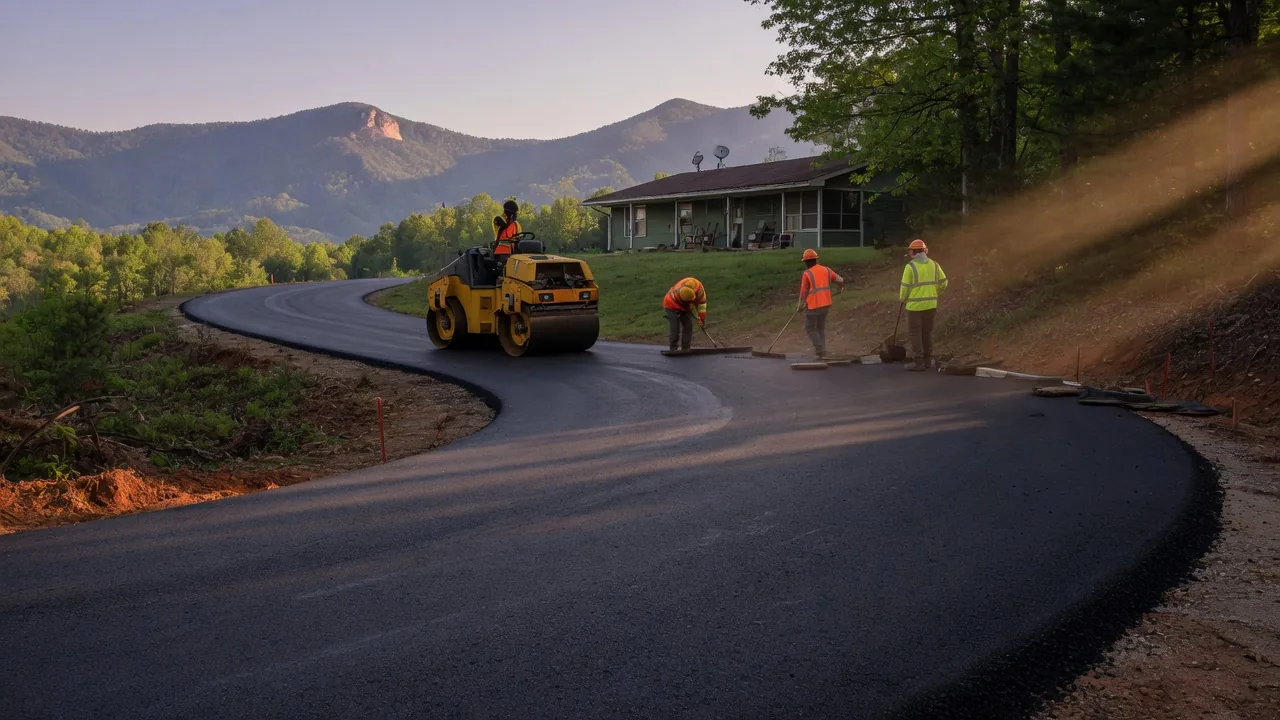
The honest first question isn't "how much to patch this crack." It's which way the rain runs on this lot. Driveways off Asheville Highway or Old Hendersonville Highway typically climb a cut slope with the house below and the road above, so runoff crosses the drive on its way down. Driveways nearer the Little River or in the bottomland off Cashiers Valley Road sit flatter, and the problem flips: water ponds instead of running, and the base stays saturated. The repair strategy is different for each, which is why a scope that never mentions grade or drainage is not a real scope.
What actually fails on Transylvania County asphalt
Three patterns cover most of what we see. Edge cracking and raveling along the outer lip — the asphalt crumbles because the edge has no shoulder and tires are riding the drop-off. Longitudinal cracks down the center or along a seam — usually a sign the subgrade is moving under one half of the drive. Alligator cracking in a patch — the base is gone, and filling the cracks with sealer is money you'll spend twice.
Older Transylvania County homes with long gravel-base drives converted to asphalt in the 1990s or 2000s frequently show base failure where the original gravel was never compacted to a uniform depth. If a screwdriver sinks more than an inch or two into the shoulder after rain, the base is the problem and surface work is a bandage. The NC Department of Insurance Engineering & Codes division publishes the state residential code that governs subgrade prep for new construction; the same principles apply to any repair that has to last.
Winter matters here too. Brevard gets freeze-thaw cycles most Januarys — meltwater seeps into hairline cracks by day and refreezes at night, prying them wider each cycle. A crack that's cosmetic in October is a pothole by March. Sealing before the first hard freeze is the cheapest repair on this page.
What each repair costs in Brevard
Real ranges, not flat rates. The jump from "surface" to "structural" is the single biggest price mover, and drainage line items (regrading, ditch, culvert) are what flatland quotes leave out.
| Scope | Typical range | What drives the number |
|---|---|---|
| Crack filling & sealing | $350–$900 | Linear feet, crack width, whether the crack is moving |
| Pothole / spot patching | $450–$1,400 | Number of patches, depth of base repair needed |
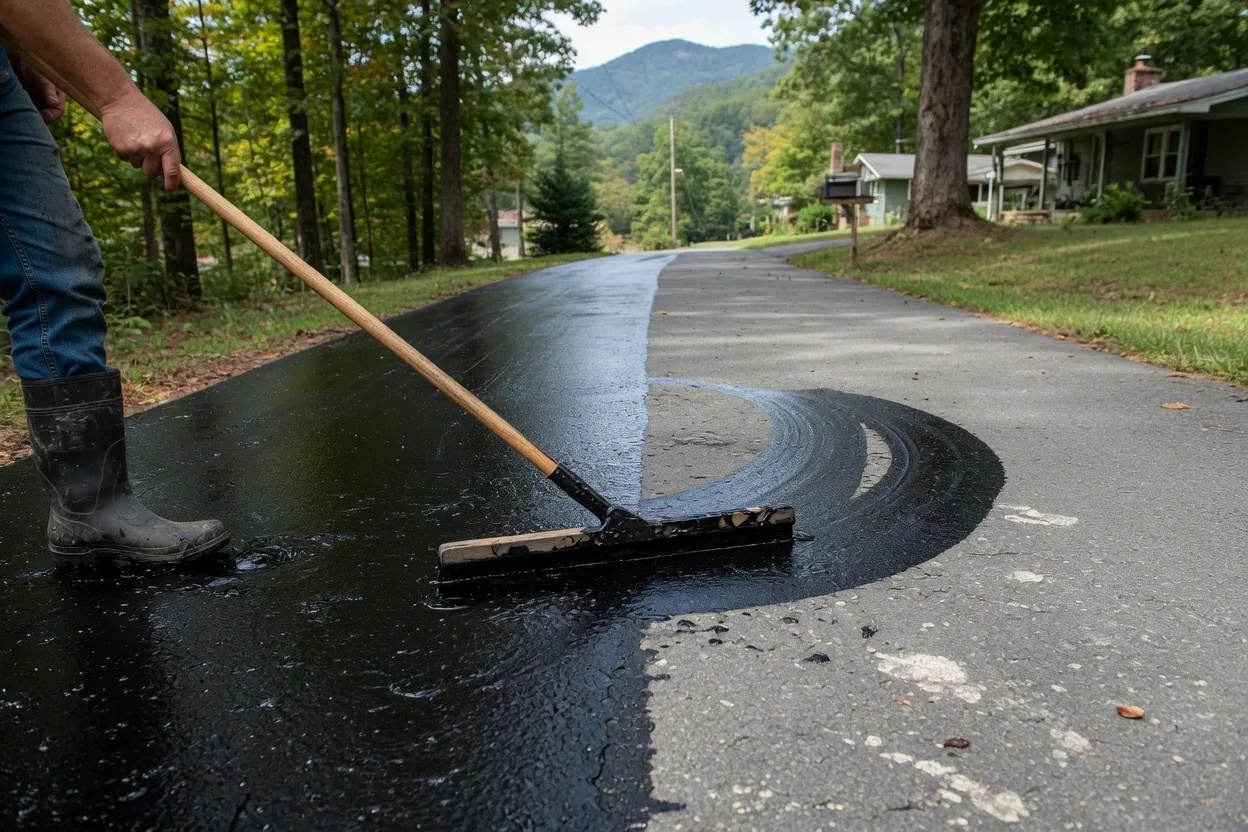
| Full-drive sealcoat | $900–$2,600 | Square footage, prep, number of coats |
| Edge repair & shoulder rebuild | $700–$2,200 | Linear feet of edge, whether drainage is added |
| Structural patch (base failure) | $1,800–$4,800+ | Square footage removed and replaced, base depth |
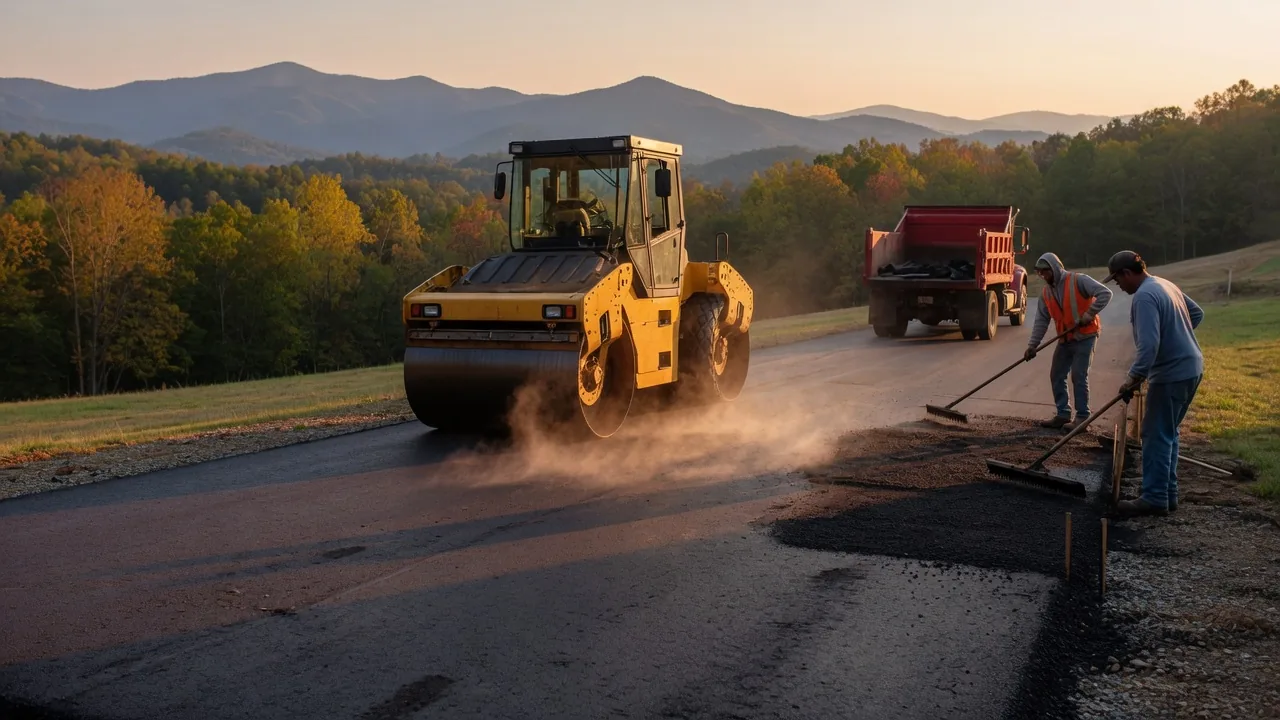
| Full overlay (1.5–2 in.) | $2,400–$6,000+ | Drive size, existing base condition, edge prep |
For a county-level breakdown including what Brevard addresses price in versus the rest of Transylvania County, see the Transylvania County cost page.
When your driveway needs a permit (and when it doesn't)
Repairing an existing driveway on your own property does not normally require a permit in Transylvania County or the city of Brevard. What does: any change to where the driveway meets a state-maintained road. NCDOT controls driveway connections to state roads, and the permit process runs through NCDOT Connect. If your repair widens the apron, changes the culvert under the entrance, or alters the sight distance at the road, that's a permit conversation.
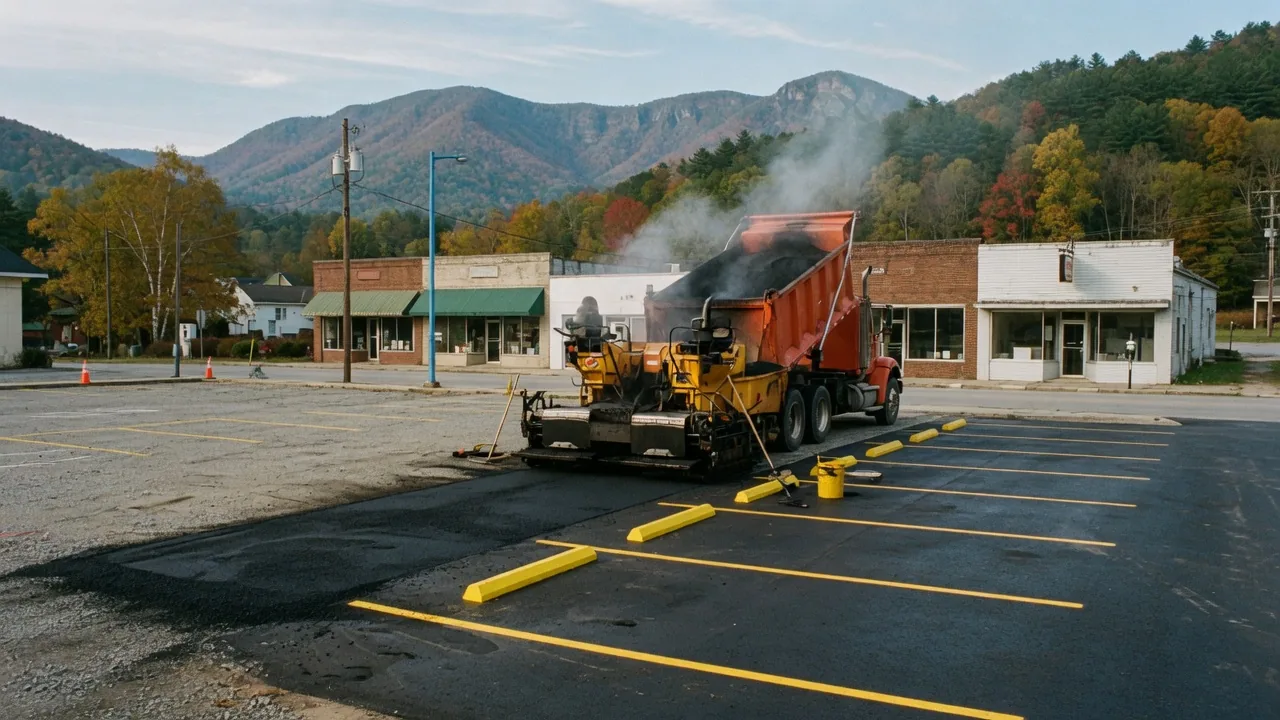
For asphalt work itself, North Carolina's general contractor licensing threshold matters mostly on larger jobs. The NC Licensing Board for General Contractors sets the dollar threshold at which a project requires a licensed GC; residential driveway work typically falls below it, but pavers who bid full-site grading alongside paving sometimes cross it. Asking your contractor how they handle that line is a fair question.
Storm water and the long view
The federal disaster record tells the story for this county: 16 declared events reach Transylvania County (1993-2026), overwhelmingly flood and storm-related. Each one pushed water at driveways and foundations built for a drier assumption. When asphalt fails in a pattern that tracks the storm history — repeated washouts at the same low point, the same culvert clogging every spring — the repair that lasts is usually the one that redesigns the drainage, not the one that re-paves the same surface.
On genuinely steep lots, look for a contractor who walks the whole run top-to-bottom before quoting. Where does the water enter? Where is it supposed to exit? Is there a turnout or ditch the runoff is meant to use, and does that path still work? The asphalt driveway repair guide covers how to read your own drive before anyone quotes it, and the Brevard paving contractors page explains what separates a real mountain-grade crew from a flatland operator.