Why the calendar, not the quote, drives resurfacing here
Driveways in Buncombe County live under a specific set of conditions: south-facing slopes that bake all afternoon, north-facing hollows that hold frost into late morning, and a canopy of hardwoods that keeps some driveways in shade for most of the day well into spring. Hot-mix asphalt needs to be laid and rolled inside a temperature window — surface and air temps warm enough that the mix stays workable before it stiffens, and dry enough that the new layer bonds to what's underneath instead of trapping moisture. Push that window and you get a driveway that looks finished and fails early.
Practically, that means local plants and crews do their heaviest resurfacing between late spring and early fall, with summer mornings favored on shaded lots because the asphalt cools faster in tree cover than it does in full sun. Rain is the other gate. A saturated base won't accept an overlay honestly, and western North Carolina's storm history (19 federal declarations on record across 1973-2026) means a lot of driveways get evaluated in the wet season, when soft spots are obvious but paving isn't.
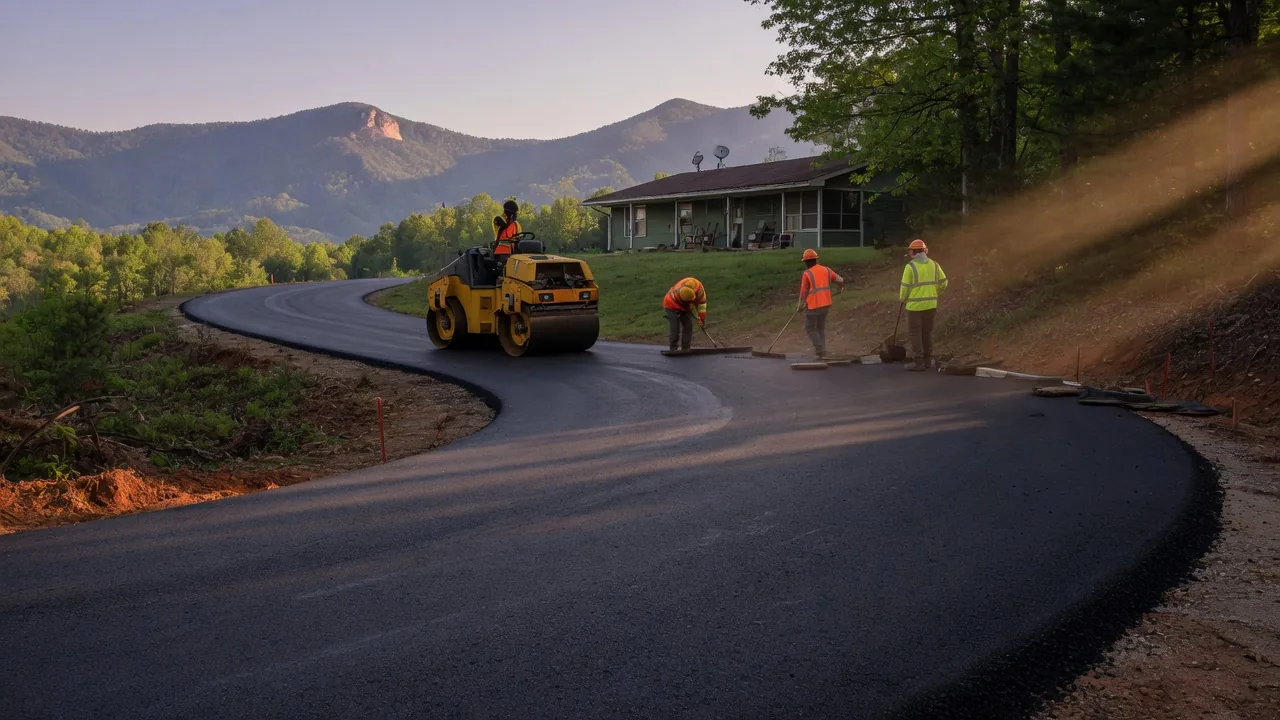
The microclimates here are unusually sharp even for the mountains. A driveway off a ridge road in Leicester or Alexander may see sun from mid-morning, while a lot tucked into a cove off New Leicester Highway or up a hollow in Weaverville can stay shaded until close to noon. Those few hours matter more than they sound. Hot-mix arrives from the plant at a specific temperature, and the roller crew has a limited time to work it after it hits the ground. On a shaded mountain lot, that window can shrink by half compared to a south-facing driveway in full sun. Reputable crews schedule shaded driveways first thing in the morning and save sun-exposed lots for later in the day, when the surface is already warm and the mix stays workable longer.
Spring in Asheville also brings the freeze-thaw cycle that does the most long-term damage. Water gets into existing cracks during warm afternoons, freezes overnight, expands, and widens the opening. By the time paving season is reliably open, a driveway that looked fine in November may have a spiderweb of new cracks that need attention before any overlay goes down. That's why a lot of local resurfacing conversations start in late winter with an evaluation, even though the actual work waits until the ground and the weather cooperate.
What actually happens during a resurfacing job
Resurfacing — also called an overlay — is not a skin coat thrown over whatever is there. It's a sequence, and each step is where bids quietly diverge:
- Evaluation. Someone competent probes for soft base, checks existing thickness at the edges, and looks at where water leaves the driveway. If the base has failed, an overlay is a cosmetic fix over a structural problem.
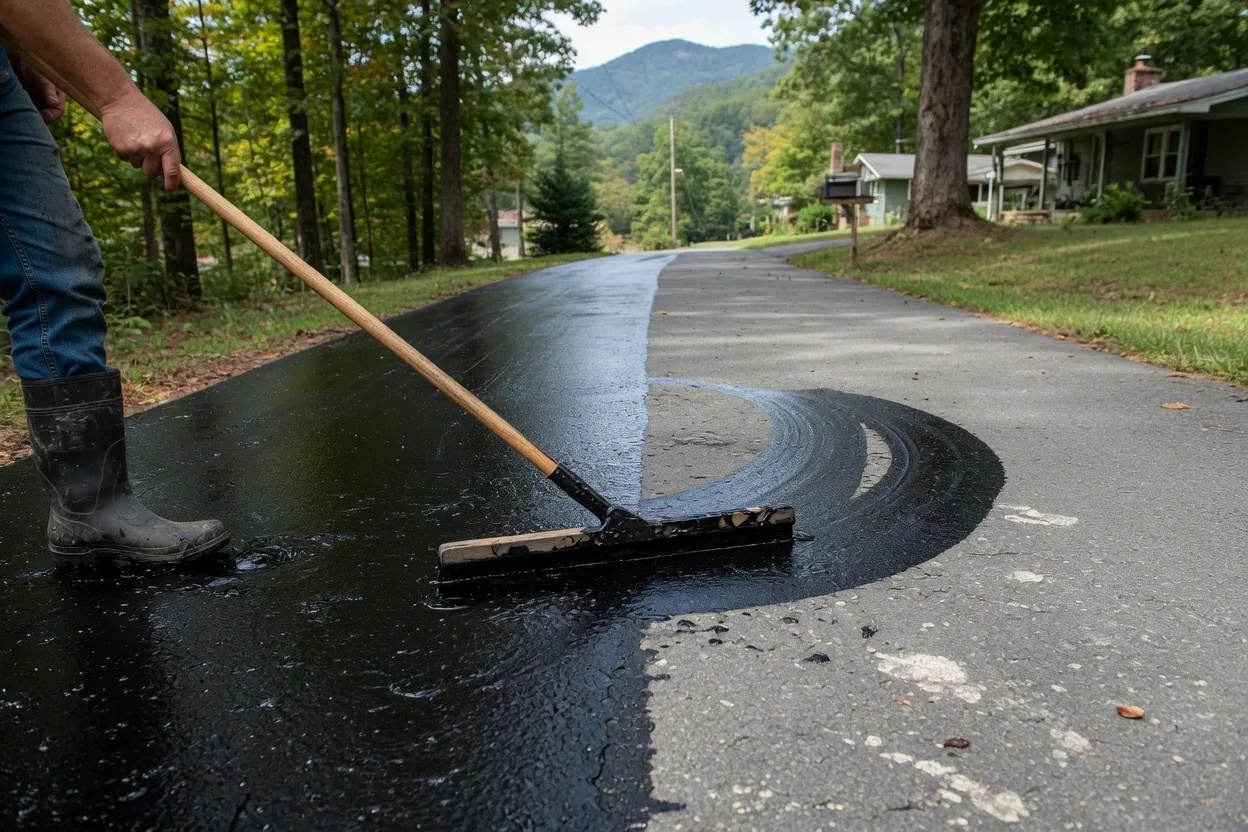
- Cleaning and prep. Loose material removed, edges squared, cracks cleaned. Optionally a tack coat so the new layer binds. Skipping this is the cheapest corner to cut and the most expensive to live with.
- Repair of failed areas first. Potholes and alligatored sections get cut out and patched before the overlay — see asphalt driveway repair for what that looks like when it's done properly.
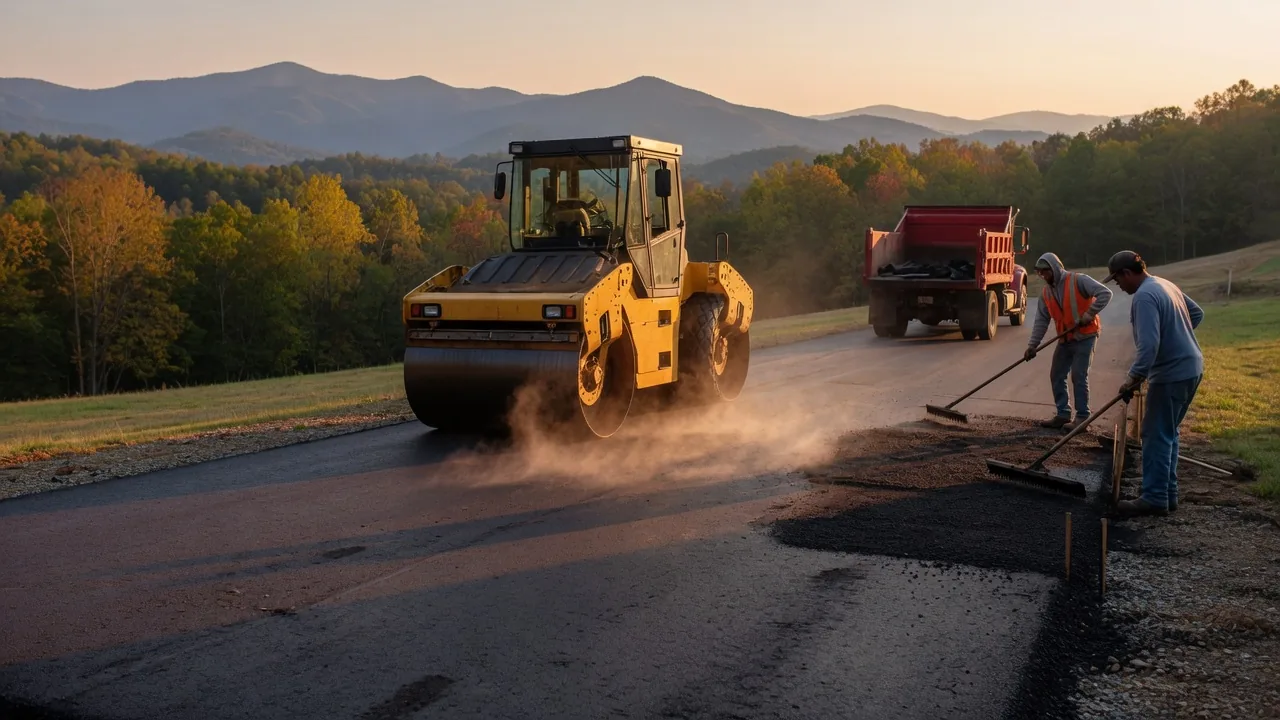
- Laying the new course. Typically an inch and a half to two inches of new hot mix, spread and rolled while it's still hot. Compaction is the whole ballgame; a half-compacted layer is a driveway with a built-in expiration date.
- Edge and grade restoration. The finished surface has to shed water off the driveway, not into it. In this terrain, that usually means paying attention to the cut below the slope, not just the blacktop.
The state's own building code, administered through the NC Department of Insurance and Building Code Council, sets the framing for how site work and drainage are handled on permitted projects; residential driveways often fall outside that, which is exactly why homeowner diligence matters more, not less.
On steep driveways around Asheville, the prep work often includes something you won't see on flatter ground: re-establishing a proper crown or cross-slope so water sheets off to the sides instead of running down the center and scouring the surface. A driveway climbing a grade in Haw Creek or off Town Mountain Road can lose its crown over years of use, and paving over a flat or dished surface just creates a riverbed. The right fix happens before the paver shows up — sometimes with a skid steer reshaping the base, sometimes with a small culvert or turnout added at the low side.
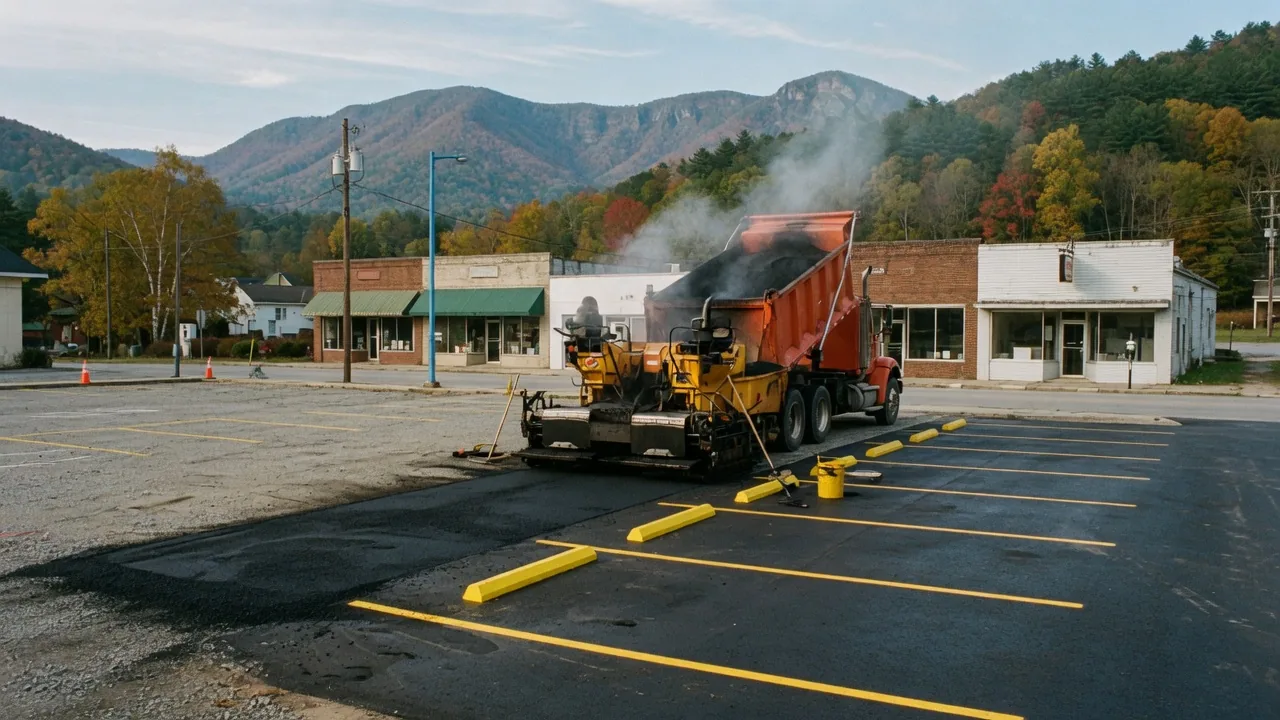
Equipment access is another local reality. Driveways in parts of West Asheville are tight and short, easy for a standard dump truck and roller. But a driveway up a switchback in the Riceville area or off a narrow gravel lane in Fairview may require a smaller paver or hand work at the edges. That difference shows up in the bid, and it's legitimate — a crew that can't get a roller to the far end of a steep narrow driveway has to compact with smaller equipment, which takes longer. If a bid looks oddly cheap for a drive with obvious access problems, ask how they plan to get the equipment in.
What resurfacing costs, and what moves the number
Local pricing is typically quoted per square foot, and the honest ranges look like this:
| Scope | Typical range (installed) |
|---|---|
| Basic overlay, sound base, easy access | $2.50–$3.75/sq ft |
| Overlay with limited patching and crack fill | $3.50–$4.75/sq ft |
| Overlay with significant cut-out repair or drainage correction | $4.50–$6.00+/sq ft |
| Typical two-car driveway (roughly 800–1,500 sq ft) | $3,500–$12,000 |
Steep or narrow mountain driveways raise the number because equipment access is harder and hand work replaces machine work. Thicker overlays cost more material. But the biggest swing factor is what's underneath: an overlay over a base that's already moving is money spent on a surface that will crack again. If you're weighing whether the driveway is even a candidate, the resurface or replace comparison is the right first read, and the resurfacing cost breakdown walks through the line items in more detail.
Timing also affects price in ways that aren't always obvious. Booking in the shoulder weeks — late spring before the summer rush, or early fall before crews shift to winter prep — can sometimes land a better slot than calling in July when every paver in Buncombe County is buried. That's not a discount so much as availability. A crew that can fit your driveway into an open morning may charge less for mobilization than one squeezing it between two bigger jobs across town. Conversely, waiting until late fall when plants are winding down can mean paying a premium for a small job that's hard to schedule, or being told to wait until spring.
The number on a square-foot basis also depends on how far the hot-mix plant is and how long the truck sits in traffic. Asheville's growing-season road congestion isn't a paving problem per se, but a load of asphalt that spends an extra twenty minutes on I-240 or Patton Avenue in the wrong direction arrives cooler and less workable, and a crew that knows it has a short laydown window may price accordingly.
The licensing and environmental details that matter locally
North Carolina sets a threshold above which general contracting work requires a license from the NC Licensing Board for General Contractors — a useful line to know when evaluating a paving bid that includes structural or drainage work, because it tells you who's actually accountable for the job. And because this is a wet, sloping region, stormwater and erosion control aren't optional paperwork: the NC Department of Environmental Quality regulates sediment and runoff, and a resurfacing job that sends water into a neighbor's yard or a creek is a problem the homeowner inherits, not the contractor. Any paving company worth hiring will talk about where the water goes before they talk about the mix.
Here's how that plays out on the ground in Buncombe County. Many driveways drain toward a creek, a roadside ditch, or a storm inlet, and the paved surface is the last thing the water crosses before it leaves your property. If the new driveway raises the grade even slightly or shifts the flow, the water ends up somewhere it didn't before. In older Asheville neighborhoods with small lots and mature trees, that can mean a neighbor's basement or a washed-out garden bed. In the steeper rural parts of the county, it can mean sediment reaching a trout stream, which is exactly the kind of thing the state's erosion rules exist to prevent.
For driveways that connect to a state-maintained road, the NCDOT has its own say over the apron and any changes to the entrance. That's usually a minor issue for a straight resurfacing, but it becomes relevant if the work involves widening the mouth of the driveway, changing a culvert under the entrance, or altering how the driveway meets the shoulder. Farm and mountain roads often have narrow shoulders and steep drop-offs at the entrance, and doing that work without the right permit can create a problem with the state that follows the property, not the contractor. A few minutes on the phone before work starts is cheaper than a fix afterward.