Why 2 inches vs 3 inches decides half the bids in Laurel Park
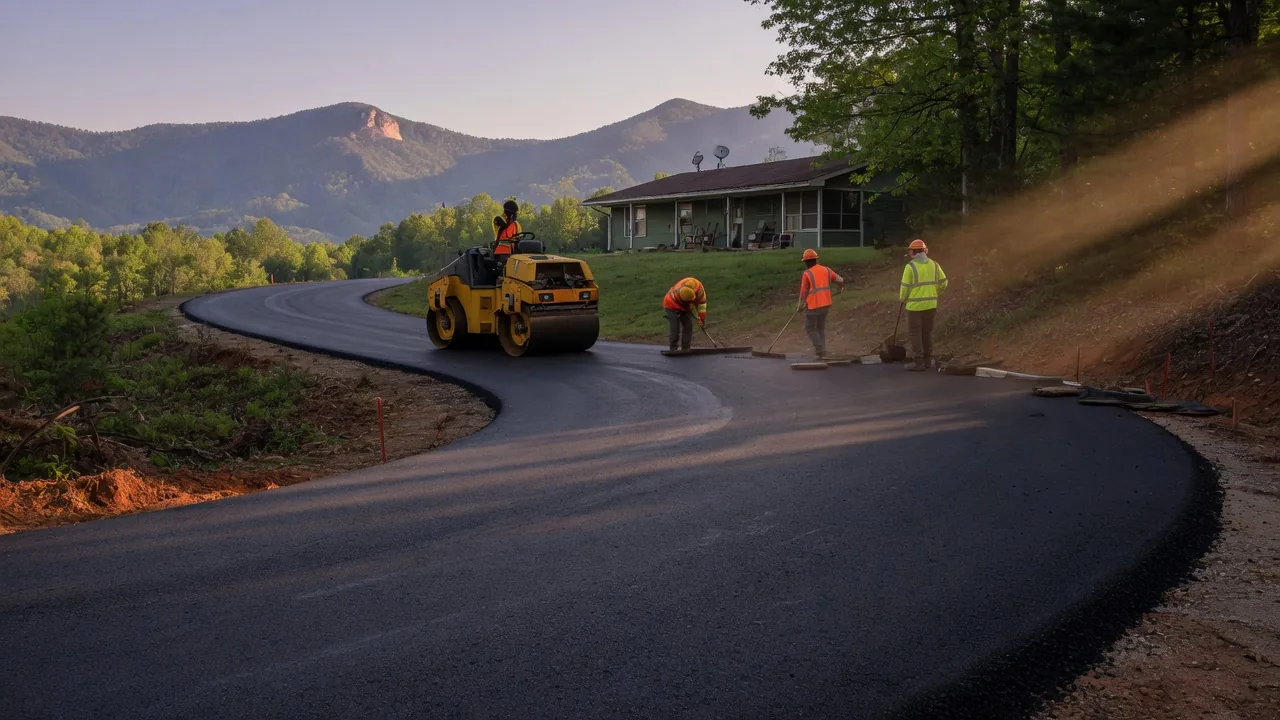
Drive a Laurel Park street and you can almost read the repair history of each driveway from the road: a thin skim coat laid over whatever was there, versus a full-depth section rebuilt where the truck turn scrapes the edge. Most premature failure on these lots is not the asphalt itself. It is 1.5 inches of surface course laid over a base that was already moving. The mix and thickness a paving contractor proposes will tell you whether the number is a repair or a patch-over.
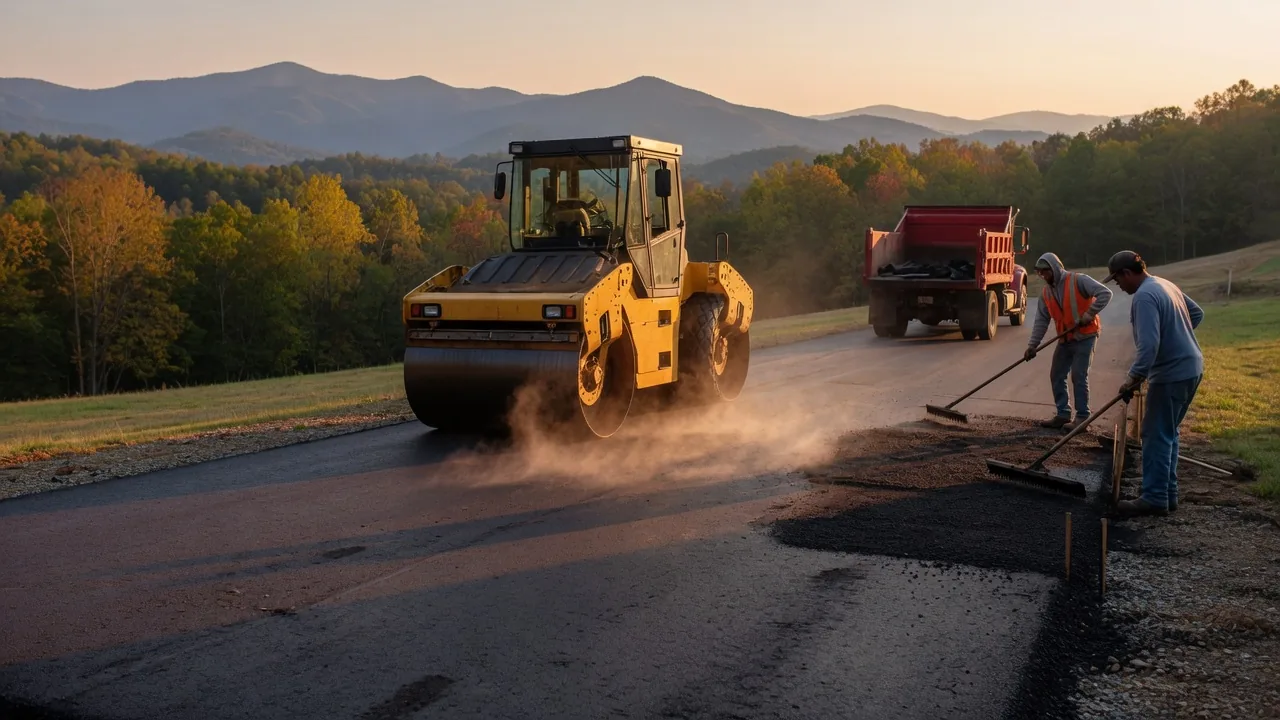
Two inches of compacted surface course is the practical floor for a residential drive in this town, and it works when the base is sound and the traffic is a couple of cars. Three inches, placed in two lifts so each layer compacts properly, is what you want where a loaded pickup or landscaper trailer turns in, where the drive rises steeply off the street, or where the subgrade was cut into the hill and has had years to settle. The mountain setting also means freeze-thaw flex, and thicker asphalt spreads that movement instead of cracking in one line.
Laurel Park ground is not flat ground
Laurel Park sits just south of Hendersonville in Henderson County, and the terrain is the story. Lots step up or drop away, drives slope toward the house or the street, and mature canopy keeps shaded sections damp long after the sun has dried everything else. Water is the number-one destroyer of asphalt here, and it almost always gets in through the edges and through cracks rather than the surface. The same storm pattern that drives flash flooding across the county has run over these driveways many times: the county has 16 federal disaster declarations on record going back 1978-2026, and wet-ground movement is what those events leave behind under pavement.
The National Weather Service forecast for the Henderson County area is a reminder that the freeze-thaw cycle does most of the quiet damage, not the once-a-decade event. A cracked edge on a steep drive sheds its water into the base, the base softens, and a small repair turns into a full-depth one. Look for that edge deterioration before it becomes the reason a contractor has to dig the whole corner out.
What a proper repair includes
A real asphalt driveway repair starts with diagnosis. The contractor should cut or saw the failed area back to sound pavement, not feather edge it, remove the loose material, and check the base. If the base is good, compact and rebuild with hot mix. If it is not, that is the moment the scope changes and the honest number changes with it, and you want that conversation before work starts, not after.
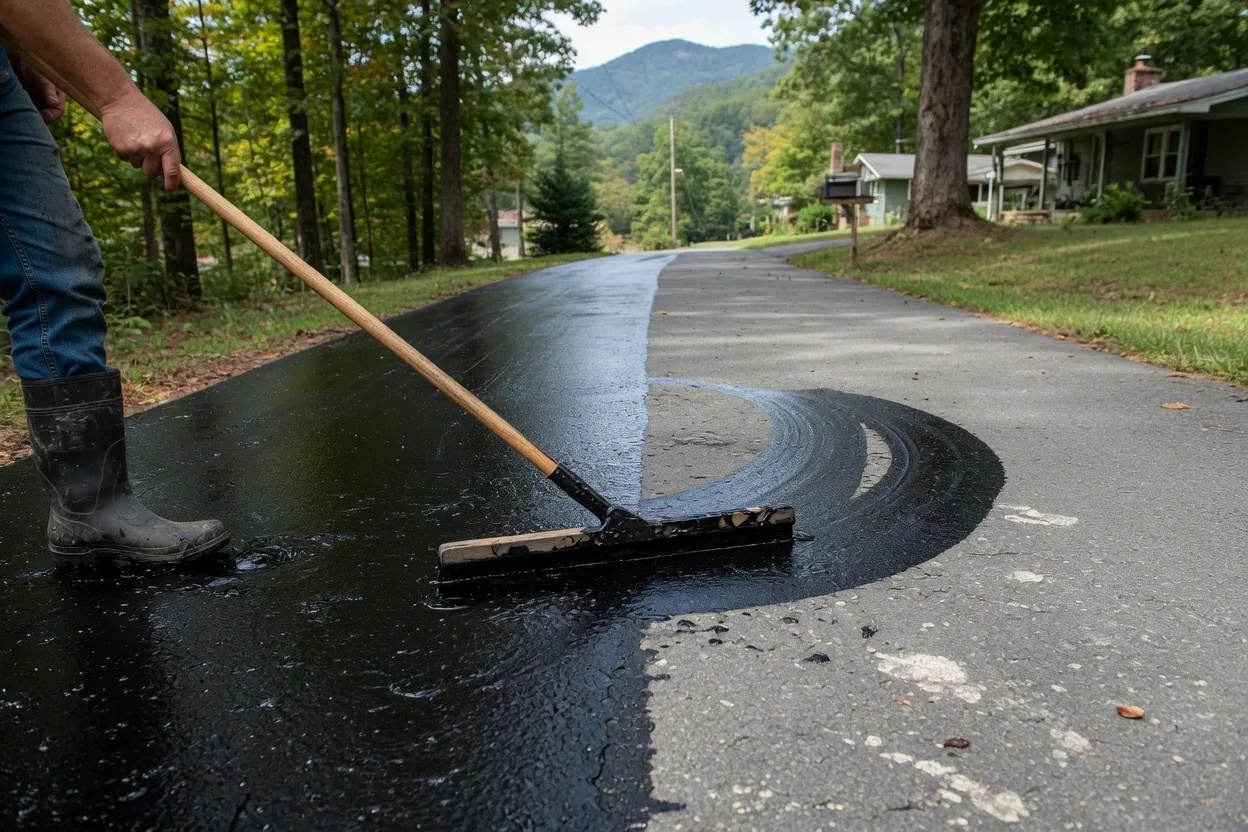
The smaller items matter more than people expect. Crack filling keeps water out of the base and costs a fraction of resurfacing. Proper edge support stops the outside inch of asphalt from crumbling, and on sloped drives in this town that outer edge is where failure begins. Drainage grading, an apron that ties cleanly to the street, and a compacted lift structure all need to be in the written scope. Anything beyond routine replacement on a commercial or shared entrance can also trigger state right-of-way rules, and the NCDOT Connect driveway permit process is where that starts. This is also where the asphalt driveway repair overview is worth ten minutes of reading before you call anyone.
Laurel Park price ranges by scope
The table below is typical for Henderson County, including Laurel Park. No two drives here price the same because the base condition is always the wild card, but the ranges should keep a bid honest.
| Scope | Typical range | Notes |
|---|---|---|
| Crack filling & sealcoat | $350-$900 | Preventive maintenance, per typical two-car drive |
| Pothole & spot patching (isolated) | $450-$1,400 | Cut, remove, and rebuild small failed areas |
| Resurfacing, 2-inch overlay | $2,800-$6,500 | Sound base required |
| Resurfacing, 3-inch, two lifts | $4,200-$8,000 | Heavier loads, slopes, or settled base |
| Full-depth repair, per section | $6-$12/sq ft | Base rebuild, thickness dependent |
| Full drive rebuild | $8-$15/sq ft | New base and surface, terrain dependent |
| Grading & drainage correction | $600-$2,500 | Often required on sloped drives |
For a fuller breakdown by town, the Henderson County cost guide walks through line-item adds like hauling, drainage, and edge repair that flat quotes skip.
Pick the crew the same way you pick the mix
Ask a paving contractor what thickness and mix they propose and why, then listen for whether the answer mentions your driveway's slope, its truck traffic, and its base. Someone who can explain the reasoning is usually the crew that does the work you actually need. The North Carolina Licensing Board for General Contractors sets the thresholds for when a project must be handled by a licensed contractor, and any bid above the residential repair threshold should come from someone who can speak to that. Commercial or multi-unit surfaces can also bring state building code into play, and the NC Department of Insurance Engineering & Codes Division is the reference point for those requirements.
Two more checks before signing. Confirm the numbers include hauling and disposal of the old material, and confirm whether the bid is per square foot or a lump sum, because the two questions catch most of the surprises in this market. When you are ready to talk to a crew, the list of paving contractors serving Laurel Park is a good starting point.