The seasonal window that actually governs your schedule
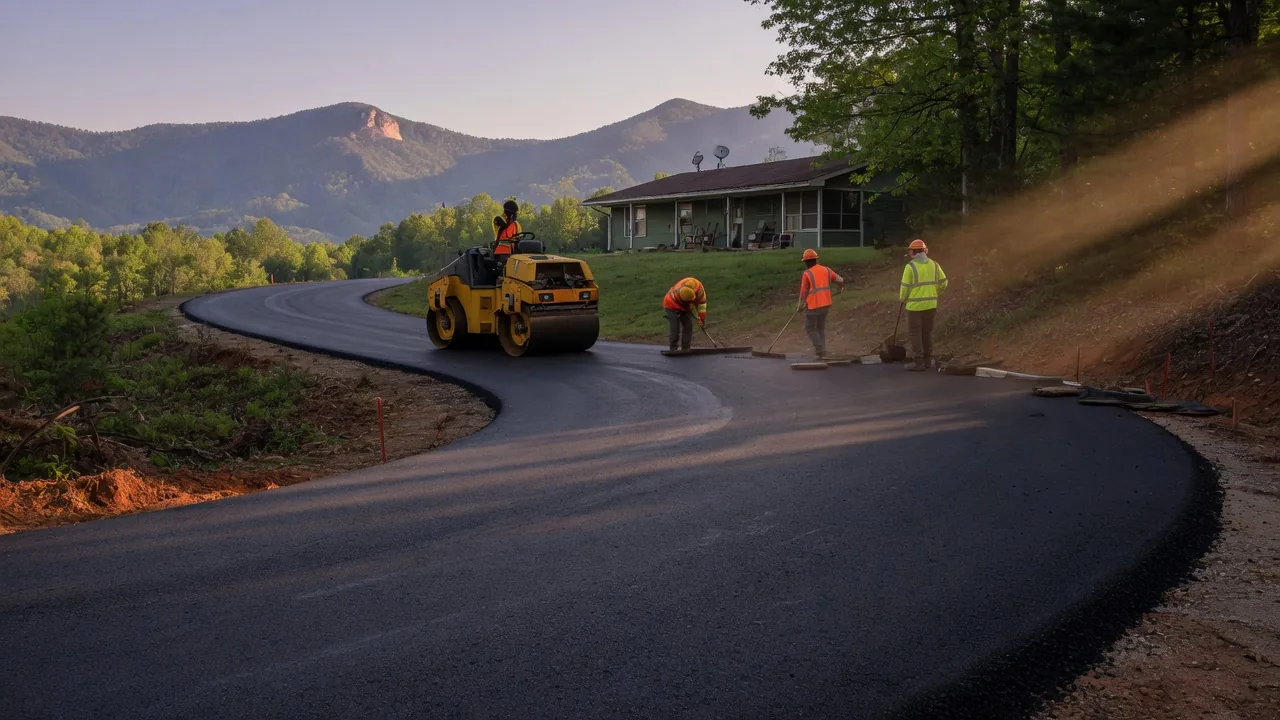
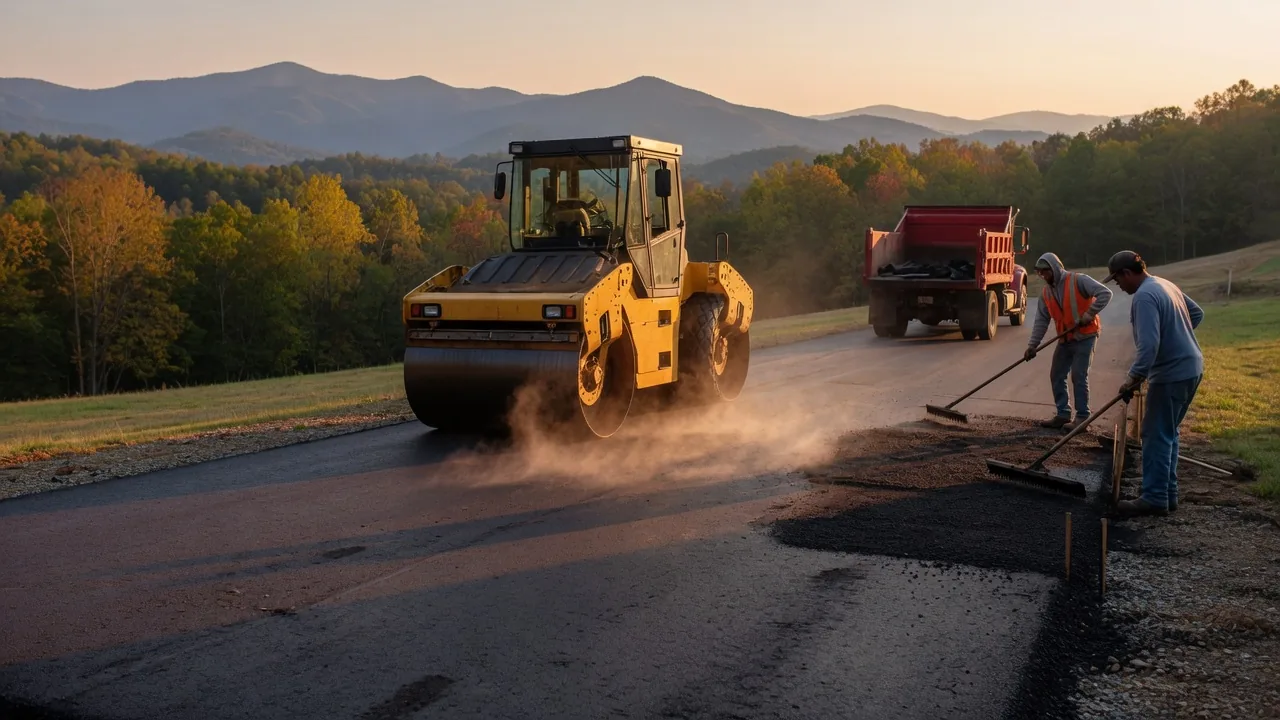
Hendersonville sits at roughly 2,200 feet in the Blue Ridge foothills, and that elevation costs paving crews weeks at both ends of the year compared to Charlotte or Columbia. Hot-mix asphalt plants in this region typically open in early spring and shut down when sustained overnight temperatures drop near freezing, because the mix has to leave the plant hot, arrive hot, and still be hot enough to compact. A load that cools below its working range before the roller touches it is a load that never bonds properly — it looks fine in May and ravels by the following spring.
In practice, the reliable laying window here is late March through early November, and the best months for a commercial lot are April through June and September through October. Mid-summer work is possible but the plant mix gets stiffer faster in afternoon heat, so good crews pour early. Winter work is limited to emergency patching with cold mix, which is a holding action, not a repair.
Mountain shade matters more than most property managers expect. A lot tucked against a north-facing slope off Kanuga or up toward Flat Rock may hold frost in the subgrade well into March, and a shaded lot can lose two to three hours of working temperature every afternoon. Crews who pave this county regularly plan around the shade, not just the calendar.
What drives the price on a Henderson County lot
The dollar spread between a light overlay and a full-depth rebuild is enormous, and the difference is almost always what's under the asphalt, not what's on top. Henderson County commercial lots range from downtown storefront parking behind century-old buildings to newer strip-center lots along the corridors — and the older ones have had decades of traffic, utility cuts, and freeze-thaw cycles working on the base.
Before anyone prices a job, someone should be probing or coring the existing section to find out how thick the asphalt is and what condition the stone base is in. If the base is sound, an overlay is genuinely the right answer. If the base has failed, an overlay just transfers the failure upward and you pay twice. For the residential side of the same math, the Henderson County asphalt cost breakdown shows how the same logic scales down to driveways.
| Scope | Typical range | When it applies |
|---|---|---|
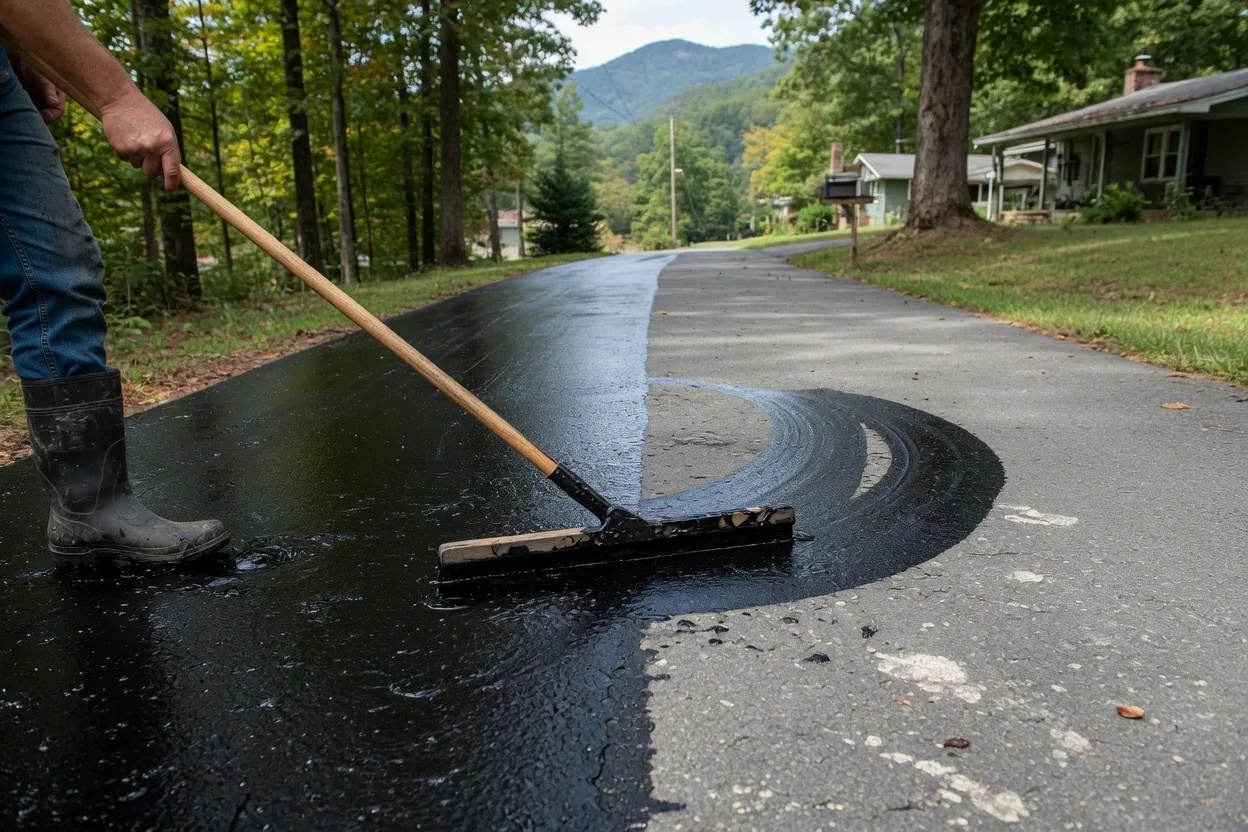
| Crack fill and sealcoat | $0.15–$0.35 per sq ft | Sound pavement, preventive maintenance |
| Mill and overlay (1.5–2 in.) | $1.75–$2.75 per sq ft | Surface cracking, base still intact |
| Full-depth patch repair | $4.00–$8.00 per sq ft | Localized base failure, potholes |
| Full-depth rebuild (remove and replace) | $3.50–$4.50 per sq ft | Widespread base failure, drainage problems |
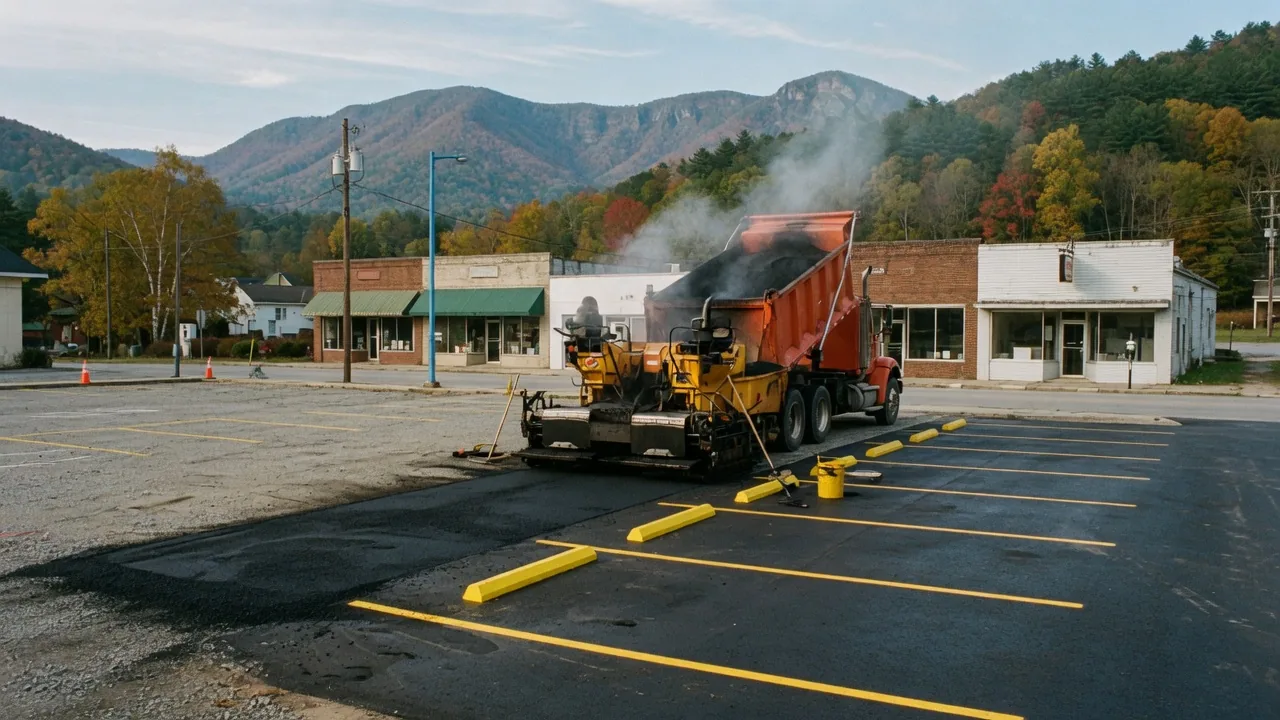
| Striping and layout (per stall) | $8–$20 per stall | Any new surface, ADA compliance |
Striping is not optional decoration. Accessible parking layout and marking requirements are code-driven, and the Americans with Disabilities Act standards referenced through HUD and enforced locally apply to commercial lots regardless of size.
Storm water has shaped this county's pavement problems
Federal disaster records show 16 declared events touching Henderson County across 1978-2026, and the pattern is overwhelmingly storm and flood related. That history matters for parking lots because asphalt is only as good as the drainage beneath and around it. A lot that ponds water after every heavy rain is a lot whose base is slowly being saturated and softened, and no surface treatment fixes that.
Before a paving scope is written, the drainage question should be answered: where does the lot discharge, are the catch basins functional, does the grading still shed water the way it did when it was built, and has upstream development changed the flow. The NC Department of Environmental Quality regulates stormwater in ways that affect larger commercial sites, and locally, any work that changes how a lot connects to a public street or right-of-way may need an access or driveway permit through NCDOT Connect. A bid that ignores drainage is not a cheaper bid — it's an incomplete one.
Choosing a crew that works this terrain
Three questions separate the crews who pave Henderson County well from the ones who don't. First: how do you handle the temperature window on my job — what mix, what plant, what time of day? Second: will you core or probe the existing section before quoting, or is this a visual estimate? Third: who pulls the NCDOT permit if my lot ties into a state-maintained road, and is that in the number?
For larger commercial scopes, the NC Licensing Board for General Contractors sets the threshold at which a project requires a licensed general contractor, and paving work above that dollar figure falls under it. Ask for the license, and ask whether the crew carries the compaction and thickness testing documentation that a property owner or lender may want later. When you're comparing bids, the Hendersonville paving contractor guide walks through what a complete written scope should contain, and the parking lot paving overview covers how the work is sequenced from demo to striping.
Scheduling around weather without losing the season
Because the window is short, lots fill fast in spring and fall. Property managers who wait until April to call usually find crews booked into June. The practical move is to get a site walk in late winter or early spring, get a written scope with the drainage and base findings, and lock a date before the plant opens. Rain delays are unavoidable in this county — the mountains generate afternoon storms that lowland crews underestimate — so a realistic schedule builds in weather days rather than pretending they won't happen. The National Weather Service outlook for the Asheville region is worth checking when a crew gives you a start date.
If your lot has failed badly enough that it's a liability now, cold-mix patching gets you safely through winter and the permanent fix goes in when the plant reopens. That's a normal sequence here, not a compromise.